AI Dating Recording Controversy: Don't Let Algorithms Steal Your Privacy

A hedge fund manager's secret date recording highlights the privacy and ethical dilemmas of AI-assisted socializing.
A hedge fund manager secretly recorded an entire date to "optimize" courtship, sparking widespread debate about AI in intimate relationships. The article notes that speech-to-text and sentiment analysis can provide conversational insights, but secret recording crosses moral and legal red lines, violating privacy and undermining trust. Current laws poorly regulate secret recording in dating scenarios, making evidence and rights protection difficult. The author recommends responsible use through transparent communication, after-the-fact review, AI simulation practice, and self-improvement, emphasizing sincerity and trust as the irreplaceable foundation of intimacy.
When AI Sneaks into Dating: An Adventure in Privacy
A hedge fund manager secretly recorded an entire date in order to optimize his courtship process. This sounds like a science fiction plot, but it actually happened. According to foreign media reports, the manager was so obsessed with "optimizing" the dating process that he secretly recorded it, attempting to use a data-driven approach to improve his romantic success rate. Although such extreme cases are rare, they reflect a widespread anxiety: in the AI era, how should we balance the boundary between technological assistance and personal privacy?
Secret Recording: The Dangerous Temptation of Efficiency Above All
This hedge fund manager's behavior is not an isolated incident. Driven by the pursuit of efficiency, some people have begun trying to use AI tools to record and analyze dating conversations in hopes of obtaining "actionable insights." They may use speech-to-text tools, sentiment analysis software, or even real-time feedback systems to guide their words and actions. The original intention may have been to improve communication quality, but the act of secret recording has crossed a moral red line.
From a technical perspective, AI can indeed analyze language patterns, emotional fluctuations, and interaction rhythms in conversations and provide objective feedback. But the problem is that this analysis is built on the other person's lack of awareness, violating basic privacy rights. Dating should be a natural interaction between two people based on trust. Once covert surveillance is introduced, the foundation of the relationship has already been shaken.
The Technical Principles of Speech-to-Text and Sentiment Analysis
Current mainstream speech-to-text (ASR) tools, such as Whisper and iFlytek Tingjian, are based on deep neural networks that map acoustic signals to text, with accuracy in quiet environments now exceeding 95%; sentiment analysis uses natural language processing models to identify emotional tendencies, the ratio of positive to negative vocabulary, and intonation features in conversations. Combined, these can in theory generate a "date conversation report" marking which topics made the other person emotionally engaged and at which moments hesitation appeared. But the input quality of such tools depends heavily on the recording environment, and errors are significant in multi-person conversations, background noise, or dialect scenarios. More importantly, technical "feasibility" does not equal ethical "shouldness"—collecting someone's voice biometric features without their consent has already touched the red line of personal information protection laws in most regions.
Privacy and Trust: The Ethical Dilemma of Technological Intervention
The secret recording incident sparked widespread discussion about technology ethics. Supporters argue that AI assistance can help people overcome social anxiety and improve communication skills; opponents emphasize that recording without consent tramples on the dignity of others. This divergence reflects the core contradiction in technological applications: the tension between efficiency and privacy, instrumental rationality and interpersonal trust.
One detail worth mentioning is that current laws are still incomplete in regulating such behavior. In most jurisdictions, secretly recording another person's conversation may be illegal, but when it comes to dating scenarios, both evidence collection and rights protection are difficult. This reminds us that technological application cannot rely solely on individual self-discipline; clear legal boundaries and social consensus are also needed.
The Legal Characterization of Secret Recording
In China, Article 1032 of the Civil Code explicitly includes "private conversations" within the scope of privacy protection, and recording another person's conversation without consent may constitute infringement; the Personal Information Protection Law classifies the processing of biometric information such as voiceprints as sensitive personal information, requiring separate consent. At the criminal level, if recorded content involves another person's privacy and is disseminated, it may also violate the crime of infringing citizens' personal information. U.S. state rules vary even more: "two-party consent states" such as California require all parties to a conversation to be informed, while "one-party consent states" such as Texas require only the recorder's consent. This legal fragmentation is one of the root causes of the difficulty in protecting rights in dating scenarios—victims often find it hard to prove that a recording exists, and also hard to quantify emotional harm.
How to Use AI Responsibly to Assist Social Interaction
If you want to use AI to improve your social skills, consider the following more responsible approaches:
- Transparent communication: Obtain the other person's explicit consent before recording or analyzing a conversation.
- After-the-fact review: After the date ends, record key points from memory rather than recording in real time.
- Use simulation tools: Practice through AI-simulated conversation scenarios rather than analyzing real interactions.
- Focus on self-improvement: Use AI to analyze your own expression habits rather than judging the other person.
The value of technology lies in enhancing human abilities, not replacing human judgment. In intimate relationships, sincerity and trust will always be irreplaceable cornerstones.
Conclusion: Technology Is a Tool, Not an Excuse
The hedge fund manager's secret recording incident is a warning: when we regard AI as a master key for optimizing everything, we may overlook the most basic interpersonal ethics. Dating is not a business negotiation and does not need a data-driven "optimal solution." While pursuing efficiency, please hold the bottom line of privacy—after all, true connection begins with respect.
One-line Summary
A hedge fund manager's secret recording of a date reflects the privacy and ethical dilemmas of AI-assisted social interaction.
Paragraph Summary
A hedge fund manager secretly recorded an entire date to "optimize" his courtship process, sparking widespread discussion about AI's involvement in intimate relationships. The article points out that tools such as speech-to-text and sentiment analysis can indeed provide conversational insights, but secret recording has crossed moral and legal red lines, violating privacy and undermining the foundation of trust. Current laws are incomplete in regulating secret recording in dating scenarios, and evidence collection and rights protection are difficult. The author recommends using technology responsibly through transparent communication, after-the-fact review, AI simulation practice, and a focus on self-improvement, emphasizing that sincerity and trust remain the irreplaceable cornerstone of intimate relationships.
Related articles

Claude May Apply Negative Weight to 'Overly Correct' Solutions
A Hacker News discussion suggests Claude may apply negative weight to 'overly correct' solutions. This article analyzes possible sources—conservative preferences from alignment training, simplicity signals under distribution shift, and implications for practical use and prompt debugging.

Nvidia CEO Jensen Huang to Testify Before US Congress This Week as Regulators Refocus on the Chip Giant
Nvidia CEO Jensen Huang testifies before Congress this week, facing three House committees including Intelligence and Foreign Affairs on Tuesday; General Counsel Tim Teter attends a closed-door session Wednesday.
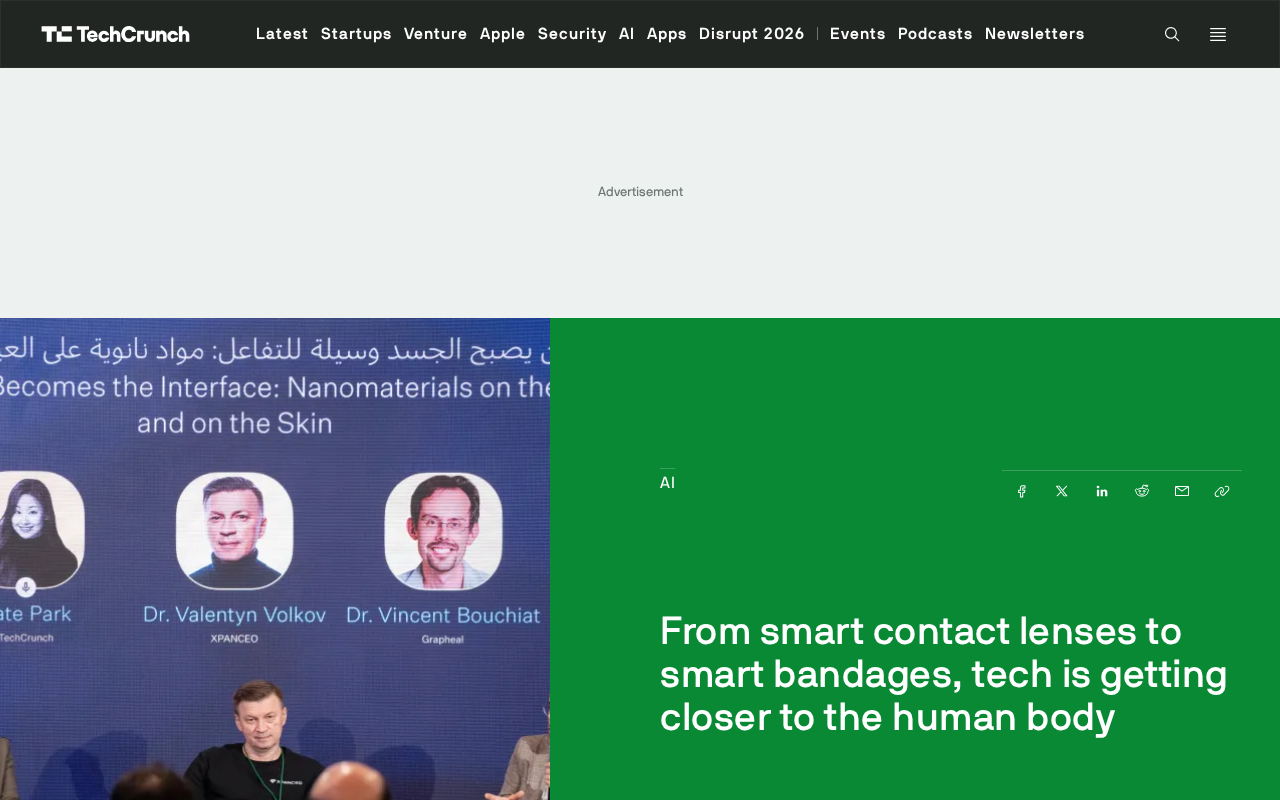
From Smart Contact Lenses to Smart Bandages: Tech Is Moving Onto the Body
Two startups are exploring smart contact lenses and smart bandages, bringing electronics directly onto the eye and skin. This article analyzes the trend of wearables moving from the wrist onto the body, along with core barriers like biocompatibility and form factor.