Nvidia CEO Jensen Huang to Testify Before US Congress This Week as Regulators Refocus on the Chip Giant

Nvidia CEO Jensen Huang testifies before Congress this week on export controls and national security.
Nvidia CEO Jensen Huang heads to Capitol Hill this week, facing joint questioning from three House committees on Tuesday—including Intelligence and Foreign Affairs—while General Counsel Tim Teter attends a closed-door House committee hearing on Wednesday. The public-plus-closed format signals lawmakers want both public policy positions and sensitive details on export controls, supply chain security, and overseas customers. As a core AI compute supplier, Nvidia remains under the regulatory spotlight.
Nvidia CEO Jensen Huang will appear on Capitol Hill this week. According to sources, he is scheduled to face questioning in both the Senate and the House; meanwhile, Nvidia General Counsel Tim Teter will also attend a closed-door hearing before a specific House committee on Wednesday.

Hearing Schedule: A Two-Day, Multi-Committee Congressional Visit
Based on information disclosed so far, Huang's congressional schedule is quite packed. Tuesday is the public-facing centerpiece—three different House committees will jointly participate in questioning him, with the Intelligence Committee and the Foreign Affairs Committee explicitly named. On Wednesday, the focus shifts to Nvidia General Counsel Tim Teter, who will face lawmakers' questions in a closed-door session before a specific House committee.
The combination of a public hearing and a closed-door meeting typically means lawmakers want to address two types of issues simultaneously: policy positions suitable for public discussion, and sensitive details that cannot be disclosed publicly. The involvement of the Intelligence and Foreign Affairs Committees also suggests the topics extend beyond purely commercial matters.
Why Now: Nvidia's Regulatory Sensitive Period
Nvidia is currently the most critical link in the global AI compute supply chain, with its GPU products essentially defining the hardware foundation for current large model training and inference. This market position naturally makes it a focus of policymakers. Congress summoning the CEO of a chip company is rarely just a courtesy exchange—it usually means lawmakers want firsthand information on issues such as export controls, market competition, and technology security.
Huang himself is described as an "on-again, off-again" CEO, a phrasing that points to the inconsistency of his schedule and statements, and indirectly suggests that this testimony arrangement itself has gone through some twists and turns.
Why the Intelligence and Foreign Affairs Committees Are on the List
Among the three House committees participating in questioning, the presence of the Intelligence Committee and the Foreign Affairs Committee is particularly noteworthy. These two committees' jurisdictions correspond respectively to national security information and foreign relations regarding technology. Their simultaneous questioning of a chip company CEO suggests the topics likely involve sensitive areas such as technology exports, supply chain security, and the proliferation of AI capabilities.
The US House Permanent Select Committee on Intelligence (HPSCI) and the Foreign Affairs Committee are two core bodies in Congress dealing with national security issues. The former oversees the intelligence community's operations, assesses foreign intelligence threats, and has historically been deeply involved in legislation on foreign investment review (such as CFIUS) and sensitive technology export controls; the latter oversees US foreign policy, arms sales, and foreign aid, and has legislative influence over technology export licenses. The joint presence of both committees in questioning a chip company typically means lawmakers want to examine, from the dual perspectives of intelligence security and foreign relations, the risks of high-performance chip flows, supply chain dependencies, and AI capability proliferation.
Nvidia's core regulatory pressure currently centers on export controls. Since 2022, the US Commerce Department's Bureau of Industry and Security (BIS) has repeatedly tightened restrictions on exports of advanced computing chips to China, covering the A100, H100, and even subsequent "downgraded" products designed for the Chinese market. The rules use compute thresholds and interconnect bandwidth as classification criteria, and include license exceptions and end-use reviews. Nvidia must repeatedly balance compliance obligations against market size, and product adjustments often trigger congressional questions about whether it is "circumventing controls"—this is precisely the backdrop for its CEO being frequently called to Congress.
What the General Counsel's Closed-Door Meeting Means
The closed-door meeting attended by Tim Teter on Wednesday is an easily overlooked but equally important part of this congressional visit. A company CEO typically gives principled statements in public hearings, while the general counsel faces more specific, technical follow-up questions in closed sessions.
Closed-door meetings are not broadcast publicly, allowing lawmakers to probe details of legal compliance, internal processes, and dealings with overseas customers. For Nvidia, communicating in such settings is often more challenging than public testimony.
Closed-door hearings are a routine congressional procedure in the US, typically used when classified information or sensitive commercial data is involved. Participants must pass security clearance, and meeting records are not made public, though lawmakers and staff still produce summaries that may feed into subsequent legislation. For companies, statements made behind closed doors do not enter the public communication chain, but they mean lawmakers can press for specific contract terms, customer lists, and compliance review processes—so companies typically send their general counsel rather than a PR lead to handle them.
Industry Impact: A Hearing Whose Signal Value Outweighs Immediate Effects
A single congressional hearing usually does not immediately change industry rules, but it sends a clear policy signal. As a leading player in AI chips, Nvidia's interactions with Congress will be watched across the entire supply chain—including cloud service providers, model companies, and other chip suppliers.
Over a longer cycle, this hearing may become source material for subsequent legislative discussions. Information lawmakers obtain during questioning often flows into committee reports and draft texts, thereby influencing the regulatory direction of AI hardware.
Information disclosed so far is limited; the specific topics of the hearing, the priorities of lawmakers, and the content of Huang's and Teter's testimony have not yet been made public. What is certain is that Nvidia will remain in the regulatory spotlight in the near term, and this congressional visit is a window into observing its policy response capabilities.
One-line Summary
Nvidia CEO Jensen Huang testifies before Congress this week on export controls and national security issues.
Paragraph Summary
Nvidia CEO Jensen Huang will head to Capitol Hill this week, facing joint questioning from three House committees on Tuesday—with the Intelligence and Foreign Affairs Committees explicitly on the list—while General Counsel Tim Teter attends a closed-door hearing before a specific House committee on Wednesday. The combination of public hearing and closed-door meeting shows lawmakers want to confirm the company's public policy positions while also pressing for sensitive details on export controls, supply chain security, and overseas customer dealings. As a core player in the global AI compute supply chain, Nvidia's move is seen as a key window during its regulatory sensitive period; the hearing itself may not immediately change rules, but it will send policy signals and provide material for future legislation.
Related articles

Claude May Apply Negative Weight to 'Overly Correct' Solutions
A Hacker News discussion suggests Claude may apply negative weight to 'overly correct' solutions. This article analyzes possible sources—conservative preferences from alignment training, simplicity signals under distribution shift, and implications for practical use and prompt debugging.

AI Dating Recording Controversy: Don't Let Algorithms Steal Your Privacy
A hedge fund manager's secret date recording sparks privacy controversy. This article explores the ethical boundaries of AI in social interaction, analyzes the risks of secret recording, and offers advice on responsible AI-assisted socializing.
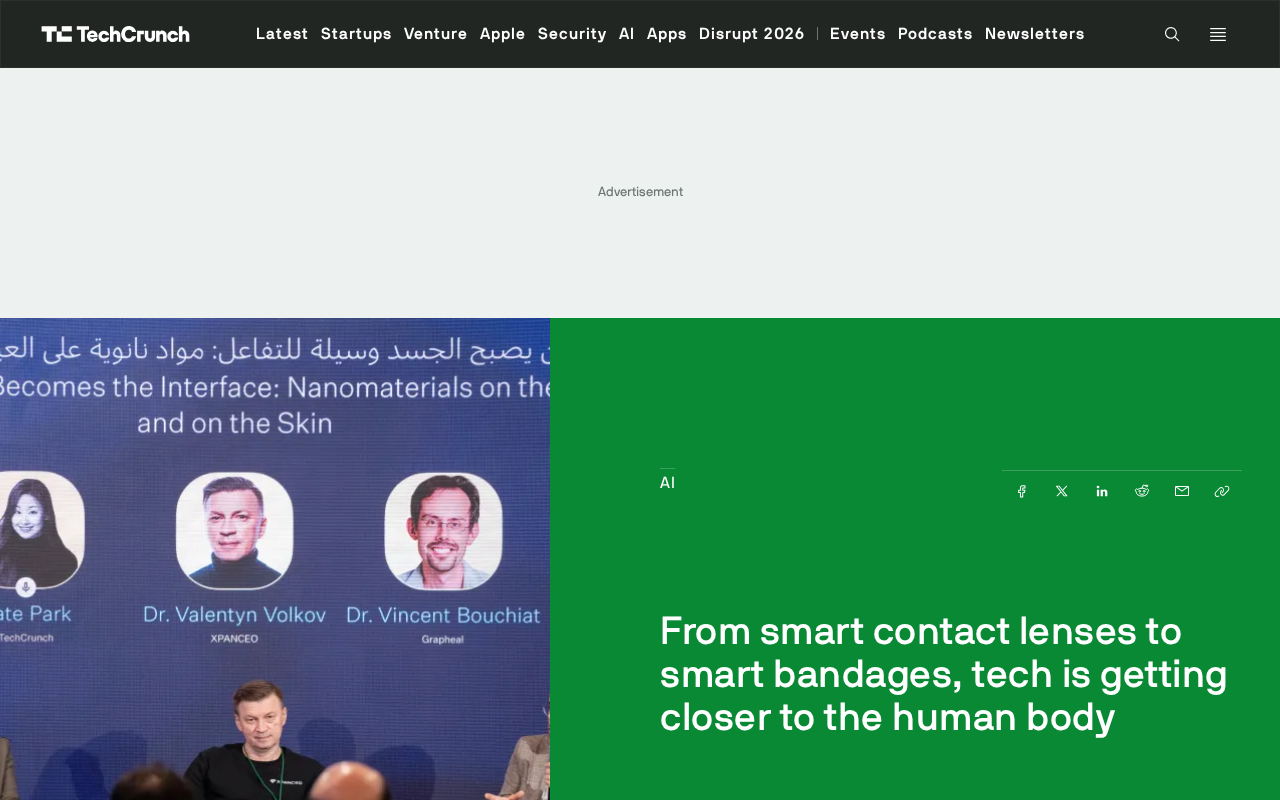
From Smart Contact Lenses to Smart Bandages: Tech Is Moving Onto the Body
Two startups are exploring smart contact lenses and smart bandages, bringing electronics directly onto the eye and skin. This article analyzes the trend of wearables moving from the wrist onto the body, along with core barriers like biocompatibility and form factor.