AI Deepfakes Bite Back: The Honest Are Hit Hardest

Dubai Police study warns: deepfakes will reverse the burden of proof, forcing honest people to prove their innocence.
Using the Dubai Police study as a starting point, the article argues that the real threat of deepfakes is not forgery itself but the reversal of the burden of proof when "it might be AI" becomes a universal doubt. Those holding genuine recordings must prove their material isn't AI-generated, with asymmetric costs: fakers need only a single question, while honest people face an impossible self-verification task. The problem spreads from personal disputes to public trust—realistic fake alerts may make people distrust even genuine bank fraud warnings. The article notes victims are unevenly distributed, with ordinary people lacking technical resources bearing the greatest cost, and that rebuilding trust infrastructure is needed beyond AI detection tools.
Introduction: When Evidence Itself Becomes the Dispute
You record a video of someone doing something suspicious, and they respond, "That's AI-generated." What happens next? This isn't science fiction—it's a warning from a Dubai Police study: realistic deepfake technology may lead people to start doubting genuine photos, audio recordings, and videos.

The core issue isn't whether AI can create fakes—of course it can—but rather where the scales of proof will tip when "it might be AI" becomes a universal shield.
Deepfake is a term combining "deep learning" and "fake," referring to the use of AI technologies such as generative adversarial networks (GANs) or diffusion models to synthesize highly realistic images, audio, or video. Its technical core involves pitting two neural networks against each other: one generates fake content, the other detects authenticity, and through repeated adversarial cycles the generator gradually produces results that are indistinguishable to the human eye. Early deepfakes were mostly used for entertainment face-swapping, but in recent years, as computing costs have fallen and open-source tools have proliferated, creating a convincing fake audio or video no longer requires a professional technical team. This explains why the Dubai Police study treats deepfakes as a systemic threat to the evidence system: lower barriers mean that "faking" is no longer the capability of a few, while "questioning" becomes a weapon anyone can wield.
The Reversal of Burden of Proof: Who Is Proving the Truth?
Traditionally, the party making a claim must provide evidence. But in the deepfake era, the situation may reverse: those holding genuine evidence instead need to prove their material is not AI-generated.

Imagine a scenario: you have an audio recording capturing someone's promise or threat. The other party casually says, "AI-synthesized," and the focus of the argument immediately shifts from "what happened" to "is the evidence credible?" Before anyone discusses the event itself, you're already mired in proving your innocence.
The cost of this reversal is asymmetric. A faker only needs a single question, while an honest person faces an almost impossible task: how do you prove that a genuine record "isn't fake"? When "it might be AI" is enough to dismiss evidence, how much proof is enough?
Burden of Proof is a foundational concept in law and debate, typically comprising two layers: the party making a claim bears the "burden of producing evidence," while the denying party only needs to rebut under specific conditions. In traditional evidence law, the presumption of authenticity favors original records—an unedited recording is generally presumed credible unless the other party can prove tampering. Deepfake technology undermines precisely this presumption: when faking is technically feasible and visually undetectable, "unedited" no longer equals "authentic." Thus, the burden of proof originally borne by the challenger may be shifted to the evidence holder. This shift is not an explicit legal provision but rather a practical outcome of博弈—when judges, employers, or the public cannot judge authenticity themselves, the least effortful approach is to require the holder to prove it.
The Chain Collapse of Trust: From Personal Evidence to Public Alerts
The problem extends beyond personal disputes. The Dubai Police study also points to a broader concern: people may begin to distrust genuine safety alerts because fake alerts have become realistic enough.
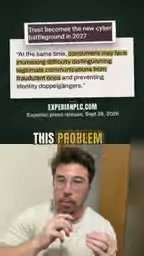
Imagine: your bank sends a fraud warning, and you wonder—could this warning itself be a scam? When every piece of information could be fake, the cost of verification becomes so high that people simply give up judging.
This isn't to say every recording or bank message is already invalid. The study provides a trend warning, not a fait accompli. But the direction is clear: deepfakes not only create false information but also contaminate the credibility of true information.

Why Honest People Bear the Greatest Cost
The victims of deepfakes are not evenly distributed. Those skilled at manipulating narratives can use "it's AI" as a low-cost rebuttal tool, while those who rely on genuine records to defend their rights—ordinary people facing harassment, whistleblowers needing evidence, innocent people trying to clear their names—are forced to bear increasingly high proof costs.
This creates a perverse incentive: the more advanced the technology, the easier it is for honest people's evidence to be questioned, and the more effective malicious denial becomes. The Dubai Police study reminds us that the cost of this trust erosion will ultimately be borne by society as a whole, but the first to suffer are those ordinary people who lack the resources for technical verification.
The Way Forward: From "Detecting AI" to "Rebuilding Trust Infrastructure"
Relying solely on deepfake detection tools is insufficient—the arms race between detection and forgery is endless. A more fundamental approach is to rebuild credible infrastructure for evidence: content provenance authentication, encrypted signatures on recording devices, third-party preservation services, etc., making "authenticity" itself verifiable, rather than leaving every ordinary person alone to face the dilemma of "proving your evidence isn't AI" in a dispute.
Before technical solutions mature, at least one fact must be acknowledged: when "it might be AI" becomes the default suspicion, the allocation of the burden of proof needs to be redesigned, otherwise the most honest people will pay the highest price.
Content Provenance is one of the main technical paths for rebuilding evidence credibility today. Its representative is the open standard promoted by C2PA (Coalition for Content Provenance and Authenticity), which embeds cryptographically signed metadata in recording devices or editing software to record the complete chain from creation to publication. Recipients can verify signatures to determine whether a file has been tampered with and what device generated it. Similar approaches include trusted timestamps (third-party institutions stamping a file's hash value to prove that content existed at a specific time) and blockchain preservation. What these solutions share is shifting "authenticity" from reliance on human visual judgment to reliance on a verifiable technical chain. But their limitations are also obvious: signatures can only prove a file hasn't been modified, not that the recorded content itself wasn't staged; and the ecosystem is not yet widespread, making it difficult for ordinary users to invoke in everyday disputes.
Frequently Asked Questions
Will deepfakes invalidate all video evidence?
No. The study provides a trend warning, not a declaration that the existing evidence system has collapsed. But the way evidence credibility is assessed needs adjustment; relying solely on visual judgment is no longer sufficient.
How can ordinary people protect their genuine records?
Currently feasible practices include retaining original files and metadata, using trusted timestamps or third-party preservation services, and keeping multi-angle, multi-source records in important situations.
Why is it said that honest people are hurt the most?
Because fakers can deny everything at low cost, while honest people bear high verification costs. The reversal of the burden of proof is most disadvantageous to ordinary people without technical resources.
One-line Summary
Dubai Police study warns: deepfakes will reverse the burden of proof, forcing honest people to prove their innocence.
Paragraph Summary
Using the Dubai Police study as a starting point, the article points out that the real threat of deepfake technology is not forgery itself, but the reversal of the burden of proof triggered when "it might be AI" becomes a universal doubt. Traditionally the claimant provides evidence, but in the deepfake era, those holding genuine recordings or videos instead need to prove their material is not AI-generated. This reversal has asymmetric costs: a faker needs only a single question, while an honest person faces an almost impossible task of self-verification. The problem also spreads from personal disputes to public trust—realistic fake safety alerts may make people distrust even genuine bank fraud warnings. The article notes that victims are unevenly distributed, with ordinary people lacking technical resources bearing the greatest cost, and that relying solely on AI detection tools cannot cure the problem; it requires rebuilding trust infrastructure such as content provenance authentication, device encryption signatures, and third-party preservation.
Related articles

Amphibious Transforming Drone: Beyond 100x Power Savings, What Are the Real Needs?
Is the amphibious transforming drone just a gimmick? Starting from the 100x power difference of the M4 Morphobot, explore real application scenarios and thesis topic ideas, analyzing boundary conditions where pure drones and pure ground robots both fail.

Warhound Raises $200 Million: Genetically Engineered "War Dogs" Paired with Anduril Gear
Warhound raises $200M, backed by Ben Lamm and Palmer Luckey, to genetically engineer dogs for military and law enforcement use and equip them with Anduril gear. This article analyzes its technology direction, funding logic, and ethical controversy.

Claude API Comes to Google Cloud: IAM Integration and SDK Access Guide
Anthropic hosts the full Claude API on Google Cloud with IAM-controlled permissions and unified billing. This guide covers the Vertex AI and Anthropic-hosted entry points, IAM role configuration, and SDK access.