AI Disrupts Mathematics: Riemann Hypothesis Proof Receives Independent Certification

AI proof gets machine certification, agents autonomously find zero-days, AI supply chain becomes the new frontline
This issue covers four main threads: the AI proof of the Riemann Hypothesis receives independent certification from the Lean and Mathlib community, with 175,187 modules compiling with zero errors—marking the shift from "AI claim" to "machine-verifiable fact," though human understanding and the Clay prize process remain incomplete; Amazon discloses that a China-linked actor used the open-source framework Cairn to have an AI agent autonomously discover a zero-day in the medical imaging app MonetX within 48 hours, going from interface mapping to writing arbitrary files and gaining root in about 11 minutes (CVE-2026-133968); CrowdStrike is in talks to acquire Zscaler, together worth about $265 billion, reflecting a cybersecurity consolidation wave; Prime Intellect's hosted model was silently swapped for 53 hours with no capability test detecting it, and a Together AI coding agent leaked credentials, exposing customer prompt samples. The common conclusion: the security and capabilities of the AI supply chain are accelerating in tandem.
From "Claim" to "Certification": A Milestone for AI Mathematical Proofs
Just yesterday, we could only cautiously describe the achievement of Anthropic mathematician Levent Alpogue and Claude as a "claimed solution to the Riemann Hypothesis." Overnight, everything changed. The Lean and Mathlib community—the experts who build the proof-checking software itself—issued a joint statement expressing complete confidence in the correctness of the proof and formally certifying that both the statement and the proof are correct.
According to the statement, MIT professor Andrew Sutherland led the verification work: all 175,187 modules in the archive compiled with zero errors; the five core theorems depend on only three standard axioms, with no extra assumptions smuggled in; independently written checkers from different teams all accepted the full export; and an independent reconstruction in an air-gapped sealed sandbox reproduced the export byte-for-byte. Sutherland himself said the probability of a problem is "approximately zero."
The significance of this certification is that it turns "AI claims" into "machine-verifiable facts." The mathematics community has long been skeptical of AI's mathematical abilities, but now even Scientific American summarizes the shift in attitude with "mathematicians once said it was wrong; now they are convinced the proof is true."
Machine Certification ≠ Human Understanding
Two key facts still warrant a calm perspective. First, the Clay Mathematics Institute's million-dollar prize has not yet been awarded—that requires a formal process, which has not happened. Second, no one has actually read and understood the argument yet. Mathematician Terence Tao noted that digesting it will take time, and the final comparator run is still underway.
This reveals a new paradigm: machine proofs can be certified, but human understanding is still catching up. If it withstands scrutiny over the coming months, this will be AI's most significant contribution to mathematics to date. We will continue to follow it.
Lean and Mathlib are the key background for understanding this certification. Lean is an interactive theorem prover and also a programming language: mathematicians use it to write definitions, theorems, and proofs as code, and the computer checks line by line whether the logic is correct. Mathlib is a community mathematics library built on Lean, gathering hundreds of thousands of definitions and theorems—essentially a machine-verifiable foundation for mathematics. "Certification" here does not mean human judges read through the proof; it means the proof compiles completely in Lean—any logical leap or unproven assumption will cause compilation to fail. The "standard axioms" mentioned in the article refer to the few foundational axioms Lean relies on (such as the axiom of choice and the law of excluded middle), while "independent checkers" and "sealed sandbox reconstruction" are cross-validation measures to prevent the compiler itself from being tampered with.
AI Agent Autonomously Discovers Zero-Day Vulnerability: University Server Breached in 11 Minutes
Amazon's threat intelligence team released a disturbing report: a China-linked actor's AI agent autonomously discovered a zero-day vulnerability. The tool, called Cairn, is an open-source framework for autonomous AI penetration testing. In September, Amazon found a copy exposed on the internet without a password, with prompts in Simplified Chinese and timestamps in China Standard Time.
The operation lasted about 48 hours, starting September 8, targeting universities in East Asia. The operator gave the agent only a target list and one instruction: "Gain shell access."
What is notable is not how powerful the agents were, but that they failed many times. Against one university's Redis database, they worked continuously for 16 hours and executed 148 operations, achieving nothing; against a graphics server, they collected about 80 real usernames and tried over 30,000 credential combinations in 6 hours, also failing.
Then they found a medical imaging application called MonetX—used by hospitals and university labs to annotate MRI and CT scans. The agent mapped its programming interface and found a path traversal vulnerability in file upload, a filename not restricted by the application. From mapping the interface to writing arbitrary files on the server took about 11 minutes. In a subsequent session, they planted a reverse shell in a file loaded every time Python starts, gaining a root shell. The vulnerability was cataloged as CVE-2026-133968, rated 9.8/10.
Amazon said it has high confidence this is a genuine zero-day, and moderate confidence the operator is China-linked based on language, time zone, and targets, but did not name any organization. The fix was merged in October, but the patched version has reportedly not yet been released.
The real lesson from this case: agents chain techniques, fall back after failure, and replan. The same loop, after hours of failure, also found flaws humans had not noticed.
Zero-day vulnerability refers to a security flaw not yet known to the vendor or for which no patch has been released, named because the vendor has "zero days" to fix it. Several terms in the article are worth explaining: path traversal is a vulnerability that tricks an application into reading or writing files outside the intended directory by crafting filenames containing ../; reverse shell refers to a technique where the victim server actively connects to the attacker's host, giving the attacker interactive command control; root shell is a command line with the system's highest privileges. CVE numbers and CVSS scores are the public identity and severity scale of vulnerabilities, with 9.8/10 being "critical." In addition, Redis is a common in-memory database that often becomes an entry point for intrusion if exposed to the public internet without a password; the agent's repeated failures against it illustrate that autonomous penetration is not a one-shot success but convergence after extensive trial and error.
The Largest M&A Rumor in Cybersecurity History: CrowdStrike in Talks to Acquire Zscaler
Bloomberg reported Friday evening that CrowdStrike is in talks to acquire Zscaler, and Reuters subsequently confirmed with independent sources. The two companies together are worth about $265 billion, with Zscaler's market cap at about $32 billion as of Friday's close. Neither company confirmed nor disclosed a price.

The market reaction was immediate: Zscaler rose about 18% after hours to around $230, while CrowdStrike fell about 8% to around $209.50. This is part of a consolidation wave—about nine months ago, Palo Alto Networks acquired CyberArk for $21.1 billion; about eight months ago, Google acquired Wiz for $32 billion. The logic is simple: CrowdStrike protects devices, Zscaler protects the network, and one company can cover both ends. But a deal of this scale will face tough questions from customers, regulators, and shareholders. Talks are not a deal, but the market has already voted on which side it prefers.
A New Form of Supply Chain Attack: Models Swapped, Prompts Leaked
The 53-Hour "Silent Swap"
Prime Intellect disclosed that attackers replaced the model behind its hosted endpoint. The original model was DeepSeekAd V4.1 Flash, serving customers through OpenRouter. The replacement lasted from 1:24 AM on November 8 to 6:35 AM on November 10—53 hours and 11 minutes in total. The replacement version was modified using public weights, stripping out the safety refusal mechanism while retaining the same chat template, settings, and tokenizer, so capability tests showed no change.
Safety tests told the real story: on HarmBench, refusals dropped from 198 out of 240 to 0; on JailbreakBench, from 98 out of 100 to 1; on StrongReject, from 304 out of 313 to 2. Prime Intellect said it found no evidence that customer prompts were logged or leaked, keys and credentials were unaffected, and all affected customers had been contacted.
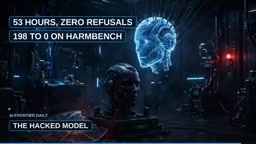
The warning is clear: if you rely on a model to refuse, you are relying on the weights you actually got. During those 53 hours, no one could tell the difference.
HarmBench, JailbreakBench, and StrongReject are three public benchmarks for measuring a model's safety alignment: they send harmful requests to the model and count the proportion of refusals. "Refusals dropping from 198 out of 240 to 0" means the same model, after replacement, would comply with almost anything—safety alignment was completely stripped. The reason attackers could achieve "no change in capability tests" is that they reused the original model's chat template, tokenizer, and inference settings—these determine the format and behavior of model inputs and outputs, while safety refusal behavior is an alignment layer added during training that can be fine-tuned away while retaining public weights. This points to an easily overlooked fact: a model's identity is determined not only by its weights but also by inference configuration, templates, and the host's deployment; if any link is replaced, what the user gets is a different "actor."
AI Coding Agent Leaks Credentials
Together AI disclosed on Saturday that its own AI coding agent had committed credentials to the company's public code repository. The credential could unlock a private store of customer prompt samples, drawn from requests to three models: Minimax M3, GLM 5.2, and Kimi K2.6, mostly concentrated in June and July. A scanner detected the exposure and the commit was rolled back, but during the window the credential was obtained by unauthorized parties who downloaded all the data, then searched prompts for other service credentials and tested their validity. Five of the tested credentials were decoy canaries planted by security firm Dragos; whether real credentials were found is still under review.
This is part of a larger experiment: between July and November, Dragos planted canary tokens in about 2 million prompts to see where they surfaced, and three providers were compromised. OpenRouter responded on Sunday, removing the three providers and cutting 125 endpoints from zero data retention, saying OpenRouter itself was not breached. At one provider called Fala, attackers controlled an inference server and could observe requests in real time during processing. Together AI's fixes have been made public: short-lived credentials, credential checks on every code change, and zero data retention by default for new accounts.
Today's stories share an unavoidable common thread: the AI supply chain is the new frontline, and the weakest link is always the person or thing holding the keys.
Canary tokens are deliberately planted decoy credentials: they have no actual permissions themselves, but once used they trigger an alert, exposing the data leak path. Dragos's experiment is an extension of the "honeypot" idea—embedding trackable fake keys in massive volumes of prompts and observing where they ultimately appear and who uses them, thereby mapping the flow of prompts among model providers. This contrasts with traditional zero data retention promises: providers claim not to store user data, but data may still be accessible to third parties during inference, logging, caching, and other stages. OpenRouter cutting 125 endpoints in the article reflects the same problem—the more providers an intermediary aggregation layer connects, the blurrier the trust boundary, and often the only way to trace a leak is through these deliberately planted "canaries."
Quick News Roundup
- SoftBank: Masayoshi Son explored a $1 trillion acquisition of memory chip maker SK Hynix; SoftBank says the idea is no longer being actively considered, SK Hynix says it was unaware, and any foreign acquisition would require South Korean government approval. KKR's Helix is in talks to acquire a majority stake in data center operator EdgeCore at a valuation of $8-10 billion.
- Microsoft AI chief Mustafa Suleyman said he is "very, very nervous": models are now fully involved in improving subsequent models, which he calls a "dangerous capability," and says the past three months have been a complete turning point—but Microsoft is not hitting the brakes.
- Los Alamos and OpenAI mark one year of collaboration: AI service usage on the Venado supercomputer grew 20x to over 3 billion tokens per week, with weekly requests jumping from about 1,200 to over 41,000.
- The SEC charged Backward Hat Capital over an alleged $560 million Ponzi scheme that promised at least 6% monthly returns under the guise of an AI-driven trading algorithm. These are allegations only; no one has been found liable.
- Alibaba Qwen4Max launched on TogetherAI: 2.4 trillion parameters, 71 billion activated per token, 1 million token context window.

This week, models are getting stronger, and so are the people and agents trying to break them. Mathematical proofs get certified, AI agents autonomously discover zero-days, a $265 billion merger is brewing, and prompts appear where they shouldn't—the security and capabilities of the AI supply chain are accelerating in tandem.
Related articles
The Bottleneck of AI Programming Isn't Generation: Why Software Factories Collapse
After AI coding tools went mainstream, PR review quality dropped and incidents rose. The speaker argues the bottleneck isn't code generation but models' inability to sustain maintainability.
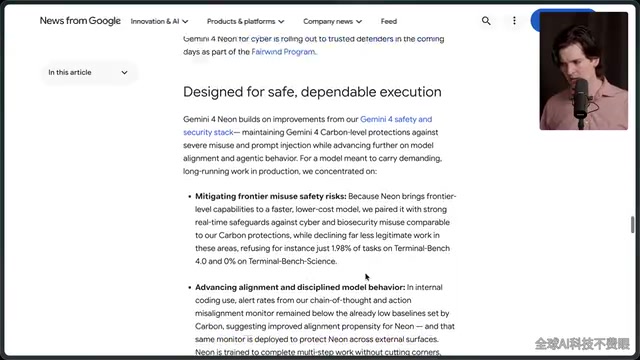
Gemini 4 Neon Hands-On: 10 Hours to Achieve What Opus Couldn't in Days, 20x Faster Warm Start
Google's surprise Gemini 4 Neon release made critic Theo change his tune: 10 hours to finish what Astra couldn't in ten days, 20x faster warm start, coherence beating Opus.
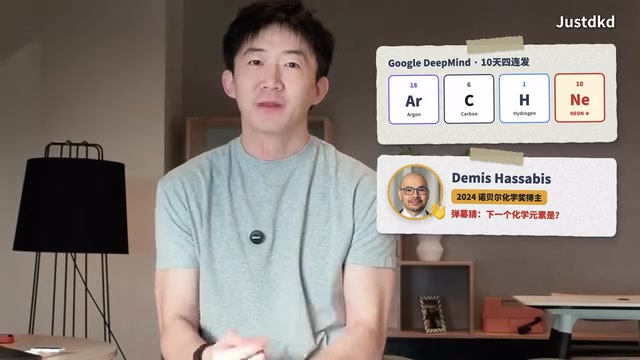
Gemini 4 Neon Hands-On: Which $20 AI Subscription Should You Choose?
Bilibili creator tests Gemini 4 Neon: composite intelligence index 61, beating Claude Opus 5.5, with API 25% cheaper. With a $20 budget, how to choose between Google AI Pro, Claude Pro, and ChatGPT Plus? Includes three must-know pitfalls and recommendations by user type.