AI Executives Are Too Out of Touch—How Can Products Serve the Public Good?

AI executives flaunt using AI for family relationships, exposing a disconnect from ordinary people's needs and product design drifting from real users.
The article criticizes AI tech leaders for eagerly showcasing how they use AI to "connect" with family—such as messaging spouses via chatbots or telling children stories with generative AI—which unexpectedly triggers public backlash because it exposes the emotional understanding gap between decision-makers and ordinary people. It points out that the tech industry has long suffered from an echo chamber effect, with executives' social circles far removed from ordinary users, leading to product designs that overemphasize technical showmanship, neglect usability and privacy/security, and ignore diverse needs of low-income groups, the elderly, and people with disabilities, potentially exacerbating the digital divide. To bridge the gap, the article suggests product teams conduct grassroots user research, establish diverse user advisory boards, improve transparent feedback mechanisms, and try reverse mentoring so executives truly understand real usage scenarios.
Tech leaders are eager to show off how they use AI to "connect" with their families, but this display only exposes how out of touch they are with ordinary people. When AI executives treat using AI to write greeting cards for family members or generate birthday wishes as innovative talking points, a sharp question emerges: do the people deciding the direction of AI products really understand the needs of ordinary people?
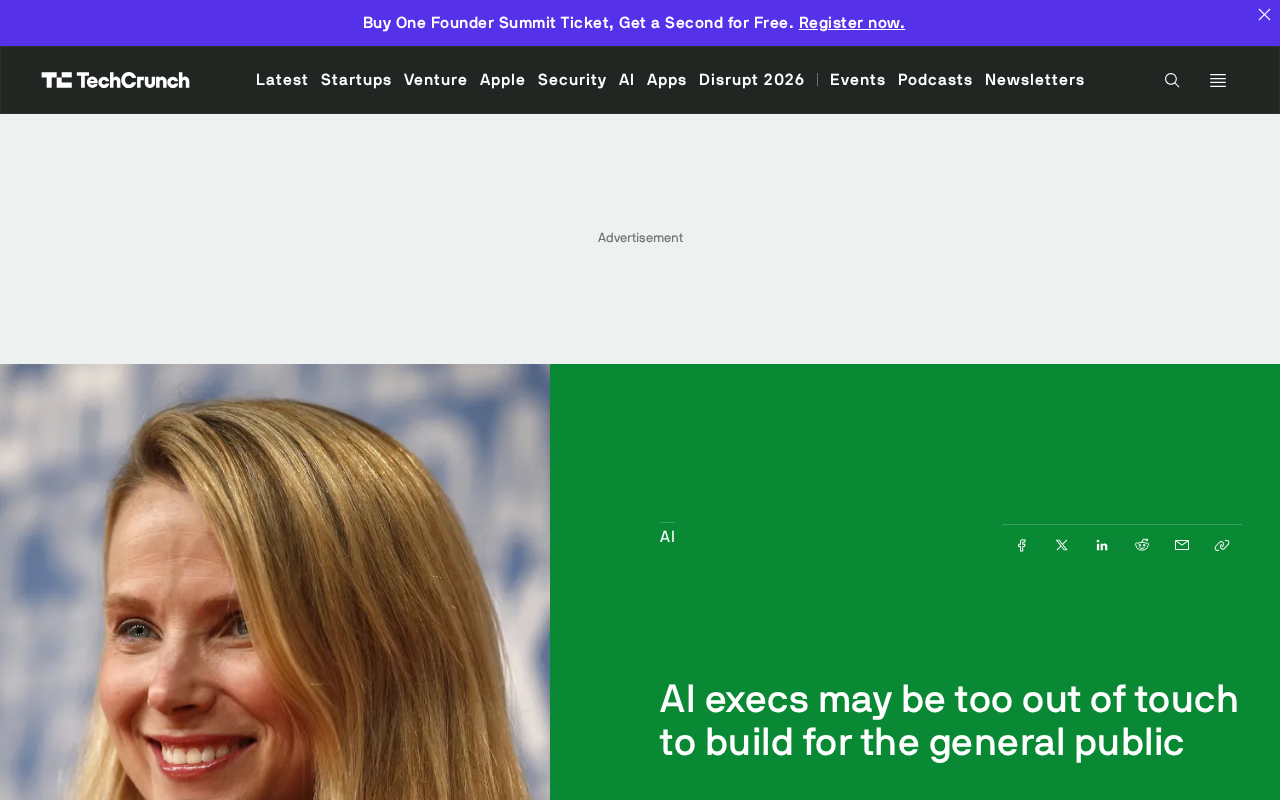
When "Connecting Families with AI" Becomes an Executive's Bragging Point
According to tech media analysis, some AI company executives have publicly shared how they use AI tools to handle family relationships—for example, using chatbots to message their spouses or using generative AI to tell stories to their children. These shares were intended to demonstrate AI's usefulness, but unexpectedly triggered public backlash. Critics point out that outsourcing interpersonal emotional communication to algorithms precisely shows that these decision-makers lack understanding of real human emotions.
This disconnect is not an isolated case. The tech industry has long suffered from an "echo chamber" effect, with executives' social circles and work styles far removed from ordinary users. What they see as "efficiency tools" may seem to ordinary people like unnecessary interference, or even an affront to privacy and emotions.
The tech industry's "Echo Chamber Effect" refers to decision-makers being长期 immersed in homogeneous information and interpersonal environments, where their views are repeatedly reinforced and difficult to challenge with heterogeneous voices. Inside AI companies, executives generally have highly educated, high-income, tech-savvy backgrounds, and their daily tool choices, social styles, and family structures are highly homogeneous. When these people repeatedly discuss experiences like "writing greeting cards with AI" internally and publicly, a self-confirming loop forms: the more they share, the more they believe this is a universal need; the fewer external counterexamples they encounter, the harder it is to detect bias. The echo chamber is not a matter of individual ability but the combined result of organizational structure and social circles, and it systematically reduces the visibility of marginalized users' needs.
The Cost of Disconnect: Product Design Drifting from Real Needs
When a huge gap exists between product decision-makers and the user base, product design is prone to directional bias. On one hand, excessive pursuit of technical showmanship at the expense of usability leads to excessively high product barriers; on the other hand, there is sluggish response to issues ordinary people care about, such as privacy and security. A more insidious risk is that executives treat their own lifestyles as the "standard," thereby ignoring the needs of diverse users such as low-income groups, the elderly, and people with disabilities.
Industry observers believe this disconnect not only affects product experience but may also exacerbate the digital divide. If AI tools are designed only to serve tech-savvy elites, the benefits of technology will be difficult to extend to broader populations.
The Digital Divide generally refers to gaps between different social groups in accessing, using, and benefiting from digital technologies. In the AI era, this concept has expanded from "whether there is internet and devices" to "whether one can effectively use and benefit from intelligent tools." The divide exists not only at the access level but also at the skill level (whether one can understand the capability boundaries of AI tools) and the outcome level (whether one can turn AI into practical benefits). When products assume users have high technical literacy, English prompt-writing ability, and patience for trial and error, the elderly, less-educated groups, and users with disabilities are often excluded. Bridging the divide is not just about lowering prices but also about proactive adaptation in interaction design, language localization, and accessibility.
How to Bridge the Gap?
To change this situation, AI companies need to proactively break out of their information cocoons. Some experts suggest that product teams should conduct user research at the grassroots level rather than relying on executives' personal experiences. At the same time, establishing diverse user advisory boards to let voices from different backgrounds participate in product decisions is important. In addition, transparent user feedback mechanisms are also crucial.
As a detail, some companies have begun trying a "reverse mentoring" system, where younger employees or external users mentor executives to understand real usage scenarios. Whether this approach works depends on whether the company is truly willing to delegate power and listen.
"Reverse Mentoring" is an organizational practice in which less senior or differently backgrounded members teach knowledge and perspectives to senior managers. It was first used in corporate management to help executives understand digital trends and youth user culture, and is now being introduced into AI product decision-making to give executives direct exposure to real usage contexts. Its effectiveness depends on three things: whether mentors have sufficient voice, whether feedback can enter the product roadmap, and whether executives are willing to acknowledge their own cognitive blind spots. If it becomes a formality, reverse mentoring may degenerate into another PR display; if tied to performance evaluation and decision-making mechanisms, it has a chance to truly change product direction.
Conclusion
For AI technology to become truly inclusive, builders first need to humble themselves. Only when executives stop treating "connecting families with AI" as a talking point and seriously consider ordinary people's emotions and needs can products truly serve the public.
Related articles

LLM Application Development: A High-Paying Career Guide for Ordinary People
LLM application development offers fresh graduates up to 35K/month, with SP offers reaching 600K. This article explains the core skills, how to break in, and how ordinary people can seize AI opportunities through learning by doing.

Say Goodbye to AI Influencer Faces: A Complete Guide to Creating Visual Assets for AI Comic Dramas from Scratch
Bilibili creator shares a full workflow for zero-basics AI comic drama visual assets: use Doubao Work skills with script-first, visual references, and real-person texture to escape AI influencer faces, then lock character and scene consistency with asset sheet layouts, weapon detail images, scene nine-grids, and cinematic color palettes.

The AI Production Pipeline Behind Great Videos: From Research to Agent Validation
AI video production isn't just a model race. This article breaks down a transferable four-step pipeline: researching professional workflows, organizing a skill checklist, configuring agents, and experimental validation—and explains how general-purpose LLMs like DeepSeek can replace paid tools to run the entire process.