AI Fatigue: Why Do Learners Feel More Lost as AI Gets Stronger?
Analyzing AI fatigue: when machines master math and coding, how learners can shift from competing to leveraging AI.
A graduate student's Reddit post captures widespread AI anxiety as systems approach proving the Riemann hypothesis and dominate competitive programming. This article examines why AI progress creates "capability squeeze," distinguishing between impressive demos and real-world deployment challenges. It reframes the issue from competition to leverage, emphasizing that deep understanding, continuous learning, and intrinsic motivation remain irreplaceable in an AI-augmented world.
A Graduate Student's Confused Confession
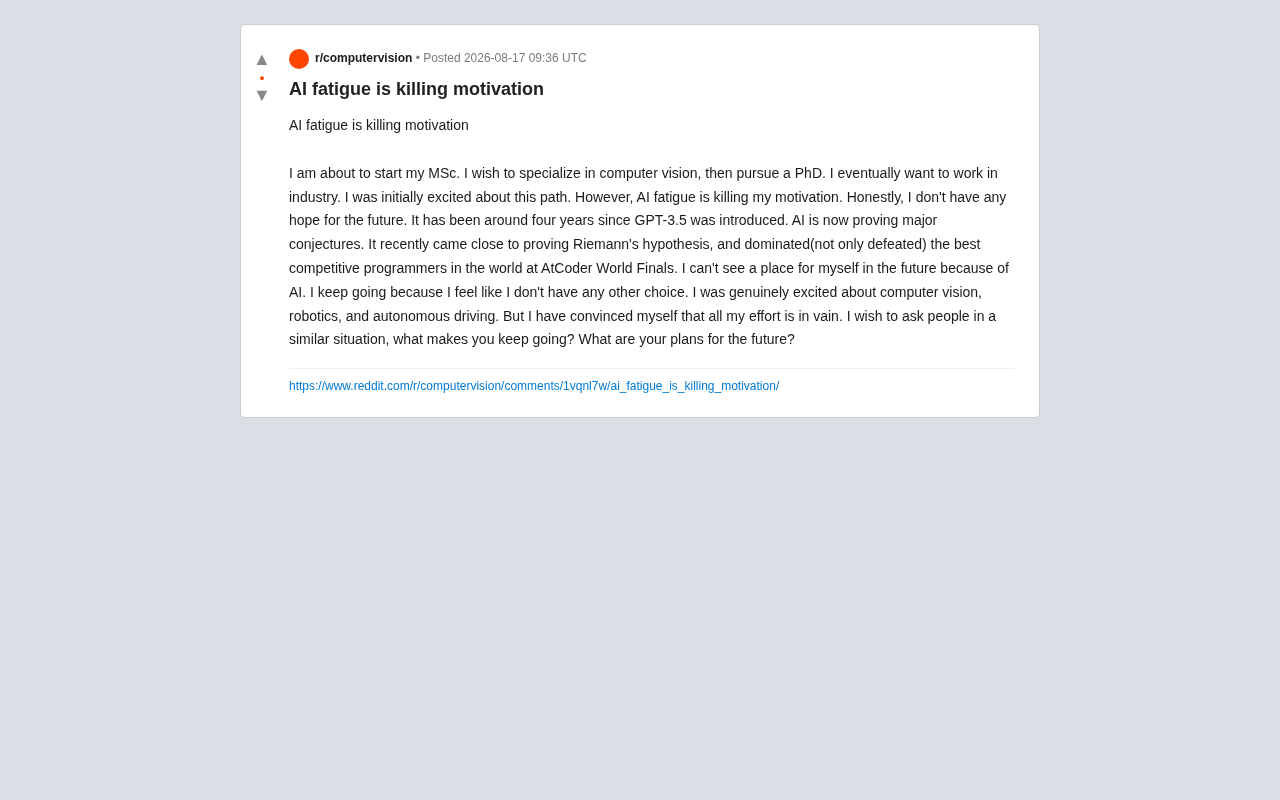
On Reddit, a student about to start a master's program shared this reflection: he had originally planned to specialize in computer vision, pursue a PhD, and eventually enter industry. This was once a career blueprint that excited him. However, a feeling called "AI fatigue" is now eroding his motivation.
"Honestly, I have no hope for the future," he wrote. "It's been about four years since GPT-3.5 was released. AI can now prove major mathematical conjectures, recently came close to proving the Riemann hypothesis, and crushed—not just beat—the world's best competitive programmers at the AtCoder World Finals. Because of AI, I don't see a place for myself in the future."
GPT-3.5 is the large language model OpenAI released in November 2022, the core technology initially powering ChatGPT. This model marked an important turning point in AI capabilities—for the first time, ordinary users could experience near-human-level text understanding and generation through natural conversation. Built on the Transformer architecture, GPT-3.5 learned broad knowledge and language patterns through pre-training on massive internet text. With 175 billion parameters, it can handle diverse tasks including code writing, text creation, and logical reasoning. This release reshaped public perception of AI capability boundaries and kicked off an exploration boom of generative AI applications across industries, making it a significant milestone for current AI anxiety.
This confession resonates widely because it articulates the shared anxiety of many technical learners, researchers, and even practitioners today: when AI capabilities expand at an exponential rate, will years of individual effort become worthless overnight?
The "Capability Squeeze" Brought by AI Progress
The two examples the poster mentioned are precisely the most impactful recent advances in AI.
Mathematics and Programming: Humanity's Last Intellectual Bastions Are Being Conquered
In mathematics, AI systems' progress in assisting with complex conjecture proofs means that abstract reasoning—once considered the highest bastion of human wisdom—is beginning to show the presence of machines. The Riemann hypothesis is one of the most famous unsolved problems in mathematics, proposed by German mathematician Riemann in 1859, concerning deep patterns in prime number distribution. It is one of the seven Millennium Prize Problems with a million-dollar bounty from the Clay Mathematics Institute, and any proof or disproof would have profound implications for number theory and cryptography. In recent years, AI systems have begun attempting to assist with mathematical proofs—for example, DeepMind's AlphaGeometry achieved International Mathematical Olympiad gold medal level in geometry theorem proving, while AI research targeting the Riemann hypothesis involves symbolic reasoning, pattern recognition, and large-scale computational verification. Although AI has not yet truly proven the Riemann hypothesis, it shows potential in helping mathematicians explore proof paths and verify partial results. This progress means that abstract mathematics, traditionally seen as a purely human intellectual domain, is also beginning to feel AI's impact.
In competitive programming, AI's demonstrated strength in top-tier competitions like AtCoder directly touches the professional confidence of the programmer community. AtCoder is one of Japan's largest online competitive programming platforms, alongside Codeforces and LeetCode, renowned for high-quality algorithm competitions. Competitive programming requires contestants to solve complex algorithmic problems within time limits, involving core computer science knowledge like dynamic programming, graph theory, and data structures—considered a litmus test for programmers' algorithmic abilities and problem-solving skills. In 2024, DeepMind's AlphaCode 2 demonstrated stunning capability in programming competitions, surpassing 85% of human contestants on the Codeforces platform. These AI systems learn programming patterns through massive code training and optimize problem-solving strategies with reinforcement learning, even handling problems requiring creative thinking. AI's breakthrough in competitive programming triggers anxiety because algorithmic ability has long been considered the embodiment of programmers' core competitiveness—the shaking of this bastion makes many tech professionals feel their career security is threatened.
What makes these advances unsettling is not merely that "AI is strong," but that they're conquering tasks believed to require "advanced human intelligence." When the core skills someone has spent years training are precisely where AI is progressing fastest, that feeling of "capability being squeezed" becomes especially intense.
The Essence of Anxiety: Uncertainty from Failed Planning
You may not have noticed, but the poster's pain doesn't stem from AI already replacing him, but from uncertainty about the future. "I continue forward only because I feel I have no other choice." This passive persistence is more draining than clear failure. The faster technology changes, the harder it is for individuals to judge what to invest in and what to abandon—this "planning failure" is the core driver of AI fatigue.
How to Rationally View AI Anxiety
Facing such emotions, simple reassurances like "AI won't replace you" often ring hollow. More valuable is reconsidering several key premises.
A Huge Chasm Exists Between AI's "Impressive Performance" and "Stable Usability"
AI "approaching proof" on mathematical conjectures and "crushing competitors" in programming contests are achievements in highly structured, clearly defined closed tasks. Real-world computer vision, robotics, and autonomous driving are filled with openness, ambiguity, and long-tail problems.
Computer vision is an important branch of AI dedicated to enabling machines to understand and process visual information. Despite breakthrough progress in tasks like image classification and object detection through deep learning, practical applications still face enormous challenges. For instance, in autonomous driving scenarios, systems must handle long-tail problems like drastic lighting changes, occlusions, and rare object recognition—situations that appear extremely infrequently in training data but are critical for safety. Medical image analysis demands extremely high accuracy and interpretability, with near-zero error tolerance. Industrial quality inspection requires identifying minute defects with high robustness demands. These real-world applications differ significantly from laboratory results on standard datasets like ImageNet, involving multidimensional engineering challenges including data collection, annotation costs, model generalization, and system integration. This "last mile" difficulty is precisely where human expertise and engineering experience remain indispensable.
Having AI score high on competition problems versus having an autonomous driving system safely navigate a complex intersection on a rainy night are entirely different orders of magnitude. The field the poster loves is precisely where that "last mile" is extremely difficult to conquer.
Tool Progress Doesn't Equal Job Elimination
Every major technological transformation in history has been accompanied by similar anxiety. During the 19th-century Industrial Revolution, textile workers feared machines would take their livelihoods and launched the Luddite movement to destroy machinery. When automobiles became widespread in the early 20th century, carriage drivers worried about unemployment, but the auto industry ultimately created millions of new jobs. When personal computers emerged in the 1980s, people feared office automation would cause mass unemployment, yet the information industry became a primary engine of economic growth. Compilers eliminated the need for hand-written assembly code, but the programmer profession not only didn't disappear—it spawned a larger software industry and more complex system demands due to improved development efficiency. These historical cases reveal a pattern: technological progress typically redefines work content rather than simply eliminating positions, and those who can adapt to new tools and master higher-level skills often gain greater opportunities amid transformation.
AI will likely play a similar role—reshaping "what constitutes valuable work" rather than simply emptying entire fields.
The Mental Shift from "Competing with AI" to "Leveraging AI"
Viewing AI as a competitor almost guarantees feelings of powerlessness. But if you see it as unprecedented leverage, the question becomes: "How can I use AI to do things one person couldn't do before?" For researchers, AI can accelerate literature reviews, code implementation, and experimental iteration, multiplying one person's research output. What's truly scarce is no longer execution capability, but the judgment to ask good questions and define valuable directions.
A Practical Thinking Framework for the Similarly Lost
Deep Understanding Remains the Scarcest Capability
The poster worries his efforts are futile, but quite the opposite—in an era when AI can generate vast amounts of "seemingly correct" content, people who can judge right from wrong and understand underlying principles become more precious. Shallow skills are indeed easily replaced, but profound understanding of a field is the very foundation needed to leverage AI. Pursuing graduate studies and diving deep into computer vision is building this difficult-to-replace depth.
Cultivating the Meta-Skill of "Continuous Learning" Matters More Than Mastering Single Skills
Rather than obsessing over "will my skills become obsolete," cultivate the meta-skill of "continuous learning and rapid adaptation." In an era of accelerating technological iteration, any single skill may become outdated, but the ability to learn itself always retains value. This may be the most fundamental antidote to AI fatigue.
Actively Constructing a Sense of Meaning Is the Fuel for Traversing Technology Cycles
AI can prove conjectures and win competitions, but it won't decide for you "what's worth doing." The original passion for robotics and autonomous driving is the true fuel driving someone through technology cycles. When the external world is full of uncertainty, returning to intrinsic interests and curiosity is actually the most stable anchor.
Conclusion: The Real Question Isn't "Will AI Replace Me"
This graduate student's confusion is a microcosm of countless tech people in this era. AI fatigue is real—it stems from deep insecurity about our own value. But like every major technological transformation in history, panic often overestimates short-term impact while underestimating humanity's ability to reposition itself under new paradigms.
The real question may not be "will AI replace me," but "in a world with AI, what kind of person do I want to become?" AI cannot answer that question—only each individual can answer it for themselves.
Related articles
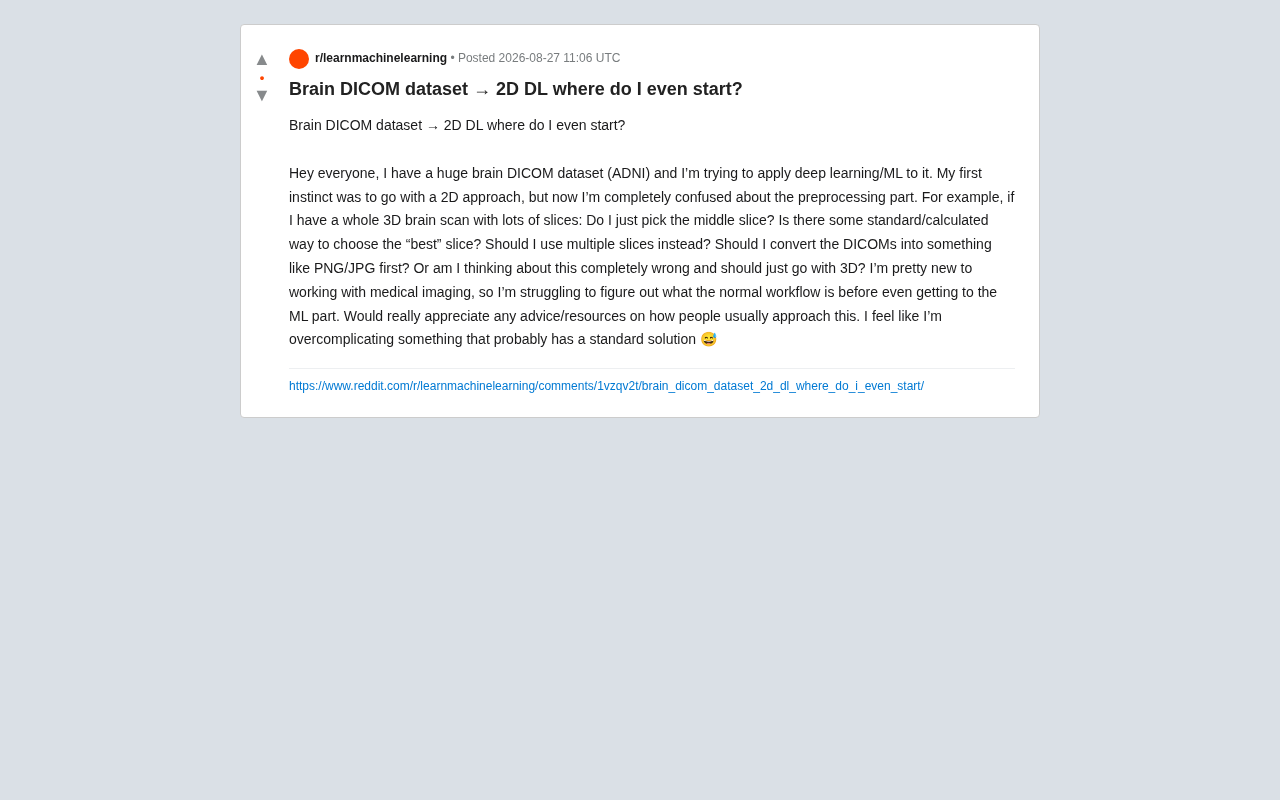
Deep Learning on Brain DICOM Datasets: A Guide to Choosing Between 2D and 3D Approaches
Comprehensive guide to choosing between 2D, 2.5D, and 3D CNN approaches for brain DICOM medical imaging deep learning. Covers ADNI dataset preprocessing workflows including resampling, registration, and skull stripping.
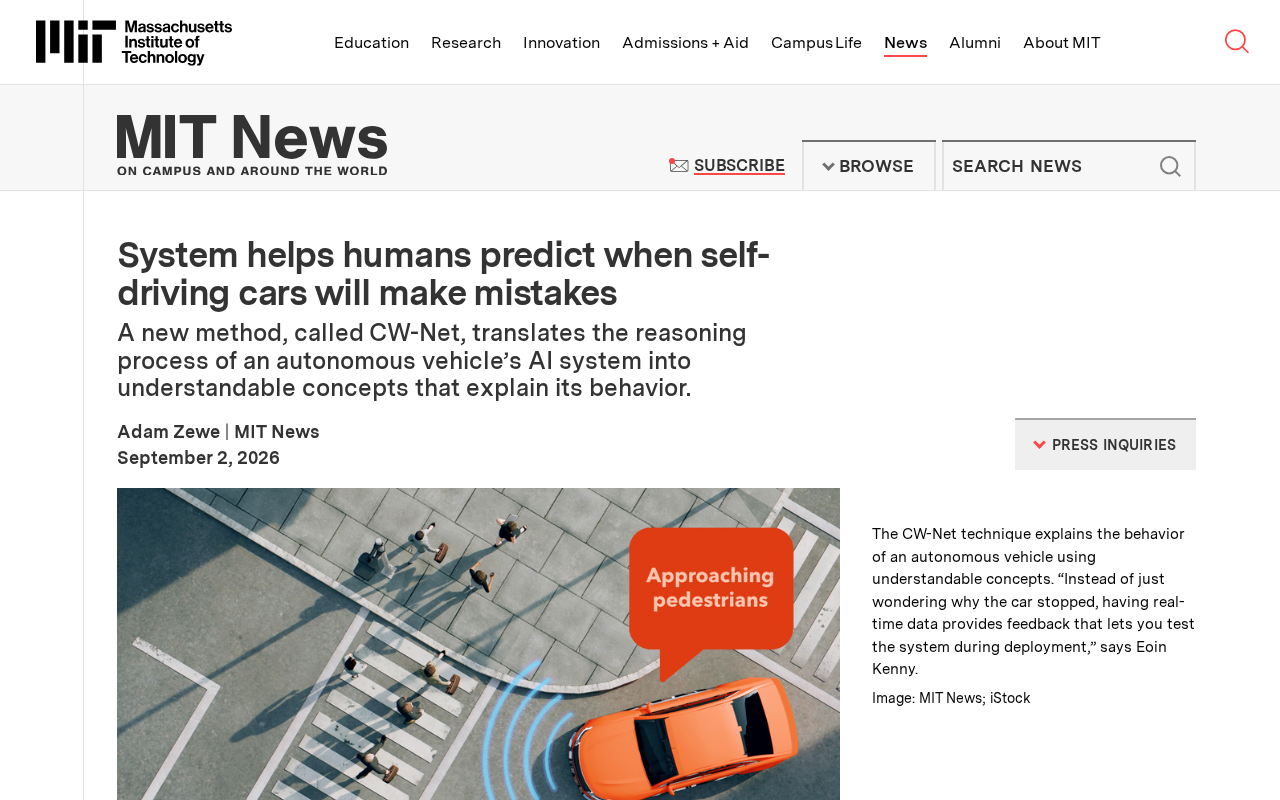
MIT Proposes CW-Net: Making Autonomous Driving AI Decision-Making Explainable and Predictable
MIT researchers propose CW-Net concept warning network, transforming autonomous driving AI's black-box decisions into human-understandable concepts, enabling error prediction and human-machine collaboration. This article analyzes its working principles and practical implications for regulatory compliance, safety redundancy, and public trust.

Flash Lightweight Models vs Pro Full Version: How Big Is the Real-World Performance Gap?
A finance master's student switches back from Flash to Pro, revealing lightweight AI models' real shortcomings in long-context processing and deep reasoning scenarios.