AI for Social Good: How Technological Breakthroughs Can Benefit Everyone

Experts and local leaders are teaming up to turn AI's technical advances into broad social value.
This article examines the growing importance of "AI for Societal Impact," arguing that as large model capabilities advance rapidly, the AI field is shifting from a purely technical race toward social responsibility — with equitable access to AI's benefits emerging as a new value benchmark. The key to inclusive AI lies in the collaboration between experts, who provide technical capabilities, and local leaders, who understand real community needs. Healthcare is highlighted as a priority domain, and the article concludes that the next wave of AI competition will be judged not just on performance metrics, but on the ability to create measurable, widespread social value in the real world.
AI progress shouldn't only serve the few. A recent collection of content focused on "AI for Societal Impact" showcases how experts and local community leaders are leveraging AI breakthroughs to share the benefits of technology with a wider population. This topic is fast becoming a central conversation in the AI industry — how do advances in technical capability translate into real social value?
The Core Question of AI Inclusivity
As large language models and generative AI capabilities evolve rapidly, a pressing question emerges: can the gains from technological progress be accessed equitably across all segments of society? The central idea emphasized in the source material — "ensuring everyone can share in the opportunities AI brings" — reflects a broader shift in AI development, from a purely technical race toward a sense of social responsibility.
The digital divide has long been a challenge of the digital era. The Internet and mobile communications both struggled with uneven adoption, but AI faces even steeper barriers to universal access due to its higher technical requirements and resource demands — compute power, data, and specialized expertise. Bringing experts and local leaders into the equation means that AI deployment must combine top-down technical supply with bottom-up community needs.
The concept of the "Digital Divide" first emerged in the 1990s alongside the spread of the Internet, describing the gap between different social groups in accessing and using digital technology. The AI era introduces new layers to this divide: the first is the access gap (can people use it at all?), the second is the capability gap (can people use it effectively?), and the third is the benefit gap (can people actually gain from it?). Compared to the Internet age, AI's barriers are higher — from the cost of compute (training and inference both require substantial GPU resources), to the scarcity of high-quality localized data, to the specialized skills needed for prompt engineering and fine-tuning. Even when models are freely available, the population that can genuinely convert AI into productivity remains highly concentrated. This is precisely why "AI inclusivity" cannot rely on open-sourcing alone — it demands systemic capacity-building and ecosystem support.
The Dual Role of Experts and Local Leaders
Notably, this topic highlights the collaboration between two distinct actors: "experts" and "local leaders." Experts provide technical capabilities and frontier breakthroughs; local leaders understand the real pain points and use cases of their communities. This combination avoids two common pitfalls: technology spinning its wheels with no viable use case, and solutions that are fundamentally mismatched to the people they're meant to serve.
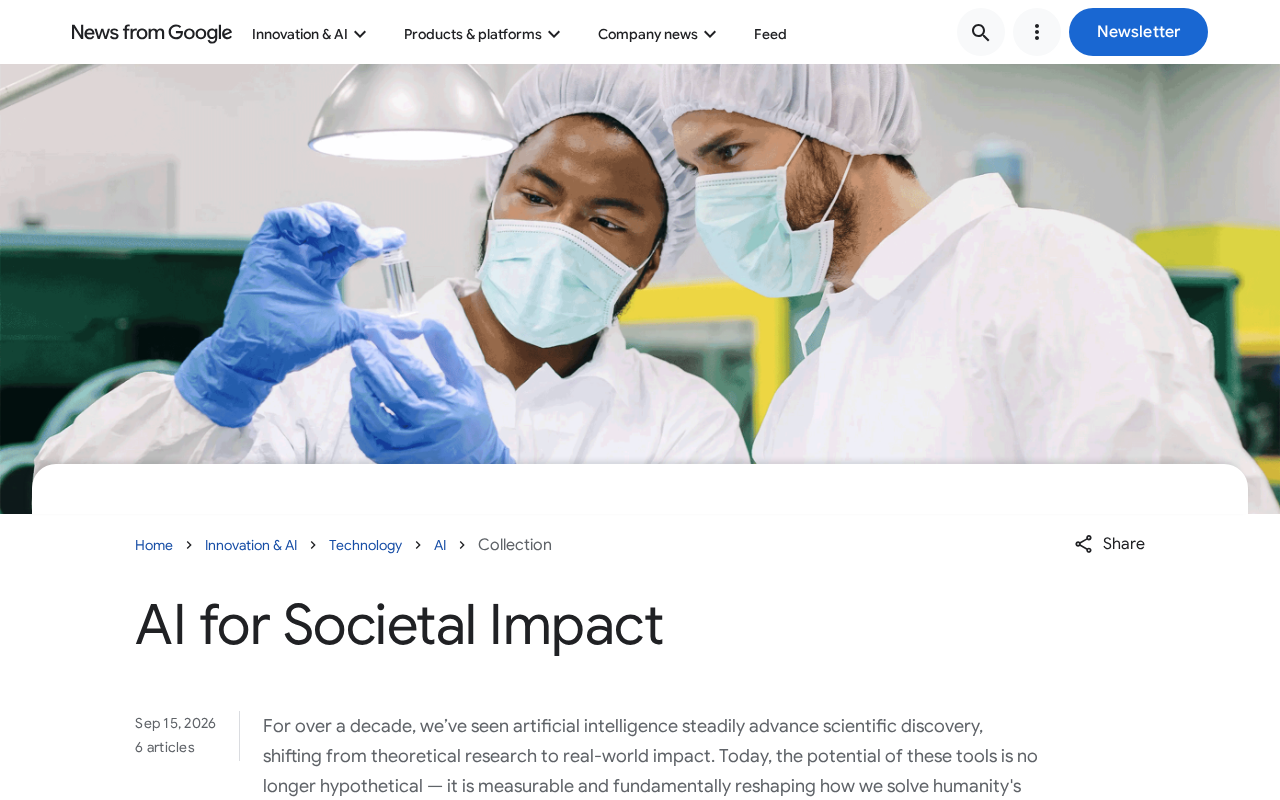
Based on the health-related visual elements present in the collection, healthcare is likely one of the key application domains for AI's social impact. The unequal distribution of medical resources is a global problem, and AI's potential in areas like diagnostic assistance, health screening, and medical knowledge dissemination is well-suited to address urgent needs in underserved regions.
The Path from Technical Capability to Social Value
For AI to generate genuine social impact, the key lies in bridging the full chain from capability to context to value. Having a powerful model alone is not enough — localization, cost control, usability, and sustainability all matter. Deep involvement from local leaders is what keeps this chain intact.
These kinds of initiatives are also redefining how AI companies measure their worth. Beyond commercial monetization, how technology contributes to education, healthcare, and public services is becoming an alternative yardstick for AI's value. "Tech for good" is no longer just a slogan — it needs to be backed by concrete cases, replicable models, and measurable outcomes.
In AI social impact practice, "localization" typically spans multiple dimensions: support for local languages and dialects, usability in low-bandwidth or offline environments, content filtering aligned with local regulations and cultural norms, and interface design tailored for users with low digital literacy. Several international reference cases are worth noting: India's Jugalbandi project connected large language models to WhatsApp to help rural residents query government benefits in 22 local languages; Kenya's agricultural AI assistant delivered crop disease alerts to farmers without smartphones via SMS. These cases point to a shared insight — sustainable AI social impact projects rarely pursue the technically optimal solution. Instead, they seek a balance between "good enough" and "accessible," and factor in operational costs and community empowerment from the very beginning of the design process.
Implications for the Industry
For practitioners and observers who follow AI's development, the growing prominence of "AI for Societal Impact" sends a clear signal: the next phase of competition in AI won't only be about model parameters and benchmark rankings — it will also be about the ability to create broad, real-world value.
Achieving the vision of inclusive AI still faces significant real-world challenges, including infrastructure disparities, gaps in digital literacy, and the need for robust privacy and security safeguards. But through the combined efforts of technical experts and local communities, AI is gradually moving out of the lab and into the everyday lives of more ordinary people. How far this direction is explored may ultimately determine whether AI can deliver on its original promise of benefiting all of humanity.
(Note: This article is based on source material consisting of a content collection showcasing AI social impact cases; specific case details are limited.)
Related articles
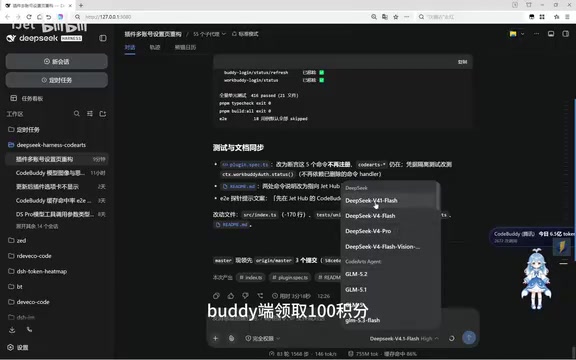
Free DeepSeek V4.1 Flash via DSH: Bulk Point Collection & International WorkBuddy Tested
DSH project update tested: WorkBuddy now offers 100 points per claim, rate limits raised beyond 80M tokens with faster resets, and international WorkBuddy supports free Hunyuan 4 and DeepSeek V4.1 Flash.
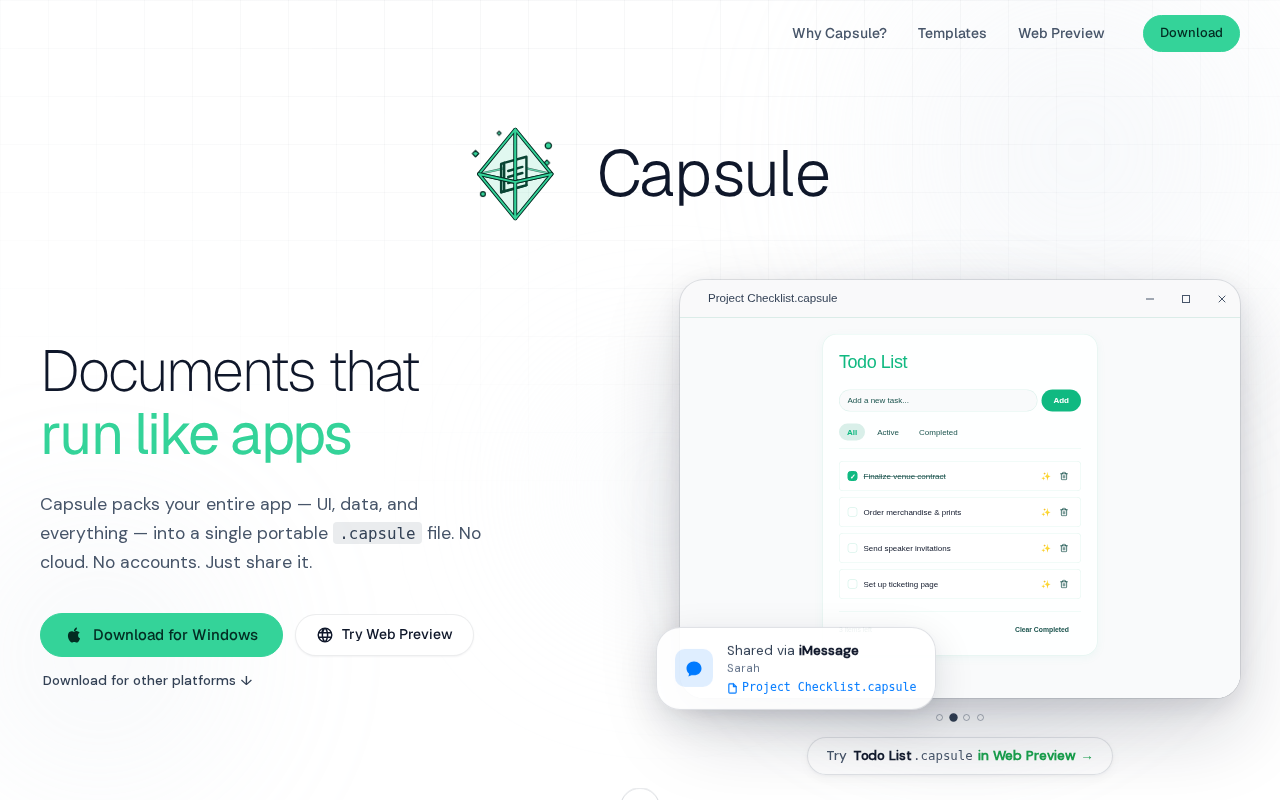
Capsule: Pack Web Apps and Data into a Single SQLite File
Capsule is a Rust/Tauri 2.0 tool that packs HTML web apps and data into a single SQLite file — privacy-first, local storage, portable sharing, with AI support.

DSH-SUBAGENT-UI Plugin: The Ultimate Sub-Agent Manager for DeepSeek Harness
DSH-SUBAGENT-UI is a DeepSeek Harness browser plugin offering sub-agent overview, search, local categorization, and completion snapshots — install with one command.