Free DeepSeek V4.1 Flash via DSH: Bulk Point Collection & International WorkBuddy Tested
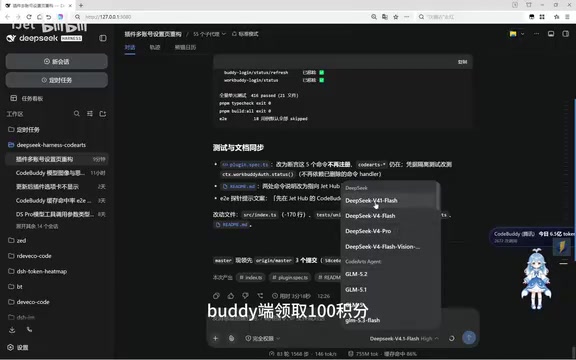
DSH gets more point sources, higher rate limits, faster resets, and free Hunyuan 4 + DeepSeek V4.1 Flash access.
DSH (DeepSeek Hub) has received a meaningful round of updates: the international WorkBuddy now offers a daily 100-point claim, extending free usage alongside existing gifted quotas. Rate limit caps have surpassed 80 million tokens with early-reset behavior observed, significantly reducing wait times for heavy users. Token consumption has also accelerated — testing showed only 1–2 accounts hit limits at 650 million tokens, indicating much wider system tolerance. The international version now supports free access to Hunyuan 4 and DeepSeek V4.1 Flash, enriching the available model ecosystem. The article also cautions that third-party free-access projects carry inherent stability risks, and official paid APIs remain the recommended choice for production use.
DSH Project Gets Another Upgrade: Points and Rate Limits Both Improve
The community around DSH (DeepSeek Hub) — a project enabling free access to DeepSeek and other large language models — has seen a wave of real-world test updates recently. According to a Bilibili creator's findings, the changes center on point collection, rate limiting mechanics, and model support in the international version of WorkBuddy. For users who've been following free LLM access closely, these adjustments directly affect day-to-day usability and how quickly quotas get consumed.
In short, it's a mixed picture: more ways to earn points, more relaxed rate limits — but also faster token burn. Here's a breakdown based on the creator's hands-on testing.
More Ways to Earn Points: WorkBuddy Now Offers 100 Points Per Claim
One clear win from this update: users have discovered they can claim an additional 100 points through the WorkBuddy interface. This adds a new bulk-collection channel on top of existing point sources, which is great news for anyone managing multiple accounts — more points means longer free usage before running dry.
The creator noted that even though tokens burn faster now, the daily 100-point buffer combined with the previously gifted 500 points means accounts can "still hold out for a long time." This suggests the point replenishment system was designed with some headroom built in, so running out of quota in the short term shouldn't be a concern.
Rate Limits Loosened: Higher Caps and Faster Resets
The changes to rate limiting are arguably the most noteworthy part of this update. According to the creator's observations, the rate limit cap appears to have been raised beyond the previous 80 million token level — the exact ceiling isn't clear, but the overall headroom is noticeably larger.
Beyond the higher cap, reset times also seem to have shortened — with some cases of "early resets" being observed. The creator added manual testing steps and a manual quota-clear operation to better track reset timing.
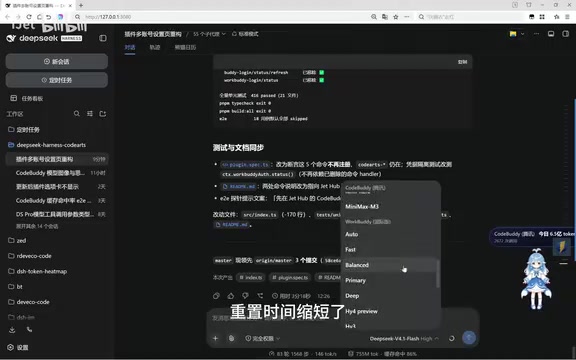
Shorter reset cycles are a tangible benefit for heavy users — quotas that previously took a long time to recover now refresh faster, reducing wait times significantly.
Rate limiting is a core mechanism API providers use to manage resource consumption, typically enforced via token counts, request frequency, or time windows. In LLM usage, tokens are both the unit of measurement and the source of cost — all input and output text, code, and so on gets converted into tokens. 80 million tokens sounds like a lot, but across multi-account concurrent use, long-context conversations, or bulk document processing, it burns through quickly: a single long document of several thousand words can consume tens of thousands of tokens, and heavy daily usage can easily reach millions. Projects like DSH essentially aggregate or relay shared API quotas, so how tight or loose the rate limiting is directly determines real-world usability — which is why the community tracks these updates so closely.
Faster Consumption: 650 Million Tokens, Only 1–2 Accounts Hit Rate Limits
The flip side of looser limits is that tokens are burning noticeably faster. The creator put it plainly: "it's burning quicker" — in testing, only 1 to 2 accounts hit rate limits at 650 million tokens of usage.
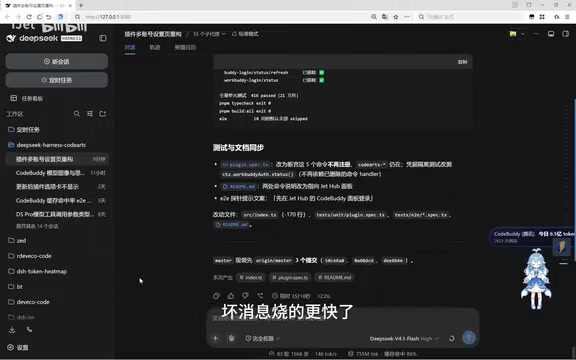
This data indirectly confirms that the rate limit threshold has been raised considerably. Previously, that level of consumption would have triggered limits on far more accounts; now, the impact is quite limited. In other words, the system is more tolerant, but users still need to keep an eye on their consumption pace.
The creator used a "meter" analogy to describe the quota situation: previously the meter was "spinning backward" (points couldn't keep up with consumption), but with 100 daily points plus the gifted buffer, the meter is now "spinning forward" — overall, stable operation can be maintained for a long time.
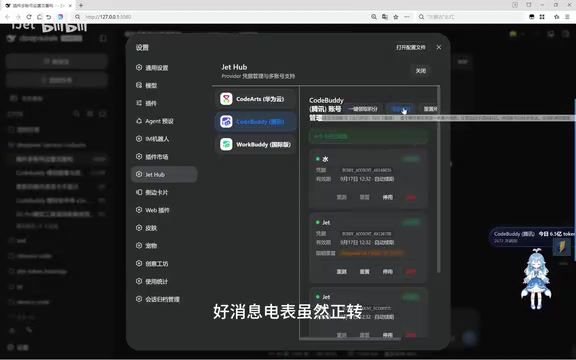
International WorkBuddy: Free Access to Hunyuan 4 and DeepSeek V4.1 Flash
Another highlight from this update: the international version of WorkBuddy now supports free access to both Hunyuan 4 (混元4) and DeepSeek V4.1 Flash.
DeepSeek V4.1 Flash, as a lightweight model built for speed, is quite practical for scenarios that demand fast responses and batch processing — especially when it's free to use. The addition of Hunyuan 4 further enriches the model ecosystem, giving users the flexibility to switch between models based on the task at hand.
Opening up the international version means more users can experience these mainstream LLMs at zero cost — which remains the core reason projects like DSH continue to attract community interest.
Hunyuan 4 (混元4) is Tencent's latest-generation multimodal large language model, capable of text generation, code writing, logical reasoning, and more. It's one of China's leading closed-source LLMs and is typically accessed through the Tencent Cloud API on a paid basis. DeepSeek V4.1 Flash is a lightweight inference variant built on top of DeepSeek's flagship model, with lower latency and higher throughput as its key selling points — well-suited for applications where response speed matters more than deep reasoning, such as real-time chat, streaming generation, and large-scale text processing. Adding both models to the DSH free-access ecosystem means users can compare different vendors' models on the same task without registering on each platform or pre-loading credits, which offers meaningful reference value for developers evaluating model selection.
Usage Tips and Risk Considerations
Based on the creator's hands-on testing, DSH is currently in a dynamic equilibrium of "more quota headroom, but also faster burn." A few things worth keeping in mind for long-term stable use:
- Use all point collection channels: The WorkBuddy 100-point entry is a newly added source — combined with daily buffer points, it can significantly extend your free usage.
- Track reset timing: Since early resets have been observed, manually testing and clearing stored rate limits can help you make better use of your quota.
- Manage your consumption pace: Faster token burn means unchecked usage can hit limits sooner — call APIs only when needed.
It's worth noting that free-access projects like this rely on third-party channels, and rules and quotas can change at any time — stability is inherently uncertain. Everything described here is based on community users' single-source testing; always refer to official channels for the latest information. For production environments or business-critical workloads, using official paid APIs is still strongly recommended to ensure service reliability.
Related articles
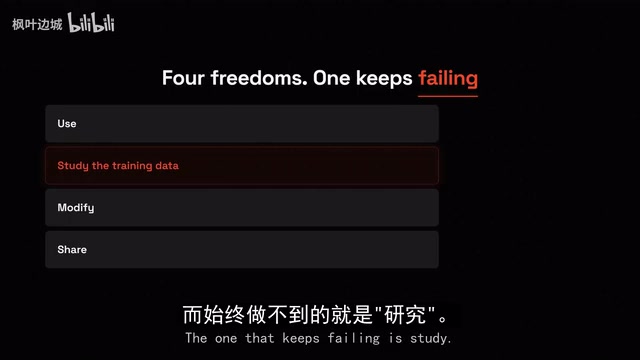
The Truth About Open-Source AI: You Got the Cake, Not the Recipe
Open-source AI exposed: what you download is weights (the cake), not training data or code (the recipe). A deep dive into open weights vs. true open source, Meta/Alibaba/DeepSeek business strategies, and how US/China/EU governments are redrawing the boundaries of openness.
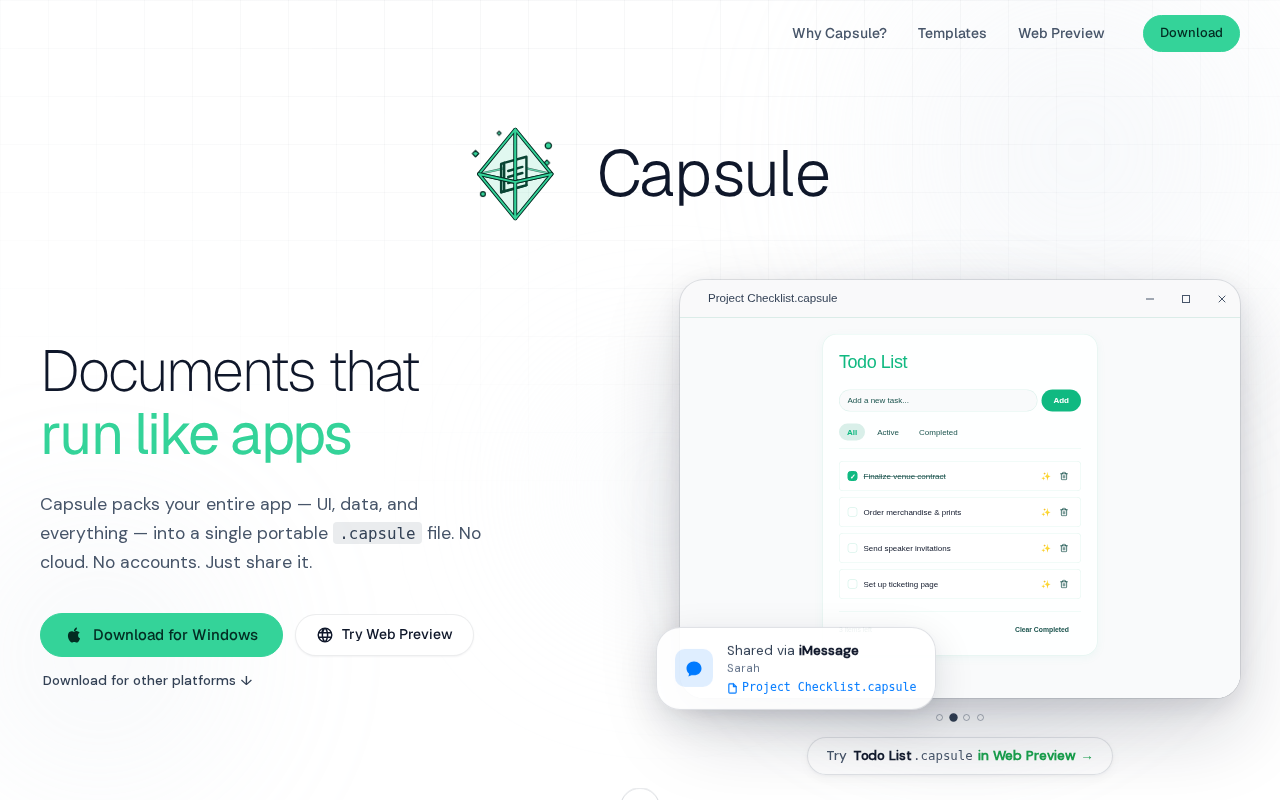
Capsule: Pack Web Apps and Data into a Single SQLite File
Capsule is a Rust/Tauri 2.0 tool that packs HTML web apps and data into a single SQLite file — privacy-first, local storage, portable sharing, with AI support.

DSH-SUBAGENT-UI Plugin: The Ultimate Sub-Agent Manager for DeepSeek Harness
DSH-SUBAGENT-UI is a DeepSeek Harness browser plugin offering sub-agent overview, search, local categorization, and completion snapshots — install with one command.