AI-Generated Pokémon Battles in Real Time: Gaming Applications of the H3 MAX Video Model

H3 MAX video model powers a playable AI-generated Pokémon battle system in real time.
A developer has created a fully playable Pokémon battle system using the H3 MAX AI video generation model, where battle visuals are generated in real time based on player actions rather than pre-made assets. The open-source project demonstrates how conditional generation techniques can map discrete game states to coherent visual output, leveraging the natural pauses in turn-based gameplay for AI inference. While challenges like latency, visual consistency, and logic constraints remain, the project points toward a future where AI serves as a game engine's rendering layer.
AI-Generated Pokémon Battles in Real Time: Gaming Applications of the H3 MAX Video Model
A developer has used the cutting-edge AI video generation model H3 MAX to build a fully playable Pokémon battle animation generation system. This project not only demonstrates the potential of AI video models for interactive content generation but also opens up new directions for AI-driven turn-based game development.
An Innovative Approach to Dynamically Generated Battle Visuals
The core innovation of this system lies in deeply integrating the H3 MAX video generation model with game logic. H3 MAX belongs to a new generation of generative AI systems based on Diffusion Models or Transformer architectures, competing in the same technical arena as OpenAI's Sora, Runway's Gen series, and similar models. These models are typically pre-trained on large-scale video-text paired datasets to learn joint spatiotemporal representations, then use conditional guidance mechanisms to control generated content. H3 MAX's key advantage in this project is its inference speed and conditional controllability, enabling it to respond to user input in real time within interactive scenarios rather than merely generating video content offline.
Unlike traditional games that rely on pre-made animation assets, this system generates battle visuals in real time based on player actions. The developer has open-sourced the complete project on GitHub (xflare-bot/pokemonlive) for the technical community to study and improve.
During the generation process, H3 MAX takes multiple game elements into account: move types, Pokémon status conditions (paralysis, fainting, etc.) are all faithfully represented on screen. The core technology at play here is Conditional Generation—using additional input signals to guide the model toward generating content that meets specific requirements. In this project, the game engine's output—including the current Pokémon species on each side, HP percentages, status condition flags, and the move being used—is encoded as conditional signals fed into H3 MAX. This is similar to how ControlNet works with Stable Diffusion, but extended into the temporal video dimension. The core challenge is designing an effective conditional encoding scheme that precisely maps discrete game logic states to continuous visual space. This means the AI must not only understand game rules but also translate abstract game states into coherent visual representations.
Technical Challenges of Real-Time Generation
The technical difficulty of generating playable game content in real time far exceeds that of ordinary video generation tasks.
Latency control is the primary challenge—players need to see feedback immediately after taking an action, imposing strict requirements on generation speed. H3 MAX has reached practical standards in inference speed, capable of completing frame generation within the time window of a turn-based game. Notably, the discrete state transition pattern of turn-based games is particularly well-suited for AI video generation: in Pokémon battles, each side selects one move per turn, the system calculates damage based on type matchups, stats, and random factors, then updates the game state. The natural interval of several seconds between turns provides a valuable time window for AI inference. By contrast, real-time action games (such as fighting games) require continuous responses at 60 frames per second—a demand that current generative AI is far from meeting. This is precisely why turn-based games serve as an ideal entry point for this technological approach.
State continuity is equally critical. Pokémon in the game need to maintain consistent appearances across multiple turns while exhibiting different behaviors based on HP and status changes. Visual Consistency is one of the core challenges in AI video generation—in single image generation, the model only needs to ensure self-consistency within one frame; but in video and cross-segment generation, the same character must maintain consistent appearance, proportions, and colors across consecutive frames. The industry currently addresses this through several technical approaches: Temporal Attention mechanisms that make the model attend to visual features from preceding frames; reference image anchoring that provides a standard character image as an anchor point for each generation; and latent space interpolation that ensures smooth transitions between adjacent generated segments in latent space. Based on the project description, the system successfully achieves this continuity—status conditions like paralysis and damage are consistently reflected in the visuals.
Logic constraints are the third key point. AI-generated visuals must strictly adhere to game rules without logical contradictions. This requires incorporating strong constraint conditions during the generation process, using the game engine's output as conditional input for the AI.
Implications for Turn-Based Game Development
The most valuable aspect of this project lies in its potential for generalization. The question raised by the developer is worth pondering: can this workflow be applied to other turn-based games?
From a technical standpoint, this approach does have transferability potential. Turn-based games share common characteristics: discrete state changes and relatively relaxed timing requirements, forming a stark contrast with real-time action games. In theory, as long as game states can be encoded as conditionally understandable inputs for the AI, a similar method could be used to generate battle visuals.
This could fundamentally change the resource requirements for indie game development—small teams wouldn't need to create massive animation asset libraries, as AI could dynamically generate content based on design intent. In traditional game development, art asset production accounts for a significant portion of the total budget. A medium-scale 2D turn-based RPG might require hundreds of character animations, skill effects, and scene assets, typically demanding months of work from a professional art team. The AI dynamic content generation paradigm shares its philosophical roots with Procedural Content Generation (PCG)—Minecraft uses algorithms to generate terrain, and Roguelike games use rules to generate levels. But what sets AI generation apart is its ability to produce highly stylized, detail-rich visual content rather than simple geometric combinations. If this technology matures, indie developers might only need to define game mechanics and art style guidelines, letting AI generate all visual presentations in real time—transforming game development from "asset-intensive" to "design-intensive."
However, there are clear limitations:
- Style consistency: Commercial games typically require a highly unified art style, and the randomness of AI generation could become problematic
- Precise controllability: Developers need precise control over how specific scenes are rendered
- Computational cost: The computing power required for real-time generation may limit large-scale commercial adoption
The Evolutionary Direction of AI Video Generation
This project represents an early attempt at transitioning AI video generation from a "content creation tool" to an "interactive system component." Unlike models like Sora that focus on content generation, H3 MAX is used here as the rendering layer of a game engine, imposing new demands on the model's real-time performance, consistency, and controllability.
Using an AI video generation model as the "rendering layer" of a game engine is an architecturally profound innovation. Traditional game engines (such as Unity and Unreal Engine) have rendering pipelines based on deterministic rasterization or ray tracing algorithms, taking 3D models and material data as input and outputting pixel-precise visuals. An AI rendering layer replaces this entire process with a generative model: the input is an abstract game state description, and the output is video frames that "look correct." The revolutionary aspect of this approach is that it completely bypasses traditional workflows like 3D modeling, skeletal rigging, and animation creation. However, it also introduces inherent uncertainty—the same input may produce slightly different outputs, which is unacceptable in deterministic systems but may be tolerable or even beneficial at the visual presentation level (adding visual diversity). NVIDIA's Neural Radiance Fields (NeRF) and 3D Gaussian Splatting are also exploring similar AI-native rendering concepts, though from different angles.
Potential future improvements include:
- Introducing stronger conditional control mechanisms to let developers precisely specify visual details
- Optimizing generation speed to support faster-paced game genres
- Developing specialized game video generation models that incorporate game logic understanding during training
From a broader perspective, this project demonstrates how generative AI can evolve from an assistive tool into a core system component. When AI-generated content becomes fast enough, coherent enough, and controllable enough, it can take on work traditionally handled by manually created assets. This applies not only to games but could extend to educational simulations, data visualization, and other fields requiring dynamic visual feedback.
Community Value of the Open-Source Project
The developer's decision to open-source this project is crucial. It provides researchers with a concrete case study demonstrating how to integrate large video models into interactive applications. It also offers game developers an experimental platform to explore the possibilities of AI generation across different game genres.
The technical community can use this project to investigate several key questions:
- What is H3 MAX's actual generation latency?
- How is state consistency maintained?
- How precise is the conditional control mechanism?
The answers to these questions will help assess the technology's maturity and application boundaries.
This Pokémon battle generator may be just an experimental project, but it points toward a fascinating future: games that no longer rely on pre-made assets but are "created" by AI in real time. This paradigm shift may still need time to mature, but the seeds of this technology have already been planted.
Key Takeaways
Related articles
AI Large Model Interview Trends: 625 Real Post-Interview Reviews Reveal Core Focus Areas
Based on real data from 1,700+ students and 625 interview reviews, discover what AI large model interviewers focus on: multi-Agent architecture, deep fundamentals, and enterprise project experience.
HouseSpaceAI: Upload 2D Floor Plans, AI Automatically Generates Interior Design Schemes
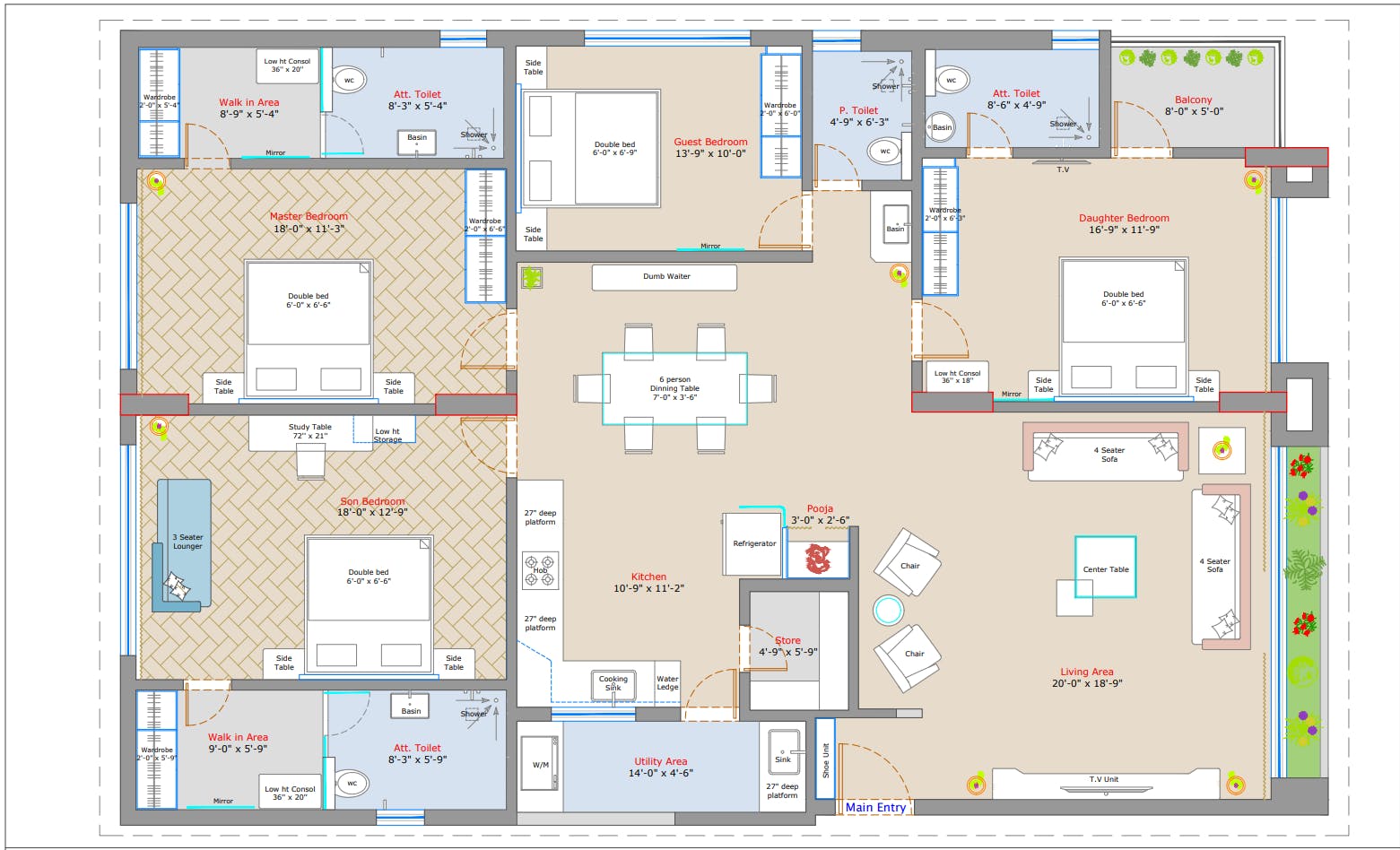
HouseSpaceAI is an AI interior design tool where users upload 2D floor plans or sketches and AI Agents generate multiple design schemes in minutes. Deep dive into its features, use cases, and real-world limitations.

Nathan Fielder Documentary Focuses on Elizabeth Holmes and the Theranos Scandal
Comedy director Nathan Fielder premieres documentary You Can See Everything at Telluride, offering a unique perspective on Elizabeth Holmes and the Theranos fraud scandal, exploring Silicon Valley's startup mythology and the boundaries of deception.