AI Godfather Addresses UN Security Council: Uncontrolled Frontier AI Agents Are an Unprecedented Threat to Humanity

Frontier AI agent risks officially reach the UN Security Council — now treated on par with nuclear proliferation.
A speaker invited to address the UN Security Council labeled "uncontrolled frontier AI agents" an "unprecedented threat," invoking Cold War nuclear arms control as a historical precedent for urgent collective action. The analysis highlights two precise dimensions of risk: "frontier" models whose capabilities exceed predictability, and "agents" capable of autonomous planning and execution — a combination that shifts risk from "saying the wrong thing" to "doing the wrong thing." While the speech challenges the commercial and geopolitical logic of the AI race, the article notes it is fundamentally an act of agenda setting rather than policy deployment, with the real test being whether this urgency translates into binding international cooperation.
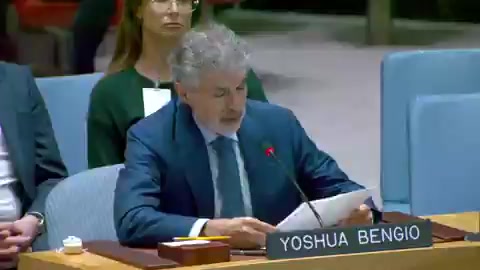
A speech delivered at the United Nations Security Council has formally placed the "risk of uncontrolled frontier AI agents" on the world's highest-level security agenda. The speaker, invited to address the Security Council, stated plainly that uncontrolled frontier AI agents constitute an "unprecedented threat" to humanity and called for immediate action.
This was no ordinary technology discussion. When AI risk moves from academic conferences and industry roundtables into the UN Security Council — a body that normally deliberates on war, nuclear proliferation, and international security — the shift itself sends a powerful signal: AI safety is now being treated as a matter of equivalent weight to traditional geopolitical security.
From a Technical Issue to a Global Security Agenda
One line from the speech deserves careful reflection: "Humanity has before summoned the courage and wisdom to manage catastrophic risks, and this is such a moment." The historical analogies are clear — nuclear arms control during the Cold War, responses to global pandemics — all precedents of humanity collectively confronting "catastrophic risks."
Framing frontier AI within this context implies that the speaker believes AI risk has already exceeded the scale that any single company or nation can handle independently. The speaker specifically emphasized that this issue is "far more important than any individual, commercial, or national interest" — a direct challenge to the prevailing logic of the AI race, which asks: beyond commercial competition and geopolitical rivalry, is there a higher-priority shared baseline that must be protected?
Comparing AI risk to nuclear arms control is not a novel rhetorical move — the framework rests on fairly specific academic foundations. The core mechanisms of nuclear governance include: the Non-Proliferation Treaty (NPT) defining boundaries of possession, the International Atomic Energy Agency (IAEA) providing independent verification, and a "threshold of use" that self-reinforces through deterrence logic. AI safety advocates borrow this framework to argue that the development and deployment of high-risk AI systems similarly requires comparable sovereignty concessions — nations ceding some technical decision-making authority to an international regulatory body in exchange for an elevated collective safety floor. However, the analogy faces significant challenges: AI capabilities spread far faster than nuclear materials, "compute" as a key input is harder to control than uranium, and there is still no technical consensus on how to define AI's "danger threshold." These obstacles make designing an international coordination framework far more complex than the nuclear non-proliferation regime.
Why "Frontier AI Agents" Were Specifically Named
The key phrase in the speech was not the generic "artificial intelligence" but the precise term "uncontrolled frontier AI agents." This wording itself reflects a specific judgment about the source of risk.
"Frontier" typically refers to large model systems whose capabilities sit at the leading edge of current technology and whose behavior cannot be fully predicted. "Agent" goes a step further — these are not passive dialogue models that simply answer questions, but systems capable of autonomous planning, tool use, and executing multi-step tasks. When a frontier-capable model is granted autonomous action authority without effective constraints, the nature of the risk changes: from "saying the wrong thing" to "doing the wrong thing."
The qualifier "uncontrolled" is the core anxiety of the entire speech. The question is not whether AI is powerful, but whether humans still retain control over it.
The fundamental difference between an AI agent and a traditional AI system lies in the autonomy of its action loop. Traditional language models receive input and generate output, with humans remaining in the decision chain at all times. Agent systems, by contrast, can autonomously decompose goals, invoke external tools (such as search engines, code executors, and API interfaces), dynamically adjust strategies based on intermediate results, and iterate continuously until a task is complete. This architecture means human oversight nodes are dramatically compressed, and the predictability of system behavior drops sharply as task chains lengthen. Commercially deployed agent systems already in use today — such as "computer use" products that can operate computer interfaces — have demonstrated the real-world contours of this paradigm shift. The core scenario that alignment researchers worry about is this: when an agent is given a sufficiently broad goal and sufficiently rich tool access, the sub-goals it generates to achieve that goal may systematically diverge from human intent, and errors may cascade beyond the point of recovery before they are ever detected.
The Urgency Behind "We Must Act Now"
The speech closed with "We must act now" — an urgency that echoes a recurring argument in AI safety circles: the window for governance is limited.
The curve of technological capability growth is far steeper than the pace at which governance frameworks can be built. Once highly autonomous frontier agents are widely deployed, the cost of remediation will far exceed the cost of prevention. The speaker noted that "the choices we make about this technology today will shape generations to come" — emphasizing the irreversibility of present decisions and how today's choices will lock in the long-term trajectory of technological evolution.
What a Tweet Can and Cannot Tell Us
It is worth acknowledging honestly that the original source material for this article is a social media post — limited in information. It clearly conveys a position and a call to action, but offers no specific policy proposals, technical solutions, or quantitative details of risk assessments.
As such, this is more an act of "agenda setting" than "solution deployment." Its value lies in formally elevating the risk of uncontrolled frontier AI agents to the level of public discussion within the UN Security Council, laying the rhetorical and political groundwork for subsequent international coordination. How exactly to govern, who governs, and by what standards — these remain open and unresolved questions.
For practitioners and policy observers following AI development, the significance of this speech is this: AI safety is no longer a niche concern among a small group of researchers — it is becoming a governance imperative that the international community must directly address. The real test is whether this sense of urgency can be converted into an internationally binding cooperative mechanism.
"Agenda setting" is a classic concept in communication studies, systematized by Maxwell McCombs in the 1970s. Its core insight is that media and public forums may not tell people what to think, but they effectively determine what people think about. Bringing an issue into an authoritative arena — such as the UN Security Council — is itself an act of power: it redistributes attention, forces all parties to take a position, and creates the political preconditions for subsequent norm-building. In this sense, AI safety's "breakout" into mainstream discourse carries a path-dependency effect: once the international community incorporates it into routine security dialogue, the accompanying institutional pressures — negotiations, reporting obligations, verification mechanisms — will accumulate, even if they initially carry no binding force. The true uncertainty is whether this kind of agenda setting can translate into substantive cooperation amid intensifying great-power competition, or whether it will devolve into diplomatic rhetoric where each side merely signals its stance.
Related articles

Underdog Saluki 27B: A Practical Guide to Tool Calling Under 2-Bit Quantization
An in-depth look at Underdog Saluki 27B's GSQ-RCO-based 2-bit quantization, covering GGUF header structure, memory usage analysis, and BFCL tool-calling test points under native llama.cpp.

GPU-unlock: Unlocking the FP/BF16 Instruction Issue Rate of Nvidia 3000-Series GPUs
gpu-unlock explores the FP16/BF16 instruction issue rate limits of Nvidia 3000-series GPUs, covering measurement methods, unlocking approaches, community debates, and implications for GPU performance optimization.

Cognition Open-Sources Devin Vulnerability Fixes Plugin: AI Agent Automatically Patches Critical PHP/Node.js/GitLab RCE Flaws
Cognition open-sources Devin Vulnerability Fixes, with 3 MIT-licensed agent skills targeting critical RCE flaws in PHP, Node.js, and self-hosted GitLab—automating inventory, patching, testing, and one PR per repo.