Cognition Open-Sources Devin Vulnerability Fixes Plugin: AI Agent Automatically Patches Critical PHP/Node.js/GitLab RCE Flaws

Cognition open-sources three MIT-licensed agent skills that automatically inventory, patch, and test RCE vulnerabilities and submit PRs.
Cognition this week open-sourced the Devin Vulnerability Fixes plugin, containing three MIT-licensed agent skills for PHP, Node.js, and self-hosted GitLab that inventory, patch, and test recently disclosed critical RCE vulnerabilities, submitting one PR per affected repository. The plugins automate the most time-consuming post-alert security work while preserving human review and CI validation. The MIT license makes the agent's modifications auditable and lets the community extend to more stacks. Real-world effectiveness is limited by test coverage and version inventory accuracy, so legacy deployments still need human review.
Cognition this week open-sourced a set of agent plugins called Devin Vulnerability Fixes, comprising 3 MIT-licensed agent skills targeting PHP, Node.js, and self-hosted GitLab deployments. They inventory, patch, and test recently disclosed critical remote code execution (RCE) vulnerabilities, ultimately submitting one automated PR per affected repository.

From "Finding the Problem" to "Submitting the PR": Closing the Loop on Agentic Remediation
Traditional security tools solve the "discovery" phase—scanner alerts, CVE lists, dependency graph highlights. What actually consumes engineering teams' time is the work after the alert: confirming the affected version range, tracing the call chain, writing a usable patch, getting tests to pass, and then going through the PR process. The positioning of Cognition's plugins is precisely to automate that second half.
According to MarkTechPost's report, the responsibilities of the three skills are drawn quite specifically: first inventory the deployment, then execute the patch, and finally test, producing one PR per repo. This "one PR per repo" design isn't the most efficient, but it matches real engineering practice—patches need to be reviewed, validated by CI, and rollback-able, rather than being silently pushed straight to the production branch.
Agent skill refers to a reusable unit of capability that encapsulates domain-specific knowledge and operational procedures, typically existing as prompt templates, tool-call sequences, and decision rules, loaded on demand by the agent at runtime. Unlike traditional plugins, a skill doesn't directly change the host program's behavior; instead, it constrains the agent's reasoning path and action boundaries within that domain. This means the same agent runtime can cover different tasks by mounting different skills, and the skill itself becomes an independently auditable, open-source-distributable object. Cognition releasing this as skills rather than a complete product form is precisely about separating the "vulnerability remediation workflow" from model capability, making it inspectable and replaceable.
What Each of the Three Skills Covers
A note on the choice of coverage: PHP, Node.js, and self-hosted GitLab. What they share is a massive ecosystem, fragmented deployment patterns, and many legacy versions—exactly the high-incidence areas for RCE-class vulnerabilities.
The PHP track targets classic web application deployments, which often lack unified dependency governance; patching requires judgment based on runtime version and extension configuration. The Node.js track must handle transitive vulnerabilities in the npm dependency tree, where the same CVE may be introduced indirectly through multiple layers of dependencies. Self-hosted GitLab is the most sensitive risk surface of the three—compromise of the code hosting platform itself means source code and CI credentials are exposed simultaneously, and self-hosted instances typically upgrade far more slowly than SaaS.
According to the original article, these vulnerabilities are the critical RCE flaws disclosed "this week," and the plugins target this specific batch of threats rather than generic vulnerability patterns. This "rapidly ship a plugin for the week's CVEs" model suggests that new disclosures will likely be followed up in the same way going forward.
Transitive dependency vulnerabilities refer to vulnerabilities that don't appear directly in a project's explicitly declared dependencies but are introduced indirectly through a direct dependency's deeper dependencies. The npm ecosystem's dependency tree naturally has this nested structure, and different versions of the same package may exist simultaneously in multiple places in the tree. This means remediation can't simply upgrade the top-level dependency; it also requires judging whether that upgrade introduces incompatible API changes, or whether a mechanism like overrides is needed to force a unified version. For an agent, accurately parsing the lockfile and locating the dependency that is actually loaded is a prerequisite for a patch to take effect.
The Reasoning Behind Open Source and the MIT License
All three skills are open-sourced under the MIT license. For a commercial agent product, this choice has its logic: the vulnerability remediation logic itself doesn't constitute a competitive moat—the real value lies in whether the agent can execute reliably: reading repository context, understanding the build process, and adjusting strategy on failure. Opening up the skills both lets the community add adaptations for more tech stacks and lets security teams audit what the agent actually does to the code.
For enterprise users, auditability is often more important than the degree of automation. An agent that autonomously modifies code and submits PRs would be hard to pass security review if its behavior logic isn't visible.
The Real-World Boundaries of Automated Patching
The upper bound of such tools' value is constrained by one premise: the correctness of the patch can be verified. The testing phase thus becomes the most critical—and hardest to automate—step in the entire workflow. For projects with mature CI, the agent can use the existing test suite to judge whether the patch breaks functionality; but for legacy PHP or self-hosted GitLab deployments lacking test coverage, "tests pass" doesn't equal "the vulnerability is fixed with no side effects."
Another implicit constraint is version determination. The impact scope of RCE vulnerabilities often depends on the specific runtime patch version and configuration combination, and the agent needs to accurately identify the actual deployment form during the inventory phase, otherwise it may miss or misapply fixes. The original article doesn't detail the logic behind this determination, and this is the part most in need of human review in real-world deployment.
Test coverage here is a concrete constraint: it measures the proportion of code paths reached by the existing test suite. After the agent submits a patch, if the test suite doesn't cover the modified function or branch, even if all tests pass, it can't prove the patch introduces no regression. For legacy projects lacking tests, the agent can only rely on static analysis or generate verification cases itself, and the latter's reliability is significantly lower than existing tests. This is why "tests pass" can only serve as weak evidence when coverage is insufficient, requiring human review to fill the gap.
What This Means for the AI Coding Agent Track
Using agents for security remediation is a signal that AI coding tools are shifting from "writing new code" to "maintaining existing systems." When writing new features, errors can be absorbed by tests and review; when fixing vulnerabilities, the cost of error is system unavailability or the vulnerability not actually being closed. This demands stronger context understanding and self-verification capabilities from the agent.
Cognition's choice to enter via open-source plugins also turns this kind of capability from a single product feature into a reusable ecosystem component. For teams using Devin, this means that when facing the next batch of critical vulnerabilities, the response process can be compressed from "scheduling, assignment, manual fixing" to "run the skill, review the PR." Whether this compression holds up reliably depends on two old problems: test coverage and inventory accuracy.
Self-verification capability refers to an agent's ability, after executing an action, to judge whether its output is correct through observable results and adjust subsequent strategy accordingly. In the vulnerability remediation scenario, this manifests as: after applying the patch, checking whether the build succeeds, whether tests pass, and whether the characteristics of the target CVE have disappeared. An agent lacking self-verification can only produce a one-shot result and can't roll back or correct on failure; an agent with this capability can form a closed loop of "patch—verify—retry." This is also one of the key capabilities determining whether such tools can move from demo to production, and its ceiling is constrained by the credibility of the verification means themselves.
One-line Summary
Cognition open-sources three MIT-licensed agent skills that automatically inventory, patch, and test RCE vulnerabilities and submit PRs.
Paragraph Summary
Cognition this week open-sourced the Devin Vulnerability Fixes plugin, containing three MIT-licensed agent skills targeting PHP, Node.js, and self-hosted GitLab, used to inventory, patch, and test recently disclosed critical RCE vulnerabilities and submit one PR per affected repository. The article notes that these plugins automate the most time-consuming part of security work after an alert, while preserving human review and CI validation. PHP, Node.js, and self-hosted GitLab were chosen because all three have massive ecosystems, fragmented deployments, and many legacy versions—exactly the high-incidence areas for RCE. The MIT open-sourcing lets security teams audit the agent's modification behavior and makes it easy for the community to extend to more tech stacks. The article emphasizes that real-world effectiveness is limited by test coverage and the accuracy of version inventory, and legacy deployments still require human review.
Related articles

AgentTrust: Adding Zero Trust and Human Approval to AI Agents
AgentTrust debuts on Hacker News, offering zero-trust security and human approval for AI agents. This article analyzes its action-level permission checks, human approval gates, and audit traceability, and discusses differences from existing AI observability tools and deployment limitations.
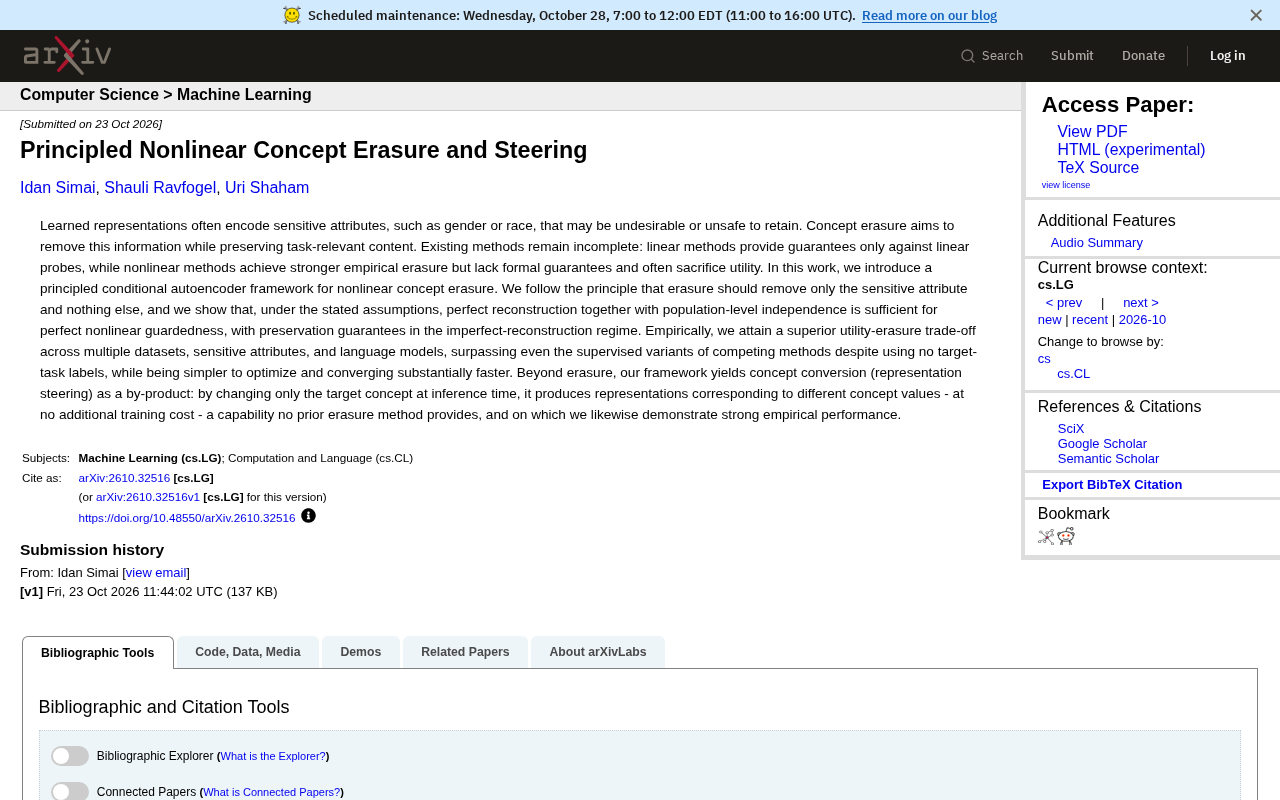
New Framework for Nonlinear Concept Erasure: Conditional Autoencoder Enables Precise Erasure and Steering
This paper proposes a conditional autoencoder framework that provides formal guarantees for nonlinear concept erasure, achieving a better utility-erasure trade-off without target-task labels and unlocking representation steering with faster convergence.

Serbia's Election Shake-Up: Vučić Concedes Defeat as Student Movement Makes History
Serbian President Vučić concedes defeat in the snap parliamentary election as a student-led opposition camp wins a historic victory. Analysis of the student movement's rise, the geopolitical impact, and Serbia's political future.