AI Is Great at Writing Code, So Why Are Codebases Becoming More Fragile?

Merging AI-generated code without understanding accumulates invisible technical debt and weakens codebase maintainability.
The article reviews a developer's view that "AI programming makes codebases fragile" and over three hundred comments on Hacker News. The original author argues that AI tends to generate code that solves current problems rather than adapting to future changes, and developers often skip deep understanding and merge directly, leading to superficial review, increased debugging costs, and invisible technical debt. The community is divided: some worry that the lack of understanding is being scaled up, while others believe the problem lies in usage rather than the tool itself. The article summarizes practical suggestions such as maintaining review depth, requiring AI to explain designs, merging in small steps, and strengthening boundary testing, and points out that the core lies in whether teams are willing to pay the cost for understanding—tool convenience cannot replace engineering discipline.
AI coding tools are changing developers' daily work, but behind the convenience lurks a concern: AI-generated code may make codebases more fragile. A developer raised this point in a blog post, sparking extensive discussion on Hacker News with over three hundred comments. This article will sort through the original author's observations, combined with community discussion, to analyze the hidden costs of AI programming.
Why Is AI-Generated Code Fragile?
The original author's core observation is: relying on AI-generated code tends to produce systems that run on the surface but are actually fragile. This fragility doesn't mean the code immediately crashes, but rather that the code has lower tolerance for edge cases, input variations, and subsequent modifications.
One direct reason is that AI tends to provide code that "solves the current problem" rather than code that "adapts to future changes." After developers receive a seemingly reasonable implementation, they often skip the step of deeply understanding it and merge it directly into the codebase. The code passes tests, but the assumptions behind it haven't been examined.
As this pattern accumulates, the overall maintainability of the codebase declines—fixing one bug may trigger another issue, refactoring costs increase, and developers' expectations of code behavior become blurred.
Chain Reactions from Lack of Understanding
Blind Spots in Code Review
When code is generated by AI, reviewers face unfamiliar logic. The original author points out that reviewers find it difficult to judge whether a piece of AI-generated code handles all edge cases, because the code itself often looks "reasonable." Review degrades from "understanding the logic" to "confirming it runs," and risks are planted there.
Code Review in engineering practice serves not only the function of finding bugs—it is also a place for knowledge transfer, design discussion, and code ownership confirmation. Google's engineering practice documentation points out that one of the core values of review is to let reviewers understand changes and take long-term responsibility for them. When reviewers face unfamiliar logic generated by AI, this value is weakened: reviewers lack the important clue of "author intent" and can only infer design from the code itself. Research shows that reviewers without context tend to do surface checks (naming, formatting, obvious errors), while the inspection rate for edge cases and implicit assumptions drops significantly. This is also the engineering basis for the community suggestion to "require AI to attach design explanations"—it partially restores the mental model needed for review.
Increased Debugging Costs
Debugging AI-generated code can be more laborious. Developers need to first reverse-engineer the code's intent, then locate the problem. The original author mentions in the post that this additional cognitive burden accumulates continuously in long-term projects.
Invisibility of Technical Debt
Traditional technical debt usually has traces to follow, such as TODO comments or known temporary solutions. AI-generated code may hide debt in seemingly normal designs, making it difficult for teams to quantify and manage.
Technical Debt is a metaphor proposed by Ward Cunningham in 1992, referring to a team choosing a less-than-ideal implementation for short-term delivery, like taking out a loan that requires paying interest later. The interest of traditional technical debt manifests as: being forced to modify multiple places when changing one piece of code, new features taking longer than expected, and increased defect rates. Its manageability depends on "visibility"—teams can identify where debt lies through code smells, TODO markers, architecture decision records, and other means. The new problem brought by AI-generated code is the blurred ownership of debt: the code is not the product of a specific developer's trade-offs, no one fully holds its design assumptions, so the team neither knows where the debt is nor finds it easy to judge repayment priorities. This suggests that teams, when introducing AI programming, need to additionally establish an "assumption recording" mechanism, for example, marking AI-generated parts and their dependent preconditions in PR descriptions.
Divergence in Community Discussion
In the Hacker News discussion, developers have different views on this issue.
Some commenters agree with the original author's concerns, believing that AI coding tools lowered the threshold for writing code but didn't lower the threshold for maintaining code. The ability to rapidly generate code may lead teams to pile up large amounts of implementation without understanding.
Other commenters take a more optimistic attitude. They believe the problem is not AI itself, but how it's used. Experienced developers treat AI-generated code as a first draft, using it after review and refactoring, and fragility can be controlled. The quality of a tool depends on whether the user maintains engineering discipline.
This divergence itself is noteworthy: it shows that the impact of AI programming is not unidirectional, but depends on how teams embed the tool into their workflows.
The Hacker News discussion presents two positions: tool theory and discipline theory. Tool theorists invoke a "bicycle problem"-style analogy: new tools amplify users' existing abilities and habits rather than creating problems out of thin air. Discipline theorists emphasize that AI lowers the marginal cost of producing code, thereby changing the incentive structure—when generating an implementation is nearly zero-cost, teams are more likely to accept it without fully understanding it, which is homologous to the risk of "copy-paste programming" but with higher intensity. Notably, the two camps overlap highly on practical suggestions: both advocate maintaining review standards, splitting changes, and strengthening tests. The divergence mainly lies in attribution rather than countermeasures, which provides a consensus basis for team implementation.
How to Reduce the Fragility of AI Code
After the original author's blog sparked discussion, many practical suggestions emerged in the community. These suggestions can be summarized in several directions.
Maintain review depth. For AI-generated code, review standards should not be lowered; instead, more attention should be paid to edge cases and exception handling.
Require explanations. Have AI attach design explanations when generating code to help developers understand the code's assumptions and limitations.
Merge in small steps. Avoid accepting large chunks of AI-generated implementation at once; split them into understandable small pieces and verify them step by step.
Strengthen testing. Use tests to cover AI code's boundary behavior, exposing fragility early.
These practices are not new, but they need to be re-emphasized in AI programming scenarios.
Balancing Tool Convenience and Engineering Discipline
The productivity gains of AI coding tools are real, but the original author's reminder also holds: convenience may mask gaps in understanding. Codebase fragility is not a problem unique to AI; any practice of skipping understanding and directly merging code brings similar risks.
The difference is that AI makes this skipping easier and more frequent. Teams need to enjoy efficiency while holding the bottom line of engineering discipline. Tools can accelerate writing code, but the responsibility for understanding code, reviewing code, and maintaining code still rests with developers.
The value of this discussion is not to negate AI programming, but to remind: the health of a codebase ultimately depends on whether the team is willing to pay the cost for understanding.
One-line Summary
If AI-generated code is merged without understanding, invisible technical debt accumulates, weakening codebase maintainability.
Paragraph Summary
The article sorts through a developer's view that "AI programming makes codebases fragile" and over three hundred comments on Hacker News. The original author believes that AI tends to generate code that solves current problems rather than adapting to future changes, and developers often skip deep understanding and merge directly, leading to superficial review, increased debugging costs, and invisible technical debt. The community is divided: one side worries that the lack of understanding is being scaled up, while the other believes the problem lies in usage rather than the tool itself. The article summarizes practical suggestions such as maintaining review depth, requiring AI to explain designs, merging in small steps, and strengthening boundary testing, and points out that the core lies in whether teams are willing to pay the cost for understanding—tool convenience cannot replace engineering discipline.
Related articles

Meta FAIR Releases e-means: A New k-means Alternative That Converges 10x Faster
Meta FAIR releases e-means in FAISS 1.16.0, replacing mini-batch k-means with ~10x fewer epochs, 10-45x GPU speedup, and no new hyperparameters.
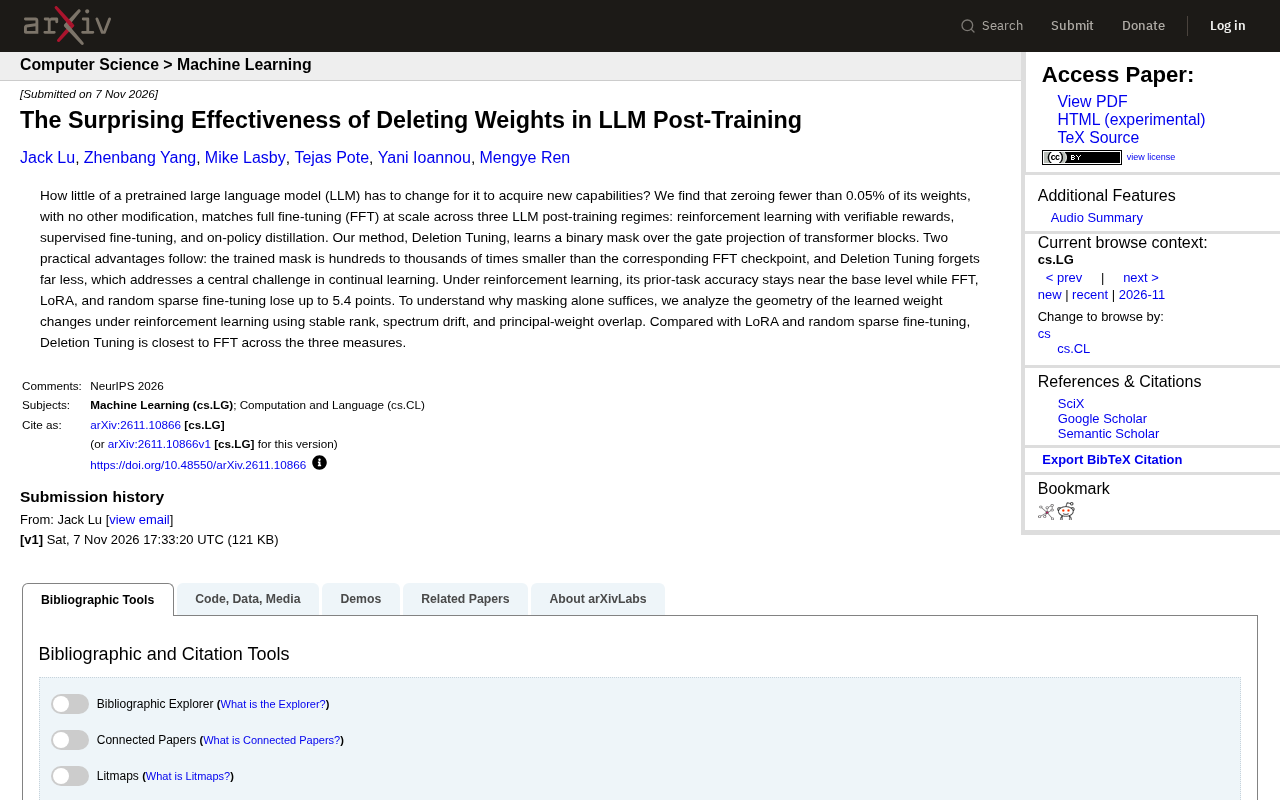
Can Deleting Weights Actually Improve LLM Post-Training?
Exploring the counterintuitive effects of deleting weights in LLM post-training, analyzing regularization and sparsity benefits, challenges, and new ideas for AI practitioners.
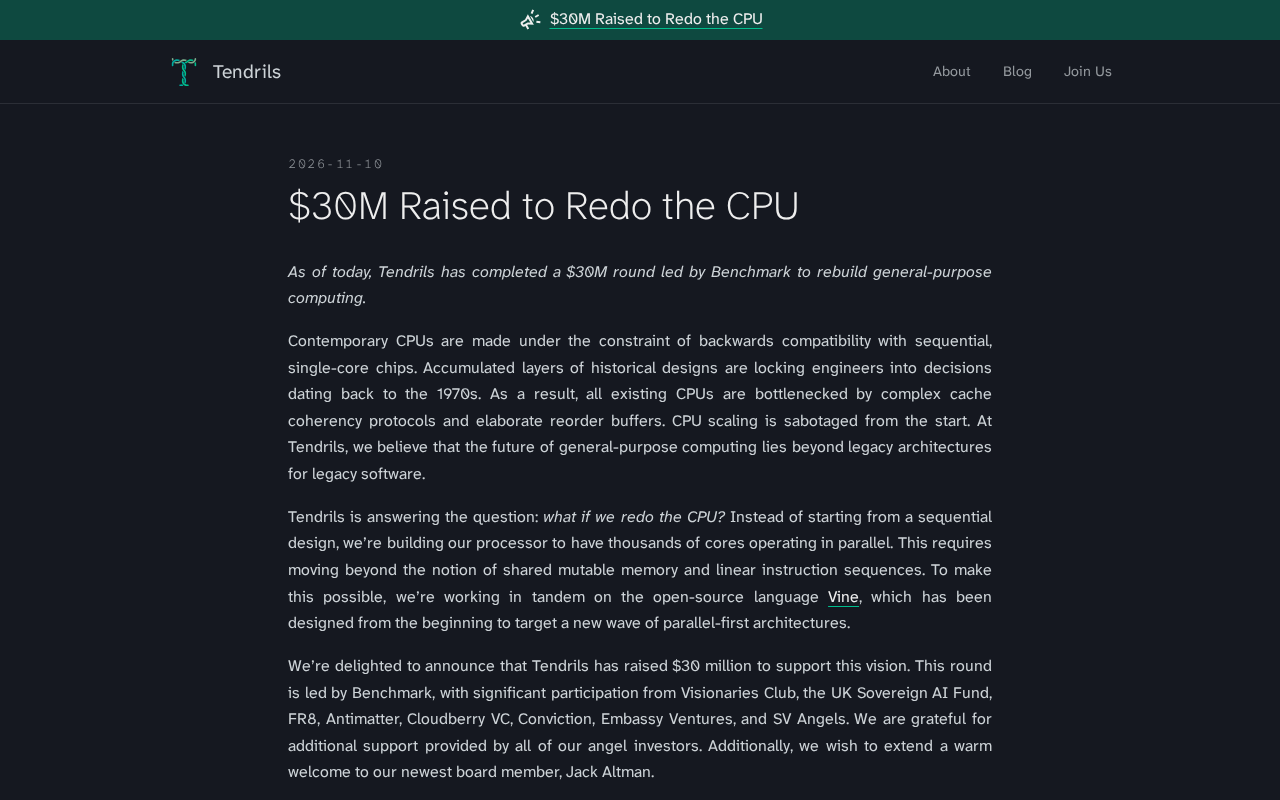
30 Million USD in Funding: The Ambition and Challenge of Redesigning the CPU
A startup has raised 30 million USD to redesign the CPU. This article analyzes its possible technical routes, funding challenges, and industry impact, exploring architectural innovation opportunities in the battle between specialization and generalization.