"AI Is Just a Tool"? This Phrase Is Hiding a Dangerous Cognitive Trap
"AI Is Just a Tool"? This Phrase Is Hi…
Why "AI is just a tool" is a misleading oversimplification that obscures design values and accountability.
The claim that "AI is just a tool" sounds reasonable but dangerously oversimplifies reality. This article examines how AI systems embed value judgments through training data and commercial incentives, why their opacity and scale make them fundamentally unlike traditional tools, and how the "tool neutrality" framing quietly shifts responsibility away from developers. A more mature framework must address design choices, layered accountability, and the sociotechnical nature of AI.
Introduction: The Cognitive Trap Behind a Popular Saying
"AI is just a tool — what matters is how people use it."
This sounds unassailable, even carrying a certain rational neutrality. It appears constantly in tech discussions, policy debates, and corporate PR statements, functioning as a universal deflection whenever AI controversy arises. Yet a widely discussed post on Hacker News makes a pointed argument: it's time to stop thinking about AI this simply.
This perspective deserves serious attention because it surfaces a widely overlooked problem — when we reduce AI to a "tool" and assign all responsibility to "how it's used," we sidestep any rigorous examination of the technology's design logic, inherent tendencies, and systemic effects.
The Historical Origins and Fundamental Limits of "Tool Neutrality"
Are Tools Really Completely Neutral?
The idea of "tool neutrality" is not new to the AI era. Throughout history, people have used similar logic to defend various technologies: "Guns don't kill people, people kill people" or "Nuclear energy can generate electricity or build bombs." The core assumption is that technology itself has no values — good or evil depends entirely on the user.
But the philosophy of technology challenged this long ago. Scholar Langdon Winner, in his landmark essay Do Artifacts Have Politics?, argued that the design of technology inherently encodes specific values and power structures. Winner is a leading figure in Science and Technology Studies (STS); his 1980 paper published in Daedalus remains required reading in the philosophy of technology. He used New York urban planner Robert Moses's Long Island overpasses as a case study — these bridges were built with clearances of just around 9 feet, deliberately too low for buses to pass, effectively excluding lower-income Black residents from public beaches. Winner's conclusion: technology is not value-neutral; its physical form can encode political intent. This insight gave rise to later frameworks like Value-Sensitive Design and profoundly shaped the theoretical foundations of AI ethics today.
Why AI Is Fundamentally Different from Traditional Tools
Compared to a hammer or a calculator, modern AI systems differ in several fundamental ways:
- Autonomy: AI can make decisions and generate content without step-by-step human intervention.
- Opacity: The "black box" nature of deep learning models makes it difficult even for developers to fully explain their behavior.
- Scale effects: A single AI system can simultaneously affect hundreds of millions of users, dramatically amplifying any biases or errors.
- Learning: AI learns from data, and that data carries the inherent biases and limitations of human society.
The "black box" problem is one of the central technical challenges facing contemporary deep learning systems. Modern AI — from the GPT series to LLaMA and other large language models — operates at the scale of hundreds of billions of parameters, and its internal feature extraction and decision pathways are nearly impossible to describe in fully human-understandable terms. In response, Explainable AI (XAI) has emerged as a dedicated research area, with representative methods including LIME (Local Interpretable Model-Agnostic Explanations), SHAP (Shapley Additive Explanations), and more recently, Mechanistic Interpretability. However, these methods still only provide partial, approximate explanations — genuinely "understanding" model behavior remains a distant goal. This fundamental opacity makes the claim that "users bear full responsibility for the tool" untenable even on technical grounds.
These characteristics mean AI is far from a "passive tool waiting to be invoked" — it functions more like an active system with inherent tendencies.
Design Is a Position: Where Do AI's Values Come From?
Training Data Determines the Model's "Worldview"
Every large language model is trained on massive datasets, and the processes of selecting, cleaning, and labeling that data are saturated with human decisions. Which content is included in the training set? What gets filtered out? How do we define the boundaries of "harmful content"? These apparently technical questions are, at their core, value judgments.
There is substantial empirical evidence showing how biases in training data translate into systematic model errors. The most well-known cases include: Amazon's AI recruiting system, exposed in 2018, which systematically downgraded female candidates because the training data was predominantly male résumés — the system was ultimately scrapped; and MIT Media Lab researcher Joy Buolamwini's findings that several commercial facial recognition systems misidentified dark-skinned women at rates as high as 34.7%, compared to just 0.8% for light-skinned men, rooted in severe imbalances in the distribution of skin tone and gender in training datasets. These cases collectively demonstrate that historical biases in data are "learned" and amplified by models as statistical patterns — they are not automatically eliminated by the technical pipeline.
In other words, when an AI system produces output, it is not "neutrally" reflecting the world — it is presenting a particular perspective shaped by training data and design decisions. Claiming AI is just a tool erases these deeply embedded value choices.
How Commercial Goals Quietly Shape Product Behavior
Even more worth noting: AI products are predominantly developed by commercial companies, and their design objectives inevitably serve commercial interests. The design of recommendation algorithms' "objective functions" is a telling example of how commercial motivations become embedded in technology. Platforms like YouTube and TikTok long optimized their recommendation systems primarily for "watch time" or "click-through rates." Research and testimony from MIT Media Lab researcher Jonathan Albright and former Facebook data scientist Frances Haugen both revealed that engagement-maximizing algorithms systematically favor emotionally charged, polarizing content because such content is more effective at driving clicks and interactions. This means a chatbot may be designed to flatter users in order to improve retention, and an algorithm "neutrally optimizing for its objective" can produce severe social consequences — polarizing public opinion and reinforcing biases. The objective function itself is a value judgment, not a technically neutral setting. These embedded incentive structures systematically shape how AI behaves — and that is simply not something end users can fully control.
The Transfer of Responsibility: Who Should Pay for AI's Consequences?
How "Tool Theory" Cleverly Blurs Accountability
A central critique in the Hacker News discussion is that the phrase "AI is just a tool" cleverly transfers responsibility from developers to users. When AI produces discriminatory outcomes, spreads misinformation, or causes real harm, developers can dismissively say: "That's a misuse problem."
This transfer of responsibility is ethically indefensible. If a system's design makes misuse easy and its consequences severe, the designers clearly bear unavoidable responsibility. Offloading all problems onto end users is, fundamentally, an evasion.
Building a More Nuanced AI Accountability Framework
How to clarify responsibility attribution for AI systems in law and policy remains one of the frontier challenges of global governance. The EU AI Act (officially entering into force in 2024) adopts a risk-tiered regulatory framework, classifying AI applications into four risk levels — unacceptable risk, high risk, limited risk, and minimal risk — and imposing strict transparency, auditability, and human oversight requirements for high-risk scenarios (such as medical diagnosis and judicial decisions), with clearly defined layered responsibilities for developers and deployers. The "Algorithmic Impact Assessment" mechanism proposed in academic circles — modeled on environmental impact assessments — would require evaluation of potential social risks before a system goes live, and is widely regarded as a promising approach to front-loading accountability frameworks.
A genuinely responsible approach should build an accountability system covering the full lifecycle:
- Developers: accountable for data quality, safety mechanisms, and known model limitations.
- Deployers: accountable for suitability of application contexts and ongoing monitoring.
- Users: accountable for specific usage behaviors and their direct consequences.
- Regulators: accountable for establishing, enforcing, and dynamically updating the overall rules.
Only by acknowledging the multi-layered nature of responsibility can we truly address the complex challenges AI presents.
Beyond Binary Thinking: Building a More Mature Understanding of AI
Neither Pure Tool Nor Independent Agent
It's important to clarify: rejecting "tool neutrality" does not mean swinging to the other extreme — anthropomorphizing AI or granting it independent moral agency. Current AI systems remain products of human design and control; they have neither intent nor consciousness.
A more accurate understanding might be: AI is a sociotechnical system with inherent tendencies. The concept of a "sociotechnical system" originated in organizational research at the UK's Tavistock Institute in the 1950s, with the core claim that technical subsystems and social subsystems (people, organizations, norms) are mutually dependent and co-evolving — any technological change must simultaneously account for its social embeddedness. Applying this framework to AI means we cannot analyze AI systems in isolation from their training environments, deployment contexts, user communities, and regulatory ecosystems. The emerging paradigms of Responsible AI and Human-Centered AI have deeply absorbed the core insights of this theory. AI carries the value choices of its designers and produces complex, not fully predictable effects through ongoing interaction with society. This perspective requires us to examine both the technology itself and its context of use — not simply choose one or the other.
From "How to Use" to "How to Build"
If the phrase "AI is just a tool" has any merit, it's the reminder to pay attention to how things are used. But its limitation is precisely that it stops there. A more mature discussion should trace the question further back: How should we build AI? What values should be embedded? What constraints should be set? And who should participate in making those decisions?
These are the core questions that genuinely need serious answers in the age of AI.
Conclusion: Rejecting Oversimplified Narratives About Technology
"AI is just a tool — what matters is how it's used" — this phrase is popular precisely because it's simple enough to quickly defuse controversy and relieve us of deeper thinking. But as this Hacker News discussion reveals, simple narratives often conceal complex truths.
As AI increasingly permeates every aspect of our lives, we need more than ever to resist this kind of cognitive laziness. AI is not a value-neutral hammer; it is a complex system carrying countless design decisions, commercial motivations, and social consequences. Only by confronting this reality squarely can we truly begin to think, build, and govern this technology responsibly.
Related articles
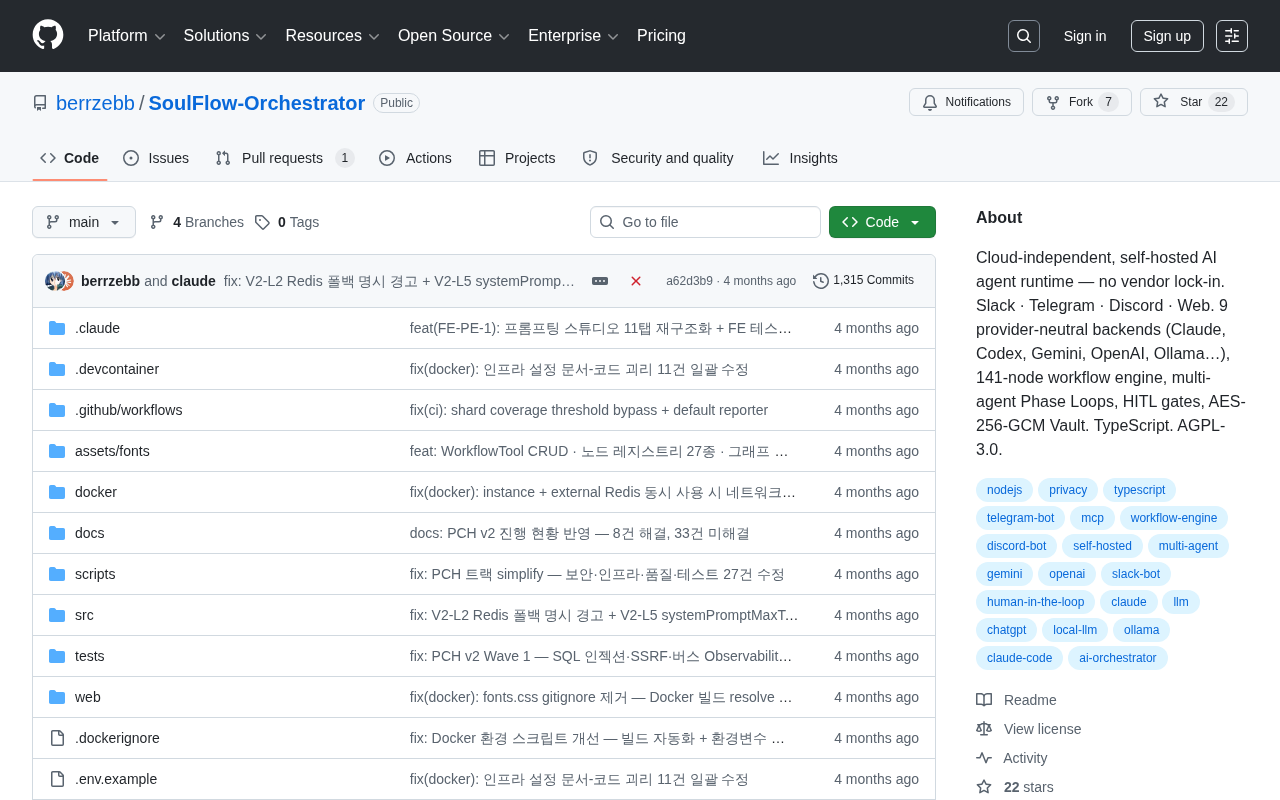
SoulFlow-Orchestrator: A Self-Hosted, Vendor-Lock-In-Free AI Agent Runtime
SoulFlow-Orchestrator is an open-source, self-hosted AI agent runtime with no vendor lock-in. Supports 9 neutral backends (Claude, OpenAI, Ollama), 141-node workflow engine, multi-agent loops, and HITL gates.
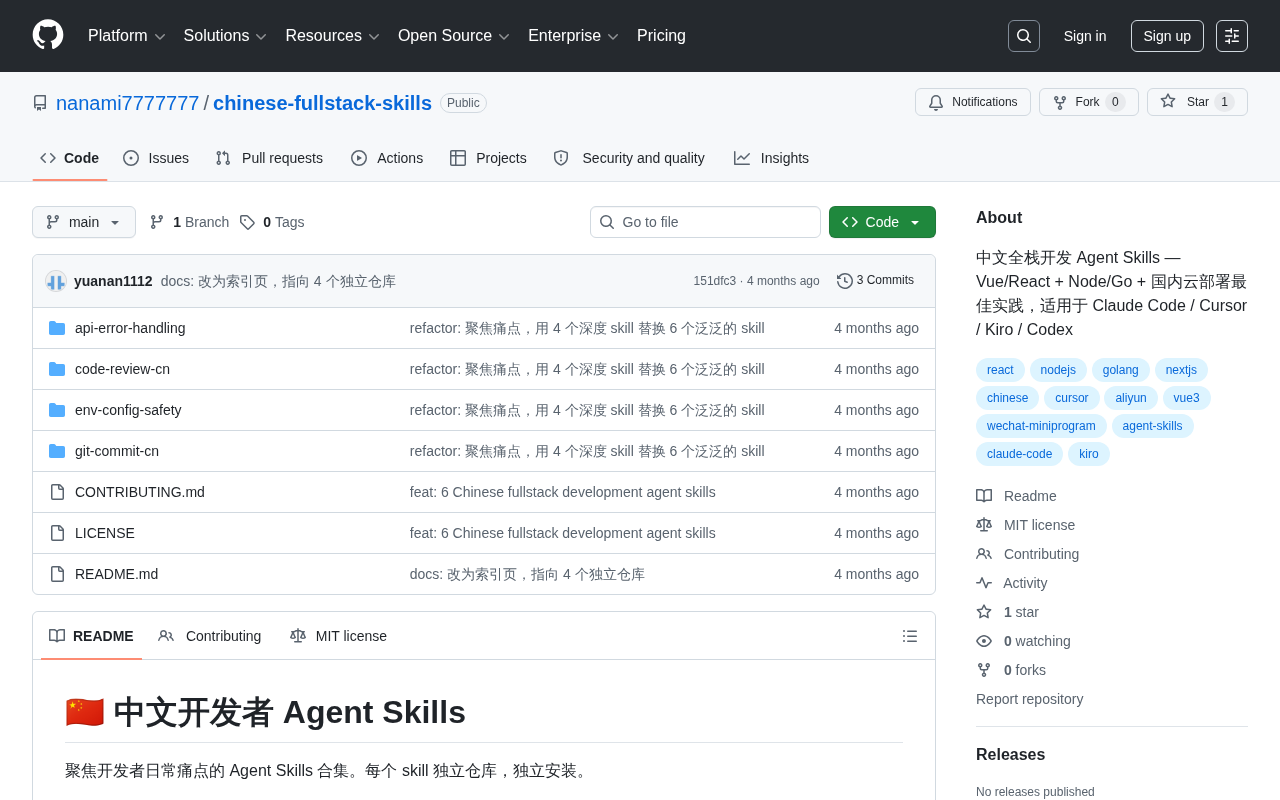
Chinese Full-Stack Agent Skills: A Skill Library Tailored for Domestic AI-Assisted Development
chinese-fullstack-skills is an Agent Skills library for Chinese full-stack development, covering Vue/React, Node/Go, and domestic cloud deployment best practices. Compatible with Claude Code, Cursor, Kiro, and Codex.

Paradigm Memory: A Local-First Memory System for AI Coding Assistants
paradigm-memory is a local MCP memory tool for Claude Code, Cursor, and Cline. It uses SQLite local storage, zero cloud, full audit trails, and a navigable cognitive map instead of bloated context files.