AI Is Now a Core Skill for Every College Student: Agent Design and Career Competitiveness

AI is a cross-disciplinary baseline skill — college students who master it early will outcompete those who don't.
AI is no longer a STEM-exclusive skill — it's a universal baseline capability like Office software, and every student regardless of major needs to engage with it. The real workplace competition isn't humans vs. AI, but AI-literate people vs. those who aren't. Students don't need to learn to code; they need application-layer skills like prompt engineering and AI agent thinking. College is the ideal window to build these capabilities proactively.
AI Is Not Just for STEM Students
Many college students still hold a deeply ingrained misconception: that artificial intelligence belongs exclusively to STEM majors and programmers, and that students in other fields simply don't need to engage with it. This belief is itself the biggest cognitive trap.
AI has long since crossed disciplinary boundaries. Whether you're studying literature, law, marketing, or graphic design, AI will become a foundational skill in whatever career you pursue. It's more like learning to use a computer or Microsoft Office back in the day — not a bonus, but an unavoidable requirement.
In other words, confining AI to a specific academic domain is like the old assumption that only engineers needed computers — a classic case of lagging behind the times. Today's reality is that AI is permeating the everyday workflows of nearly every industry.
People Who Use AI Are Replacing Those Who Don't
The logic of workplace competition is quietly shifting. The real threat isn't AI replacing humans — it's people who use AI replacing those who don't. This is a more realistic and more urgent truth.

A key distinction needs to be made here: ordinary people learning AI don't need to write complex code or build large language models. What we truly need to master is how to use AI effectively and appropriately. This is an application-level skill — the barrier to entry is far lower than most people imagine, yet the value it delivers is enormous.
Just as driving a car doesn't require understanding how an engine works, using AI effectively doesn't require understanding the underlying deep learning algorithms. What matters is building a working methodology and mindset for collaborating with AI.
The Real Value of AI: Freeing Up Time for Thinking
There's another common moral anxiety around AI: the fear that it will be used to cut corners or cheat. But this misunderstands the nature of tools.

AI's core value lies in eliminating repetitive work and preserving your most valuable time for thinking, creativity, and professional depth. Once mechanical, repetitive tasks are delegated to AI, people can channel their energy into work that truly reflects human value — deep thinking, creative expression, and professional judgment.
From this perspective, using AI isn't about taking shortcuts — it's a reallocation of resources. It liberates people from the mundane so they can focus on higher-order cognitive activities. This is also why viewing AI purely as a "cheating tool" is far too narrow a perspective.
Looking at history, every wave of widely adopted general-purpose tools has faced similar moral debate. When calculators arrived, critics warned students would lose the ability to do mental math. When the internet emerged, search engines were accused of encouraging a "look it up and forget it" culture. But the evidence consistently shows that the line between genuine "laziness" and "efficiency gains" has never been about the tool itself — it's about whether the user retains the capacity for independent judgment and deep understanding. AI follows the same logic: after letting AI draft an initial version, can you identify its errors, inject professional insight, and take ultimate responsibility for the outcome? That is the true measure of whether a tool is being used in a healthy way.
College Is the Best Time to Build Your AI Foundation
For college students, the campus years represent a golden window for developing AI capabilities. Compared to scrambling to catch up after entering the workforce, proactively learning AI thinking and techniques while still in school is a far more deliberate form of preparation.

Getting ahead on these skills isn't about "involution" — it's about paving the way for your future and protecting your core competitiveness. While your peers are still sitting on the fence, those who establish AI collaboration skills early will hold a first-mover advantage in job searching and career development.
Where Students Should Start
For students looking to get started, here are a few key directions:
- Build an AI mindset: Understand what AI can and can't do; learn to judge which tasks are appropriate to delegate to AI
- Master prompting techniques: Learn to communicate with AI using clear, structured language — this is the most critical skill at the application layer
- Apply it to your field: Integrate AI tools into your major coursework and practice to find use cases that genuinely improve your efficiency
- Maintain critical thinking: AI output is not always accurate — human judgment and oversight remain irreplaceable
AI Agent design and development is an extension of this trend — it goes beyond using off-the-shelf AI tools to learning how to orchestrate AI to automatically complete a series of tasks, representing the advanced direction of AI application skills.
Prompt engineering is the single most valuable core skill to systematically learn at the AI application layer. Simply put, a prompt is the instruction or question you give to an AI. The same request, expressed in different ways, can yield dramatically different results. High-quality prompts typically include several elements: a clear task objective, necessary background context, the desired output format, and when appropriate, a role assignment (e.g., "Please analyze this from the perspective of a legal advisor..."). Research shows that trained users can extract several times more value from the same AI tool compared to those who ask questions haphazardly. For students without a technical background, prompt engineering offers the highest return on investment of any single AI skill — it requires no programming knowledge yet significantly amplifies the practical utility of AI.
AI Agents represent a more advanced form of AI application. Unlike conventional Q&A-style AI, an Agent is an automated system capable of independently planning steps, calling on multiple tools (such as search, code execution, and file processing), and iterating continuously until a complex task is complete. Understanding the working logic of Agents — task decomposition, tool invocation, and feedback loops — can help users design better workflows and automate repetitive tasks at scale, even without hands-on development experience.
Conclusion: Engage Proactively, Don't Wait Passively
AI has evolved from a novel concept into a concrete baseline capability requirement. For today's college students, rather than debating whether to learn it, the more productive question is: how do I learn it well and use it effectively?
Embracing AI isn't about chasing trends — it's a responsible choice for your own future. In an era of rapid technological evolution, those who proactively master their tools will always go further than those who wait to be told.
Related articles
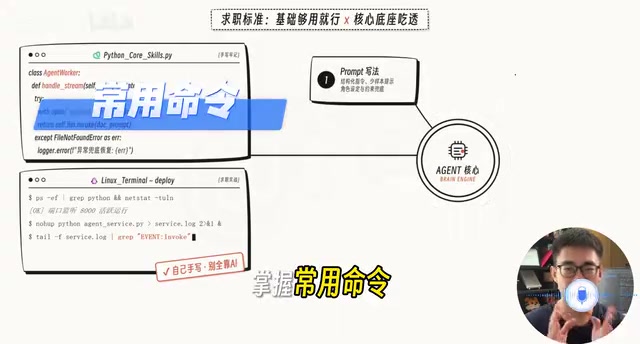
AI Agent Developer Job Hunt Guide: Four Hard Standards to Clear Before You Apply
A practical guide for landing AI Agent developer roles: four measurable standards — project runs, problems debuggable, solution explainable, interviews survivable.
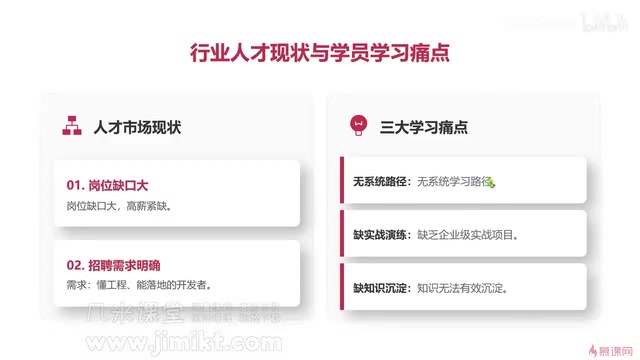
Multi-Agent Development Guide: From Monolithic AI to Team Collaboration in Practice
A beginner's guide to multi-agent development covering core advantages, common learning pain points, enterprise tech stacks, and engineering methodology for AI developers.
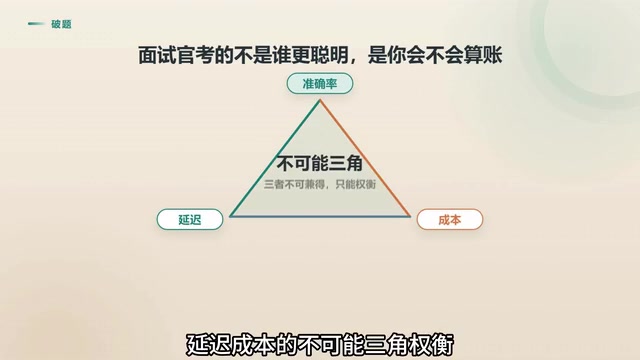
Agent Skill Routing: Retrieval vs. LLM vs. Two-Stage Architecture Compared
Retrieval or LLM for Agent skill routing? Compare coarse-filter vs. fine-select architectures on latency, accuracy, and cost — with 4 key production considerations.