AI Large Language Models: From Basics to Real-World Deployment — A Career Pivot Window for Everyone

AI large models are shifting from hype to real deployment — and practitioners who can execute are now the scarcest resource.
As inference costs plummet and API prices nearly halve, the AI industry's core logic has shifted from capital arms race to engineering execution. Unlike ordinary chat AI, large language models can read business data, integrate with enterprise systems, and autonomously execute complex workflows. Proven use cases already exist in HR, legal, and e-commerce — with dramatic efficiency gains. The article argues that prompt engineers are now commonplace; what's truly scarce is the practitioner who can take a model from error messages to a live, production-ready deployment. Readers are also cautioned that "zero-to-high-salary" framings carry clear marketing intent and should be evaluated critically.
From Arms Race to Engineering Efficiency: The AI Industry's Logic Is Shifting
A series of recent signals suggests that the underlying logic of the AI industry is undergoing a fundamental shift. ByteDance has committed massive capital to AI infrastructure, and NVIDIA founder Jensen Huang, during his visit to China, openly acknowledged that China is a central battleground in the global AI race. Meanwhile, inference costs for large models continue to fall, with domestic API prices nearly halved within six months.
Taken together, these developments point to one conclusion: the enterprise approach to AI has moved on from the early capital-intensive "arms race" mentality toward a relentless pursuit of engineering efficiency. This pattern repeats itself throughout the history of technology — whenever the technical barrier disappears, the application layer explodes. And the core vehicle driving this next wave of growth is the AI large language model.
What Exactly Is an AI Large Language Model?
In a single sentence: an AI large language model is an intelligent productivity tool capable of empowering entire industries and replacing repetitive manual work. It is fundamentally different from an ordinary chat AI.
A standard chat AI can only respond passively — you ask a question, it gives an answer, and the interaction stays at the level of basic Q&A. The capabilities of a large language model are far more sophisticated: it can precisely read business data, integrate with enterprise system APIs, intelligently break down complex business tasks, and autonomously plan and execute complete workflows. During execution, if it encounters data anomalies or process bottlenecks, it can self-correct and optimize, ultimately delivering standardized, deployment-ready results.
This leap from "conversation partner" to "capable worker" is exactly what distinguishes large models from ordinary chat AI — and what makes them viable in real enterprise environments.
From a technical perspective, the term "Large Language Model" (LLM) derives from parameter scale — modern mainstream models typically have parameters ranging from tens of billions to several trillion. Parameters can be loosely understood as the encoded form of the knowledge and patterns a model "learns" from vast amounts of text; the larger the scale, the stronger the model's language comprehension and reasoning ability tends to be. "Fine-tuning," mentioned in this article, refers to taking a general-purpose large model and performing secondary training on domain-specific data, making it better aligned with the terminology, formatting, and logic of a particular business context — for example, training a model on a company's own contract documents to produce a specialized model that better understands legal rules. "API integration" means enterprises don't need to deploy massive models themselves; they simply call third-party model services over the network and pay per usage — which is also the most direct way businesses benefit from falling inference costs.
Real-World Deployment Scenarios That Have Already Been Proven
Just how significant is the impact when large models are applied to specific enterprise scenarios? Several real-world cases that have already been deployed illustrate the point.
HR and People Management: An HR large model can fully automate employee onboarding, transfers, and offboarding; handle initial resume screening and matching; and manage attendance calculations — completing massive recruitment screening tasks end-to-end, with reported efficiency gains of around 10x.
Legal and Compliance: A legal large model can automatically review contract clauses, identify risk loopholes, and generate compliant documents. Contract review work that previously took an entire day can now be completed in around fifteen minutes.

E-commerce: An e-commerce large model can automatically generate product copy, analyze user reviews, and accurately diagnose customer conversion issues — providing around-the-clock support for store operations and optimization.
It's worth emphasizing that these are not future-facing features still in the concept stage — they are applications that have already been proven in live enterprise environments. What they share in common: handing off large volumes of repetitive, process-driven work that previously consumed significant human effort to large models for batch processing.
What's Scarce Isn't Theory — It's Practical Execution
The author of the original video makes a noteworthy observation: AI large models won't eliminate people, but they will create a growing gap between those who can deploy them in the real world and everyone else.

This point is especially vivid in a job-seeking context. Two candidates apply for the same position: one lists "proficient in office software" on their resume, while the other lists "independently deployed a customer service large model and intelligent reporting large model in live projects." The interviewer's choice is obvious.
The author goes further: what the industry is truly short of isn't people who only understand theory. People who know prompt engineering and are familiar with the basic architecture of large models are already everywhere. But practitioners who are willing to take on real enterprise projects, handle model fine-tuning and deployment adaptation, and bring a project all the way from error messages to a fully functioning system — you'd struggle to find even one in ten.
There is a clear information gap and capability gap here — and that is precisely the window of opportunity for ordinary people to make a genuine career pivot.
"Prompt Engineering" refers to the practice of carefully crafting the instruction text fed to a model in order to guide it toward more accurate, requirement-aligned outputs. This skill was once considered a core competitive advantage, but as model capabilities have improved and tutorials have proliferated, the barrier to entry has dropped sharply. When the article says "people who know prompts are everywhere," this is exactly what it means. What actually forms a real barrier is the engineering ability to embed models into real business systems — including handling unstable model outputs, formatting results and writing them into enterprise databases, and managing API timeouts and error retries. These issues almost never appear in tutorial environments, yet they are the most common bottlenecks in real projects, and the true dividing line between "theory people" and "execution people."
The Starting Line and Practical Advice
The author draws an analogy between today's AI large models and WeChat Official Accounts ten years ago, or short-form video five years ago. History shows that the first to capture the dividends of an era are rarely the most technically proficient — they are the ones who act first.

In terms of learning investment, the author argues the barrier isn't high: set aside about two hours a day, stay consistent for three months, and that's enough to go from "having heard of large models" to actually being able to execute real deployment projects hands-on.
It's worth viewing this with some critical distance. Phrases like "zero background to high salary" and "skip 99% of the wrong turns" carry obvious marketing and lead-generation undertones; actual learning curves and employment outcomes vary significantly from person to person, and readers should exercise independent judgment. But strip away the sales language, and the core logic still holds up — as inference costs fall and API prices drop, the barrier to applying large models really is getting lower, and enterprise demand for people who can translate technology into tangible outcomes is genuinely growing. For those hoping to enter this field, a more practical path than obsessing over theoretical depth may be to get involved in real projects as early as possible and build a track record of demonstrable, deployed work.
Related articles
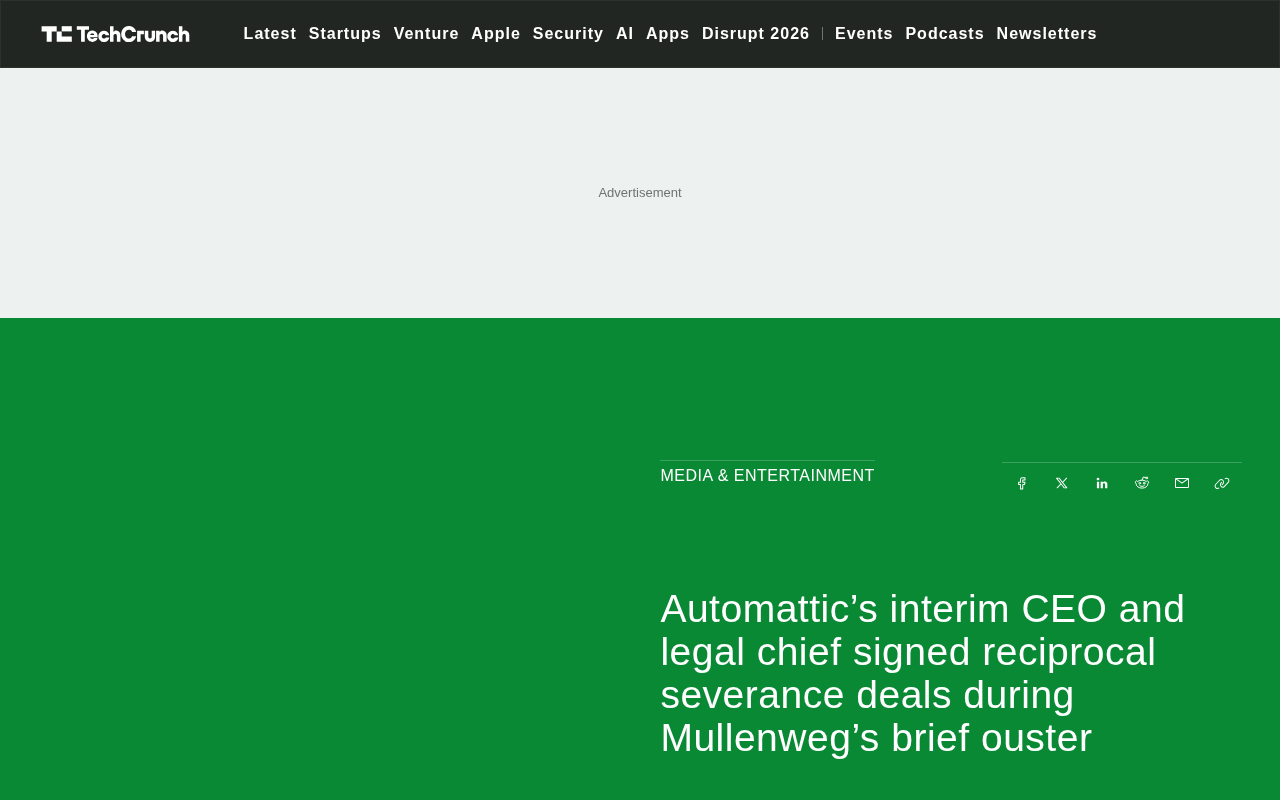
Automattic Executives Signed Reciprocal Severance Agreements During Mullenweg's Brief Ouster
Automattic's CFO and General Counsel signed reciprocal severance agreements during Matt Mullenweg's brief ouster, covering one year's salary and accelerated equity vesting, raising corporate governance concerns.
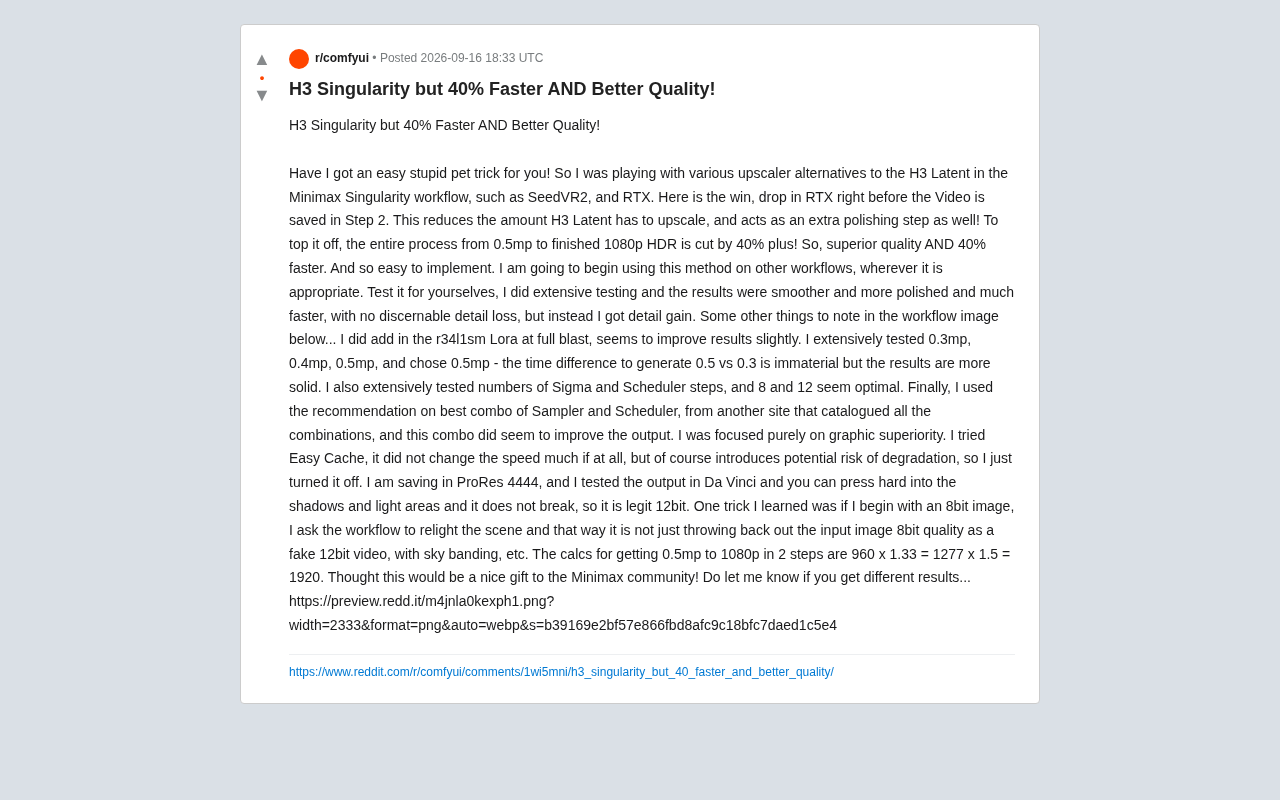
H3 Singularity Optimization: 40% Speed Boost With Better Image Quality
A Reddit user's Minimax Singularity workflow tip: insert an RTX upsampler before H3 Latent for 40%+ speed gains and better quality. Covers parameters, 12-bit output, and more.
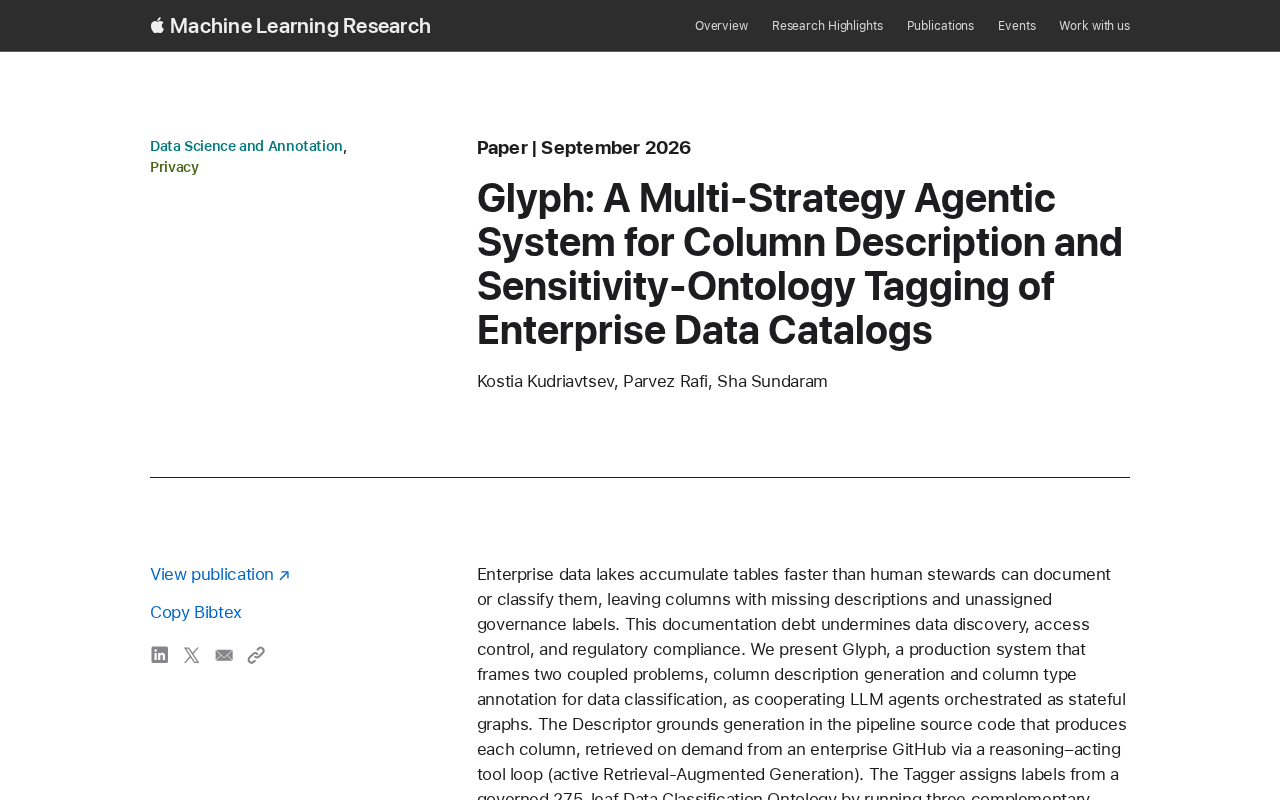
Glyph: A Multi-Strategy Agent System for Automated Enterprise Data Catalog Annotation
Glyph is a multi-strategy LLM agent system for enterprise data catalogs that automates column description generation and sensitivity ontology tagging, grounding outputs in pipeline source code to improve accuracy.