Glyph: A Multi-Strategy Agent System for Automated Enterprise Data Catalog Annotation
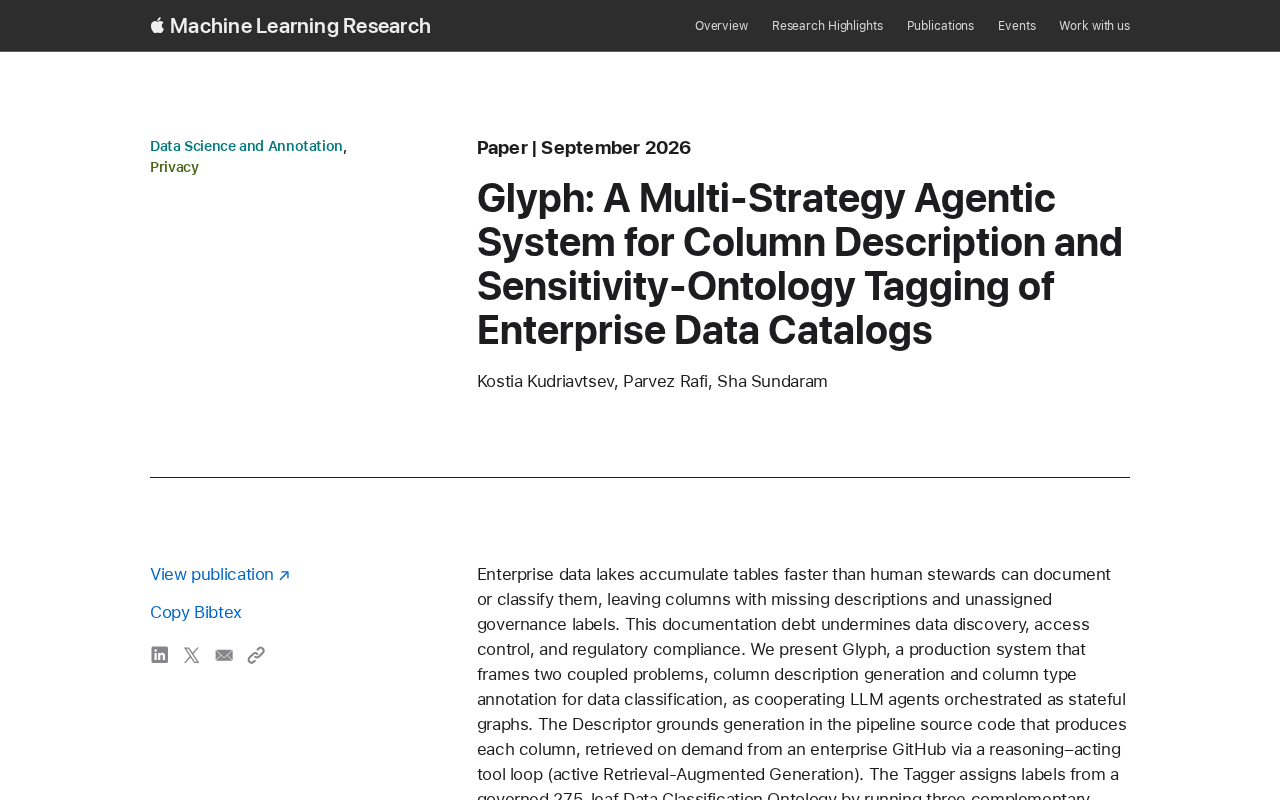
Glyph uses multi-agent collaboration and code-grounded generation to automate column descriptions and sensitivity tagging in enterprise data lakes.
Enterprise data lakes accumulate undocumented columns faster than stewards can label them, creating "documentation debt" that undermines data discovery, access control, and compliance. Glyph is a production multi-strategy agentic system that models column description generation and sensitivity ontology tagging as cooperating LLM agents orchestrated via stateful graphs. Its core Descriptor component grounds generation in the ETL pipeline source code that produced each column, dramatically reducing hallucination and providing auditable provenance. The result is a practical path for automating the most labor-intensive parts of GDPR and similar compliance workflows at enterprise scale.
The "Documentation Debt" Problem in Enterprise Data Lakes
Enterprise data lakes expand far faster than human governance can keep up. Tables accumulate at the speed of automated pipelines, while data stewards responsible for organizing and classifying them simply can't match the pace. The result: vast numbers of columns missing descriptions and governance labels — what's commonly called "documentation debt."
This debt is no minor issue. Columns lacking descriptions and classification tags directly undermine three critical things: data discovery, access control, and regulatory compliance. When you can't determine whether a given column contains sensitive information, fine-grained permission management becomes impossible — as does meeting increasingly stringent regulatory requirements.
The Two Coupled Problems Glyph Addresses
The researchers behind Glyph present it as a production system that handles two interrelated problems within a unified framework:
- Column description generation: Automatically producing readable, business-meaningful descriptions for undocumented columns.
- Column type annotation and data classification: Tagging columns with sensitivity and governance-related ontology labels (sensitivity-ontology tagging).
These two tasks aren't independent — they're coupled. A column's semantic description often determines which sensitivity category it belongs to, and conversely, the classification result can constrain the accuracy of the description. Glyph's core approach is to model both tasks as cooperating LLM agents, orchestrated as stateful graphs.
Multi-Strategy Agent Orchestration
A "multi-strategy agentic system" means Glyph doesn't rely on a single prompt or a single model call. Instead, multiple agents with distinct responsibilities collaborate within a stateful graph. The graph structure allows the system to maintain intermediate state, retrieve context on demand, and pass information across multiple steps — offering far more control and traceability than a one-shot end-to-end generation approach.
Stateful graphs are an important infrastructure concept for multi-agent systems worth elaborating on. Unlike stateless, single-pass LLM calls, stateful graphs persist intermediate results throughout the reasoning process — for example, source code snippets retrieved by one agent, or a draft description generated by another — and feed these intermediate states as inputs to subsequent nodes. Frameworks like LangGraph and LlamaIndex Workflows provide similar graph orchestration capabilities. The key advantage of this design is observability: the inputs and outputs of every node can be logged and audited, which is especially important in enterprise compliance contexts — the system must not only deliver a conclusion, but also be able to explain how it was reached. In Glyph's context, the graph structure allows the description generation and sensitivity classification agents to share intermediate state and mutually constrain each other, rather than running independently and stitching results together afterward.
Descriptor: Grounding Generation in Source Code
A key component of Glyph is the Descriptor. What makes it distinctive is that rather than having the LLM "guess" a column's meaning in isolation, the generation process is grounded in the pipeline source code that produced that column.
This is an engineering-valuable design choice. The true semantics of enterprise data columns are often embedded in the ETL/data pipeline code that created them — how a field is computed, which upstream table it comes from, what transformations it underwent. By retrieving this source code on demand as context, the Descriptor generates column descriptions that are more factually grounded and less prone to hallucination. Compared to traditional approaches that rely only on column names and a small sample of data values, this "code as evidence" methodology significantly improves reliability.
The term "grounding" has a specific meaning in LLM application engineering: constraining the model's generative behavior to verifiable external evidence in order to combat hallucination. Approaches that rely purely on column names and sampled data have clear blind spots — column names may be abbreviations or internal codenames, and sampled data may have lost semantic value through anonymization or sparsity. ETL/data pipeline source code is different: it records a field's computation origin, JOIN relationships, and transformation rules in explicit logic, making it the most authoritative "primary documentation" of data semantics. The Descriptor's approach is essentially similar to Retrieval-Augmented Generation (RAG), except the retrieval target shifts from a general knowledge base to the enterprise's internal code repository. This design choice simultaneously solves two problems: reducing hallucination rates, and providing traceable provenance for generated descriptions so data stewards can verify them during review.
Why This Approach Deserves Attention
From an industry perspective, Glyph addresses a genuine pain point in data governance automation. Traditionally, completing column-level metadata has been heavily manual — costly and difficult to scale. Introducing LLM agents into this workflow could theoretically free stewards from repetitive labor, allowing human effort to focus on review and exception handling.
Also worth noting is its direct support for the compliance dimension. Sensitivity-ontology tagging means the system attempts to identify which columns involve personal privacy, financial data, or other regulated data categories — precisely the most labor-intensive part of operationalizing regulations like GDPR. Automating this step has clear real-world significance for large enterprises' data compliance frameworks.
As a production system, Glyph's positioning also signals that it's more than a laboratory prototype — it's a solution designed to deploy against real enterprise data catalogs.
A sensitivity ontology is the structured representation of a data classification framework, typically defined as a hierarchical tree of data types and sensitivity levels — for example, grouping "name," "national ID number," and "medical records" under the parent node "Personally Identifiable Information (PII)." The significance of ontology tagging is that it goes beyond free-text descriptions: a structured classification label can be directly consumed by access control policies, data catalog search engines, and compliance reporting tools without requiring further natural language parsing. Regulations like GDPR, CCPA, and HIPAA often require enterprises to quickly locate all fields holding specific categories of data — exactly the scenario where an ontology tagging system delivers value. Glyph models the classification task as mapping to nodes within a predefined ontology, meaning its output can directly integrate with an enterprise's existing data governance toolchain rather than producing free text that requires secondary processing.
Summary
Glyph demonstrates a pragmatic path for Agentic AI in enterprise data governance: multiple LLM agents dividing responsibilities and collaborating, orchestrated via stateful graphs, with generation grounded in reliable evidence such as pipeline source code — simultaneously addressing the coupled tasks of column description and sensitivity classification.
It's worth noting that the currently available materials are primarily drawn from the paper abstract; specific evaluation metrics, accuracy figures, and comparisons against baseline methods are not fully presented in the source material for this article. For teams focused on data governance automation, Glyph's architectural approach — especially the "code-grounded generation" aspect — already offers valuable reference points.
Related articles
Automattic Executives Signed Reciprocal Severance Agreements During Mullenweg's Brief Ouster
Automattic's CFO and General Counsel signed reciprocal severance agreements during Matt Mullenweg's brief ouster, covering one year's salary and accelerated equity vesting, raising corporate governance concerns.
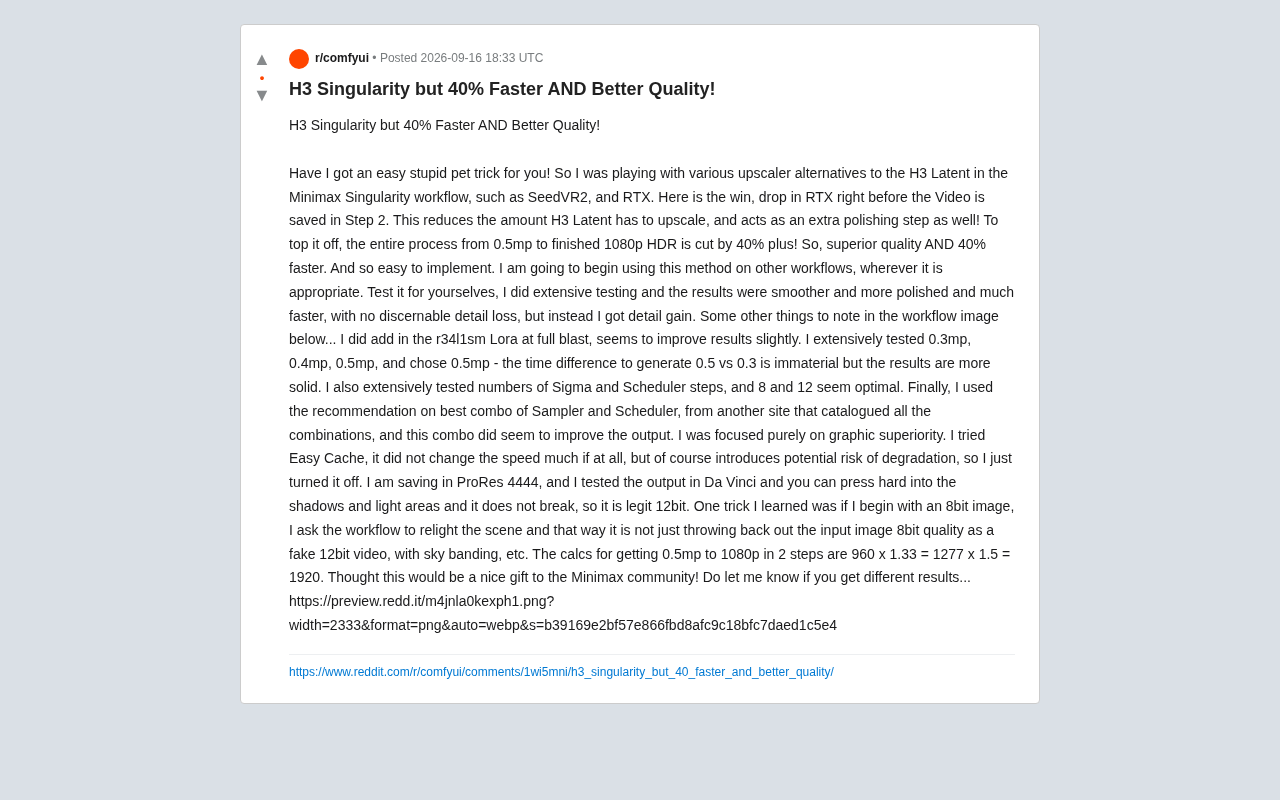
H3 Singularity Optimization: 40% Speed Boost With Better Image Quality
A Reddit user's Minimax Singularity workflow tip: insert an RTX upsampler before H3 Latent for 40%+ speed gains and better quality. Covers parameters, 12-bit output, and more.
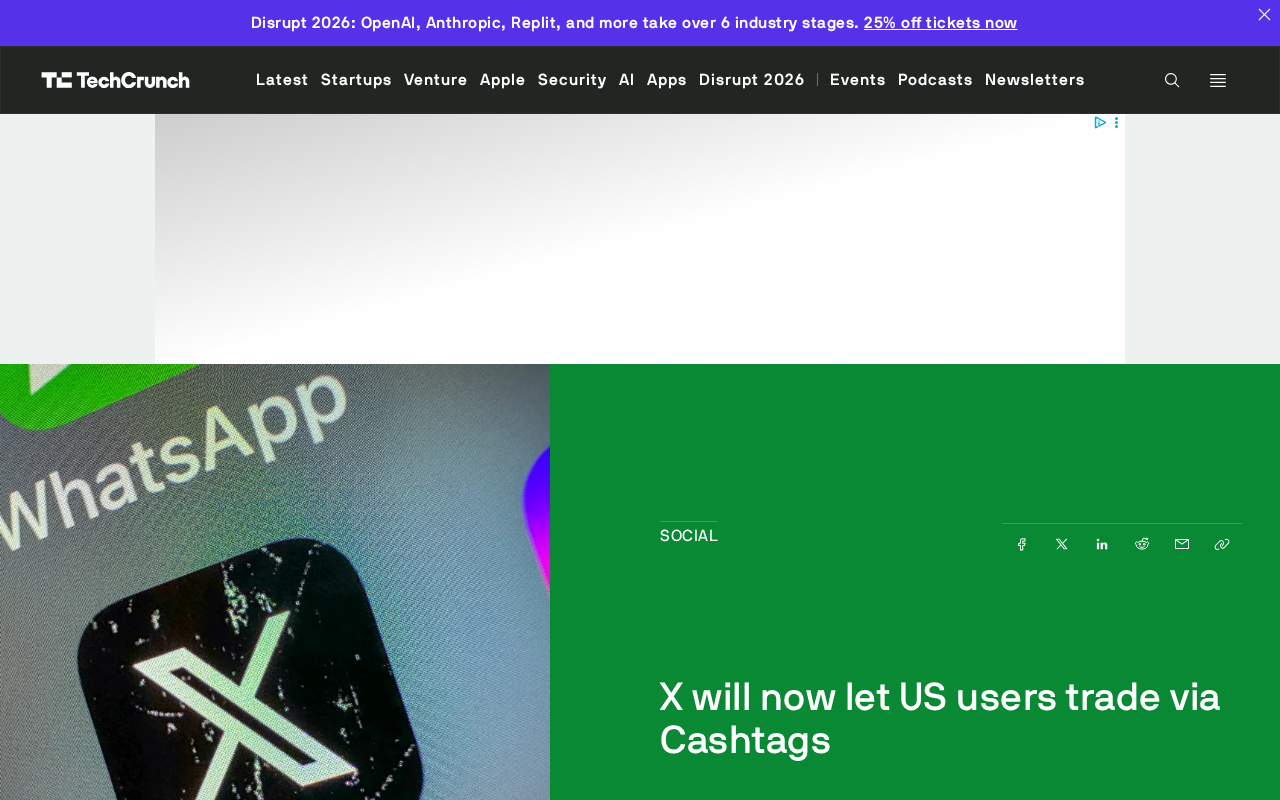
X Launches Cashtag Stock Trading, Blurring the Line Between Social Media and Markets
X (formerly Twitter) is rolling out Cashtag-based stock trading for U.S. users, merging market discussion with trade execution. We break down how it works, the risks of social trading, and what it means for X's everything-app ambitions.