AI Large Model Learning Roadmap for Beginners: Three Stages from Prompt Engineering to Agent Development
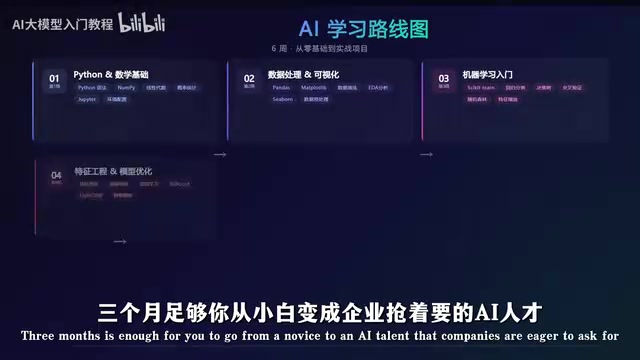
A 3-stage roadmap: prompt engineering → RAG knowledge bases → Agent development, with a grounded take on the "3-month" promise.
This article outlines a three-stage AI learning roadmap for beginners: Stage 1 covers prompt engineering and API integration, with a copywriting generator as the hands-on project; Stage 2 introduces RAG and vector databases for building private-data Q&A assistants; Stage 3 dives into Agent development using the ReAct pattern and multi-agent collaboration. The article emphasizes that each stage must produce a real, working project, and offers a candid reality check on marketing claims like "job-ready in three months" — arguing that genuine capability comes from hands-on experience, not just completing tutorials.
AI Large Model Learning Roadmap for Beginners: Three Stages from Fundamentals to Hands-On Practice
As the wave of AI large models continues to surge, one question dominates the minds of beginners: if I start learning today, how long will it realistically take before I can build something useful — or even transition into an AI role that companies are actively hiring for? One popular Bilibili creator put it this way: with a clear roadmap and consistent effort, three months is an achievable target. This article synthesizes that learning framework into a structured progression from foundational knowledge to real-world application, with practical analysis and honest caveats along the way.
One important disclaimer upfront: phrases like "job-ready after finishing the course" are motivational framing more than guarantees. What actually matters is producing tangible project outputs at each stage. Bookmarking a tutorial is not the same as learning it — skills only solidify when you build something real.
Stage 1: Build the Foundation — Master Prompt Engineering and API Calls
Many beginners fall into a common trap: they want to jump straight into model training or fine-tuning large models. In reality, training LLMs from scratch demands enormous compute resources, high-quality datasets, and deep engineering expertise — it's simply not the right starting point.
The correct first step is learning how to effectively use existing large models. This involves two things: writing clear, well-structured prompts (understanding how to guide model outputs through instructions, context, and examples), and getting a solid grasp of how API calls work — specifically, how to integrate a model's capabilities into your own programs.
The hands-on goal for this stage is concrete: build a viral copywriting generator. When you can reliably produce high-quality copy using prompt engineering combined with API calls, you've already developed real, applicable skills. As the creator puts it, finishing this step means you could "go freelance writing copy for clients" — a slight exaggeration, perhaps, but it genuinely illustrates that prompt engineering skills have standalone monetization value.

Stage 2: Learn to Get Things Done — Master RAG and Knowledge Base Construction
Once the foundation is solid, Stage 2 enters the territory of truly "putting AI to work," with Retrieval-Augmented Generation (RAG) at its core.
RAG addresses a fundamental limitation of large models: out of the box, they have no knowledge of your company's internal documents, proprietary industry reports, or private datasets. With RAG, you can enable AI to first retrieve relevant content from a knowledge base you provide, then generate accurate answers grounded in that content — dramatically reducing hallucinations.
Key skills to develop at this stage include:
- Data cleaning: How to transform messy, unstructured documents into structured data that AI can process
- Vector databases: Understanding how text is converted into vectors, stored, and retrieved
- Agent and knowledge graph basics: Laying the groundwork for Stage 3
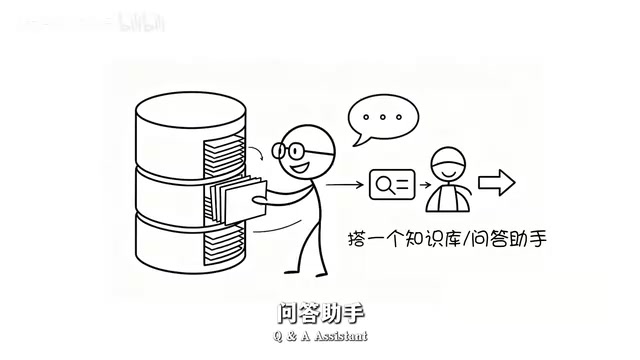
The hands-on project here is building a knowledge base Q&A assistant. Load it up with industry reports, company manuals, and internal documents — then query it directly for accurate, source-grounded answers. This type of application addresses very real enterprise needs, from customer support and internal knowledge management to industry research.
Vector databases are the core infrastructure of any RAG system and deserve a closer look. Before text enters a vector database, it's first processed by an embedding model, which converts it into a high-dimensional numerical vector — essentially encoding semantic meaning as coordinates in mathematical space. Text that is semantically similar ends up with vectors that are spatially close to each other. At retrieval time, the user's query is also converted into a vector, and the system uses cosine similarity or Approximate Nearest Neighbor (ANN) algorithms to quickly identify the most semantically relevant text chunks from the knowledge base. These chunks, along with the original question, are then passed to the large model to generate a response. Popular vector databases include Chroma, Pinecone, Weaviate, and Milvus — Chroma in particular appears frequently in beginner tutorials due to its lightweight, easy-to-use design. Understanding this mechanism is invaluable for debugging retrieval quality: when AI gives a wrong answer, the issue often lies in the embedding approach or retrieval parameters, not the model itself.
Stage 3: Get Your Hands Dirty — Build Agents and Multi-Agent Collaboration
Stage 3 is the most technically demanding and the most revealing of real engineering capability — actually building a functional Agent.
The conceptual core here is the ReAct pattern (Reasoning + Acting). Simply put, instead of passively answering questions, the AI enters a loop of "think → act → observe → think again," autonomously deciding which tools to call (search, calculation, database queries, etc.) to complete a complex task. This is the critical leap from "chatbot" to "AI assistant that actually gets things done."
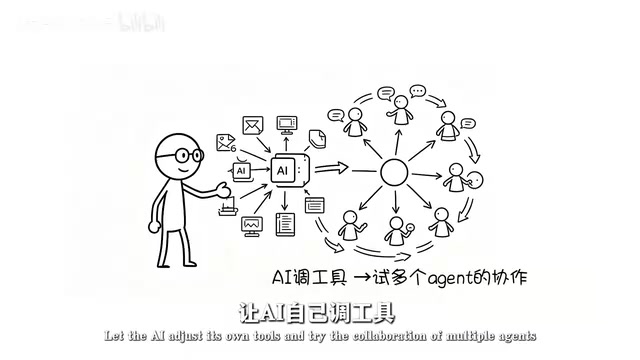
The next level beyond this is multi-agent collaboration. When a single agent struggles with complex workflows, you can design multiple specialized agents working in concert — one for planning, one for execution, one for review and verification. Completing this stage equips you to build a fully functional conversational assistant, or to design a comprehensive AI implementation plan for an enterprise.
The ReAct pattern (Reasoning + Acting) was formally introduced in a 2022 paper from Princeton University and Google, and it forms the conceptual backbone of most modern agent frameworks. The core loop works like this: the model first outputs a "Thought," describing its current reasoning; it then decides on an "Action" — calling a specific external tool; the tool returns an "Observation," and the model re-enters the reasoning phase, repeating until the task is complete. This structure makes the model's reasoning traceable and debuggable, dramatically improving reliability compared to pure end-to-end generation. LangChain, LlamaIndex, and AutoGen are the most widely used agent development frameworks today — all natively support the ReAct pattern and provide out-of-the-box components for tool calling, memory management, and multi-agent orchestration. For beginners, the most intuitive path to understanding ReAct is running a single-agent tool-calling example in LangChain end-to-end.
Is This Roadmap Worth Following? A Few Honest Observations
From a technical standpoint, the "Prompt Engineering → RAG → Agent" three-stage progression aligns well with the mainstream logic of AI application development today. It's incremental, each step has a clear project output, and the direction is sound.
That said, a few things deserve a realistic assessment:
- "Three months to job-ready" is an optimistic benchmark: Whether you hit that target depends heavily on your existing programming background, hours invested, and practice intensity. Those with prior coding experience will ramp up much faster; true beginners may need significantly longer.
- Employability is about more than tool proficiency: What companies actually want are people who can solve real problems and have genuine project experience. Simply following tutorials to completion isn't enough — you need real projects to sharpen your skills.
- Watch out for marketing language: Phrases like "job-ready after the course" or "companies are competing to hire you" often carry promotional undertones. Keep your focus on the skills themselves, not the promises.
Closing Thoughts
The greatest value of this learning roadmap lies in the clear, actionable progression it provides: start with prompt engineering and API calls, advance to RAG for handling real business data, then graduate to Agent development for autonomous task execution. The three stages build on each other naturally, and each comes with a concrete hands-on project.
For beginners, the real barrier isn't the roadmap itself — it's the willingness to move beyond "save it for later" and actually build something at every stage. The technology landscape evolves rapidly, but the underlying engineering mindset and hands-on capabilities are what create lasting, durable value.
Related articles
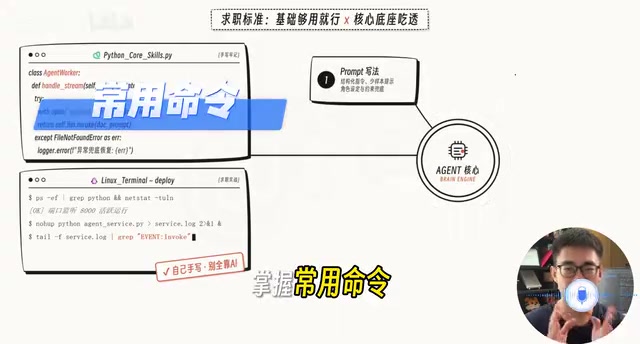
AI Agent Developer Job Hunt Guide: Four Hard Standards to Clear Before You Apply
A practical guide for landing AI Agent developer roles: four measurable standards — project runs, problems debuggable, solution explainable, interviews survivable.
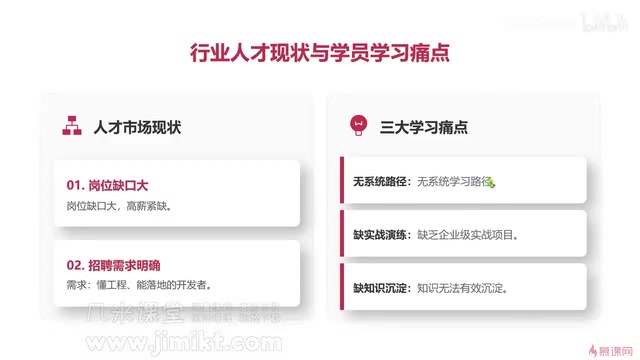
Multi-Agent Development Guide: From Monolithic AI to Team Collaboration in Practice
A beginner's guide to multi-agent development covering core advantages, common learning pain points, enterprise tech stacks, and engineering methodology for AI developers.
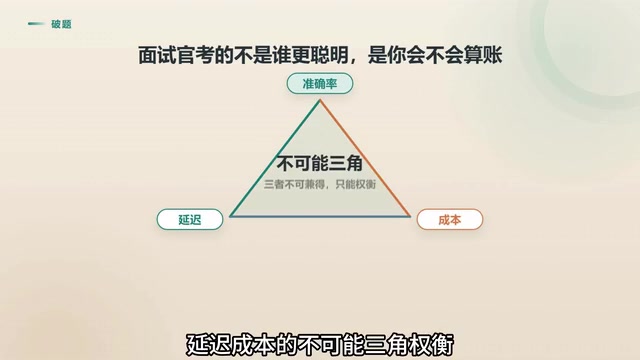
Agent Skill Routing: Retrieval vs. LLM vs. Two-Stage Architecture Compared
Retrieval or LLM for Agent skill routing? Compare coarse-filter vs. fine-select architectures on latency, accuracy, and cost — with 4 key production considerations.