AI Manga Drama Production: A Complete Beginner's Guide Using Fanqie, Doubao, Jimeng & Hongguo
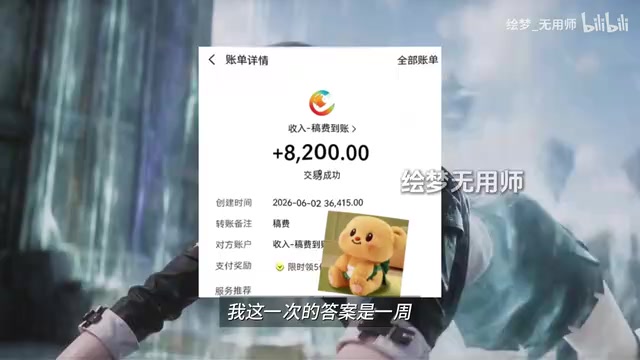
A 6-step AI workflow lets anyone produce serialized manga dramas at low cost and monetize on Chinese short-video platforms.
AI manga dramas use tools like Doubao and Jimeng to chain script generation, storyboarding, text-to-image, image-to-video, editing, and platform publishing into a standardized workflow. Monetization relies on ad-unlock and paid-unlock revenue sharing on platforms like Fanqie and Hongguo, with continuous serialization being key to accumulating income. While the tutorial brings production costs down to roughly 100 RMB, "five-figure monthly income" claims represent individual outliers — not typical results. Content homogenization is intensifying, and original storytelling plus consistent output remain the true competitive advantages.
What Are AI Manga Dramas, and Why Are They Suddenly Trending?
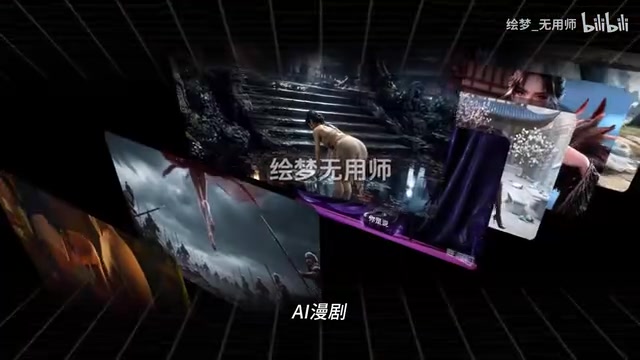
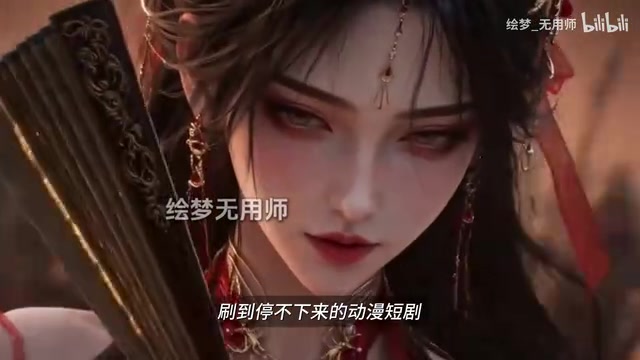
AI manga dramas are a form of short animated series designed to keep viewers bingeing episode after episode. Using AI tools to mass-produce scripts, visuals, and voiceovers, creators distribute their work on platforms like Fanqie and Hongguo, which support serialized content and offer revenue-sharing mechanisms. The business logic is straightforward: viewers either watch ads or pay to unlock the next episode, and creators earn a cut of that revenue.
As one Bilibili tutorial puts it, the barrier to entry is dropping fast — "It's no longer a question of whether you can make it; it's who gets their workflow running first." Once a series is up and running, ad unlocks and paid unlocks create a sustained positive feedback loop, theoretically forming a repeatable content income model.
That said, it's worth keeping realistic expectations. Claims like "five-figure monthly income in one week" described in the video reflect individual creators' personal experiences — not universally reproducible results. For most people, this is more like a content entrepreneurship path that requires ongoing effort and experimentation, rather than a guaranteed shortcut to profit.
The Monetization Logic Behind AI Manga Dramas
The tutorial lays out the monetization model in blunt terms: serialized content leaves viewers with only two choices — watch an ad or pay. Either way, the creator earns a share. Those few seconds of "unlocking" are described as "building an infinitely replicable income model."
The key to this model is serialization and high-volume output. A single episode is unlikely to generate stable income. Only when content is updated consistently and viewers develop a habit of following the series do ad and paid-unlock revenues start to accumulate. This explains why the tutorial repeatedly emphasizes "turning the workflow into your own standardized process" — efficiency determines output volume, and output volume determines your earning ceiling.
The ad-unlock and paid-unlock revenue-sharing mechanisms offered by platforms like Fanqie Novel and Hongguo Short Drama are the infrastructure that makes this business model viable. Hongguo, for example, provides creators with ad revenue shares calculated by view count or unlock count, and top-performing content can enable per-episode paid access. Creators don't need to build their own payment systems — the platform handles traffic distribution and billing, so creators can focus purely on content production. This is similar to YouTube's CPM ad model, but with a key difference: the "unlock" mechanic creates a stronger payment trigger. Viewers who have already watched multiple episodes face a higher sunk cost, making them more likely to continue — resulting in relatively stable conversion rates. Understanding this platform logic helps creators make smarter decisions around topic selection and episode pacing to better align with monetization goals.
The Six-Step Production Workflow, Broken Down
The tutorial breaks AI manga drama production into six steps that can each be operated independently or chained together into a full workflow. The entire process relies primarily on Chinese domestic AI tools including Fanqie, Doubao, Jimeng, and Hongguo.
Step 1: Write the Script
The script is the foundation of the entire series. Use large language models like Doubao to generate or refine story outlines and episode scripts, with a focus on designing plot structures that have strong hooks to keep viewers coming back. The tutorial author has compiled their commonly used prompts into a document, highlighting just how much script quality depends on prompt crafting.
Step 2: Create the Storyboard
The storyboard determines the visual pacing. Convert the script into panel-by-panel visual descriptions, specifying the characters, settings, actions, and emotions in each shot to provide clear instructions for the text-to-image step.
Step 3: Text-to-Image Generation
Use text-to-image tools like Jimeng to generate manga-style visuals based on the storyboard descriptions. The core challenge here is maintaining consistency in character appearance and art style across panels — one of the most technically demanding aspects of AI manga production.
Character consistency is one of the most common technical pain points in AI manga production. Since each text-to-image generation is an independent inference process, the model doesn't "remember" what a character looked like in the previous image. This causes the same character to appear with different faces, hair colors, or outfits across different panels, severely disrupting narrative coherence.
The most widely used solutions include: anchoring detailed character descriptions in prompts (e.g., hair color, eye shape, clothing keywords), using reference images for style transfer (via Jimeng's or Midjourney's "image reference" features), or fine-tuning a LoRA model to "lock in" a specific character's appearance. For beginners, the most cost-effective starting point is to use the platform's built-in character consistency features combined with a fixed set of negative prompts.
Step 4: Image-to-Video Generation
Convert static images into animated clips using image-to-video tools, bringing the manga panels to life with motion effects and enhancing the viewing experience.
Image-to-Video (I2V) refers to the technology where a static image is used as the starting frame, and an AI model predicts and generates subsequent frames to produce a coherent animated sequence. Tools like Jimeng, Kling, and Runway all support this feature. Generated clips are typically 3–6 seconds long, which suits the short-shot storytelling style of manga-style panels.
It's worth noting that I2V still has limited control over motion magnitude — large character movements or rapid camera cuts often produce distortions, ghosting, or other visual artifacts. In practice, most creators stick to subtle motion effects such as hair swaying, eye movement, or lip sync. This approach maintains visual quality while significantly reducing generation failure rates.
Step 5: Video Editing and Voiceover
Edit and assemble the generated video clips, then add voiceover, sound effects, and background music. AI voice synthesis can handle the voiceover work, further reducing labor costs.
Step 6: Review and Publish
Do a final review of the completed episode — checking for smooth cuts, subtitle accuracy, and audio-video sync — then publish to platforms like Fanqie and Hongguo that support serialized manga drama content to begin monetization.
A Few Things Creators Should Keep in Mind
The greatest value of this workflow is that it breaks down complex animation production into standardized steps that, in theory, a single person can complete from script to publication — primarily using free or low-cost AI tools. When the tutorial author mentions a "100 RMB cost," they're referring to just how dramatically the tool barrier has been lowered.
That said, a few real-world concerns are worth keeping in mind:
- High income uncertainty: Revenue shares depend on view counts, platform policies, and content quality. Individual case studies don't represent average outcomes.
- Risk of content homogenization: As more creators run the same workflow, competition intensifies quickly. Topic selection and original storytelling become the real competitive moats.
- Platform and tool dependency: The entire workflow is tied to specific platforms' revenue-sharing mechanisms. Policy changes can directly impact earnings.
AI manga dramas have genuinely lowered the technical barrier to content creation, but behind any "20,000 RMB a month" result is a long-term investment in consistent updates, topic refinement, and audience development. The tools can help you produce visuals — but whether you can retain viewers and convert that into income ultimately comes down to the content itself.
Related articles
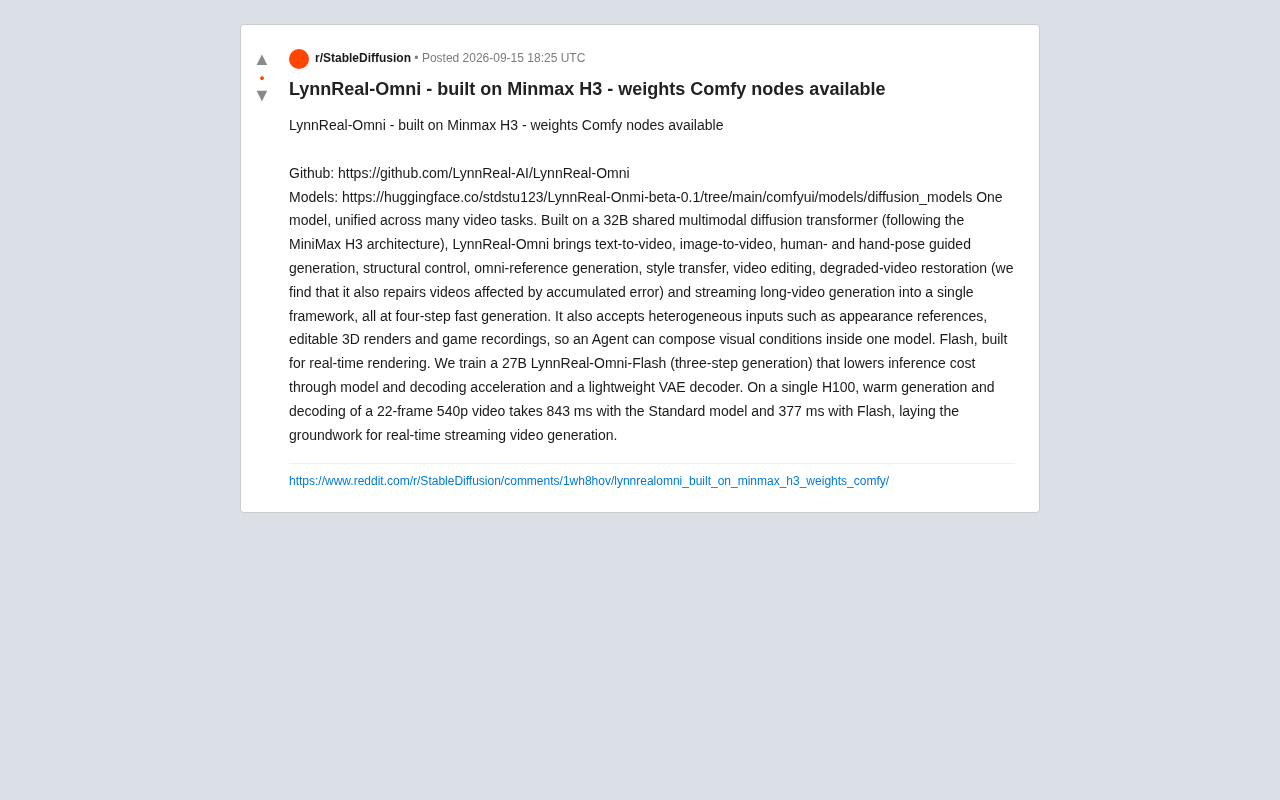
LynnReal-Omni: 32B Unified Video Diffusion Model Goes Open Source with Multi-Task Coverage in Four Steps
LynnReal-Omni is a 32B unified video diffusion model on MiniMax H3, covering text-to-video, pose guidance, style transfer, restoration in 4 steps. Flash version generates 540p video in 377ms on one H100.

Anthropic Co-Founder: AI 'Kill Switch' May Need to Be Mandatory by Law
Anthropic's co-founder tells the BBC that AI 'kill switches' may need to be legally mandated. We analyze the industry logic, technical challenges, and the tension between regulation and innovation.

The AI Data Center Boom Is Colliding With Cities Scarred by Heavy Industry
The AI data center boom is clashing with post-industrial communities. Philadelphia's case reveals structural conflicts between AI growth, energy use, water, and environmental justice.