The Binding of Isaac Developer Removes AI Music, Steam Review Bombing Subsides
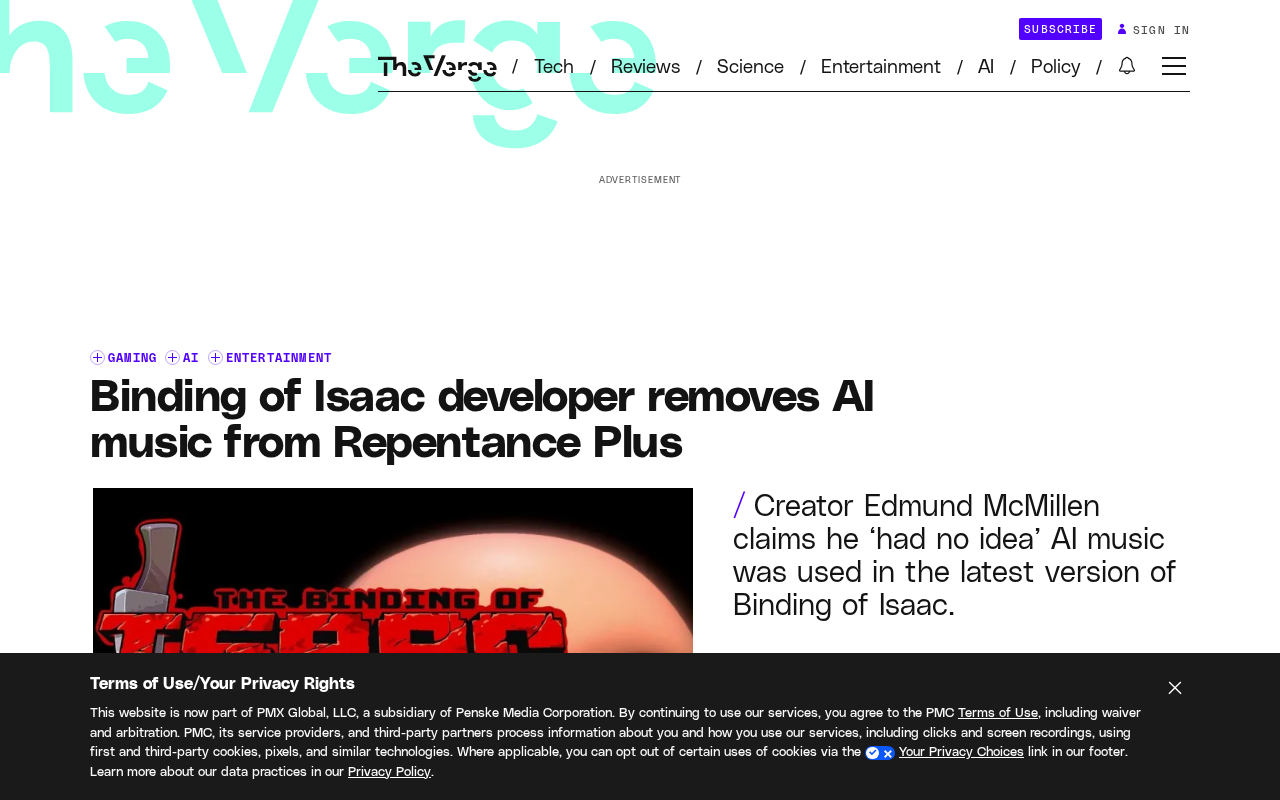
The Binding of Isaac: Repentance+ faced review bombing over AI music, and the removal has sparked industry reflection on AI transparency.
Music in a GTA-themed area of The Binding of Isaac: Repentance+ was found to contain Suno metadata, confirming it was AI-generated. The Steam community launched a review bombing campaign over undisclosed AI use. The developer quickly removed the tracks, but discussion continues about the boundaries of AI in game development. Players' core concern is not technology itself but the dilution of human creative value and the need for transparency. The case shows that when AI content is discovered rather than disclosed, trust quickly turns into negative reviews. Developers must balance efficiency with creative ethics and prioritize community communication.
The Binding of Isaac: Repentance+ faced a review bombing campaign on Steam that lasted several days after it was discovered that a GTA-themed area in the game used AI-generated music. According to Reddit user ShweetsStuff, the audio files for multiple tracks in that area contained Suno metadata, pointing to an AI music generation tool. After the controversy escalated, the developer quickly removed the music, but the incident once again brought the use of AI content in the game industry and player acceptance issues to the forefront.

Event Recap: From Player Discovery to Review Bombing
The origin of the matter was not complicated. While digging through game files, ShweetsStuff noticed that the background music used in a Grand Theft Auto-inspired area in Repentance+ had audio files with embedded Suno metadata. Suno is a platform that provides AI music generation services, allowing users to generate songs through text prompts. This discovery quickly spread through the community, and players were unhappy that the game used AI music without clearly disclosing it.
Negative reviews began to flood Steam, mostly centering on views such as "AI music lacks soul," "the developer is lazy," and "disrespect for artistic creation." This emotional reaction is not an isolated case—in recent years, players' resistance to AI-generated content has been reflected in multiple game communities, especially when such content is used to replace the work of human creators.
Suno is a platform focused on AI music generation. Users only need to input text descriptions (such as style, mood, and instruments) to generate a complete song including vocals and accompaniment in a short time. The generated audio files usually contain specific metadata (such as generation model version and prompt information), and this metadata becomes a key clue for identifying AI music. Suno's convenience has led to its rapid adoption in indie games and content creation, but it has also sparked widespread controversy over copyright ownership, artistic originality, and whether AI involvement should be disclosed. In this incident, players confirmed through the Suno metadata in the audio files that the game music was not created by humans.
Developer Response: Quick Removal and Limited Public Response
Facing pressure from negative reviews, the development team acted quickly. It was confirmed that tracks containing AI music have been removed from the game. Although this approach was direct, it did not fully calm the discussion. Some voices in the community still questioned: Why was AI music chosen in the first place? Is there other undiscovered AI content? Was the developer's communication transparent enough?
From a crisis public relations perspective, quickly removing problematic content is a standard move to limit damage. But the deeper question is: where is the boundary for using AI tools in game development? If developers use AI for assisted creation, do they need to disclose it to players? These questions were not fully answered in this incident, but they are worth considering for the entire industry.
Behind Player Sentiment: Deep Anxiety About AI Replacing Human Creation
Review bombing, as a means for players to express dissatisfaction, is not uncommon on Steam. But in this incident, the intensity of players' reactions deserves attention. The Binding of Isaac, led by independent developer Edmund McMillen and with a deep community foundation, has a player base with high expectations for game quality and creative sincerity. The involvement of AI music was seen by some players as a betrayal of those expectations.
The core of this sentiment is not simply technical rejection, but concern about "the value of human creation being diluted." In fields such as music, art, and voice acting, the barrier to entry for AI tools is rapidly lowering, but player communities generally hope that developers will remain transparent when using these tools and ensure the leading role of human creators.
Review Bombing refers to a large number of players concentratedly posting negative reviews in a short period to express dissatisfaction with a certain game decision or event. On the Steam platform, because the review system directly affects a game's visibility and sales, review bombing is often used by players as a means of pressuring developers. The motivations for this behavior vary, including protests against business models, technical issues, or ethical controversies. In this Binding of Isaac incident, the focus of the review bombing was on the use of AI music, reflecting the sensitivity of the player community toward AI replacing human creation. It is worth noting that although review bombing can quickly attract attention, it can also be abused, so Valve once introduced a mechanism to filter "off-topic" reviews, but that mechanism has not completely eliminated the phenomenon.
Industry Implications: Transparency and Trust Costs in the Use of AI Content
The Binding of Isaac incident is not an isolated case. From major publishers to independent studios, the use of AI tools in game development is expanding, but controversy surrounding their use is also growing in tandem. This incident provides a clear case: when AI content is discovered rather than disclosed, player trust quickly turns into negative reviews, which in turn affects the game's reputation.
For developers, the key may not be whether to use AI, but how to use it and how to communicate about it. Positioning AI as an auxiliary tool rather than a replacement, and explaining it to the community when necessary, may be an effective path to reducing trust costs. Otherwise, similar controversies will only repeat themselves.
Conclusion: One Removal, Unresolved Issues
AI music has been removed from Repentance+, and the Steam review bombing is expected to gradually subside. But the questions left by the incident have not disappeared: How can the game industry find a balance between efficiency and creative ethics? Where is the boundary of the player community's acceptance of AI content? The answers to these questions will gradually become clearer as more similar incidents occur. For those who follow the intersection of AI and the creative industries, this experience with The Binding of Isaac is a footnote worth recording.
One-line Summary
The Binding of Isaac: Repentance+ faced review bombing over AI music, and the developer's removal has sparked industry reflection on AI transparency.
Paragraph Summary
Music in a GTA-themed area of The Binding of Isaac: Repentance+ was found by players to contain Suno metadata, confirming it was AI-generated. The Steam community then launched a review bombing campaign to express dissatisfaction that the developer had not disclosed the use of AI. The developer quickly removed the tracks, but the incident did not quell discussion about the boundaries of AI use in game development. The core of player sentiment is not simply rejection of technology, but concern that the value of human creation is being diluted, and they want developers to remain transparent. This incident provides a typical case for the game industry: when AI content is discovered rather than proactively disclosed, trust quickly turns into negative reviews. Developers need to find a balance between efficiency and creative ethics and value communication with the community.
Related articles

Win a Car for Getting Close to 50 Pounds? The Whatnot Marketing Behind a YouTube Challenge
An analysis of the YouTube challenge "Get Close to 50 Pounds and Win a Car," exploring how it drives traffic to livestream platform Whatnot and why weight-guessing content attracts viewers and converts commercially.

Why Data Centers Have Become the Center of Big Tech's Backlash
Tech journalist Paris Marx's book Hyperscale reveals how data centers became the flashpoint for Big Tech backlash—from resource costs and environmental impacts to policy battles.

Astra 6.2 and Sol 6.2 Unexpectedly Flop on Simple Bench
Astra 6.2 and Sol 6.2 underperformed on the Simple Bench benchmark, sparking heated discussion on Hacker News. This article analyzes the background, Simple Bench's testing logic, and implications for evaluating model capabilities.