Win a Car for Getting Close to 50 Pounds? The Whatnot Marketing Behind a YouTube Challenge

A YouTube weight challenge video is actually lead-generation marketing for Whatnot's car-giveaway livestream, revealing a strategy that blends content and commerce.
The article analyzes a popular YouTube challenge video: contestants pick items within a time limit to make the total weight as close to 50 pounds as possible, with the closest winning a car and their selected items. The video appears to be entertainment but is actually lead-generation for Whatnot's November 29 livestream giving away 100 cars. High-value items tend to be light, forcing contestants to balance value against weight; ultimately the person with 30 pounds beats the one with 90 pounds. The article notes such challenges spread easily due to simple rules, uncertain outcomes, and strong immersion, and that packaging promotions as watchable content is more acceptable than hard ads—though the format is easy to copy and requires escalating investment.
A Game of "Weight"
A challenge video has been circulating on YouTube recently: contestants must pick items from shelves stocked with merchandise within a time limit, trying to make the total weight of their selections as close to 50 pounds as possible. Whoever comes closest not only keeps the items they chose but also drives away the car in the background. In the video, some people sprint for a PlayStation 5, others grab a Rolex watch priced at around twenty thousand dollars—the scene is chaotic and thrilling. But this isn't mere entertainment content; it's a carefully designed platform promotion campaign.
Challenge Mechanics: Countdown and Valuation Pitfalls
Decision Pressure Within 15 Seconds
The rules are simple and brutal: once the timer starts, contestants have only a very short time (15 seconds in one round of the video) to sweep items off the shelves, and when time's up they must place their items on the scale. Whoever's scale weight is closest to 50 pounds wins. This design deliberately creates cognitive load—contestants must quickly judge item weight, assess value, and make trade-offs under countdown pressure.
The Mismatch Between Value and Weight
The most dramatic detail in the video is that the total value of the merchandise exceeds one hundred thousand dollars, yet contestants' selection logic is inconsistent. Some grab a PlayStation 5, estimating it at "about three or four pounds"; others head straight for the Rolex, thinking it's worth twenty thousand dollars. The problem is that high-value items tend to be very light, contributing little toward the goal of "close to 50 pounds." One contestant even grabbed about 10 items on the fly, trying to pile up weight through sheer quantity.

This mismatch is precisely the appeal of the challenge: it tests not who understands merchandise value better, but who can make the closest estimate to the target when information is incomplete. The result of the final round is rather ironic—one person chose 90 pounds of items, another chose 30 pounds, and the latter won because they were closer to 50 pounds (off by 20 pounds vs. off by 40 pounds).
The Real Winner: Whatnot's Platform Exposure
From Challenge to Livestream Teaser
The video takes a sudden turn midway: the host announces that on November 29, 100 cars will be given away for free on Whatnot, calling it the "biggest livestream giveaway" it has ever done. All the challenge footage is essentially a content hook designed to drive traffic to this livestream.

Whatnot is a platform centered on livestream selling and auctions, and this kind of "car giveaway" event is clearly aimed at acquiring and reactivating users. The narrative structure of the challenge video is typical: first create visual impact with high-value merchandise and a car, then build emotional climax with countdowns and victory moments, and finally land on platform event information.
The Boundary Between Content and Commerce
A detail worth noting: the video doesn't hide its commercial purpose—the host directly directs viewers to "check the description to download Whatnot." This candor actually reduces viewers' resistance, because the challenge itself genuinely provides entertainment value. From a content marketing perspective, this is an effective example: using a highly watchable challenge to carry platform promotion information rather than inserting a blatant ad.

Whatnot's business model: Founded in 2019, Whatnot is an e-commerce platform centered on livestream auctions, covering categories such as collectibles, designer toys, apparel, and electronics. It operates like a "livestream version of eBay": sellers display merchandise in real time in livestream rooms, buyers bid in the chat, and the platform takes a commission after the sale. The platform's core competitiveness lies in combining entertainment content with instant purchasing; average user dwell time and conversion rates are both higher than those of traditional shelf-based e-commerce. In recent years, Whatnot has rapidly acquired users through high-frequency giveaway events (such as cars and luxury goods). Although such events are costly, compared with traditional advertising, they can more directly guide users to complete registration and first-order conversion.
Why These Challenges Work
From a传播 (dissemination) mechanism perspective, weight-guessing challenges have several natural advantages. First, the rules can be explained in one sentence, so viewers understand with zero threshold. Second, the outcome is uncertain—even after watching the beginning, you can't guess the ending. Third, the mismatch between item value and weight creates the drama of "contestants making mistakes," making it easy for viewers to feel immersed—"if it were me, I definitely wouldn't take that one."
For brands, the cost of this kind of content is controllable (prizes and merchandise have budget caps), but its传播 potential is relatively large. This is especially true when counterintuitive outcomes occur (for example, the person who took 30 pounds beats the person who took 90 pounds), making comments and secondary传播 more likely.
The "Hook—Value—Action" structure in content marketing: This kind of video follows the classic marketing funnel design. The first 3 seconds use high-value merchandise and a car to create a visual hook and retain viewers; the middle section provides entertainment value through countdowns and suspense over who wins, sustaining viewing; the ending clearly guides viewers to download or reserve the livestream (Call to Action), completing conversion. Unlike hard ads, the challenge itself has independent watchability, so viewers will finish watching even if they don't buy, thereby expanding reach. This structure is especially effective on short-video platforms, because algorithms tend to recommend content with high completion rates, and the suspense of a challenge naturally favors completion.
Takeaways for Content Creators
If you're doing livestream selling or platform promotion, this case offers several reusable ideas. Package promotional information as a challenge with independent entertainment value rather than a simple spoken ad. Use physical rules (weight, time, distance) to create natural tension, which is more credible than a artificially designed script. Let contestants' decision-making mistakes become part of the content; viewers remember "flops" and "narrow wins" far more strongly than straightforward success stories.
Of course, the ceiling of this kind of content is also obvious: the challenge format is easy to copy, and once viewers' sense of novelty fades, prizes or rules must be continuously upgraded to maintain attention. Whatnot's choice to use an event on the scale of "giving away 100 cars" to capture traffic is essentially trading higher investment for longer user retention—how effective it ultimately is depends on whether the platform can convert onlookers into real buyers.
One-line Summary
A YouTube weight challenge video is actually lead-generation marketing for Whatnot's car-giveaway livestream, revealing a strategy that blends content and commerce.
Paragraph Summary
The article analyzes a popular YouTube challenge video: contestants pick items within a time limit to make the total weight as close to 50 pounds as possible, and the closest person wins a car and the items they selected. The video looks like entertainment but is actually lead-generation for Whatnot's livestream event on November 29, where 100 cars will be given away. In the challenge, high-value items tend to be light, so contestants must weigh value against weight; ultimately the person with 30 pounds of items beats the one with 90 pounds because they are closer to 50 pounds. The article notes that such challenges have传播 advantages because the rules are simple, the outcome is uncertain, and they easily create a sense of immersion. Brands packaging promotions as independently watchable content are more readily accepted than hard ads, but the article also cautions that the format is easy to copy and requires continuously escalating investment.
Related articles
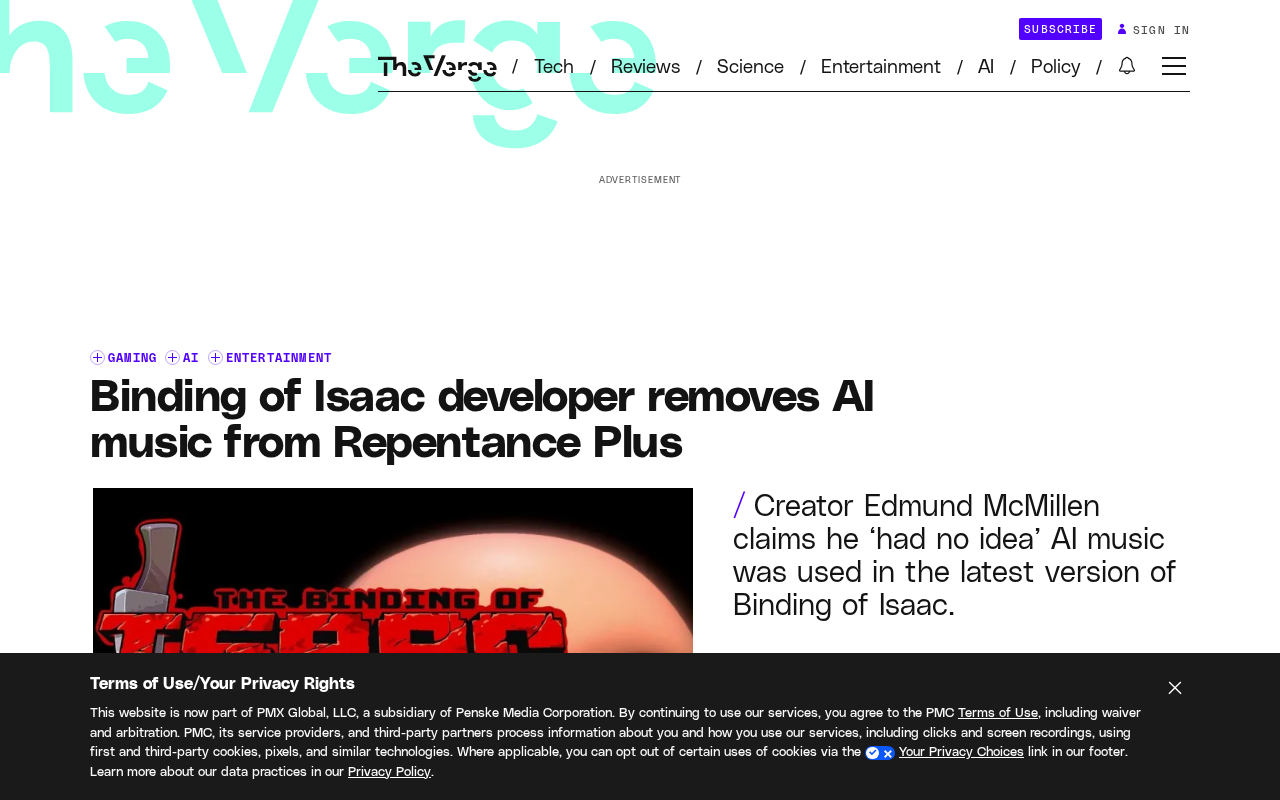
The Binding of Isaac Developer Removes AI Music, Steam Review Bombing Subsides
The Binding of Isaac: Repentance+ faced Steam review bombing over AI music, and the developer has removed the tracks. This article reviews the incident, analyzes player anxiety about AI replacing human creation, and explores transparency and trust costs around AI content in the game industry.

Why Data Centers Have Become the Center of Big Tech's Backlash
Tech journalist Paris Marx's book Hyperscale reveals how data centers became the flashpoint for Big Tech backlash—from resource costs and environmental impacts to policy battles.

Astra 6.2 and Sol 6.2 Unexpectedly Flop on Simple Bench
Astra 6.2 and Sol 6.2 underperformed on the Simple Bench benchmark, sparking heated discussion on Hacker News. This article analyzes the background, Simple Bench's testing logic, and implications for evaluating model capabilities.