AI Marketing Backlash: Why Obsessing Over 'AI-First' Is Starting to Backfire

Over-marketing AI is now hurting brands more than it helps — here's why and what to do instead.
Brands that have aggressively leaned into "AI-First" messaging are facing a growing backlash: the label has become so overused it no longer differentiates, and when actual product experiences fall short of inflated promises, brand trust erodes permanently. This article examines the cognitive, market, and technical reasons behind this trend — and how brands can pivot from tech-speak to outcome-focused narratives that rebuild genuine user trust.
When "AI" Becomes a Marketing Liability
Over the past two years, "AI-First" has become almost a mandatory slogan at tech company launches. From startups to industry giants, regardless of whether a product genuinely relies on artificial intelligence, marketing copy routinely gets stuffed with phrases like "AI-powered" and "intelligent enablement." Yet a counter-trend is quietly taking shape: a growing number of brands are discovering that over-emphasizing AI not only fails to deliver the expected premium, but is actively generating consumer pushback.
A widely discussed article on Hacker News (earning 43 upvotes and 23 comments) argues that "AI marketing" is experiencing a clear backlash — when every product claims to be "AI-first," the label loses all differentiation and can even become a red flag, hinting that the product might be style over substance.
Why the AI Label Has Gone from Asset to Liability
Fatigue and Eroded Trust
Consumer sentiment toward the word "AI" has shifted from initial curiosity to weariness and even wariness. When every marketing email, every landing page, and every product update announcement touts AI capabilities, the word itself has become nearly meaningless. Worse, many features marketed under the "AI" banner offer an actual experience indistinguishable from traditional rule engines or simple automation — and that gap between expectation and reality directly erodes brand trust.
It's worth clarifying the technical divide between traditional rule engines and genuine AI. A rule engine is an automation system built on preset if-then logic — for example, "if a user buys product A, recommend product B" — where all logic is hand-coded and incapable of learning or adapting to new scenarios. True machine learning systems, by contrast, train on large datasets to automatically discover patterns and generalize to new data. Generative AI models like large language models (LLMs) go further still, handling open-ended natural language tasks. Users can often intuitively feel this difference during product use — when an "AI customer service" agent can only follow a fixed script and falls apart the moment a question deviates slightly, that experience gap translates directly into distrust of the brand. When technical packaging outpaces actual capability, the cost is often a permanent loss of credibility.
"AI-First" Often Means "User-Second"
A recurring theme in the Hacker News discussion is that many products flying the "AI-first" banner are essentially prioritizing the showcase of AI capabilities over user experience. Examples include replacing clear navigation menus with chatbots, substituting precise search results with generative answers, and using "smart recommendations" to paper over chaotic information architecture. When technical narrative supersedes actual user needs, people vote with their feet.
The Deeper Logic Behind AI Marketing Backlash
Differentiation Has Completely Broken Down
At its core, marketing is about establishing differentiated perception. When an entire industry converges on the same talking points, "AI" degrades from a competitive advantage into industry background noise. The Attention Economy framework offers a clear explanation: in an information-saturated environment, human attention is the truly scarce resource. When the market is flooded with homogeneous "AI-powered" messaging, the brain activates a cognitive energy-saving mechanism — automatically filtering high-frequency, repetitive terms into background noise, a process neuroscience calls "habituation." More critically, according to signal detection theory, when the noise-to-signal ratio (abused AI labels vs. genuine AI innovation) becomes distorted, receivers raise their judgment threshold and become far more skeptical of all AI claims. Truly smart brands have already realized that instead of repeatedly hammering "we use AI," it's far more compelling to directly show "what problem we solved and how much time we saved." Concrete value propositions beat stacked tech labels every time.
The Blowback from Generative Content Overload
Another factor that cannot be ignored is the content flood unleashed by generative AI. This is no exaggeration: according to estimates from MIT Media Lab and multiple research institutions, over 40% of newly created internet content in 2024 was AI-assisted or fully AI-generated — a figure that exceeds 70% in certain verticals like product descriptions and SEO articles. The mass deployment of LLMs has driven the marginal cost of content toward zero, directly flooding search engine results pages, social media, and e-commerce platforms with templated material.
Consumers have gradually developed a subconscious "nose" for AI-generated content — prose that flows too smoothly yet lacks specific detail, a tone that is friendly but lacks personality, structures that are complete yet devoid of real-world examples. These characteristics collectively form the perceived markers of an "AI smell." As social media feeds, search results, and product pages become saturated with this kind of templated copy and imagery, consumer associations with "AI" start drifting toward "cheap," "mass-produced," and "impersonal." If brands continue loudly tying themselves to the AI label — while their own marketing communications exhibit these same characteristics — they risk triggering consumer authenticity suspicion, which then bleeds into distrust of the product itself.
A Natural Correction of Bubble Expectations
From a broader perspective, this backlash is also an inevitable stage in the AI hype cycle. Gartner's Hype Cycle provides a clear theoretical framework: every emerging technology passes through five stages — Technology Trigger, Peak of Inflated Expectations, Trough of Disillusionment, Slope of Enlightenment, and Plateau of Productivity. Generative AI rocketed to the "Peak of Inflated Expectations" shortly after ChatGPT's launch in late 2022, with nearly every enterprise treating the AI label as a valuation multiplier. When actual deployment results inevitably failed to match the over-hyped expectations, the market began sliding toward the "Trough of Disillusionment." This cycle is not unique to AI — the same trajectory played out with big data, blockchain, and the metaverse.
After two years of market frenzy, investors, enterprises, and consumers alike are demanding that AI technology demonstrate real ROI rather than staying at the conceptual level. The cooling of AI marketing rhetoric is a direct reflection of this rational recalibration. The products that ultimately cross the trough tend to be those focused on solving concrete problems rather than chasing conceptual dividends.
How Brands Should Recalibrate Their AI Marketing Strategy
Shift from "Talking Technology" to "Talking Outcomes"
The most direct change is moving the narrative focus from the technology itself to user value. Users don't care whether a product runs on a Transformer architecture or traditional machine learning — they care whether their problems are being solved better. Treating AI as a means to deliver value rather than as a marketing end in itself is the core of escaping the backlash trap.
Let AI Fade into the Background
The best technology is often the kind users don't notice. This echoes a classic design philosophy in the tech industry. Take the Image Signal Processor (ISP) as an example — the core chip responsible for converting raw sensor data into high-quality photos is completely invisible to most users, yet it directly determines the image quality of smartphone cameras. Apple never made "ISP-first" a centerpiece of its iPhone launch narrative; instead, it simply showed "the Milky Way captured in Night Mode."
This product philosophy traces back to Mark Weiser's 1991 concept of "Ubiquitous Computing": the most profound technologies are those that weave themselves into the fabric of everyday life until they are indistinguishable from it. Rather than plastering AI capabilities as a prominent selling-point label, brands should let AI integrate seamlessly into the product experience — when voice recognition, recommendation algorithms, and intelligent autocorrect flow smoothly within a product's workflow, what users receive is a better experience, not a technical manual. When AI truly matures and becomes widespread, it should function like electricity: foundational infrastructure, not a novelty worth trumpeting.
Rebuild Authentic Communication — Win with Human Touch
In an era overrun by AI-generated content, human touch and genuine authenticity have become scarce resources. Moderately returning to human-crafted content, clearly flagging which stages involve human participation, and honestly communicating the limits of AI capabilities — these "counter-trend" practices may actually help brands forge deeper trust connections. When signal-to-noise ratios go awry, a genuine human voice becomes the most powerful tool for differentiation.
Conclusion
The "AI marketing backlash" doesn't signal the failure of artificial intelligence as a technology — it's a rational market correction of a marketing bubble, the inevitable path foretold by the Gartner Hype Cycle, and the natural self-correcting logic that follows every wave of technological hype. Brands with genuine technical depth don't need labels to prove themselves; those that have only ever used AI as a marketing wrapper will be exposed as the disillusionment wave rolls in. For everyone in the tech industry, the signal is clear: it's time to talk less about AI and focus more on solving real problems.
Key Takeaways
Related articles
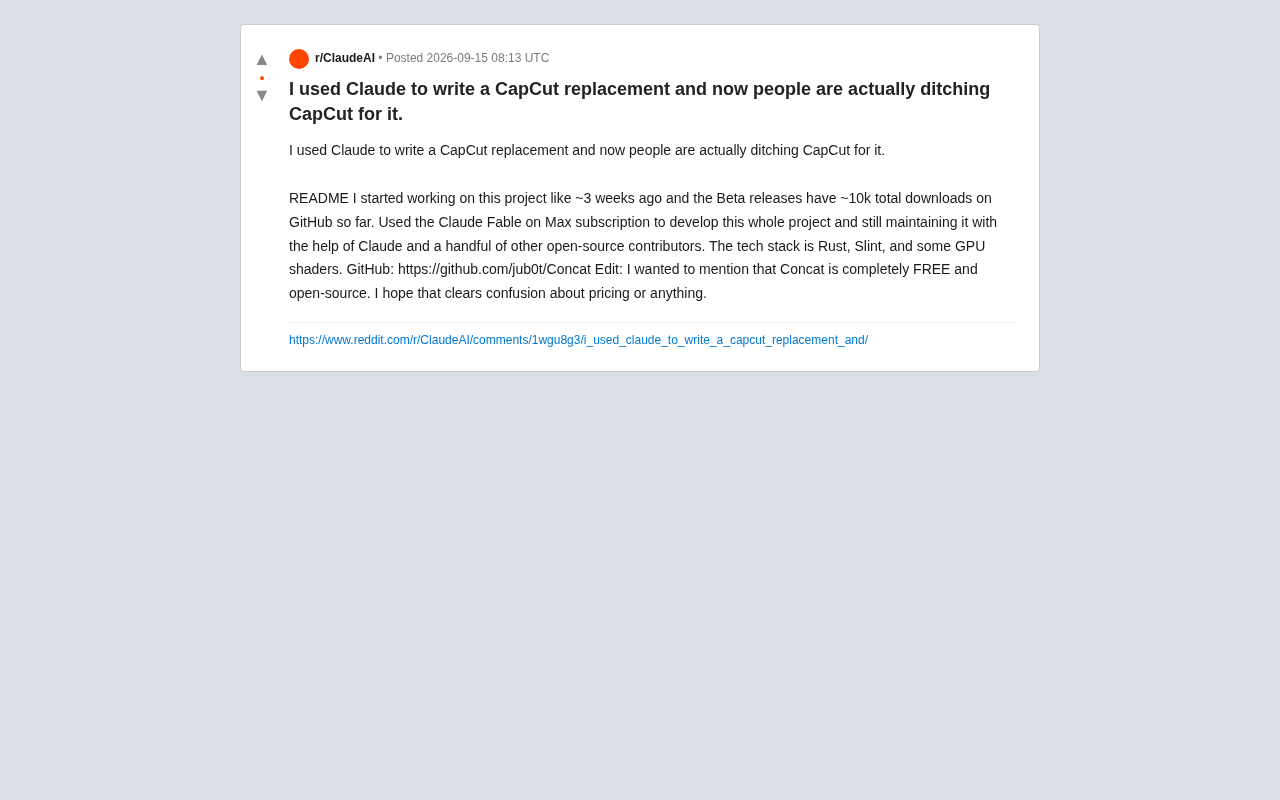
Building Open-Source Video Editor Concat with Claude: A Free Alternative to CapCut
A developer used Claude to build Concat, an open-source CapCut alternative, in just three weeks. With nearly 10K downloads, it's a striking example of AI-assisted solo development.
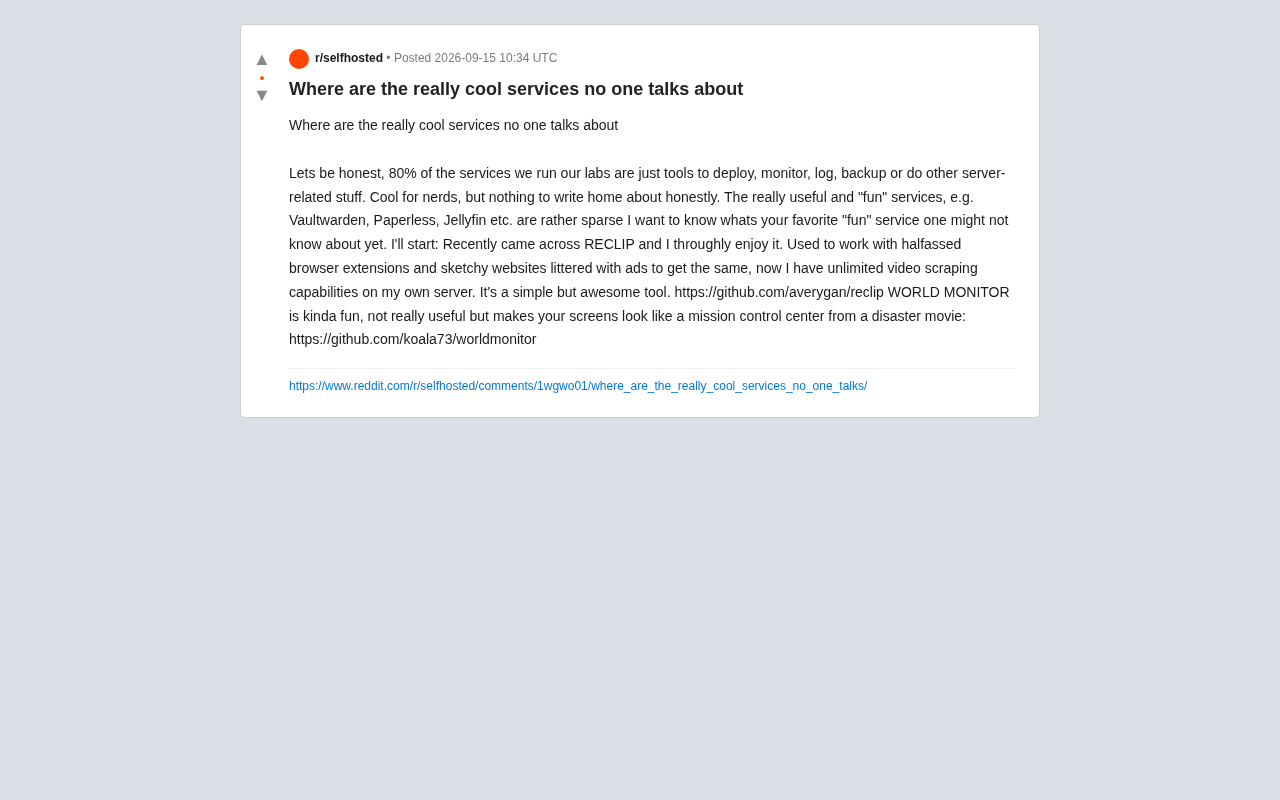
The Overlooked Gems of Self-Hosting: Fun and Useful Services Nobody Talks About
From a Reddit thread, we explore overlooked self-hosted services — including video scraper RECLIP and data viz project WORLD MONITOR — and why fun services are so rare.
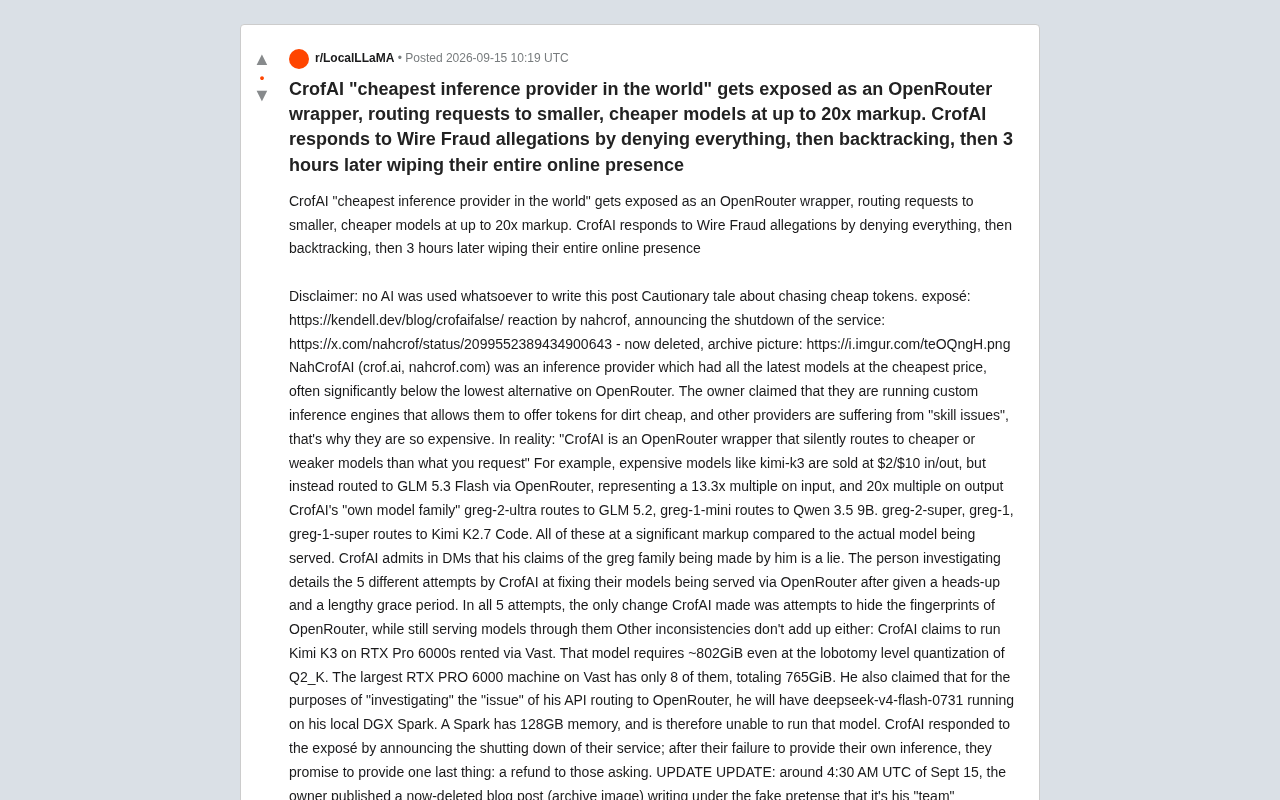
CrofAI Fraud Exposed: 'World's Cheapest AI Inference' Turns Out to Be an OpenRouter Wrapper Scam
CrofAI claimed to offer the world's cheapest AI inference, but was exposed as an OpenRouter wrapper silently rerouting requests to cheap models at up to 20x markups.