Building Open-Source Video Editor Concat with Claude: A Free Alternative to CapCut
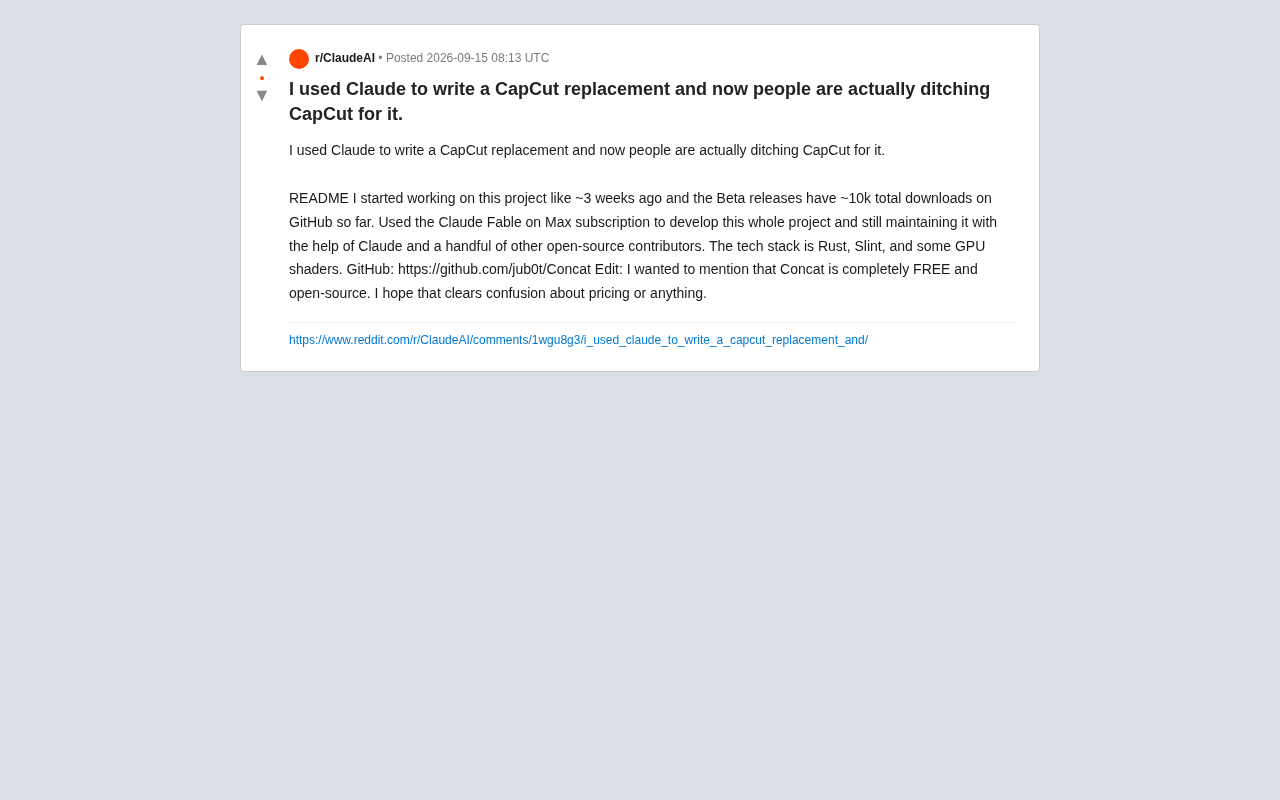
Developer built open-source CapCut alternative Concat using Claude Max in three weeks, reaching nearly 10K downloads.
An independent developer used a Claude Max subscription to deliver a Beta version of Concat, a video editor, in roughly three weeks — with nearly 10,000 GitHub downloads and real users migrating from CapCut. Built on a hardcore stack of Rust, Slint, and GPU shaders, the project is fully free and open source, targeting users frustrated with CapCut's privacy policies and business model. The author acknowledges Claude as a collaborator handling boilerplate and debugging, while architecture and product decisions remain human-led — a clear illustration of AI's real-world impact on solo development.
A developer has completed an ambitious project using Claude: building an AI-assisted video editor capable of replacing CapCut. The project, called Concat, launched just about three weeks ago, and its Beta release has already accumulated nearly 10,000 downloads on GitHub. Even more noteworthy, according to the author, real users have started ditching CapCut in favor of this new tool.
Three Weeks, One Developer, One AI
What makes this case most striking is the development pace. The author revealed that the entire project was built using Claude's Max subscription (Fable), and continues to be maintained with Claude's help alongside a handful of open-source contributors. Video editing software typically involves complex engineering challenges — timeline management, codec handling, GPU rendering — and is widely considered a technically demanding domain. In that context, delivering a functional Beta version in three weeks speaks volumes about the real-world value AI coding assistants provide in lowering the barrier to building complex software.
With nearly 10,000 downloads, this is far from a toy project. It addresses a genuine pain point: many users are frustrated with CapCut's privacy policies, built-in ads, and feature restrictions, and are actively looking for a lightweight, free alternative that doesn't lock them into any ecosystem.
Tech Stack: Rust + Slint + GPU Shaders
Concat's technical choices are remarkably hardcore. The author disclosed the following stack:
- Rust: Known for memory safety and high performance, making it ideal for performance-sensitive media processing;
- Slint: An emerging native Rust GUI framework used to build the interface;
- GPU shaders: Used for video rendering and effects acceleration.
This combination is uncommon in desktop application development, especially for an AI-assisted project. It reflects a broader trend: AI coding tools are now capable of working with relatively niche, high-barrier languages like Rust, helping developers quickly get up to speed on unfamiliar stacks and produce working code.
How Much of the "Heavy Lifting" Can AI Handle?
It's worth maintaining a grounded perspective here. The author explicitly stated that the project is "still maintaining it with the help of Claude and a handful of other open-source contributors" — AI is a collaborator, not the sole author. In practice, Claude most likely handled large volumes of boilerplate code, API calls, bug investigation, and documentation, while architectural decisions, performance tuning, and product direction remained human-led. This is the typical shape of AI-assisted programming today: significantly boosting efficiency, but not replacing human judgment.
Slint is a relatively young GUI framework (open-sourced in 2021), designed for embedded systems and desktop applications, featuring a declarative UI language paired with Rust/C++/JavaScript backends. Compared to Electron (which relies on Chromium and web technologies), Slint's advantages lie in its extremely low runtime memory footprint and native rendering performance — no browser engine dependency, and a much smaller final binary size. This matters especially for video editing software, which already competes heavily for memory and CPU resources. Adding Electron's overhead on top of that would noticeably degrade the user experience.
GPU shaders are small programs that run on the graphics card, executing rendering calculations per-pixel or per-vertex. In video editing scenarios, operations like color correction, filter effects, and compositing would cause even modern high-end CPUs to struggle with real-time preview frame rates if processed serially. Offloading these tasks to the GPU for parallel execution is standard practice in professional tools like Premiere and DaVinci Resolve. Concat's choice to implement GPU shaders from scratch — rather than relying on existing video processing libraries — represents a level of technical complexity far above most desktop applications, and is precisely where AI-assisted programming's real capability limits in low-level, high-difficulty code are most apparent.
What "Completely Free and Open Source" Really Means
The author made a point of clarifying that Concat is completely free and open source, addressing any concerns about pricing. The project is hosted on GitHub (jub0t/Concat). This positioning is itself the core weapon against CapCut.
While CapCut is feature-rich, its business model, data collection practices, and availability issues in certain regions have caused a steady exodus of privacy-conscious users who value control over their tools. An open-source, free alternative built on a modern tech stack is naturally positioned to attract this audience. The open-source model also means the community can continuously contribute features and fixes, creating a positive feedback loop — and that's the long-term leverage behind those 10,000 downloads.
CapCut evolved from ByteDance's CapCut international product and faced regulatory scrutiny in the United States similar to that of TikTok. Some users proactively sought alternatives due to data sovereignty concerns. Additionally, CapCut's free tier adds watermarks to exported videos, its subscription pricing model and dependence on cloud-hosted assets frustrate creators who prefer local workflows. These pain points represent a natural market gap for Concat — open source means auditable code with no hidden data uploads; running locally means no dependency on internet connectivity or account systems. For independent creators, privacy-sensitive users, and those in regions with limited connectivity, this positioning holds considerable practical appeal.
What This Case Tells Us
Zooming out, this story is a quintessential portrait of the solo developer in the AI era:
- A single developer, aided by AI, can take on complex products in an extremely short timeframe — work that would previously have required an entire team;
- Open source combined with community collaboration gives personal projects the potential to evolve sustainably;
- Real user migration ("people are actually ditching CapCut") demonstrates genuine product-market fit, not just technical showmanship.
That said, caution is warranted. 10,000 downloads and a "Beta" label mean the product is still early-stage — stability, feature completeness, and cross-platform support all remain to be proven. Whether software written with AI assistance over three weeks can match mature commercial products in long-term maintenance and handling complex edge cases is still a question that time will answer.
But regardless, Concat offers a noteworthy data point: when AI coding tools become powerful enough, the gap between individual developers and established commercial software is shrinking at a visible pace.
Related articles
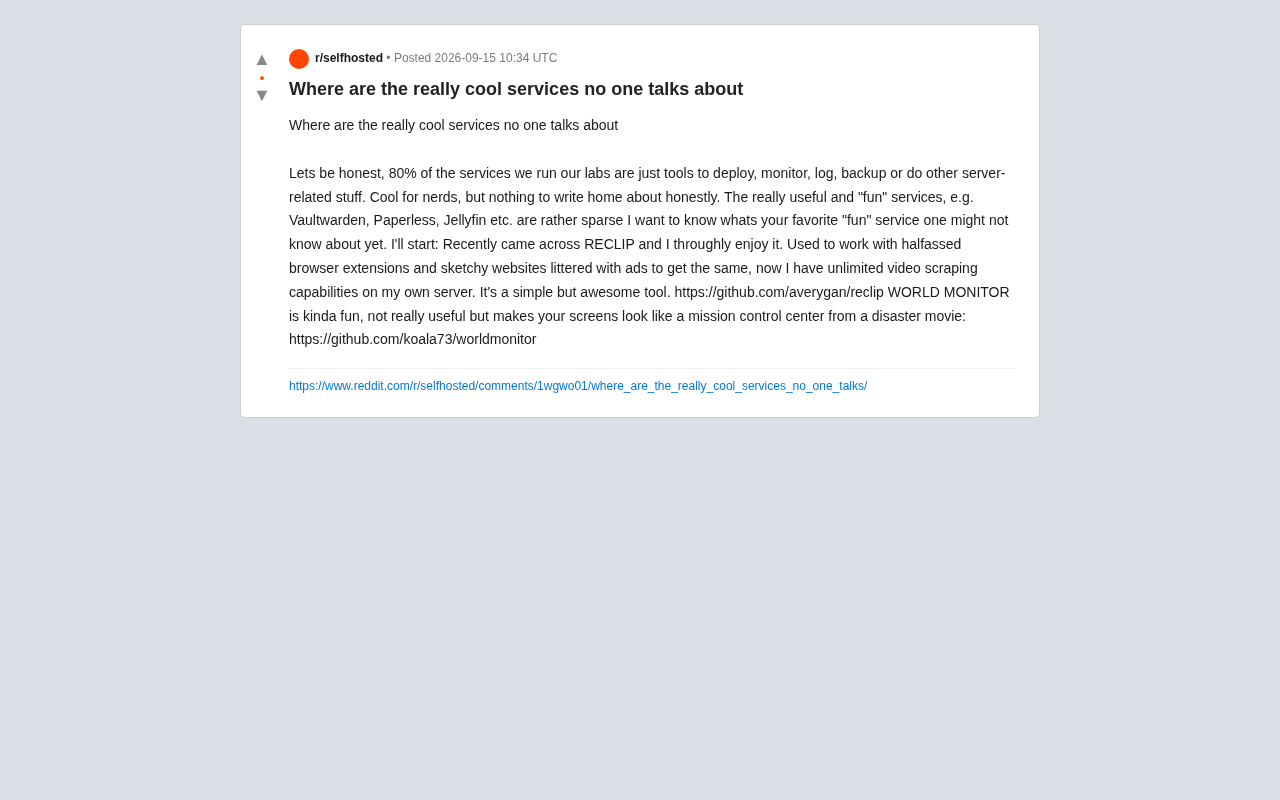
The Overlooked Gems of Self-Hosting: Fun and Useful Services Nobody Talks About
From a Reddit thread, we explore overlooked self-hosted services — including video scraper RECLIP and data viz project WORLD MONITOR — and why fun services are so rare.
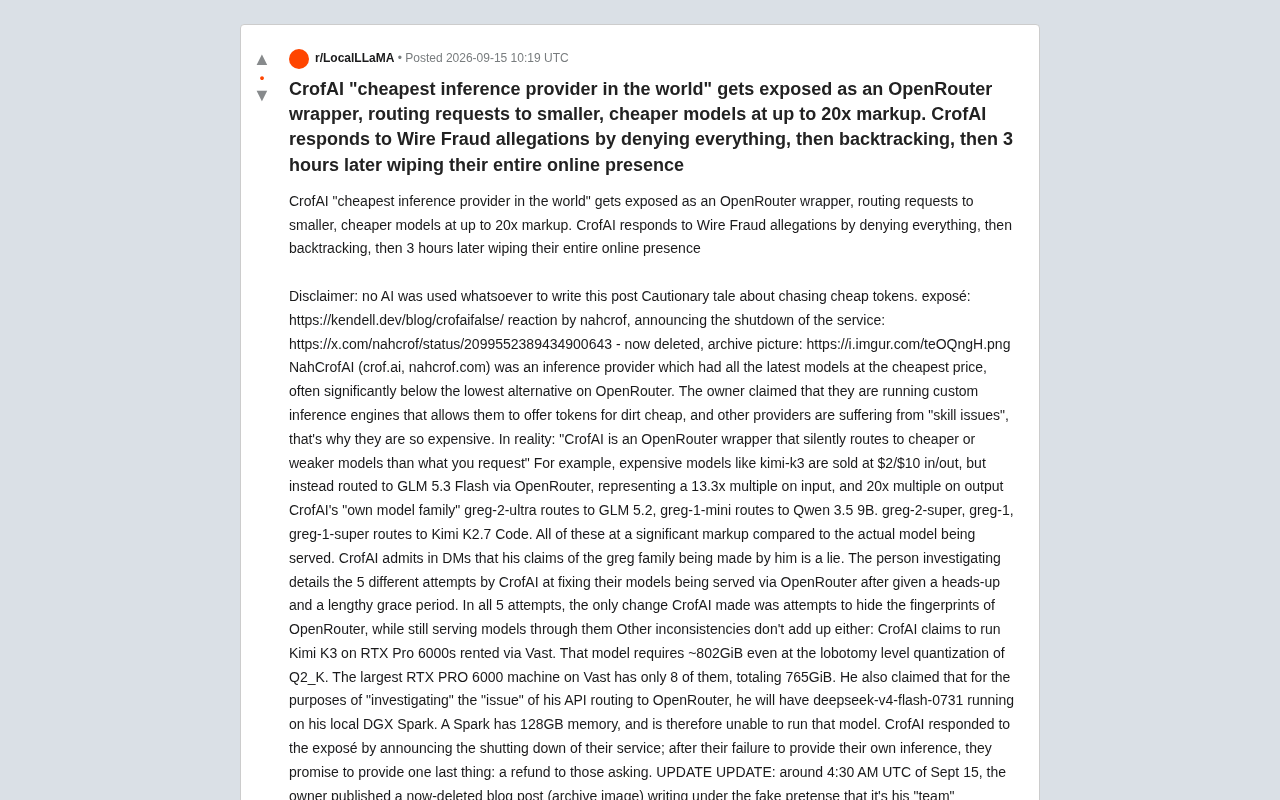
CrofAI Fraud Exposed: 'World's Cheapest AI Inference' Turns Out to Be an OpenRouter Wrapper Scam
CrofAI claimed to offer the world's cheapest AI inference, but was exposed as an OpenRouter wrapper silently rerouting requests to cheap models at up to 20x markups.

Bringing Software Quality Back to the Mainstream: A Reflection on Speed-First Culture
Why has software quality gone from default to luxury? Exploring technical debt, software bloat, and how to make quality the norm again in a speed-obsessed industry.