The Overlooked Gems of Self-Hosting: Fun and Useful Services Nobody Talks About
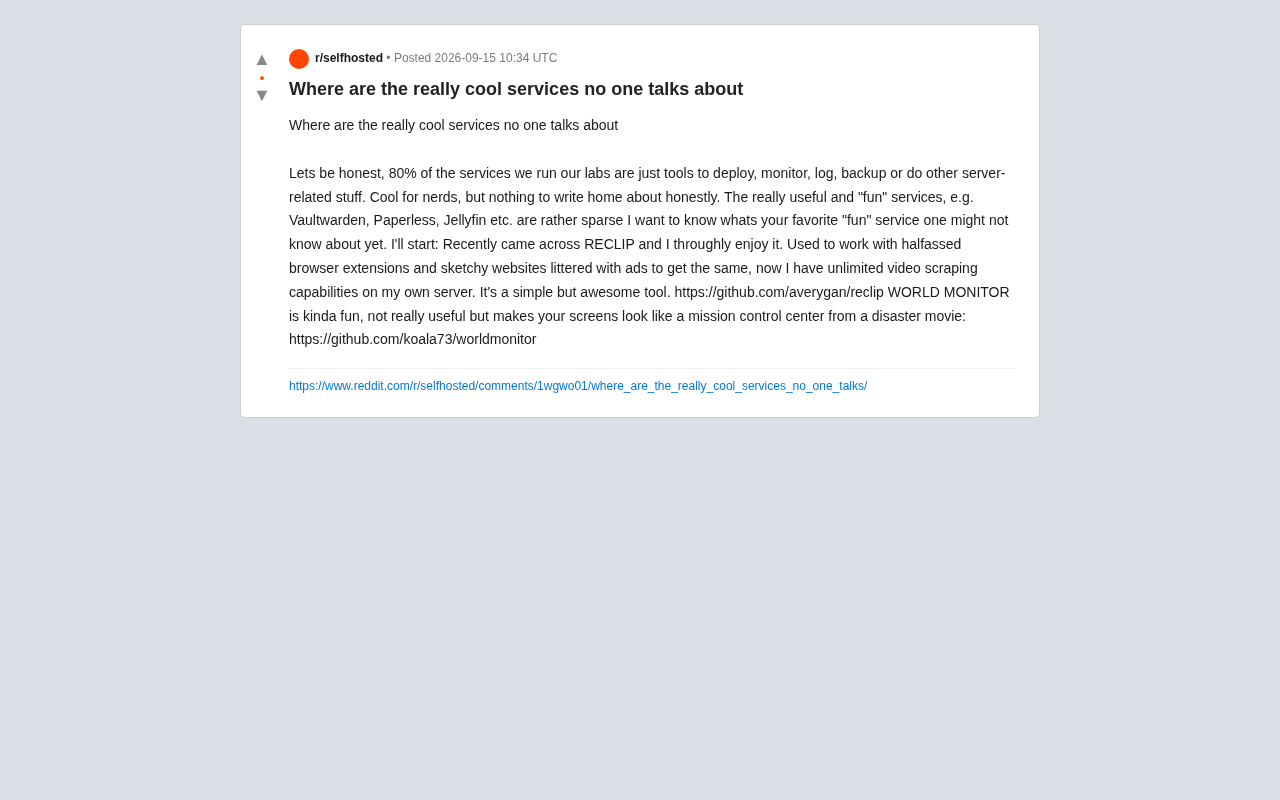
RECLIP and WORLD MONITOR are rare self-hosted gems worth discovering beyond the usual infrastructure tools.
Starting from a Reddit discussion, this article examines a overlooked truth in the Homelab world: most self-hosted services are boring ops infrastructure, while genuinely fun and useful tools are rare. It spotlights two obscure picks — RECLIP, which brings video scraping to your own server, and WORLD MONITOR, a dramatic global data visualization dashboard. The article also explores why interesting services are scarce and why community word-of-mouth remains the best way to find them.
When Self-Hosting Is More Than Just Tool Stacking
There's a truth that gets discussed repeatedly in the Homelab community but rarely stated plainly: most of the services we run are just "tools for tools." Deployment, monitoring, logging, backups, reverse proxies — these things are genuinely cool for tech enthusiasts, but honestly, they don't deliver much joy in actual day-to-day use.
One Reddit user put it bluntly: "80% of what we run in our labs are server-related tools for deploying, monitoring, logging, or backing things up. Cool for geeks, but nothing to really show off." That hit a nerve for a lot of self-hosters — because truly useful and interesting services like Vaultwarden (password management), Paperless (document digitization), and Jellyfin (media center) are actually quite rare.
The core question driving this discussion is simple: beyond the well-known star projects, what lesser-known self-hosted services are genuinely fun?
RECLIP: Video Scraping on Your Own Server
The first recommendation shared in the thread was RECLIP, a self-hosted tool focused on video scraping.
Its value proposition is crystal clear. In the past, pulling off video downloads or clip captures meant relying on two frustrating options — hobbled browser extensions or ad-riddled, sketchy online websites. Both deliver a poor experience and come with real privacy and security risks. RECLIP moves this capability entirely onto your own server, delivering what the poster called "unlimited video scraping" that you fully control.
The original poster described it as "simple but awesome" — and that captures something essential about great self-hosted software: it doesn't chase feature bloat. It does one specific thing well, and it returns data sovereignty to the user. For anyone tired of ad pollution and privacy leaks, there's a unique appeal to a clean tool running on your own hardware.
Under the hood, RECLIP is powered by yt-dlp — an open-source, community-maintained command-line video download engine that supports hundreds of platforms. yt-dlp is extremely capable, but its command-line interface creates a steep learning curve for casual users, and keeping it updated locally on every device is a chore. RECLIP's value lies in wrapping yt-dlp in a web interface and deploying it as a server-side service. Once running, any device on your network can just submit a URL through a browser to trigger a download — files go straight to server storage, with no need to install or configure anything on individual devices. This pattern of "wrapping a CLI tool into a web service" is a common self-hosting development approach. Projects like Vaultwarden (a lightweight rewrite of the Bitwarden server) follow similar logic: lower the barrier to entry while preserving complete data autonomy.
WORLD MONITOR: Fun Before Useful
The second recommendation goes in a completely different direction — WORLD MONITOR.
The poster's description is wonderfully evocative: it's "not really useful, but it makes your screen look like the command and control center in a disaster movie." This is a project that leans hard into visualization and aesthetic impact, presenting global data feeds in a dramatically charged layout that channels the energy of a military operations room.
Tools like this remind us that the fun of self-hosting doesn't always come from utility. For many Homelab enthusiasts, having a large dashboard screen that just looks incredibly cool is its own kind of satisfaction. These projects serve atmosphere and bragging rights — and that's a legitimate and often overlooked side of self-hosting culture.
Why "Fun" Services Are So Rare
This discussion points to something worth examining: why do infrastructure-layer services keep multiplying while end-user-facing, genuinely fun services remain comparatively scarce?
The answer likely lies in the difference in developer motivation. Infrastructure tools solve problems that developers and sysadmins face themselves — the requirements are clear, the audience is concentrated, and open-source projects naturally cluster around those needs. Services aimed at everyday life and entertainment, on the other hand, require more complete product thinking and better UI design. The development cost is higher, the payoff less immediate — many developers build something for personal use and then let it sit, never really promoting it.
This also explains why these projects are things "no one talks about." They're scattered across the corners of GitHub, with no real discovery channels, surfacing only through word of mouth in niche communities. RECLIP and WORLD MONITOR only entered more people's awareness because of a single Reddit thread.
There's a widely-cited observation in open-source circles: "Infrastructure eats engineers; products eat designers." The self-hosting ecosystem is predominantly engineer-driven, and engineers tend to solve technical pain points from their own workflows rather than build complete products for everyday life scenarios. On top of that, community curation projects like Awesome-Selfhosted catalog thousands of apps, but their classification systems skew toward functional tools — media servers, file sync, password managers. "Fun but impractical" has almost no corresponding index category, which puts these projects at a structural disadvantage when it comes to discoverability. In short, infrastructure tools spread easily because they're useful and easy to categorize; entertainment-oriented projects depend on serendipitous community discovery because they lack clear classification labels.
The Value of Finding Obscure Gems
For self-hosting enthusiasts, discussions like this one matter far beyond a simple list of software recommendations. They form a kind of decentralized discovery mechanism: when mainstream app stores and search engines are saturated with commercial content, the truly valuable niche tools can only surface through genuine user recommendations.
If you're maintaining your own Homelab, it's worth regularly following discussions of the "what's your favorite obscure service" variety. Beyond the already-legendary projects like Vaultwarden, Paperless, and Jellyfin, tools like RECLIP — ones that nail a specific need and genuinely respect user data sovereignty — can deliver genuinely surprising value.
The ultimate joy of self-hosting may be exactly that: somewhere among the boring ops tooling, finding the one service that makes you grin and think, "this thing is actually really cool."
Related articles
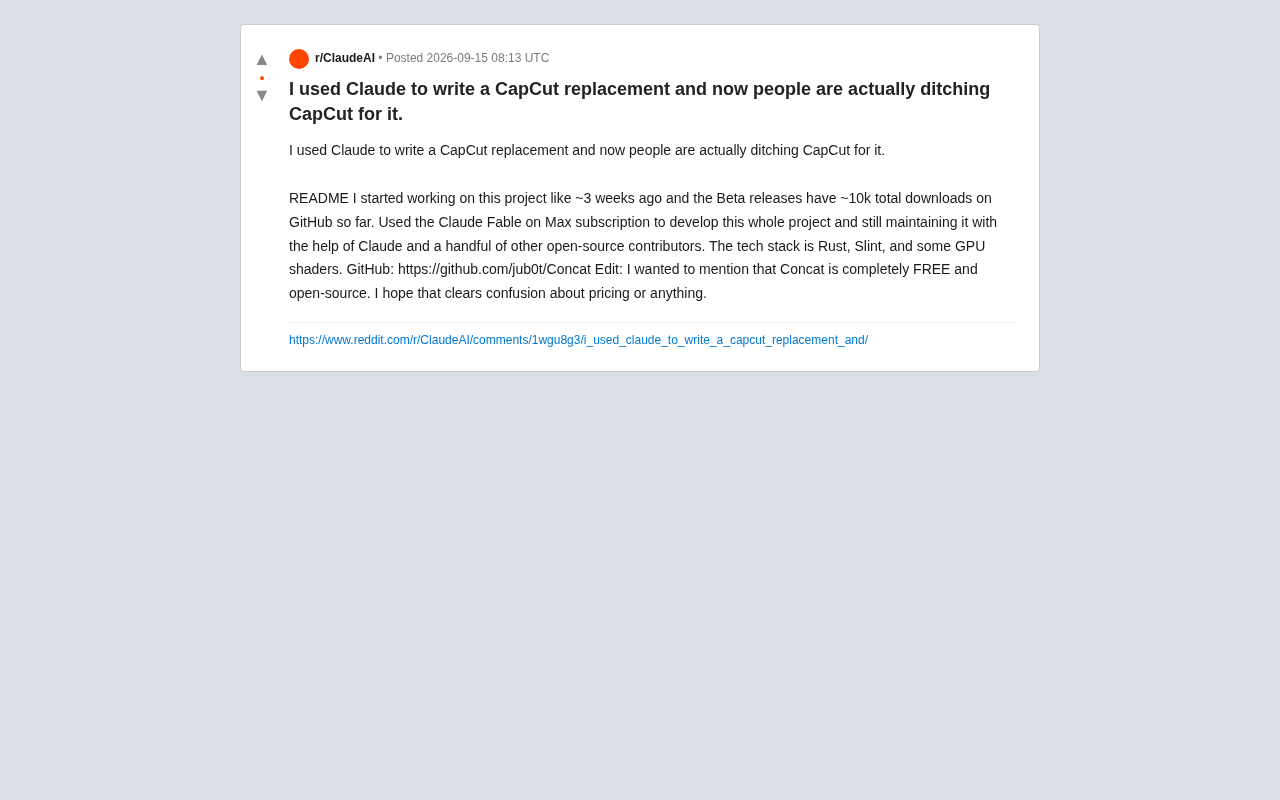
Building Open-Source Video Editor Concat with Claude: A Free Alternative to CapCut
A developer used Claude to build Concat, an open-source CapCut alternative, in just three weeks. With nearly 10K downloads, it's a striking example of AI-assisted solo development.
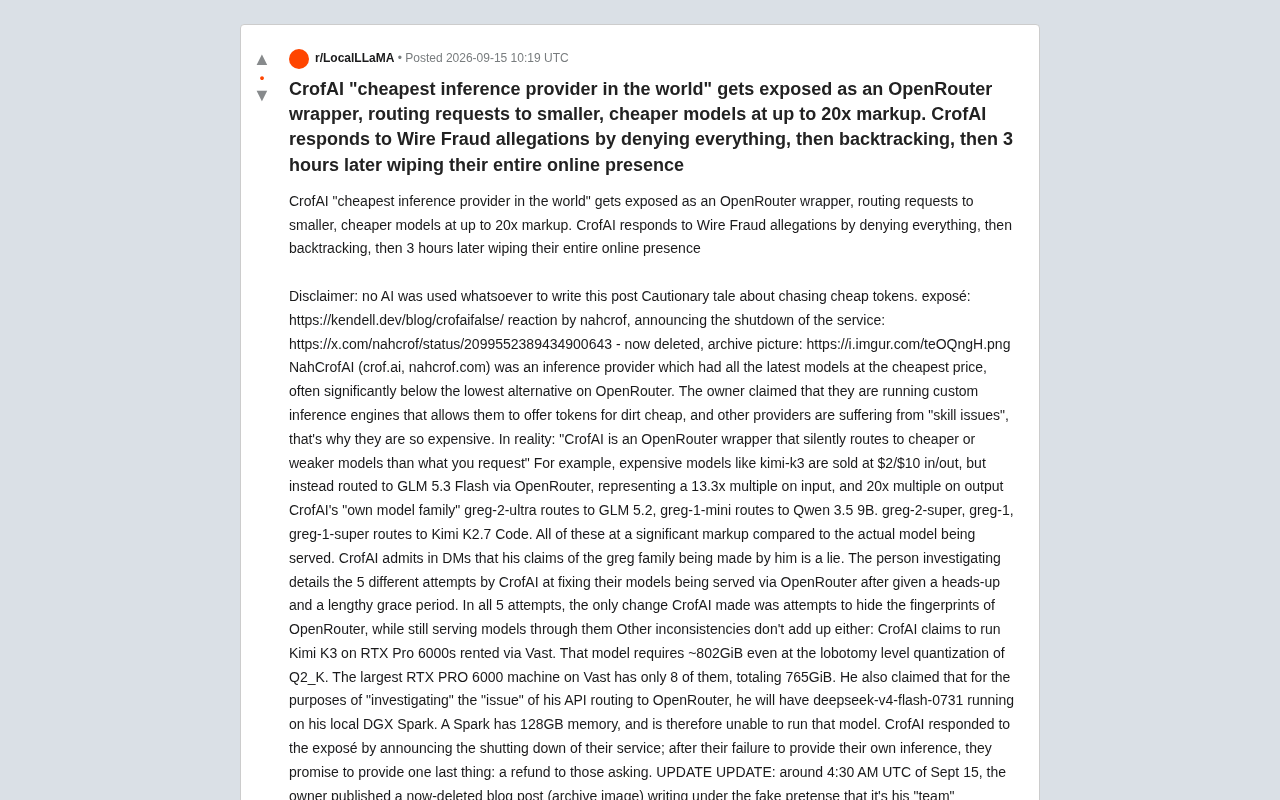
CrofAI Fraud Exposed: 'World's Cheapest AI Inference' Turns Out to Be an OpenRouter Wrapper Scam
CrofAI claimed to offer the world's cheapest AI inference, but was exposed as an OpenRouter wrapper silently rerouting requests to cheap models at up to 20x markups.

Bringing Software Quality Back to the Mainstream: A Reflection on Speed-First Culture
Why has software quality gone from default to luxury? Exploring technical debt, software bloat, and how to make quality the norm again in a speed-obsessed industry.