AI Model Comparison Dashboard Project Overview: Daily Tracking for GPT/Claude/Gemini
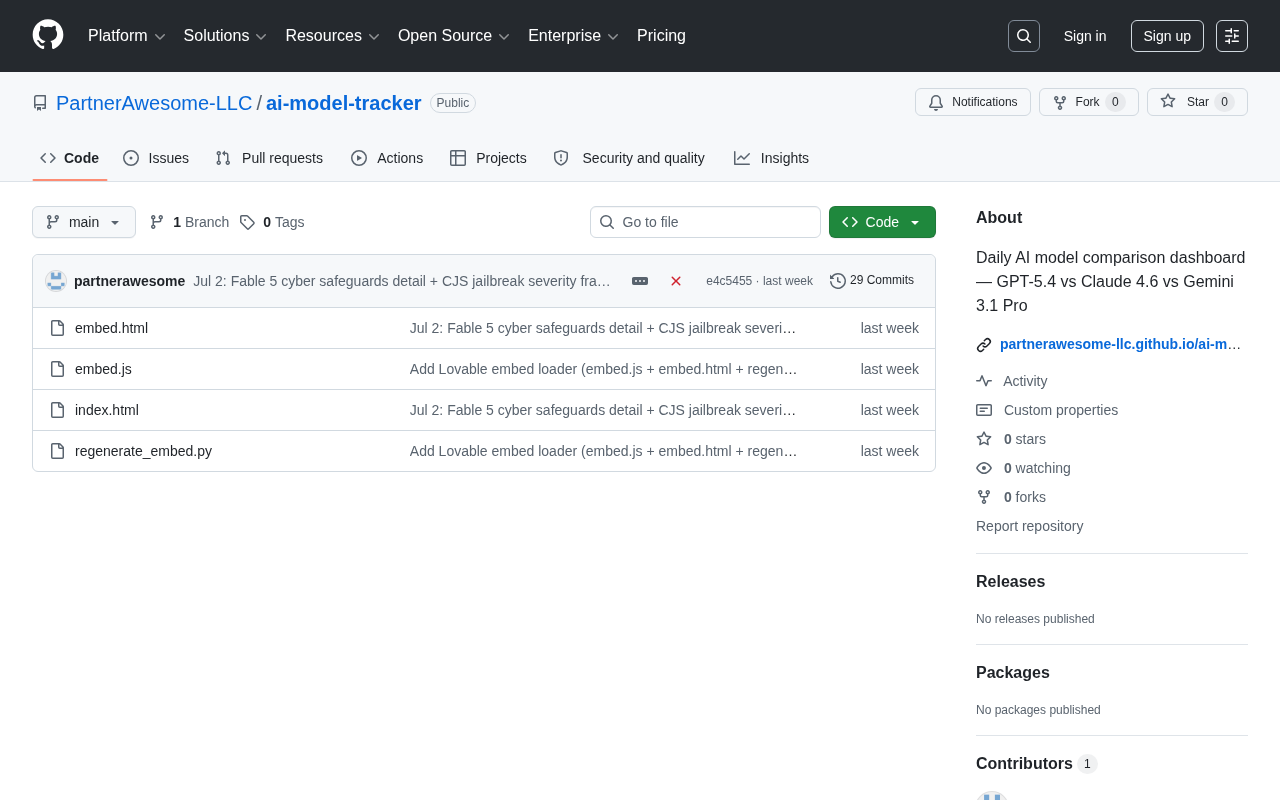
ai-model-tracker is a daily GPT/Claude/Gemini comparison dashboard, but still an early-stage project with zero community traction.
ai-model-tracker is an open-source project maintained by an individual developer, positioned as a daily-updated AI model comparison dashboard covering GPT, Claude, and Gemini, built entirely in HTML. While the article acknowledges real demand for such aggregated dashboards as LLMs iterate faster, it emphasizes that a dashboard's true value lies in data sourcing, update frequency, and evaluation transparency — not presentation alone. With 0 Stars and 0 Forks, the project is still a proof of concept. Teams with model selection needs are advised to rely on mature platforms like Chatbot Arena and Open LLM Leaderboard, treating ai-model-tracker as a watch-list item until its methodology and data mature.
Project Overview
This is an open-source project called ai-model-tracker, hosted on GitHub and maintained by user partnerawesome. Its purpose is straightforward: a daily-updated AI model comparison dashboard designed to benchmark the performance of mainstream large language models side by side.
Based on the project description, the models it targets include GPT, Claude, and Gemini product lines. The project is primarily built with HTML, which suggests it leans more toward a frontend-focused static dashboard rather than a complex backend evaluation system.
It's worth noting that this project currently has very low community traction — 0 Stars and 0 Forks — placing it at a very early stage of development. This makes it look more like a personal experiment or proof of concept than a mature, battle-tested tool.
What Problem Does This Kind of Model Tracker Solve?
As large language models iterate at an ever-accelerating pace, flagship models from different vendors push the boundaries of their capabilities on a near-constant basis. For developers and researchers, manually tracking each model's performance across tasks like coding, reasoning, and multimodal understanding has become genuinely time-consuming.
This is exactly where a "daily comparison dashboard" provides value: aggregating scattered model capability information onto a single page, presenting differences along consistent dimensions, and helping users quickly determine which model best suits a specific task. Tools like this aren't uncommon in the AI ecosystem — public leaderboards (such as various LLM Leaderboards) have already become an important reference point for many teams making model selection decisions.
That said, the core competitive advantage of any dashboard-style project has never been the "display" itself, but rather the data sources behind it, the update frequency, and whether the evaluation methodology is transparent and trustworthy.
Some of the more established public leaderboards in the AI community today include: the Open LLM Leaderboard maintained by Hugging Face (focused on open-source model performance on standard benchmarks), LMSYS's Chatbot Arena (Elo rankings based on real-user blind-test voting), and the HELM evaluation framework published by Scale AI. Each platform has its own focus — some prioritize reproducible standardized tests, some more closely reflect real-world usage, and others cover multi-dimensional metrics including safety and fairness. Understanding these mainstream reference systems helps in assessing where a new dashboard sits methodologically and where its differentiated value lies.
A Realistic Assessment of an Early-Stage Project
Based on the available information, this project is difficult to call a production-ready productivity tool at this point. Zero Stars, zero Forks, and a pure HTML tech stack all point to something that has just gotten started and hasn't yet been promoted or validated.
For readers interested in tracking capability differences between models like GPT, Claude, and Gemini, the more reliable approach right now is to rely on established public evaluation platforms and community leaderboards with substantial user bases. As for ai-model-tracker, it's worth keeping an eye on as a small project — if the author consistently updates the data, refines the evaluation dimensions, and opens up the methodology over time, it could grow into a lightweight and practical reference point.
Key Dimensions to Consider When Evaluating This Type of Project
- Data sources: Are the scores and comparison conclusions drawn from official benchmarks, third-party evaluations, or the author's own testing?
- Update frequency: Does it truly update daily, or does it stagnate over time?
- Evaluation dimensions: Does it only show overall rankings, or does it break down performance by specific scenarios like coding, math, long-context handling, and multimodal tasks?
- Transparency: Is the evaluation methodology and weighting publicly available, and can results be independently reproduced?
"Evaluation methodology transparency" deserves special attention because assessing large language model capabilities comes with several well-known pitfalls: data contamination (models may have encountered benchmark questions during training), prompt engineering variance (different prompt formats can cause significant score fluctuations), and selection bias in evaluation dimensions (choosing tasks that favor one's own model) can all compromise the reliability of final rankings. A truly trustworthy comparison dashboard should, at minimum, publicly disclose the prompt templates, scoring criteria, and test samples used, so that external researchers can independently replicate the results.
Conclusion
ai-model-tracker presents a clear product vision — using a daily-updated dashboard to track capability comparisons across mainstream large models. The direction itself addresses a real need, but given the project's current maturity, it remains at a very early stage with limited functionality and essentially no community validation.
For teams looking to make model selection decisions, the recommendation is to rely primarily on established public leaderboards, and treat emerging projects like this one as supplementary items to watch — revisiting them once their data accumulation and methodology have matured enough to be worth incorporating as a reference.
Related articles
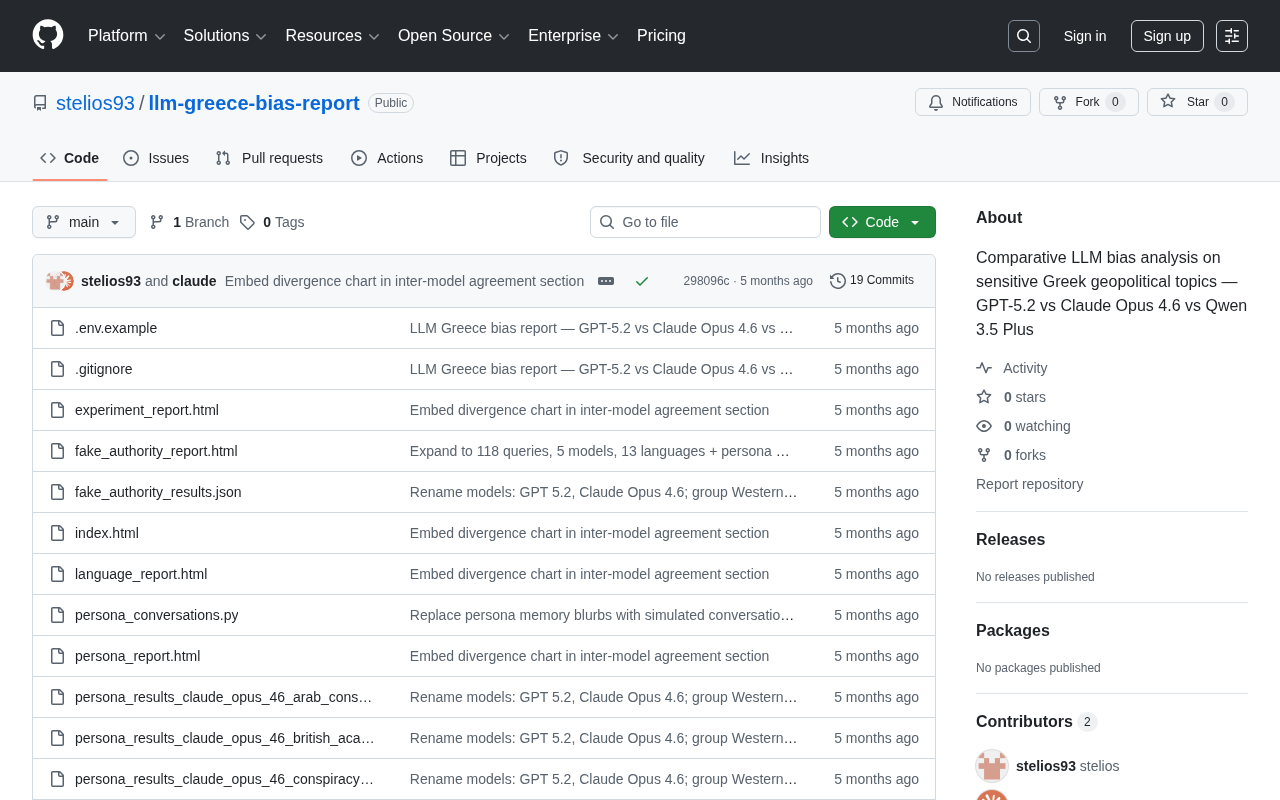
Geopolitical Bias Compared Across Three AI Models: GPT-5.2, Claude, and Qwen Tested
An open-source project compares GPT-5.2, Claude Opus 4.6, and Qwen 3.5 Plus on sensitive Greek geopolitical topics. We break down its methodology, limitations, and why LLM neutrality audits matter.
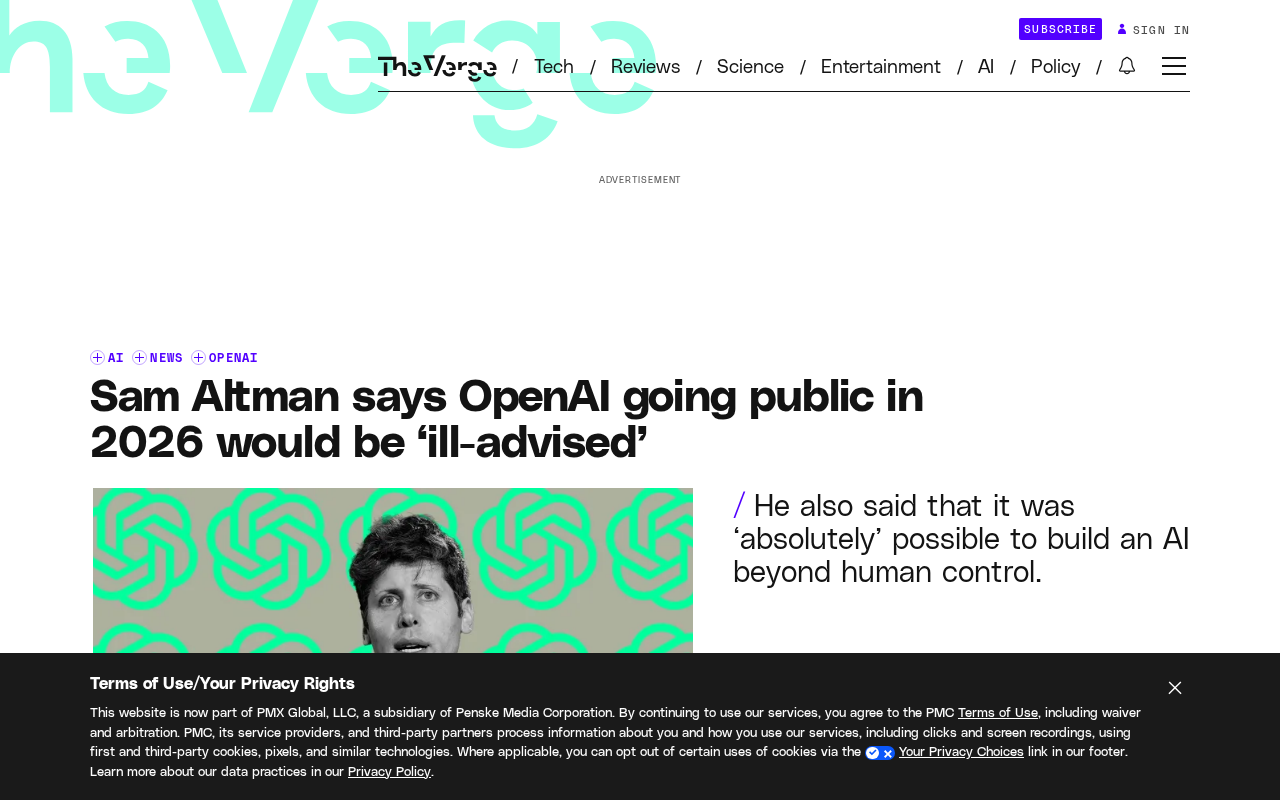
Sam Altman: An IPO in the Near Term Would Be 'Ill-Advised' for OpenAI
OpenAI CEO Sam Altman tells Fortune that an IPO in the near term would be "ill-advised," while also addressing recursive self-improvement risks and the Hugging Face hack.
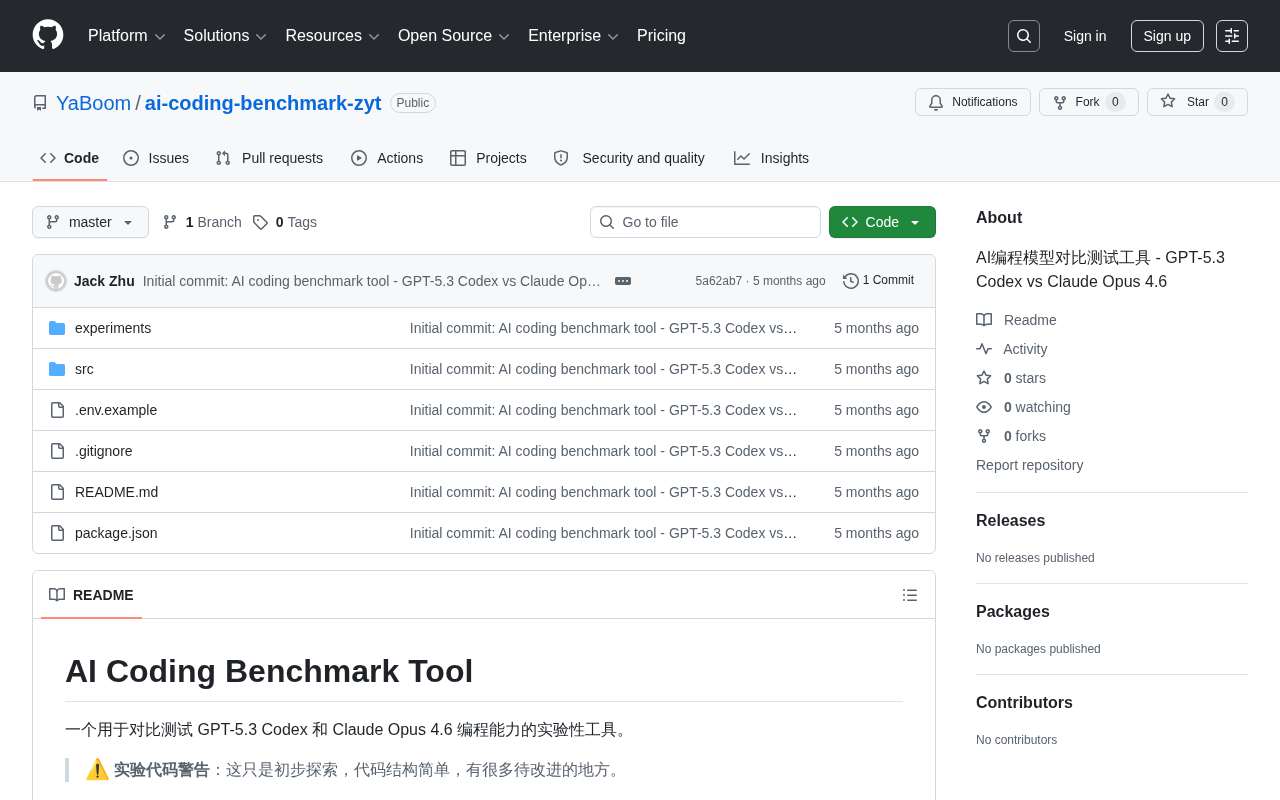
AI Coding Model Benchmark Tool: GPT-5.3 Codex vs. Claude Opus 4.6 — Which One Wins?
The open-source project ai-coding-benchmark-zyt benchmarks GPT-5.3 Codex vs. Claude Opus 4.6. This article explores its methodology, value, and developer guidance.