AI Models Know About "Women, Peace and Security"—But Never Bring It Up

Mainstream AI models know WPS but rarely invoke it proactively in open dialogue, revealing a gap between knowledge and behavior.
The article discusses a Hacker News observation: mainstream AI models have solid knowledge of the UN's Women, Peace and Security (WPS) framework and can explain it when asked directly, but rarely introduce this perspective spontaneously in open-ended policy analysis, conflict reasoning, or gender discussions. The author sees this not as a single-model flaw but a systemic issue in training and alignment. Causes may include safety alignment's conservative handling of sensitive dimensions like gender, conflict, and violence, and the absence of WPS terms in user prompts leaving models without retrieval cues. This "knowing but not saying" doesn't surface as error but yields analyses that look complete yet miss a corner, hard for users to notice. The article suggests users proactively introduce frameworks in prompts, and developers test both whether models "know" and whether they "will use" knowledge.
Introduction: A Concept Models "Know But Don't Mention"
An analysis that sparked discussion on Hacker News points out that mainstream AI models are not lacking in knowledge about the "Women, Peace and Security" (WPS) international policy framework, yet they rarely proactively introduce related perspectives in actual conversations. This phenomenon reveals an easily overlooked problem: there is a significant gap between a model's knowledge coverage and its behavioral tendencies.
WPS is an important agenda promoted by the UN Security Council, emphasizing women's right to participate in and need for protection during conflict prevention, peace negotiations, and post-war reconstruction. That models "know" this content shows that training data is not lacking in relevant texts; that models "don't say it" points to hidden biases in alignment strategies, prompt distributions, and safety filtering.
Background of the WPS Agenda: UN Security Council Resolution 1325 (2000) is the cornerstone of the WPS framework. It was the first to formally incorporate a gender perspective into the international peace and security agenda, affirming the unique impact of armed conflict on women and girls and emphasizing women's equal participation and full involvement in conflict prevention, peace negotiations, peacekeeping operations, and post-war reconstruction. Since then, the Security Council has adopted a series of follow-up resolutions (such as 1820, 1888, 1889, 1960, 2106, 2122, 2242, etc.), forming what is known as the WPS agenda system, covering pillars such as preventing sexual violence in conflict, ensuring women's participation in peace processes, and protecting women's human rights. Many countries have developed National Action Plans (NAPs) to implement this agenda, making it a routine analytical dimension in foreign and security policy. Precisely because WPS is a highly mature policy framework with abundant texts, relevant content is not lacking in model training corpora—which makes the observation that "knowledge exists but is rarely invoked" even more analytically valuable.
Knowledge Exists, but the Trigger Threshold Is Too High
The core observation of the discussion is this: when directly asked about WPS, models can provide fairly complete explanations; but in open-ended policy analysis, conflict scenario reasoning, or discussions of gender issues, models rarely spontaneously incorporate the WPS framework into their answers.
This state of "passive knowledge" is related to models' behavioral habits. Models tend to organize answers around concepts explicitly raised by users and remain silent on analytical dimensions that are not named. For cross-cutting issues like WPS, users often do not proactively use the term, so the model simply skips over it. The result is that knowledge slumbers in the database while analytical perspectives are absent from the output.
According to discussion in the Hacker News comment section, this phenomenon is not unique to any single model but can be observed across multiple mainstream models, suggesting it is more of a systemic issue in training and alignment pipelines than a defect of a single product.
Why "Not Saying It" Deserves Attention
If AI is used in scenarios such as policy research, conflict early warning, and humanitarian assistance planning, models omitting the WPS perspective can have substantive consequences. The impact of conflict on women is distinctive, and the participation structure of peace processes directly affects the durability of agreements. An analytical tool that does not proactively introduce these dimensions may inadvertently reproduce existing gender blind spots.
The more subtle problem is that this omission does not appear in the form of error. The model does not give obviously wrong conclusions; instead, it gives an analysis that "looks complete but is actually missing a corner." Users can hardly detect the absence, because the missing part is never mentioned. This silent bias is harder to correct than explicit errors.
According to views in the discussion, this prompts us to reexamine the evaluation approach of "whether the model knows." Knowledge tests can only verify whether a model can restate a concept; they cannot verify whether the model will apply the concept in appropriate scenarios.
The Tension Between Trigger Mechanisms and Alignment Strategies
One explanation is a side effect of safety alignment. WPS involves sensitive dimensions such as gender, conflict, and violence, and models may tend to be conservative when generating content, avoiding proactively opening discussions that could be controversial. While this conservative strategy reduces risk, it also lowers the probability of related perspectives appearing.
Another explanation relates to prompt distribution. The WPS term rarely appears in user questions, so models lack clear retrieval cues. Models do not proactively "think of" a framework the user has not mentioned, even if that framework is highly relevant to the current question.
According to discussion on Hacker News, these two mechanisms may exist simultaneously. To improve this situation, it is necessary both to adjust how sensitive issues are handled in alignment strategies and to enhance the ability to identify implicit analytical dimensions in retrieval and reasoning processes.
Safety Alignment and Over-Refusal: Safety alignment typically uses reinforcement learning from human feedback (RLHF), rule-based filtering, or system prompts to keep models from generating harmful, biased, or controversial content. A known side effect is "over-refusal": models also become conservative toward reasonable requests that border on sensitive topics, preferring to skip them rather than elaborate. For cross-cutting issues such as gender and conflict, models may misjudge "proactively introducing a gender perspective" as taking a potentially controversial stance, and thus remain silent in open-ended analysis. Unlike explicit refusal, this conservatism manifests as "not mentioning" rather than "refusing to answer," making it harder to detect through evaluation and harder to fully correct through simple prompt engineering.
Prompt Distribution and Retrieval Augmentation: Large model responses depend heavily on explicit cues in the prompt. If a user's question does not contain terms such as "gender," "women," or "WPS," the model lacks anchors during semantic retrieval and reasoning, making it difficult to activate relevant frameworks. Retrieval-augmented generation (RAG) can alleviate this problem to some extent: by retrieving framework documents semantically related to the question from external knowledge bases and explicitly injecting implicit dimensions into the context. But RAG also depends on query construction; if the query itself does not reflect cross-cutting perspectives, retrieval results will still lean toward the dimensions the user has named. Therefore, prompt distribution bias and alignment conservatism are two independent but compounding mechanisms, and improvement requires work on prompt engineering, retrieval strategies, and alignment objective design simultaneously.
Implications for AI Applications
For users applying AI to research and decision support, this finding means model outputs cannot be treated as a complete analytical checklist. What the model provides is a reasonable answer based on the current prompt, not an exhaustive analysis covering all relevant frameworks. Proactively introducing analytical frameworks such as WPS in prompts is currently the more reliable approach.
For model developers, the discussion points to a deeper evaluation question: beyond testing whether a model "knows," it is also necessary to test whether a model "will use" what it knows. Designing evaluations for the latter is far more difficult, because it depends on judgments of scenario relevance—precisely the weak point of current evaluation systems.
Conclusion
"Knowing but not saying" is an easily overlooked failure mode. It does not throw an error, does not trigger a warning; it simply leaves the analysis one dimension short. WPS is only one example, and similar framework omissions may widely exist across various cross-cutting issues. Attention to this phenomenon is essentially asking: to what extent do we want AI to proactively fill in users' cognitive blind spots, and to what extent should it do only what users explicitly ask for?
One-line Summary
Mainstream AI models possess WPS knowledge but rarely invoke it proactively in open-ended conversations, revealing a gap between knowledge coverage and behavioral tendencies.
Paragraph Summary
The article discusses an observation on Hacker News: mainstream AI models have sufficient knowledge of the UN's "Women, Peace and Security" (WPS) framework and can explain it fully when asked directly, but in open-ended policy analysis, conflict reasoning, or discussions of gender issues they rarely spontaneously introduce this perspective. The author argues this is not a defect of any single model but a systemic issue in training and alignment pipelines. Causes may include conservative handling of sensitive dimensions such as gender, conflict, and violence in safety alignment, as well as the absence of WPS terminology in user prompts, which leaves models without retrieval cues. This "knowing but not saying" does not manifest as error but produces analyses that "look complete but are actually missing a corner," which users find hard to notice. The article suggests users proactively introduce analytical frameworks in prompts, while developers should test both whether models "know" and whether they "will use" knowledge in evaluations.
Related articles

Comparing Three Channels for Subscribing to GPT Plus in China: Is Website Top-Up the Easiest?
How to subscribe to GPT Plus in China? This article compares website top-up, credit card, and mobile top-up channels—process, cost, and risk—with steps and tips to help you choose wisely.
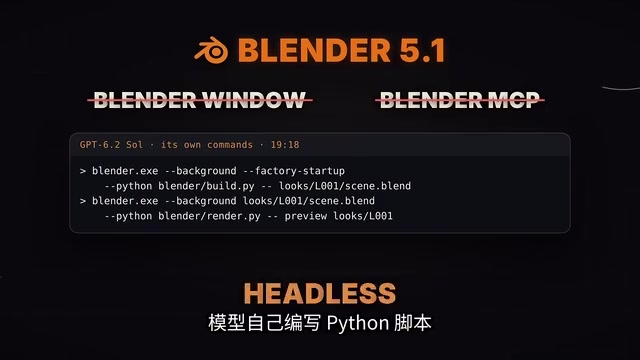
GPT-6.2 Dual-Model Hands-On Test: Astra Burns $419, Sol Just $5
OpenAI GPT-6.2 Astra vs Sol tested on Blender clock, neon shooter, and Formula racing. Astra costs $419, Sol $197, cheapest clock under $5. Cost comparison and selection advice.

After GPT-6 Ultra's Launch: A Complete Guide to Plus/Pro Subscriptions
How to subscribe to GPT membership after GPT-6 Ultra's launch? This article covers the complete Bilibili tutorial: registering a Google account from scratch, Alipay top-up walkthrough, and a comparison of Go, Plus, and Pro plans.