AI Paper Picks: New Breakthroughs in Agent Architecture and Context Management

Seven key AI agent papers signal a shift from demos to production-grade, engineered agent systems.
This week's AI paper roundup covers seven significant works on agent systems, spanning skill transfer (Skill Lift), just-in-time agent generation (JIT-Agent), multi-agent coordination (Prime Agent), lifecycle evaluation (Judges as a Lifecycle), real-lab scientific discovery (Co-Scientist), and context engineering (What Compaction Destroys, Context Management as Code). Together they signal a clear engineering turn: the field is moving from proof-of-concept agents toward maintainable, evaluable, production-ready systems.
Introduction: Agent Research Enters Deep Waters
The AI research community has recently seen a wave of significant papers focused on agent systems. From skill transfer and just-in-time compilation agents to lifecycle-based evaluation frameworks and real-lab scientific discovery, these works collectively sketch a clear trend: AI agents are maturing from "demo-able" prototypes toward engineered, maintainable, and evaluable production systems.
This article reviews seven recently prominent papers, examining the core problems each addresses and what they mean for the future of agent development in practice.

Building Agent Capabilities: From Skill Transfer to Just-in-Time Compilation
Skill Lift: Making Agent Skills Reusable and Transferable
The "Skill Lift" research direction targets the problem of abstracting and transferring agent skills. In traditional agent development, capabilities tied to specific tasks are tightly coupled to particular scenarios, making reuse difficult. The core idea behind Skill Lift is to abstract successful execution patterns into reusable "skill" units, allowing agents to quickly draw on prior experience when facing new tasks rather than learning from scratch.
The value here is a substantial reduction in agent training and deployment costs. Once an agent masters a certain class of operational patterns, it can theoretically "lift" those patterns to a higher level of abstraction and generalize them to similar but not identical task scenarios.
From a technical lineage perspective, the concept of skill transfer is rooted in Transfer Learning and Hierarchical Reinforcement Learning (HRL). In HRL, agents decompose complex tasks into multi-level subgoals, where low-level policies handle atomic operations and high-level policies manage composition and scheduling. Skill Lift follows this same thread but places greater emphasis on automatically extracting and abstracting reusable skill modules from actual execution trajectories — analogous to function abstraction and modular encapsulation in software engineering. Notably, this approach echoes OpenAI's early experiments with the "Voyager" agent in Minecraft, which achieved continuous learning and capability accumulation in an open-world environment by encoding successful behaviors as callable JavaScript functions. Skill Lift's further contribution lies in pushing this skill-abstraction mechanism toward more general-purpose scenarios.
JIT-Agent: Just-in-Time Compilation Ideas Reshape the Agent Paradigm
"JIT-Agent" draws on the concept of Just-in-Time (JIT) compilation from programming languages. Traditional agents typically rely on pre-designed fixed workflows when handling tasks; the JIT paradigm instead advocates dynamically generating execution strategies or code at runtime based on the current context.
To appreciate the depth of this innovation, it helps to revisit how JIT compilation itself works. JIT compilation was originally a core runtime optimization technique, widely adopted by the Java Virtual Machine (JVM) and .NET CLR. Its central idea is to avoid compiling all source code into machine code before execution (i.e., AOT — Ahead-Of-Time compilation) and instead dynamically compile and optimize based on actual execution paths and hot code at runtime. This allows programs to make better compilation decisions based on concrete runtime context. Transplanting this idea to the agent domain means agents no longer depend on pre-hardcoded behavior paths for every scenario. Instead, when facing a specific task, they generate execution plans or code snippets in real time based on current context, striking a dynamic balance between flexibility and execution efficiency.
The biggest advantage of this approach is flexibility — agents are no longer constrained by developer-defined behavior trees, but instead "compile" a solution tailored to the current problem on the fly. This is especially critical for handling long-tail and open-ended tasks, and it marks a fundamental architectural shift from static orchestration to dynamic generation.
Prime Agent: The Coordination Hub in Multi-Agent Systems
"Prime Agent" explores the role design of a dominant coordinator in multi-agent systems. For complex tasks, a single agent often falls short, requiring multiple sub-agents to work together. The Prime Agent, as the central scheduler, handles task decomposition, sub-task assignment, and result integration — making it a key component for building scalable multi-agent systems.
Research on Multi-Agent Systems (MAS) traces back to early work in distributed AI, but in today's LLM-driven agent ecosystem, the coordination problem presents new dimensions of challenge. Core difficulties include: controlling the granularity of task decomposition (too coarse and sub-agents are overloaded; too fine and communication overhead explodes), information sharing and conflict resolution among sub-agents, and aligning global objectives with local behaviors. Mainstream multi-agent frameworks such as AutoGen, CrewAI, and LangGraph are all exploring different coordination paradigms. The Prime Agent's design as a central coordinator is essentially a centralized scheduling architecture, in contrast to decentralized peer-collaboration models — centralized approaches make it easier to guarantee global consistency and execution determinism, while decentralized ones offer better fault tolerance and scalability. The trade-off between these two paradigms is likely to become a core architectural decision point in future multi-agent system design.
Evaluation and Quality Assurance: Judges as a Lifecycle
Evaluation has long been a pain point in deploying AI systems, especially for generative and agent-based systems where the absence of clear ground-truth answers makes quality assurance exceptionally difficult. "Judges as a Lifecycle" puts forward an important thesis: evaluation should not be a one-time check at the end of the development pipeline, but rather a continuous process woven throughout the entire system lifecycle.
The "Judges" concept here builds on the "LLM-as-a-Judge" evaluation paradigm that has gained traction over the past two years. This paradigm was first applied at scale by the LMSYS team in MT-Bench and Chatbot Arena, with the basic idea of using a more capable LLM to score or rank the outputs of other models as a replacement for expensive, time-consuming human evaluation. Its strengths are high scalability and fast evaluation speed, but it also carries known biases: position bias (favoring answers listed first), verbosity bias (favoring longer answers), and self-preference (favoring answers that resemble the judge model's own style). Embedding Judges throughout the system lifecycle requires not only addressing when to evaluate and what to evaluate, but also simultaneously tackling the calibration challenges posed by these evaluation biases.
From One-Time Benchmarking to Continuous Evaluation
Traditional model evaluation tends to concentrate on benchmark testing after training is complete. But in real production environments, the distribution of system inputs constantly shifts and user needs continue to evolve. Embedding "Judges" (typically models or rule sets used to automatically assess output quality) into the full lifecycle means the system can continuously monitor its own performance and detect quality degradation in a timely manner.
This idea aligns closely with the Continuous Integration/Continuous Deployment (CI/CD) philosophy in software engineering. CI/CD is a foundational practice of modern software engineering, ensuring fast and safe delivery of code changes through automated build, test, and deployment pipelines. In the AI systems domain, this practice is evolving into MLOps (Machine Learning Operations) and the newer LLMOps concept. MLOps focuses on automated workflows for model training, version management, data drift monitoring, and model retraining; LLMOps goes further to focus on prompt version management, continuous monitoring of output quality, cost optimization, and safety guardrail deployment. Making evaluation lifecycle-aware essentially means embedding quality gates into the LLMOps pipeline, enabling systems to continuously self-diagnose in production rather than relying solely on offline pre-launch evaluations.
This reflects how AI system development is actively absorbing best practices from mature software engineering. Making evaluation "lifecycle-aware" is, at its core, about establishing long-term, reliable quality guardrails for agent systems.
Scientific Discovery in Practice: Co-Scientist in Real Labs
"Co-Scientist in Real Labs" brings AI agents into real scientific laboratory settings. Compared to performance on controlled benchmarks, AI functioning as a "co-scientist" in real experimental environments faces far greater challenges: uncertain experimental conditions, noisy data, and the collaboration interface with human researchers.
To understand the positioning of this research, it helps to look at the three development phases AI-assisted scientific discovery (AI for Science) has gone through in recent years. The first phase was data analysis acceleration, where AI was primarily used to process large-scale experimental data — examples include AlphaFold predicting protein structures and DeepMind's materials discovery project GNoME. The second phase was hypothesis generation, where AI began participating in proposing scientific hypotheses by using large language models for literature synthesis and novel hypothesis reasoning. The third phase is closed-loop experimentation, where AI not only generates hypotheses but can also design experimental protocols, control automated lab equipment, analyze results, and iterate on hypotheses — forming a complete scientific discovery loop. Carnegie Mellon's "Coscientist" and related work from Google DeepMind have already demonstrated this closed-loop capability in chemical synthesis and materials science.
Co-Scientist in Real Labs represents an active push toward this third phase, with the core difficulty lying in handling uncontrolled variables in real experiments and achieving effective collaboration with human researchers. The significance of this type of research is in verifying whether AI agents are truly capable of accelerating scientific discovery. When AI can help design experiments, analyze results, and propose hypotheses, it evolves from a tool into a research partner. Real-lab deployment provides a far more rigorous test of AI's practical value than the idealized settings of academic papers.
Context Engineering: The Most Important Direction This Week
What Compaction Destroys: The Hidden Cost of Context Compression
As context lengths continue to grow, managing and compressing context has become a central challenge for agents handling long conversations and long-horizon tasks. The title of "What Compaction Destroys" is itself thought-provoking — it directly confronts the unavoidable information loss that occurs during context compression.
The backdrop here is the tension between the explosive expansion of LLM context windows and models' actual processing capacity. From 2,048 tokens in the GPT-3 era, to 128K tokens in GPT-4, to the million-token-scale context windows of Claude and Gemini, context windows have grown exponentially. Yet longer context does not mean the problem is fully solved — research shows that models processing very long contexts suffer from the "Lost in the Middle" problem, where retrieval accuracy for information positioned in the middle of the context drops significantly. To address this, academia and industry have developed various context compression techniques: summary-based compression (condensing conversation history into summaries), retrieval-based compression (RAG — injecting only relevant retrieved snippets into context), distillation-based compression (compressing the semantic information of long text into fewer "soft prompt" vectors, as in Gisting and AutoCompressors), and sliding window strategies. Each approach involves a difficult trade-off between information retention and computational efficiency.
When we compress historical context to save tokens or improve efficiency, what critical information do we actually lose? And how do those losses affect the agent's subsequent decisions? This research reminds developers: compression is not a free lunch. Blunt truncation or summarization can fundamentally undermine an agent's ability to maintain long-term consistency.
Context Management as Code: Engineering Context Management as a First-Class Practice
Complementing the previous paper, "Context Management as Code" argues for elevating context management to a first-class engineering practice. Just as infrastructure can be defined with code (Infrastructure as Code), the organization, injection, and cleanup of context should be managed explicitly and in a version-controlled manner.
The concept borrowed here — Infrastructure as Code (IaC) — is a core DevOps principle, exemplified by tools like Terraform, Ansible, and Pulumi. Its central principle is that all infrastructure configuration (servers, networks, databases, etc.) should be defined in declarative code, version-controlled, and deployed through automated processes, eliminating the inconsistencies and untraceability that come with manual configuration. Applying this philosophy to context management means that an agent's context construction process is no longer an implicit, hard-to-trace black box. Instead, it is precisely defined through explicit code logic: when to inject the system prompt, when to retrieve external knowledge, when to clean up stale information, when to compress conversation history. This transparent management makes context behavior auditable, reversible, and shareable and reusable across teams.
The core message of this idea is: don't let context become a black box. By codifying context management logic, developers can precisely control what information enters the model's view and when, enabling predictable, debuggable, and reusable agent behavior. This may be one of the most practically actionable directions in recent papers for real-world engineering.
Conclusion: The Engineering Turn in Agent Research
Looking across these papers, a clear theme emerges — the engineering turn in agent research. Whether it is JIT-style dynamic generation, lifecycle-based evaluation with Judges, or explicit management through Context Management as Code, researchers are increasingly focused on making agent systems maintainable, evaluable, and trustworthy.
This signals that the AI agent field is moving beyond the "showmanship" stage and entering a pragmatic period of engineering construction. For practitioners, these papers are not just showcases of academic frontiers — they offer directly actionable methodologies. From skill reuse to context governance, each one points toward a critical path for building production-grade agent systems.
Key Takeaways
Related articles
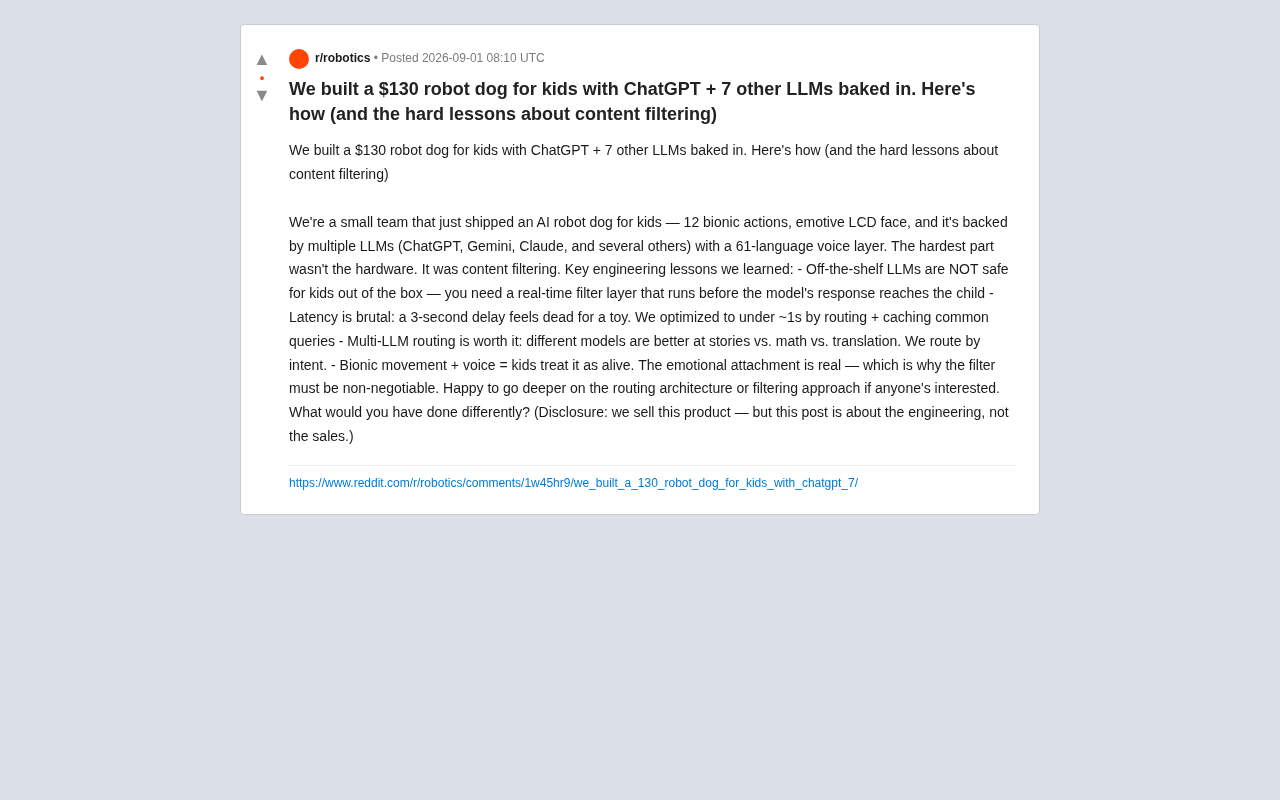
Building an AI Robot Dog for Kids: Multi-Model Routing, Content Filtering, and Latency Optimization
A $130 AI robot dog for kids integrates 8 LLMs with 61-language voice interaction. The team shares key engineering lessons on content safety filtering, multi-LLM intent routing, and sub-1-second latency optimization.

Can Omarchy Dominate the Sub-$1000 Laptop Market? An In-Depth Analysis
Omarchy, based on Arch Linux, shows unique advantages in the sub-$1000 laptop market. This analysis compares Windows and MacBook performance bottlenecks on low-spec hardware and examines why Omarchy enables cheap laptops to run smoothly, plus the ecosystem challenges and market prospects it faces.
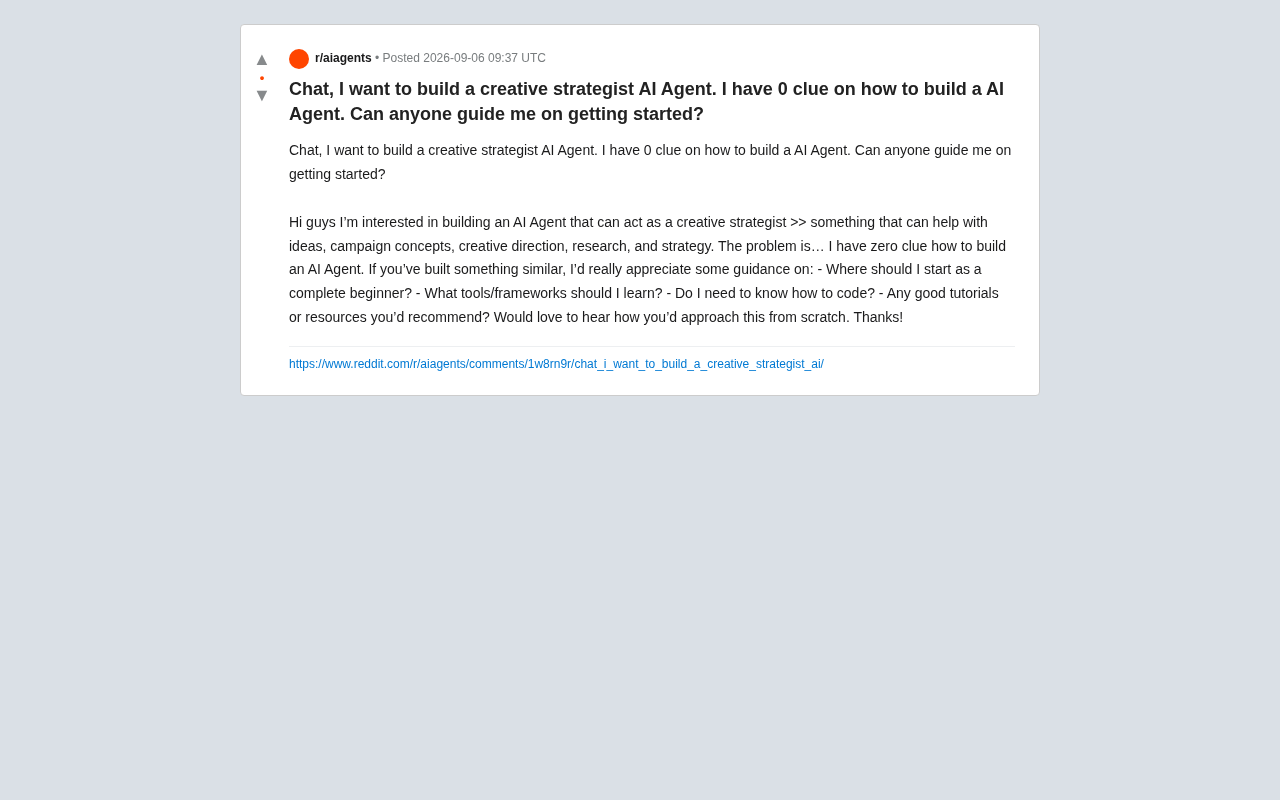
AI Agent Beginner's Guide: Building a Creative Strategy Intelligent Assistant from Scratch
A complete guide to building a creative strategy AI Agent from scratch. No coding required — use tools like Dify and Coze to quickly build an intelligent assistant.