AI Penetration Testing Learning Roadmap: Four Stages from Beginner to Advanced

A four-stage learning roadmap for mastering AI-powered penetration testing from beginner to expert.
This article outlines a systematic four-stage AI penetration testing learning roadmap. Starting from foundational concepts and legal boundaries, it progresses through AI-assisted web vulnerability discovery, enterprise-level automated security integration with CI/CD pipelines, and culminates in advanced multi-Agent development and adversarial security strategies — helping security professionals leverage AI as a force multiplier.
AI Penetration Testing: A New Track in Cybersecurity
When large language models can read code, analyze logs, and auto-generate scripts, a natural question arises: Can AI really help you find vulnerabilities? The answer is yes — but only if you know how to properly leverage AI at every stage of penetration testing.
The future of security testing no longer involves engineers solely relying on manual command execution and repetitive tool usage. Instead, it requires learning to harness AI for greater efficiency — offloading repetitive mechanical tasks to AI while focusing more energy on vulnerability analysis, attack strategies, and security policy formulation. This is the core logic behind "AI-empowered cybersecurity": AI doesn't replace humans; it amplifies their capabilities.
This article breaks down a systematic AI penetration testing learning roadmap into four progressive stages, helping practitioners who want to enter this field build a clear growth framework.
Stage One: AI Penetration Testing Fundamentals
The core objective of the introductory stage is to understand what AI can actually do for penetration testing while mastering the legal boundaries and basic processes of security testing. This stage doesn't require diving into complex underlying algorithms — you just need to learn the AI capabilities that are practical and immediately applicable.
Building Dual Awareness of AI and Cybersecurity
First, you need to understand the foundational concepts of AI and AI agents — such as what context means, what an Agent is, and common AI-assisted tools like Codex and command-line utilities.
In the context of penetration testing, these concepts have very specific meanings. An AI Agent refers to an AI system capable of perceiving its environment, making autonomous decisions, and executing actions. Unlike simple Q&A-style large language models, agents possess capabilities like task planning, tool invocation, and memory management. In penetration testing scenarios, an Agent can autonomously decide which tool to use next and which target to analyze, without requiring step-by-step human instructions. Context is the foundation for a large model's understanding and content generation — it refers to the amount of information the model can "remember" within a single conversation. The larger the context window, the more code and log information the AI can process, and the stronger its analytical capabilities become. Codex is a model released by OpenAI specifically designed for code comprehension and generation, capable of understanding multiple programming languages and generating executable script code.
That said, you must also establish proper cybersecurity awareness: the definition of White Hat Hacker, professional ethics, and the legal authorization boundaries that security testing must adhere to. This point is especially important — "penetration testing" without authorization is essentially an attack.
Mastering the Standard Penetration Testing Process
After building this foundational awareness, you need to familiarize yourself with the standard penetration testing workflow: reconnaissance, threat modeling, exploitation, post-exploitation, and report generation.
The standard penetration testing process typically follows industry frameworks such as PTES (Penetration Testing Execution Standard) or the OWASP Testing Guide. Reconnaissance is divided into passive and active collection — the former gathers target intelligence through public information sources (such as WHOIS, DNS records, and search engines), while the latter directly interacts with the target system. Threat Modeling evaluates the attack surface and potential risks based on collected information. Exploitation is the process of verifying whether vulnerabilities can actually be exploited. Post-Exploitation focuses on privilege escalation, lateral movement, and data acquisition after gaining initial access. The final report generation needs to clearly document vulnerability details, risk levels, reproduction steps, and remediation recommendations.
Once you understand this workflow, you can see AI's core application points within it — AI can quickly map target assets during reconnaissance, assist in understanding vulnerability principles during analysis, and significantly boost efficiency during verification and report generation.
Stage Two: AI-Assisted Web Vulnerability Discovery in Practice
The second stage represents a critical leap "from tools to practice," with the goal of integrating AI into your actual vulnerability discovery work, achieving automated asset collection and intelligent vulnerability analysis.
Setting Up an AI Penetration Testing Lab Environment
The first step in hands-on practice is building a usable AI lab environment, including AI assistant installation and configuration, selecting common large models, workspace setup, and access permission management. A stable, isolated, and permission-controlled environment is the foundational guarantee for security testing. "Isolation" is crucial here — the penetration testing environment must be strictly separated from production environments, typically using virtual machines or Docker containers to build sandboxed testing environments that prevent test activities from accidentally affecting real systems.
AI-Assisted Asset Collection and Code Auditing
Once the environment is ready, you can have AI handle asset collection and attack surface mapping: assisting in writing asset collection tools, performing web fingerprinting, analyzing scan results, and even conducting source code analysis to discover potential security issues. This type of work is often tedious and repetitive — exactly the kind of tasks AI excels at.
Web fingerprinting is a key technique in the reconnaissance phase of penetration testing. By analyzing characteristic information from the target website — such as HTTP response headers, page features, JavaScript library versions, CSS frameworks, and cookie naming conventions — it identifies the target's web server type (e.g., Nginx, Apache), development framework (e.g., Spring, Django, Laravel), CMS system (e.g., WordPress, Drupal), and specific version numbers. Once the technology stack is identified, security testers can quickly correlate known CVE vulnerabilities (Common Vulnerabilities and Exposures), dramatically narrowing the vulnerability search scope. AI's advantage in this phase lies in its ability to simultaneously analyze multi-dimensional fingerprint features and cross-reference them against massive vulnerability databases, far exceeding manual efficiency.

AI Combined with Kali Linux for Penetration Practice
The final step is connecting AI's capabilities — tool invocation and vulnerability analysis — with practical platforms like Kali Linux to complete a full automated penetration test.
Kali Linux is a Debian-based Linux distribution maintained by the Offensive Security team, pre-loaded with over 600 penetration testing tools, making it the most widely used penetration testing operating system among security professionals worldwide. It integrates core tools including Nmap (network scanning), Burp Suite (web application testing), Metasploit Framework (exploitation framework), Wireshark (network traffic analysis), and John the Ripper (password cracking). Combining AI with Kali Linux means AI can automatically select appropriate tools based on the target environment, generate customized scan commands, interpret tool output, and dynamically adjust attack strategies based on scan results — achieving a leap from "tool operator" to "intelligent orchestrator."
This marks the point where you can have AI collaborate in real attack-and-defense scenarios, rather than merely using it as a Q&A chatbot.
Stage Three: Enterprise-Level AI Automated Penetration Testing Integration
Once your individual capabilities mature, the next step is moving toward engineering-grade solutions. The goal of this stage is to integrate AI capabilities into existing security testing frameworks, building a personal penetration testing platform with AI capabilities that supports a complete security loop.
Framework Wrapping and Automated Exploitation
First, you need to perform secondary wrapping of penetration frameworks, connecting AI to the existing security toolchain to achieve automated reconnaissance. Going further, AI can assist with exploitation and post-exploitation — such as generating payloads (malicious code or data designed to trigger vulnerabilities) and helping bypass defense mechanisms — though all of this must be conducted under legal authorization. The concept of secondary wrapping refers to adding an AI decision layer on top of existing framework APIs like Metasploit, allowing AI to automatically select attack modules based on target environment characteristics, adjust parameter configurations, and perform intelligent analysis of attack results.
Automated Report Generation and CI/CD Security Pipelines
Report generation is often the most time-consuming task for security engineers. AI can automatically organize test data and output standardized security reports, freeing people from tedious documentation work. AI-generated reports not only include technical vulnerability details but can also automatically classify risk levels based on CVSS scores and provide targeted remediation recommendations based on vulnerability context, significantly improving report professionalism and actionability.

Taking it a step further, AI can be embedded into enterprise CI/CD security pipelines, performing automated security checks when code is committed. CI/CD (Continuous Integration/Continuous Delivery) is a core practice in modern software development, where developers frequently commit code to shared repositories, and automated toolchains automatically handle building, testing, and deployment. DevSecOps embeds security checks into this workflow, "shifting left" — conducting security reviews early in development rather than after deployment. Specific implementations include automatically running SAST (Static Application Security Testing, analyzing security defects in source code) at code commit, executing SCA (Software Composition Analysis, detecting known vulnerabilities in third-party dependencies) during the build phase, and performing DAST (Dynamic Application Security Testing, simulating attacks against running applications) before deployment. The introduction of AI makes these checks more intelligent — reducing false positives, prioritizing high-risk vulnerabilities, and automatically generating remediation recommendations.
This means security testing shifts from "post-deployment auditing" to "during development," forming a true DevSecOps security loop.
Stage Four: Advanced Practice and AI Security Expert Development
The final stage aims at becoming the AI security testing expert on your team — someone capable of handling penetration tests on complex systems and developing custom security testing tools. It encompasses four core directions.
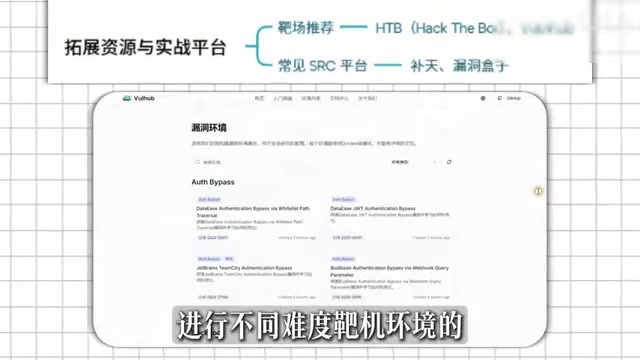
SRC Platform Practice and Security Range Exercises
First, accumulate real-world enterprise vulnerability discovery and submission experience through SRC platforms like Butian and Vulbox. Second, use various security ranges to conduct vulnerability analysis and penetration testing exercises across different difficulty levels. Combining real-world and simulated environments builds solid practical intuition.
SRC (Security Response Center) is a vulnerability collection platform established by enterprises. White hat hackers can conduct security testing on enterprise assets within authorized scope and submit discovered vulnerabilities to the platform for rewards. Well-known domestic SRC platforms include the Butian Vulnerability Response Platform and Vulbox, while international platforms include HackerOne and Bugcrowd. This mechanism is essentially a crowdsourced security testing model, where enterprises leverage the global security researcher community to discover security weaknesses in their systems. For security practitioners, SRC platforms serve as both the best channel for legitimate practice and an important avenue for accumulating real cases and building industry reputation. Vulnerability ratings typically follow CVSS (Common Vulnerability Scoring System), ranging from low to critical severity, with corresponding reward levels.
Intelligent Agent Development and Adversarial Security Strategies
Third, develop intelligent testing Agents that execute automated penetration testing through multi-Agent collaboration, automatically exploring attack paths. Multi-Agent collaboration is a cutting-edge direction in AI security testing. Its core concept is decomposing complex penetration testing tasks among multiple specialized AI Agents, each responsible for a specific function — for example, one Agent focuses on reconnaissance, one handles vulnerability scanning, one executes exploitation, and one performs post-exploitation analysis. These Agents collaborate through predefined communication protocols and task orchestration frameworks (such as AutoGen, CrewAI, etc.), simulating the division of labor in real red team operations. Automated attack path exploration draws on graph search algorithm concepts, modeling the target network as an Attack Graph. The AI searches for optimal attack paths from initial entry points to core assets on the graph, capable of discovering complex multi-step attack chains that human testers might overlook.
Fourth, pivot toward adversarial security strategies, shifting focus from "repetitively running tools" to vulnerability analysis, attack methodologies, and security strategy formulation. Adversarial security strategies require security experts to think from an attacker's perspective, understanding adversaries' TTP (Tactics, Techniques and Procedures) and designing more effective defense solutions accordingly. AI's value at this level lies in its ability to rapidly simulate multiple attack scenarios, helping security teams conduct red-blue team exercises and continuously validate the effectiveness of defense systems.
Conclusion: AI Is the Lever, Humans Are the Fulcrum
Looking across all four stages, a clear theme runs throughout: AI excels at handling repetitive, large-scale mechanical tasks, while human value lies in judgment, creativity, and strategy. A true AI security expert isn't the person who can enter the most commands — it's the person who knows how to direct AI and focus their energy on high-value thinking.
For practitioners looking to enter the AI security field, rather than worrying about "will AI replace security engineers," it's better to start making AI your lever as early as possible. This AI penetration testing learning roadmap from beginner to advanced may well be the practical map you need for planning your future career development.
Related articles

Berlin Under Ransomware Attack: Why Government Agencies Have Become Prime Targets
Berlin faces a severe ransomware attack targeting municipal systems. This analysis explores why government agencies are high-value targets, decodes double extortion tactics, and examines cybersecurity defense strategies in urban digital transformation.

AI Ghostwriting Government Reports Triggers Trust Crisis: A Deep Dive into the Wellington City Council Incident
Wellington City Council's Deloitte report exposed as heavily AI-generated, sparking debate on consulting transparency, government procurement, and AI accountability.
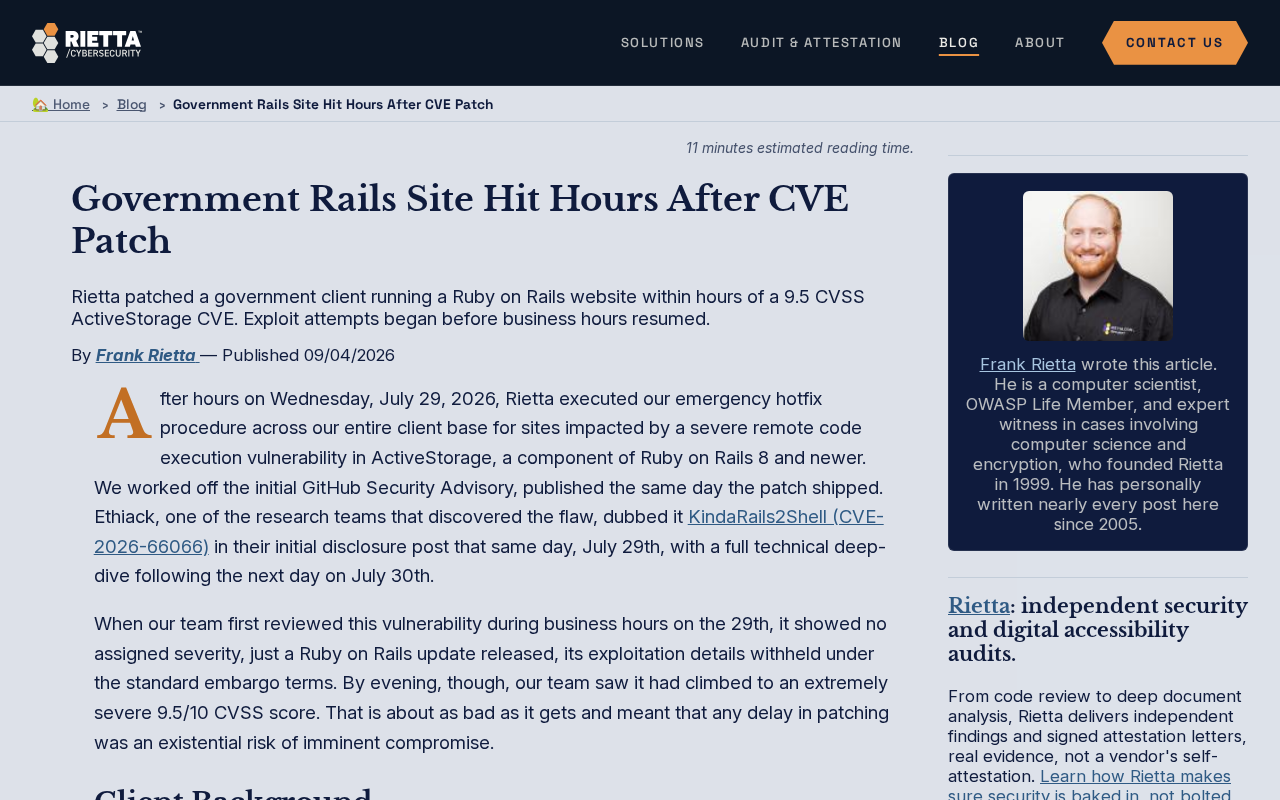
Government Rails Site Breached Hours After Patch Release: A Wake-Up Call on n-day Vulnerability Threats
A government Rails site was breached hours after a CVE patch release. Deep analysis of patch racing, n-day threats, and defense strategies for developers.