AI + Pharmacy: Five Specialized Directions and a Learning Roadmap for Beginners

A guide to five AI + pharmacy career tracks with a structured beginner learning path.
This article breaks down the AI + pharmacy field into five specialized directions — AIDD, clinical pharmacy, pharmaceutics, Traditional Chinese Medicine, and pharmacovigilance — analyzing entry barriers, salary potential, and ideal candidate profiles for each. It provides a practical 4-6 month learning roadmap covering Python basics, pharmacy-specific tools like RDKit, and project implementation.
Why AI + Pharmacy Is Becoming a Hot Career Track
The convergence of artificial intelligence and pharmacy is becoming a critical pathway for traditional pharmacy professionals seeking career transformation and advancement. From policy incentives to industry demand, multiple factors are driving the rapid development of this interdisciplinary field.
The fundamental driver behind this trend is the enormous challenge facing traditional drug development — it takes an average of 10-15 years from target discovery to market approval, costs over $1 billion, and clinical trial success rates remain below 10%. AI technology primarily reduces overall R&D risk by shortening the lead compound discovery cycle and improving the quality of preclinical drug candidates, transforming the industry's need for AI capabilities from a "nice-to-have" to a "must-have." Currently, over 100 AI-assisted drug molecules have entered clinical stages globally. Notably, Insilico Medicine's ISM001-055 became the first drug candidate to enter Phase II clinical trials with both the target and molecular design entirely driven by AI, marking the transition of AI drug development from proof-of-concept to actual output.
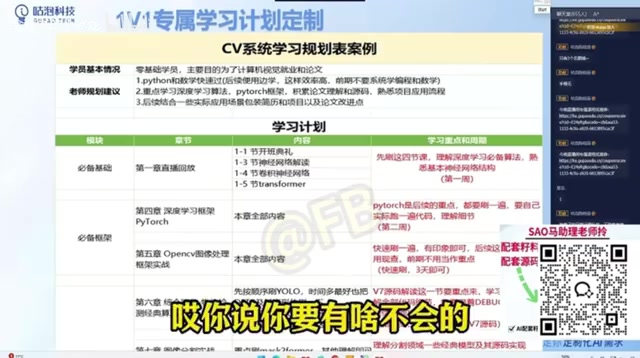
China's National Medical Products Administration (NMPA), Ministry of Science and Technology, and other agencies have been continuously promoting policies related to "AI-empowered pharmaceutical R&D." Leading pharmaceutical companies such as Hengrui Medicine, BeiGene, and WuXi AppTec, along with numerous emerging biotech companies, are actively building AI drug development capabilities, creating strong demand for interdisciplinary talent.
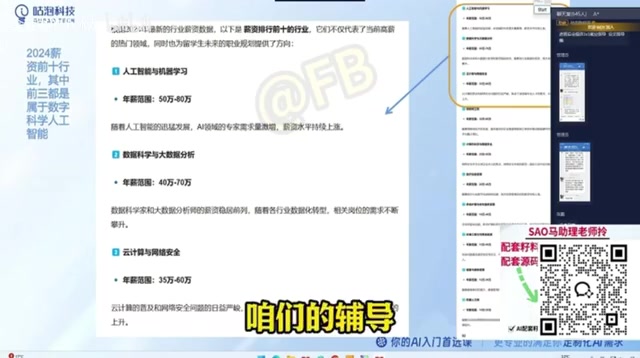
From a salary perspective, this trend is even more apparent. Traditional pharmacy graduates typically earn between 5,000 and 8,000 RMB per month, while AI pharmacy-related positions offer starting salaries of 15K to 25K RMB, with senior roles commonly reaching 300,000-400,000 RMB annually. This salary gap reflects the market scarcity of professionals who "understand pharmaceutical science and can apply AI tools."
On the research front, AI methods also demonstrate clear advantages. Whether publishing in Chinese core journals or SCI-indexed papers, AI-assisted pharmaceutical research tends to be well-received for topic novelty and during peer review — a practical benefit for researchers seeking promotions or degrees.
Five Specialized Directions in AI + Pharmacy Explained
For those looking to enter this field, choosing the right niche is more important than learning aimlessly. Based on different professional backgrounds and career goals, the field can be divided into the following five directions.
AIDD (AI-Driven Drug Discovery): The Highest-Paying Core Track
AI-Driven Drug Discovery (AIDD) is currently the highest-paying subspecialty, covering core drug discovery processes including molecular design, activity prediction, and virtual screening. This direction has relatively high entry barriers and is best suited for professionals with backgrounds in medicinal chemistry or computational chemistry.
From a technical stack perspective, AIDD involves core methods including: molecular generative models (such as Variational Autoencoders/VAE and Generative Adversarial Networks/GAN for de novo design of novel molecular scaffolds), Graph Neural Networks/GNN (treating molecules as graph structures composed of atom nodes and chemical bond edges for molecular property prediction), physics-based molecular docking combined with AI-enhanced virtual screening (computationally predicting the binding affinity between small molecules and target proteins), and ADMET prediction (early-stage assessment of a drug's Absorption, Distribution, Metabolism, Excretion, and Toxicity). Notably, DeepMind's AlphaFold2 achieved a revolutionary breakthrough in protein 3D structure prediction, providing an unprecedented structural data foundation for Structure-Based Drug Design (SBDD) and further expanding AIDD's application boundaries.
AI + Clinical Pharmacy: A Lower-Barrier Entry Point
This direction has a relatively low entry barrier, with primary applications in hospitals and clinical settings, such as medication decision support systems, intelligent prescription review, and individualized dosing optimization. For practicing pharmacists and clinical pharmacy professionals, this is a particularly accessible entry point.
Specifically, AI applications in clinical pharmacy include: individualized dose prediction based on patient genomics data and pharmacokinetic models, mining adverse drug reaction signals from electronic health records using natural language processing (NLP), and building intelligent prescription review systems combining rule engines with machine learning. These applications share a common characteristic — they require relatively less algorithmic depth but demand deep understanding of clinical scenarios, which plays to the professional strengths of pharmacy practitioners.
AI + Pharmaceutics: A Powerful Tool for Research Efficiency
For graduate students in pharmaceutics, AI methods can significantly improve research output in areas such as formulation optimization, dosage form design prediction, and sustained/controlled-release model construction. This is a research-oriented choice.
Traditional formulation optimization in pharmaceutics often relies on extensive trial-and-error experiments and empirical designs (such as orthogonal experiments and central composite designs). Machine learning models — particularly random forests, gradient boosting trees, and artificial neural networks — can establish nonlinear mappings between formulation variables (such as excipient ratios and process parameters) and product quality attributes with relatively fewer experimental data points, dramatically reducing the number of experiments needed and improving optimization efficiency.
AI + Traditional Chinese Medicine (TCM): A Blue Ocean with Less Competition
The combination of AI and Traditional Chinese Medicine is considered a blue ocean with relatively less competition, backed by strong national policy support. In 2022, China's State Council released the "14th Five-Year Plan for TCM Development," explicitly promoting the deep integration of AI and other technologies with TCM. For professionals in Chinese materia medica, this is a highly differentiated direction with opportunities in areas such as identifying the pharmacological material basis of TCM and mining formula compatibility patterns.
Typical AI applications in TCM include: intelligent mining and knowledge extraction from classical texts using NLP technology, multi-component–multi-target–multi-pathway mechanism analysis based on network pharmacology, formula compatibility pattern and "herb pair" relationship discovery based on knowledge graph technology, and predicting quality control indicators for Chinese medicinal materials (such as correlations between fingerprint spectra and chemical component content) using machine learning. Because TCM data is multi-dimensional, unstructured, and highly empirical, AI methods have unique advantages in integrating massive information and identifying hidden patterns, helping researchers move from "hard to explain" to "quantifiable."
AI Pharmacovigilance: Compliance and Risk Management Oriented
This direction focuses more on post-market safety surveillance and regulatory compliance management. The work is relatively stable, making it suitable for those inclined toward regulatory agencies, new drug technical review positions, or pharmaceutical company compliance departments.
Pharmacovigilance is the scientific activity of monitoring, evaluating, understanding, and preventing adverse drug reactions and other drug-related problems. AI applications in this field mainly include: automatically identifying and extracting adverse event signals from social media, academic literature, and spontaneous reporting systems using NLP; assessing the strength of drug–adverse reaction associations through causal inference methods; and using machine learning for trend prediction and early warning based on drug safety data. As global pharmaceutical regulations increasingly tighten post-market safety requirements, talent demand in this area is growing steadily.
Learning Roadmap for Beginners (4-6 Months)
Many pharmacy professionals worry about whether they can get started without programming or math backgrounds. In reality, learning AI + pharmacy can be approached in stages, with an overall timeline of approximately 4 to 6 months.
Phase 1: Python Basics and AI Concepts (~30 Days)
Start with Python programming fundamentals, focusing on data processing tools like Pandas and NumPy, while gaining familiarity with basic concepts of machine learning and deep learning. This phase doesn't require deep study of advanced mathematics — being able to proficiently use tool libraries is sufficient. For most learners with pharmacy backgrounds, the entry difficulty is lower than imagined.
Pandas is Python's most commonly used structured data processing library, excelling at cleaning, filtering, and statistically analyzing tabular data — think of it as a programming version of Excel but far more powerful. NumPy provides efficient numerical computing capabilities and serves as the underlying foundation for virtually all scientific computing and machine learning libraries. The core idea of machine learning is enabling computers to automatically "learn" patterns from data rather than being manually programmed with explicit rules — for pharmacy professionals, this is analogous to automatically extracting structure-activity relationships or predictive models from large amounts of experimental data, rather than relying on manual equation fitting.
Phase 2: Pharmacy-Specific Tool Practice (~40 Days)
Focus on learning core tools specific to the pharmaceutical domain. For example, use RDKit for molecular structure processing and descriptor calculation, then combine it with scikit-learn to complete a small drug property prediction project. Running through a complete real-world case end-to-end quickly builds confidence and practical experience.
RDKit is an open-source cheminformatics toolkit supporting Python and C++ interfaces. It can perform molecular reading and parsing (e.g., generating molecular objects from SMILES strings), substructure searching and matching, molecular fingerprint calculation, physicochemical property descriptor generation, 3D conformer generation and optimization, and more — it is one of the de facto standard tools in the AI pharmacy field. Molecular Descriptors are methods for converting chemical structures into numerical vectors that machine learning algorithms can process. Common types include Morgan fingerprints (also called ECFP, Extended Connectivity Fingerprints), MACCS structural keys, and physicochemical property descriptors (such as molecular weight, LogP, hydrogen bond donor/acceptor counts, etc.). scikit-learn is Python's most mainstream traditional machine learning library, providing a complete toolchain from data preprocessing and feature selection to model training and evaluation. It has a gentle learning curve and is highly suitable for beginners.
Phase 3: Project Implementation and Output (30-60 Days)
After choosing a specialized track, complete a full implementation project. If the goal is employment, focus on building a project portfolio and GitHub repository; if the goal is publication, focus on experimental design and paper writing. The core of this phase is deeply integrating the AI tools learned earlier with your own pharmaceutical domain problems.
A typical beginner-level project example: download an active compound dataset for a specific target (such as the hERG potassium channel) from the ChEMBL database, calculate molecular fingerprints using RDKit as features, train a random forest classification model with scikit-learn to predict cardiac toxicity risk, and finally evaluate model performance using ROC curves, confusion matrices, and other metrics. Such a complete end-to-end project demonstrates both technical capability and direct relevance to pharmaceutical safety evaluation — it holds practical value whether included in a resume or used as a methods validation section in a paper.
Core Principles to Uphold During Learning
In the interdisciplinary field of AI + pharmacy, practitioners must be clear about their core competitive positioning. For pharmacy professionals, domain expertise is the fundamental advantage — algorithms and programming are merely tools that amplify professional value. Therefore, it's not advisable to dive deep into computer science fundamentals divorced from actual pharmaceutical problems, nor should one blindly chase the latest algorithms.
The following principles are worth keeping in mind:
- Pharmacy expertise comes first: AI is a lever that amplifies professional value, not a replacement for expertise itself. Learning should always revolve around real pharmaceutical problems, avoiding "using AI for the sake of using AI." A good AI pharmacy project derives its value primarily from the pharmaceutical significance of the problem, and secondarily from methodological sophistication.
- Use data compliantly: The use of medical and clinical data must comply with relevant ethical standards and regulatory requirements — this is a non-negotiable baseline. Specifically, data involving patient information requires ethics committee approval, data de-identification must comply with the Personal Information Protection Law and Data Security Law, and even public datasets must be used in accordance with their licensing agreements.
- Choose your track based on your background: Different professional backgrounds correspond to different optimal directions. Employment-oriented and research-oriented priorities differ as well — make rational choices based on your own situation.
Practical Advice on Learning Resources
For those hoping to enter the AI + pharmacy field, here are some pragmatic suggestions:
First, clarify your core objective — career transition or research output — then choose your specialized direction and learning focus accordingly.
Second, make good use of free, high-quality resources. Open-source tools like RDKit, scikit-learn, and DeepChem have comprehensive documentation. Public datasets like PubChem and ChEMBL are freely accessible. Combined with official Python tutorials and relevant academic papers, self-study can absolutely carry you through this learning path.
DeepChem is an open-source deep learning framework built on TensorFlow and PyTorch, specifically designed for molecular science domains including drug discovery, materials science, and quantum chemistry. It includes built-in MoleculeNet benchmark datasets (containing multiple standardized molecular property prediction tasks) and various pre-trained models, making it particularly friendly for learners who want to quickly get started with deep learning applications in pharmacy. PubChem, maintained by the U.S. National Institutes of Health (NIH), is the world's largest free chemical database, containing structural and bioactivity information for over 110 million compounds. ChEMBL, maintained by the European Bioinformatics Institute (EMBL-EBI), records over 2 million experimentally validated bioactive compounds with their corresponding target information. These two datasets provide rich practical material for AI pharmacy research and learning, and are the most frequently cited data sources in papers in this field.
Finally, whether to enroll in systematic paid courses should be a rational decision based on your available time, learning budget, and self-discipline.
Key Takeaways
Related articles

Training AI Models on Google Colab: Capability Boundaries & Practical Guide
An in-depth analysis of Google Colab's real capabilities for AI model training, covering free vs Pro GPU differences, model size limits, LoRA fine-tuning, and local+cloud workflow best practices.

DeepSeek Harness rc.8 Released: Major Upgrades to Multimodal Image Understanding and Sub-Agent System
DeepSeek Harness rc.8 brings multimodal image processing, on-demand sub-agents, Windows terminal persistence, and SQLite optimization. The open-source Agent framework with 170K+ GitHub stars iterates at remarkable speed.
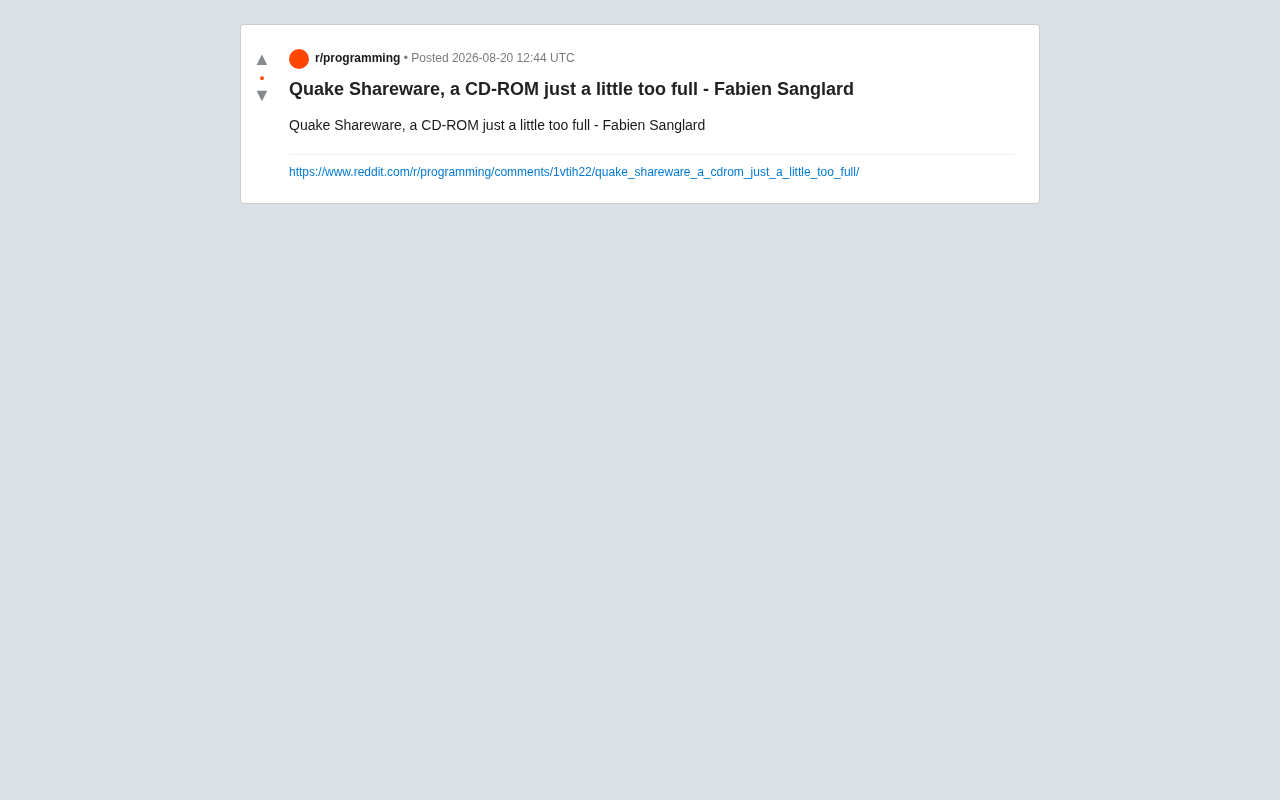
The Quake Shareware CD: Bit-Level Space Art Filled to Overflowing
Deep analysis of how the 1996 Quake shareware CD-ROM was filled to its absolute capacity limit. Fabien Sanglard's technical archaeology reveals id Software's engineering trade-offs under disc space constraints.