AI Poster Wins Ohio State Fair: A Complete Analysis of the Art Competition Fairness Controversy

AI poster wins Ohio State Fair art competition, igniting debate over fairness and evaluation standards.
An AI-generated poster winning at the Ohio State Fair has reignited debate over whether AI works should compete alongside human creations. The controversy highlights outdated competition rules, judges' inability to identify AI outputs, and fundamental questions about what art competitions should reward — visual quality or human effort. The incident underscores the urgent need for separate AI categories, disclosure requirements, and a broader rethinking of creative evaluation in the generative AI era.
Event Recap: AI Work Enters the Traditional Art Arena
Recently, news of an AI-generated poster winning an art competition at the Ohio State Fair sparked widespread discussion on the Hacker News community, quickly accumulating 77 upvotes and 56 comments. What might seem like an ordinary local event actually touches one of the most sensitive nerves at the intersection of technology and art today — should AI-generated content be allowed to compete alongside human-created works?
The Ohio State Fair is a long-standing regional exhibition in the United States, and its art competition segment has traditionally served as a platform for local artists and hobbyists to showcase their handcrafted skills. When an AI-assisted or entirely AI-generated poster took first place, the result not only surprised contestants but also put judging mechanisms, competition rules, and even artistic evaluation standards under public scrutiny.
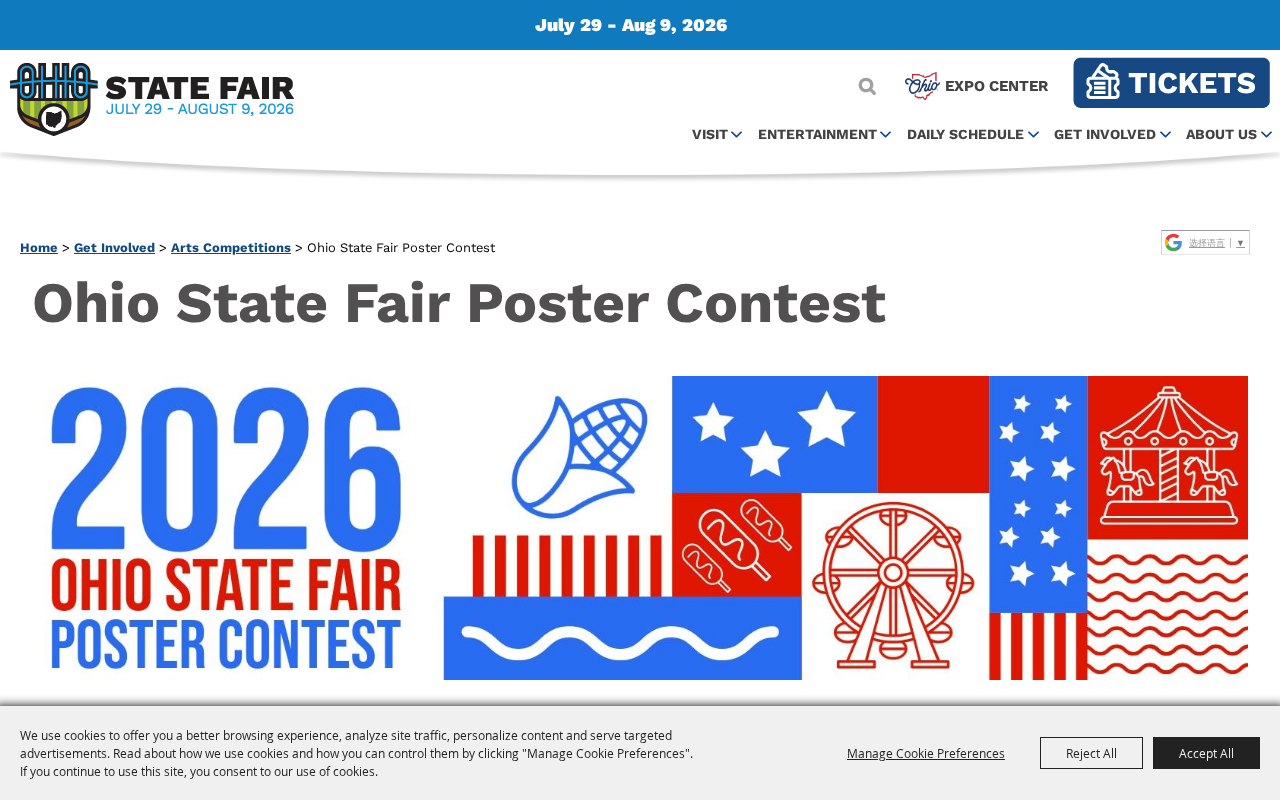
The Core Controversy: Rule Gaps and Fairness Concerns
Outdated Competition Rules
The primary issue exposed by this incident is that traditional competition rules are woefully unprepared for AI technology. The vast majority of local art competition guidelines were drafted before the explosion of generative AI, and their rules typically don't explicitly define whether a "work" must be purely human-created, nor do they require disclosure of AI-assisted tool usage.
In this regulatory vacuum, AI entries neither violate any rules nor can they be effectively identified. This mirrors similar controversies in other fields in recent years — from the Colorado State Fair digital art award to various photography and writing competitions, AI works have repeatedly won "within the rules" only to trigger public outcry afterward. Notably, at the 2022 Colorado State Fair, Jason Allen's Midjourney-generated work Théâtre D'opéra Spatial won first place in the digital art category, becoming a globally iconic event in the AI art debate. Allen invested approximately 80 hours in prompt refinement and post-processing, and noted his use of Midjourney when entering, but the judges did not fully understand what that notation meant. This precedent directly prompted multiple art institutions to reconsider their entry rules — Getty Images subsequently banned uploads of AI-generated images, and several international photography competitions explicitly excluded AI works. However, for local events like the Ohio State Fair, the pace of rule updates clearly hasn't kept up with technological change. The root of the problem isn't malicious deception by contestants, but rather that the evaluation system has yet to establish a normative framework for addressing new technology.
Why Can't Judges Identify AI-Generated Works?
Interestingly, judges often struggle to identify AI-generated works during the review process. As diffusion models (such as Stable Diffusion, Midjourney, DALL-E, etc.) have matured, AI images have reached a level of photorealism in composition, color, and detail that makes them virtually indistinguishable from human-created art.
Diffusion Models are the core technical architecture in today's generative AI image domain. Their fundamental principle is based on two symmetric processes: the forward process gradually adds Gaussian noise to an image until it becomes pure noise, while the reverse process trains a neural network to learn how to progressively remove noise to restore or generate images. DDPM (Denoising Diffusion Probabilistic Models), proposed by Ho et al. in 2020, laid the theoretical foundation. Subsequently, Stable Diffusion, the DALL-E series, and Midjourney brought this technology to consumer-level applications. These models are typically trained on billions of image-text pairs and can generate high-resolution, stylistically diverse images from natural language descriptions, with output quality that in many scenarios matches or exceeds that of professional illustrators.
For art judges without professional technical backgrounds, visually determining whether a work was AI-generated has become increasingly difficult. Current technical methods for identifying AI-generated images mainly include digital watermarking, metadata embedding, and deep learning-based detection classifiers. The C2PA (Coalition for Content Provenance and Authenticity) alliance's content provenance standard attempts to embed tamper-proof origin information at the time of image generation, but adoption of this standard is still in its early stages and can be easily bypassed through simple operations like screenshots or format conversion. Classifier-based detection methods face an ongoing cat-and-mouse game — as generative models iterate and improve, the accuracy of earlier detection methods drops significantly. In actual fair competition scenarios, works are typically submitted in printed form, rendering digital detection methods almost entirely ineffective. This presents a fundamental feasibility challenge for using technical means to identify AI works in traditional art competitions.
This raises a deeper question: If visual quality alone can no longer distinguish the origin of a work, does the evaluative dimension of "human creation" itself still hold meaning? This is precisely where community discussions diverge most sharply.
Community Perspectives: A Polarized Debate on Tech Ethics
Supporters: AI Is the Paintbrush of a New Era
Some Hacker News users argue that AI tools are fundamentally no different from cameras, Photoshop, and other new technologies that have emerged throughout history. Every tool revolution has faced the challenge of "this isn't real art," yet all have eventually been accepted as part of the creative toolkit. Those holding this view believe that using AI to generate images still requires aesthetic judgment, prompt engineering, and iterative refinement, which itself constitutes a form of creative labor.
Prompt engineering refers to the technical practice of carefully designing and optimizing text input instructions to guide AI models toward desired outputs. In the image generation domain, an effective prompt might include precise descriptions across multiple dimensions such as subject, style, composition, lighting, color, artist style references, and negative constraints. Advanced users also employ techniques like weight adjustment, seed value control, and ControlNet for fine-grained control. Supporters argue that this process requires deep visual art literacy and understanding of model behavior, constituting a new form of creative labor in its own right.
Opponents: AI Dilutes the Value of Human Creation
However, more voices express concern. The core value of traditional art competitions lies in rewarding human skill, time investment, and emotional expression. When AI works can generate award-winning results in minutes and compete alongside pieces that took dozens of hours of handcrafting, both the fairness and the meaning of such competitions face fundamental challenges.
Opponents emphasize that the issue isn't whether AI is an effective creative tool, but rather the category mismatch — placing AI works in a category meant to reward handcrafted skill is itself a violation of the spirit of competition rules. Critics further point out that the labor involved in prompt engineering is more akin to "art direction" or "curation," fundamentally different from traditional creation that starts from a blank canvas and is completed through hand-eye-brain coordination. The skill sets and time investments involved differ by orders of magnitude. This distinction is not one of degree but of kind.
Deeper Reflections: Restructuring the Art Evaluation System
Classification and Disclosure Mechanisms Are Imperative
From this incident, a clear solution direction emerges: art competitions need to urgently establish independent categories for AI works and mandatory disclosure mechanisms. This isn't about excluding AI works, but about creating separate evaluation tracks for them to avoid unfair competition with traditional creation.
In fact, some cutting-edge art exhibitions and competitions have already begun establishing dedicated categories for "AI-assisted creation" or "digitally generated art," requiring contestants to clearly indicate the degree of AI involvement in their creative process. This approach of transparency both respects technological progress and preserves the evaluation space for traditional creation.
Uncertainty in Copyright and Legal Frameworks
The legal status of AI-generated content adds further complexity to this controversy. The U.S. Copyright Office ruled definitively in 2023 that images generated purely by AI are not eligible for copyright protection, as copyright law requires "human authorship." However, if a human makes substantial choices and arrangements during the creative process — such as significantly modifying AI output or incorporating it as part of a larger creation — the modified portions may qualify for copyright protection. The EU's AI Act takes a different angle by requiring that AI-generated content be labeled. This legal uncertainty directly affects competition rule-making: if AI-generated works are not legally considered "authored creations," then their participation in competitions that reward "creators" presents a fundamental logical contradiction.
Balancing Technological Progress and Cultural Value
This seemingly local fair controversy is actually a microcosm of the global collision between technology and culture. As generative AI capabilities continue to leap forward, virtually every field that relies on "human originality" as a basis for evaluation — from art, writing, and music to design — will face similar identity crises.
The real challenge isn't simply "banning" or "allowing" AI, but rather, while acknowledging that technology has irreversibly changed the creative ecosystem, redefining what exactly we are rewarding: the visual quality of the final result, or the human labor and intent behind it? There's no standard answer to this question, but the Ohio State Fair incident has undoubtedly sounded an alarm for society to begin thinking about it sooner rather than later.
Conclusion
An AI poster winning at a local fair may seem trivial, yet it reflects the core proposition that all content creation fields must face in the generative AI era. Outdated rules, judging dilemmas, value reassessment — these issues won't disappear with the resolution of a single controversy; instead, they will become increasingly prominent as technology proliferates. From the redefinition of copyright law to the establishment of competition subcategories, from the offensive-defensive dynamics of AI detection technology to philosophical reflections on the very definition of "creative labor," every level requires the joint participation of the art world, the technology community, and public policymakers. For the art world and the broader creative industry, it's better to proactively build new evaluation and regulatory systems for the AI era than to react passively.
Related articles

RisenX Explained: The Coding Agent Officially Recommended by DeepSeek
RisenX is a DeepSeek-native coding agent featured in DeepSeek's official API docs. It supports cache-first loops, tool-call repair, and Flash/Pro smart switching.

ChordViz Review: A Real-Time Visualization Workbench for MIDI and Audio
In-depth review of ChordViz music visualization tool with real-time MIDI and audio input, chord visualization, notation, and audio-reactive visuals, plus OBS, TouchDesigner and Resolume integration.

3D-Printed Robot Desk Lamp: How to Make a Machine Feel Alive Like a Pixar Character
See how an indie developer uses 3D printing, ROS 2, and a custom animation editor to turn Pixar's iconic desk lamp into a real robot with personality, vision, and RL-driven autonomy.