AI Prep Review: Feature and Experience Analysis of a Machine Learning Mobile Study App
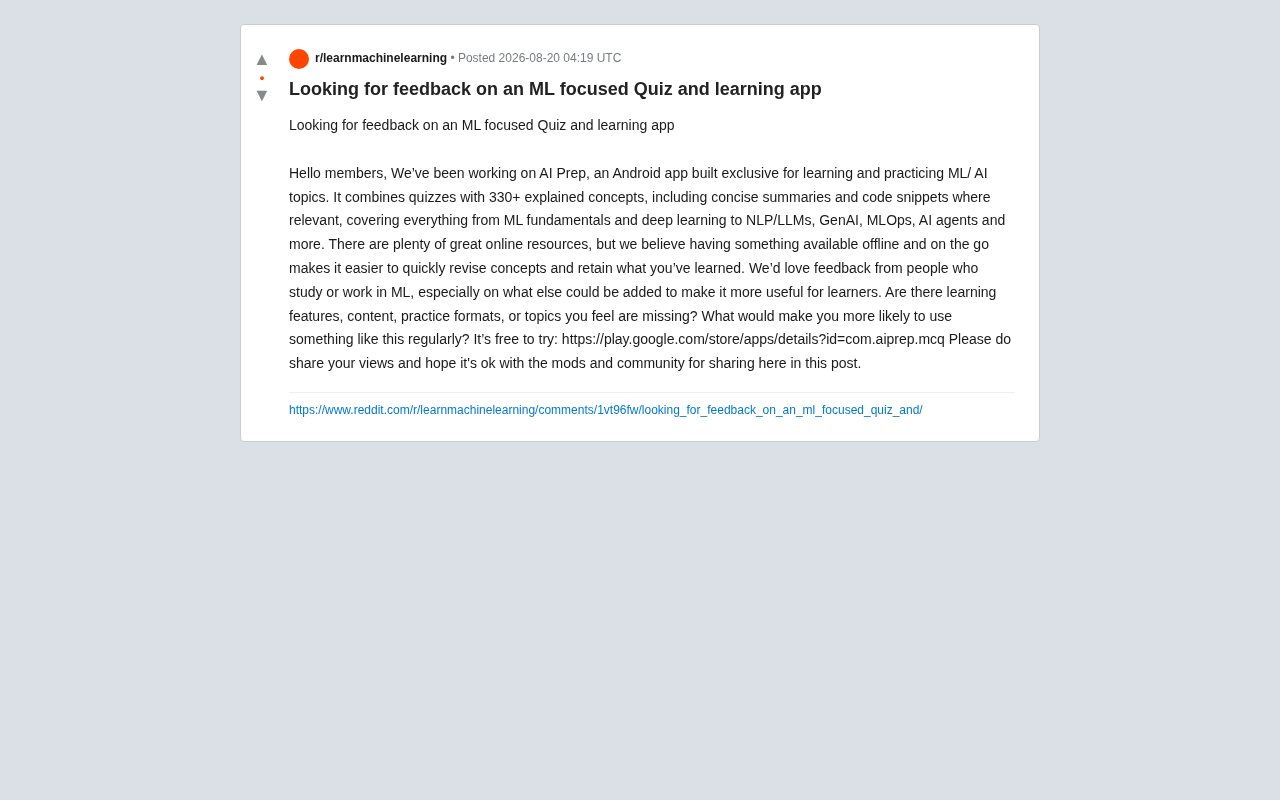
A review of AI Prep, a mobile quiz app for reviewing 330+ machine learning concepts on the go.
AI Prep is an Android app offering 330+ explained ML concepts across deep learning, NLP, LLMs, GenAI, MLOps, and AI Agents, combining concise summaries, code snippets, and quizzes for mobile, offline learning. This review analyzes its strengths in fragmented knowledge reinforcement and identifies key improvement areas including spaced repetition algorithms, diversified practice formats, content freshness, and cross-platform support.
What Is AI Prep: A Mobile Learning Tool Focused on Machine Learning
As demand for AI skills continues to surge, efficiently learning and reviewing machine learning (ML) concepts has become a common pain point for practitioners and students alike. Recently, an Android app called AI Prep was posted on Reddit, with its developer seeking feedback from ML learners. The app features a combined "quiz + concept explanation" format, aiming to provide a systematic solution for fragmented learning scenarios.
Unlike the abundance of online courses and documentation on the market, AI Prep emphasizes offline availability and learn-anywhere convenience. The developer believes that being able to quickly review concepts during commutes, waiting times, and other spare moments helps improve knowledge retention — a scenario that traditional online resources struggle to address. This mobile-first, microlearning product paradigm already has successful precedents. Duolingo, for example, broke language learning into 5-to-10-minute micro-units combined with gamification and spaced repetition, amassing over 500 million users worldwide. In the programming space, apps like Enki, Mimo, and SoloLearn have adopted similar microlearning models. Research shows that microlearning improves knowledge retention rates by approximately 17% compared to traditional long-session learning (Journal of Applied Psychology, 2018). AI Prep applies this proven product methodology to the high-demand knowledge domain of machine learning — a reasonable strategic choice.
AI Prep's Core Content Coverage
According to the developer, AI Prep includes 330+ explained concepts spanning a broad range of topics:
- ML Fundamentals: Core knowledge for getting started with machine learning
- Deep Learning: Neural networks and related theory
- NLP / LLMs: Natural language processing and large language models
- GenAI: Generative artificial intelligence
- MLOps: Model deployment and operations
- AI Agents: Intelligent agent-related topics
Among these, Generative AI (GenAI) is one of the most influential technology directions in recent years, broadly referring to AI systems capable of generating new content such as text, images, audio, video, and code. Its technical foundations include the Transformer architecture (proposed by Google in 2017), Diffusion Models (powering image generation tools like Stable Diffusion and DALL-E), Variational Autoencoders (VAE), and Generative Adversarial Networks (GAN). The launch of ChatGPT in late 2022 thrust GenAI into the mainstream, and subsequent competition among large language models like GPT-4, Claude, Gemini, and Llama has accelerated the field's evolution. Applications have expanded into code assistance, drug discovery, creative design, and many other areas, making it a core driver of AI commercialization.
MLOps (Machine Learning Operations) is a practice framework that brings DevOps principles to the machine learning lifecycle, covering data version management, model training automation, continuous integration/continuous deployment (CI/CD), model monitoring, and drift detection. According to Gartner research, only about 53% of enterprise AI projects successfully transition from prototype to production — MLOps emerged precisely to solve this "last mile" problem. The mainstream toolchain includes MLflow, Kubeflow, Weights & Biases, and DVC, while cloud platforms like AWS SageMaker, Google Vertex AI, and Azure ML continue to strengthen their MLOps capabilities. The knowledge landscape in this field is still evolving rapidly, making continuous learning particularly essential for practitioners.
AI Agents are among the most active areas of AI research and application today. Unlike traditional single-turn Q&A-style AI, agents can autonomously plan tasks, invoke external tools, execute multi-step reasoning, and dynamically adjust behavior based on environmental feedback. Since 2023, open-source projects like AutoGPT and BabyAGI have attracted widespread attention, while academic frameworks such as ReAct (Reasoning + Acting) and Reflexion have provided theoretical foundations for agent decision-making. In 2024–2025, agent development frameworks like LangChain/LangGraph, CrewAI, and AutoGen have matured rapidly. Understanding core agent concepts — including Tool Use, Memory management, and multi-agent collaboration — has become essential knowledge for AI practitioners.
Each concept comes with a concise summary and, where relevant, code snippets to help learners bridge theory and practice. This "concept + code + quiz" trinity design is a mainstream format among current AI learning products.
AI Prep's Product Positioning and Market Context
From a product positioning standpoint, AI Prep targets the niche need of "quick review and knowledge reinforcement" rather than systematic teaching from scratch. This positioning makes sense: given the rapidly iterating knowledge landscape in AI, many practitioners who already have foundational knowledge need high-frequency review tools more than yet another lengthy course.
Interestingly, this quiz-based (Quiz/MCQ) learning approach has solid cognitive science backing. Active Recall refers to the process of learners actively retrieving information from memory without prompts. A landmark 2011 study published in Science (Karpicke & Blunt) showed that students who practiced active recall through testing achieved long-term memory retention over 50% higher than those who repeatedly re-read their notes. Spaced Repetition is based on the forgetting curve theory proposed by German psychologist Hermann Ebbinghaus in the 19th century — human memory decays exponentially over time, but reviewing at the point just before forgetting can significantly extend retention duration. Combining these two methods — using quizzes to force the brain to actively retrieve information — produces significantly better memory outcomes than passive reading. This is precisely the theoretical foundation behind the success of tools like Anki and SuperMemo. If AI Prep can deepen its investment in both areas, it will have genuine differentiated competitive strength.
The app currently uses a free trial model, distributed through the Google Play Store. This "try for free first, then consider paying" strategy aligns with the standard playbook for utility apps building an early user base.
Improvement Directions Based on Community Feedback
The developer proactively raised several open-ended questions in their post — a healthy signal for product iteration. They wanted to know:
- What additional learning features are needed?
- What content or topics are currently missing?
- What types of practice formats are preferred?
- What factors would motivate users to keep using the app long-term?
Potential Areas for Feature Optimization
Drawing from common practices across current AI learning products, there are several improvement directions worth considering for AI Prep:
First, introduce a spaced repetition algorithm. If the app could track each user's mastery level for every concept and intelligently schedule review sessions accordingly, it would dramatically improve review efficiency and significantly boost user retention. The most classic reference here is the SM-2 (SuperMemo 2) algorithm, proposed by Polish researcher Piotr Wozniak in 1987, and one of the most widely used scheduling algorithms in the spaced repetition field. Its core logic works as follows: users rate each card on a 0–5 scale (indicating how easy or difficult recall was), and the algorithm uses this to calculate an "Easiness Factor," dynamically adjusting the interval in days before the next review — higher ratings mean longer intervals, while items that are repeatedly difficult to recall get scheduled for review more frequently. In recent years, next-generation algorithms like FSRS (Free Spaced Repetition Scheduler) have introduced more refined memory models building on SM-2, and Anki added FSRS as an optional scheduler in 2023. If AI Prep could incorporate a similar mechanism, it would achieve truly personalized learning pace orchestration.
Second, diversify practice formats. Multiple-choice questions (MCQs) alone can make learning superficial. Consider adding fill-in-the-blank, code completion, and scenario-based application questions — especially for practice-heavy topics like MLOps and AI Agents. For example, an MLOps scenario question could ask learners to select appropriate monitoring metrics for a model drift detection scenario, which demands a higher cognitive depth than pure concept memorization.
Third, maintain content timeliness. The LLM and GenAI fields evolve at breakneck speed, and the content library needs continuous updates to retain its value. The developer could consider establishing a community contribution mechanism or a regular content update schedule.
Fourth, cross-platform support. Currently only available on Android, expanding to iOS and web in the future would reach a much broader user base.
Summary: A Pragmatic Choice for Fragmented Machine Learning Study
AI Prep represents a pragmatic niche within AI educational tools — a mobile-first, offline, fragmented knowledge reinforcement tool. Rather than trying to reinvent systematic courses, it focuses on the specific scenario of "review" — and this restrained positioning actually makes it easier to carve out a distinctive identity.
For readers currently studying or working in ML, this type of app is worth considering as a supplement to existing learning resources. Of course, as an early-stage product, its content depth, practice quality, and long-term maintenance capability still need time to prove themselves. The developer's proactive approach to seeking community feedback at least signals a willingness to continuously refine the product.
For any developer considering building a similar learning tool, the AI Prep case offers a valuable perspective: in an era of content overabundance, how learning experiences are organized and adapted to specific contexts often matters more than the content itself in determining a product's success. Cognitive science has already provided clear methodological guidance for effective learning — active recall, spaced repetition, microlearning — the real challenge lies in translating these principles into a product experience that users are willing to open every day.
Related articles

NVIDIA AI Chips Found Inside Russian Missiles: The Fatal Blind Spot in Export Controls
Ukraine found an NVIDIA Jetson Orin NX edge AI chip inside a downed Russian cruise missile, exposing critical export control gaps for consumer-grade dual-use AI hardware.
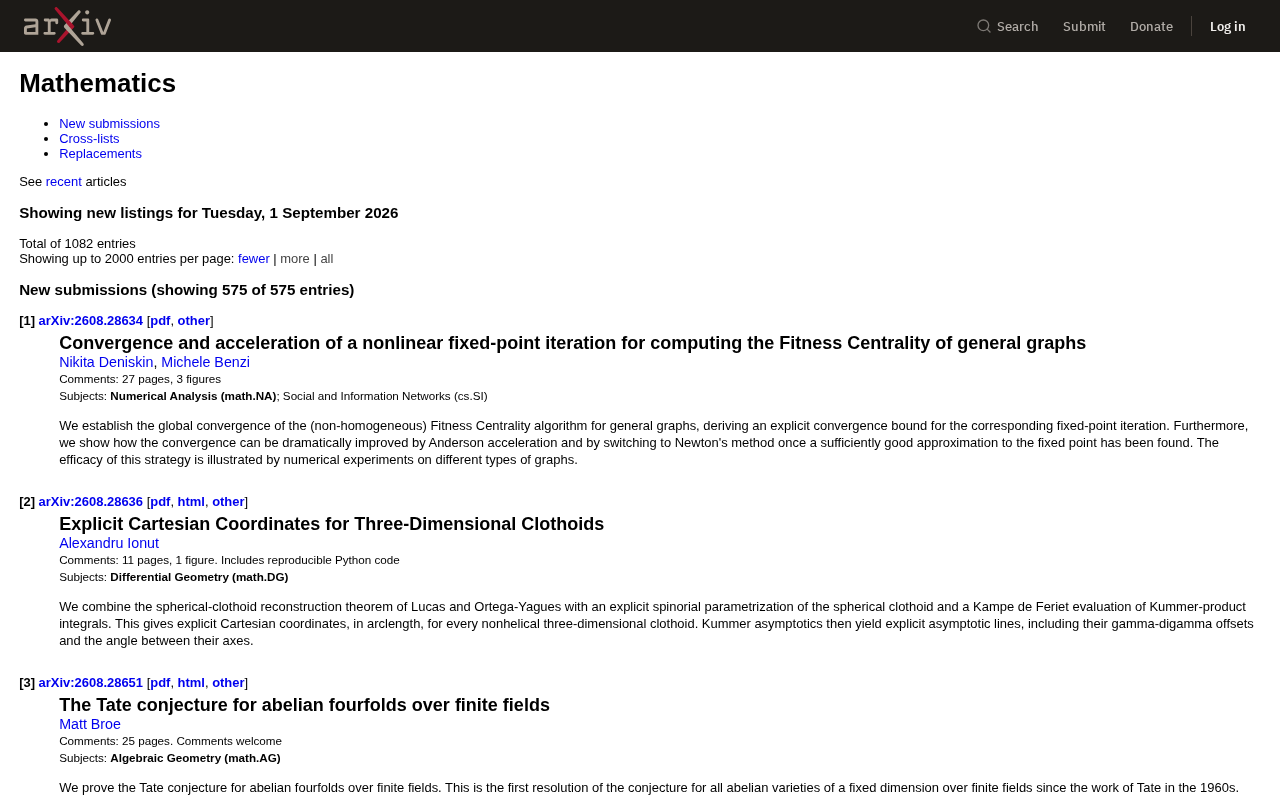
The Flood of AI Junk Papers: The Academic Crisis Behind Nearly 600 Daily arXiv Submissions
Nearly 600 daily arXiv submissions in one field, many suspected as AI-generated junk. This article analyzes AI slop's impact on academia, from review overload to training data contamination.
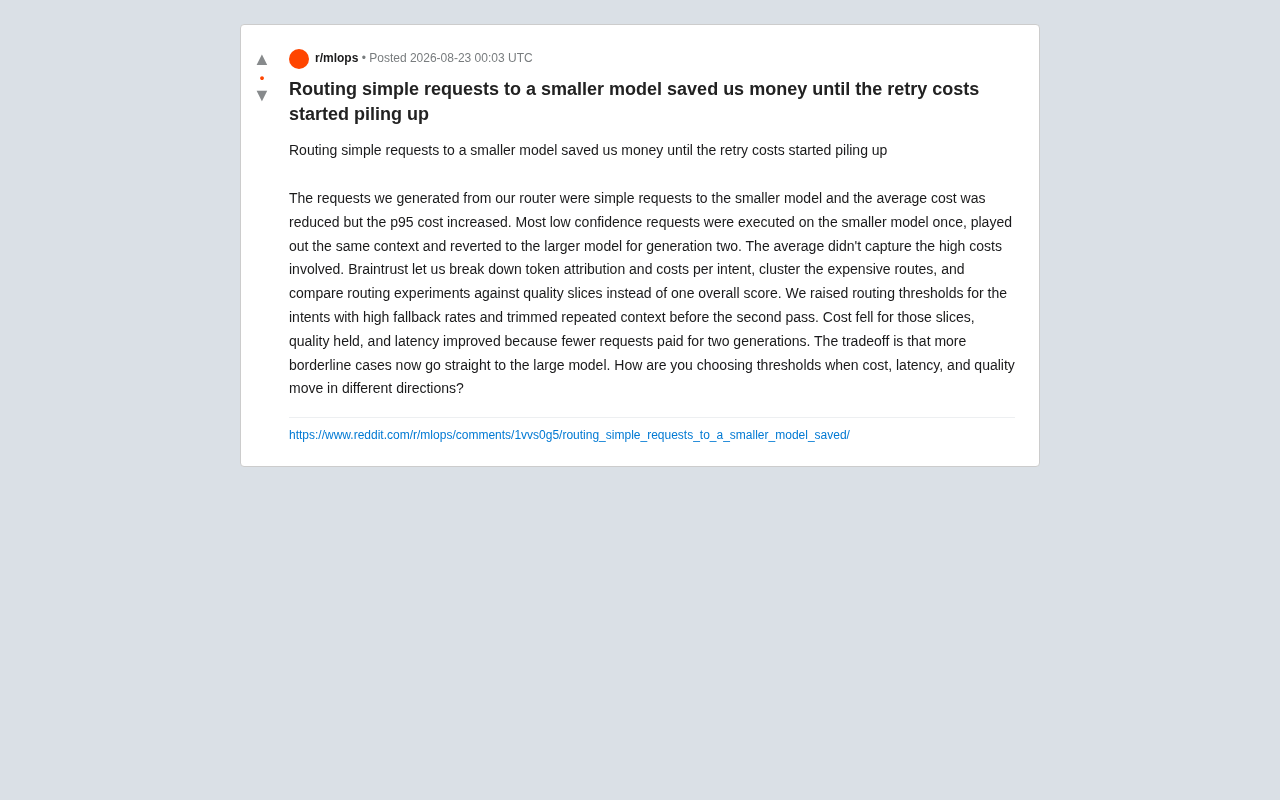
The Model Routing Cost Trap: How Retry Costs Devour Your Savings
Model routing seems to cut LLM costs, but retry fallbacks can spike p95 tail costs. Learn how to detect hidden retry costs and optimize with cost attribution and percentile monitoring.