AI Reconstructs the Unrecorded: How 'Love, Rendered' Brings Old Photos to Life

'Love, Rendered' uses AI photo restoration and pose control to reconstruct an elderly couple's unfilmed first meeting.
'Love, Rendered' is a documentary project pushing the boundaries of AI technology, reconstructing a historical moment — the first meeting of subjects Burt and Ethelle — for which no visual record exists. The team combined two core techniques: AI restoration of faded archival photographs to recover clear facial details, and pose control models to transfer dynamic body movements and micro-expressions onto the restored subjects. Using real historical photos as an anchor, the approach offers a third creative path between authentic archival footage and fictional reenactment, while also sparking important discussions about authenticity and the need for transparent AI disclosure in nonfiction filmmaking.
Can a Moment That Was Never Photographed Be Seen Again?
Some memories were never captured by a camera — like the day an elderly couple first met. No footage exists, only a handful of faded photographs and stories passed down through the years. Now, a creative team is using AI to answer a fascinating question: can we reconstruct a memory that was never filmed?
That's the central premise behind the documentary project Love, Rendered. Produced in collaboration with Primordial Soup and Story Syndicate, the film tells the story of Burt and Ethelle's first meeting. With no existing video footage to work from, the team used technology to transform static historical images into dynamic, lifelike visuals.
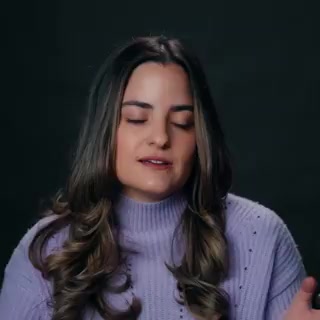
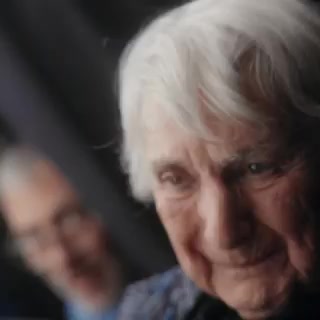
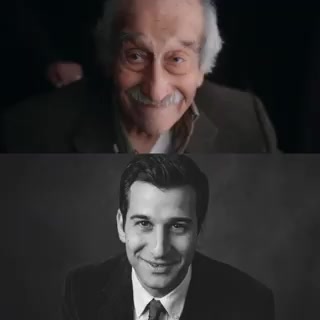
Technical Breakdown: Photo Restoration + Pose Control Models
According to the team's public documentation, the creative process hinged on the combination of two key technologies:
Archival Photo Restoration
The first step was restoring historical archival photos. These old photographs typically suffer from fading, scratches, and low resolution. Through AI-powered restoration, the team was able to recover clearer, more faithful representations of the subjects — providing a high-quality visual foundation for the subsequent motion generation.
AI photo restoration typically involves a multi-stage pipeline: first, denoising and scratch-removal models (such as restoration networks based on U-Net or diffusion models) eliminate physical damage; next, super-resolution models (such as ESRGAN or Real-ESRGAN) upscale low-resolution historical photos to a size sufficient for downstream generation; finally, face enhancement models (such as GFPGAN or CodeFormer) are applied specifically to facial regions to recover fine details. Black-and-white photographs may also go through an automatic colorization step. The significance of this full pipeline lies in the fact that pose control models are sensitive to input image clarity and facial detail — if the source image quality is insufficient, the generated motion sequences often produce distorted faces or unnatural movement. Photo restoration, therefore, isn't a cosmetic enhancement; it's a prerequisite for ensuring the quality of the dynamic output.
Pose Control Models
The more pivotal step was incorporating pose control models. The team used these to capture and reproduce Burt and Ethelle's mannerisms and micro-expressions.
This deserves closer examination. Animating a still photograph is nothing new — but making the subjects move in ways that reflect their individual personalities and convey subtle facial expressions is a far more challenging task. Pose control models serve precisely this function: they transfer dynamic body postures and facial expressions onto restored portrait images, so the result isn't simply an animated interpolation, but a reproduction that carries the character of the individual.
Pose control models are a class of image generation control techniques that use human body keypoints or skeletal representations as an intermediate medium — ControlNet is one of the most well-known open-source implementations. The core idea is to extract frame-by-frame skeletal pose information from a reference video or motion capture data, then feed this pose sequence as a conditioning signal into a diffusion model to drive the target subject's motion while preserving their appearance. In projects like Love, Rendered, teams typically need to find reference footage whose movement style matches the temperament of the historical subject (or have a performer enact it), extract the pose sequence, and then transfer it onto the restored archival photo subject. Reproducing facial micro-expressions usually requires an additional layer: facial landmark detection or dedicated face reenactment models. Both components working together are what enable the final output to carry both physical movement and nuanced expression.
Why This Matters
Love, Rendered represents an emerging creative direction for generative AI in documentary and visual storytelling: using technology to fill the gaps where historical footage simply doesn't exist.
When traditional documentaries encounter historical events with no visual record, they typically rely on dramatic reenactment, narration, or still photos with voiceover. AI-driven pose control and photo restoration offer a third path — one that sits between "authentic archival footage" and "fully fictional reenactment." It uses real historical photographs as an anchor and extrapolates a plausible dynamic representation through technical means.
This approach preserves the authenticity of the original historical material while allowing audiences to "witness" moments that were never filmed, in a far more immersive way. For personal and family stories laden with memory and emotion, this technology carries particular power to move people.
The Boundaries Worth Considering
Of course, using AI to "reconstruct" moments that were never filmed raises real questions about authenticity and ethics. When the mannerisms and micro-expressions in a scene are generated by a model rather than captured by a camera, how should audiences understand the "truth" of what they're seeing?
The team's approach — grounding everything in restored real photographs rather than generating subjects from scratch — preserves a meaningful baseline of authenticity. It also signals that the application of AI generative techniques in documentary work requires transparent disclosure to audiences about how and to what degree technology has intervened.
This discussion already has established frameworks in documentary scholarship. Scholar Bill Nichols identifies six modes of documentary, among which the "poetic" and "participatory" modes both acknowledge the subjective presence of the filmmaker. AI-generated imagery has further catalyzed what researchers are calling "synthetic documentary" — material that doesn't directly record reality, but whose generation is grounded in authentic historical evidence. Some practitioners and scholars advocate for "AI disclosure" as an industry norm: explicitly noting in credits which sequences were AI-generated or reconstructed, distinguishing them from original archival material. This parallels existing conventions in photojournalism around disclosing image manipulation. For family memory projects specifically, the informed consent and degree of participation of the people involved also constitutes an important dimension of ethical evaluation.
Conclusion
Love, Rendered is a genuinely illuminating experiment: by combining photo restoration with pose control models, it allows a memory that has no visual record to be performed once more. Projects like this suggest that generative AI is not only capable of creating entirely new content — it is increasingly becoming a tool for bridging past and present, and for restoring and reconstructing both collective and personal memory.
The full film is available on YouTube. If you're curious to watch this technologically resurrected love story unfold, it's well worth a look.
Related articles

5 Practical Ways Real Estate Agents Can Use AI to Boost Efficiency (2026 Edition)
How can real estate agents use AI to boost efficiency? Based on a YouTube walkthrough, this breaks down five methods — ChatGPT for listing descriptions, Canva for marketing materials, forms for open house leads, Zapier for automated follow-up, and seller meeting prep — and flags risk boundaries like fair housing laws, photo authenticity, and price verification.

Grok Bot vs ChatGPT Agent: Which AI Agent Is More Powerful?
How does Grok Bot differ from ChatGPT Agent? This comparison examines how they work: Grok Bot has a cloud computer and runs persistently inside tools to execute multi-step tasks automatically; ChatGPT Agent operates web pages in a browser and is more mature at general tasks. Includes selection advice.

Walmart Agent Gateway: AI Shops for You Automatically—Why Is Amazon Going the Opposite Way?
Walmart's Agent Gateway lets ChatGPT, Gemini and other AI assistants access its product catalog to search, compare and add to cart, with spending limits and per-purchase approval. Amazon blocks external AI agents—two retail giants, opposite paths. Currently US-only, India may follow.