AI Reverse Engineering in Practice: DeepSeek + Skill Automatically Cracks WASM Signatures

AI combined with Skill packages and MCP toolchain automatically locates and reproduces e-commerce website WASM signatures without writing code.
The article introduces a practical case where a Bilibili creator used DeepSeek, Skill packages, and MCP toolchain to automatically reverse engineer the WASM signature of an e-commerce website. The target API carries signature parameters, timestamps, and a V3 value in cookies, some generated by WASM encryption. The creator gave the website homepage to the AI and limited collection to the first 10 records; the AI automatically loaded the "find encryption entry point" skill, called the reverse engineering MCP tool, located the obfuscated WASM module, completed signature reproduction, environment patching, and packet capture verification, ultimately successfully collecting data without writing code. The article also notes that the solution depends on skill package quality, large-scale collection still requires login and risk control handling, and WASM implementations vary greatly across websites, so generalization ability needs verification.
In the fields of web security and data collection, JavaScript reverse engineering has always been a highly demanding technical skill, especially when dealing with WASM encryption and complex signature parameters, which often require significant time to analyze obfuscated code. Recently, a Bilibili creator shared a practical case of using AI (DeepSeek) along with a Skill package and MCP toolchain to automatically reverse engineer the WASM signature of an e-commerce website, demonstrating how AI can elevate reverse engineering efficiency to the level of a "one-person studio."
Practical Goal: Cracking the WASM Signature of a Pagination API
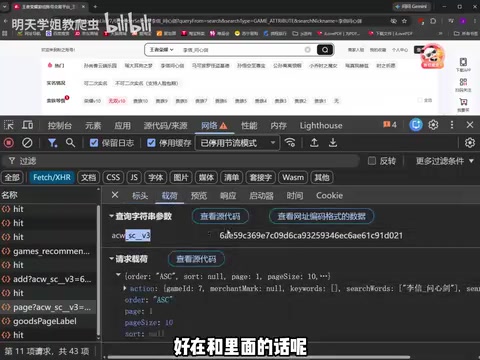
The target of this reverse engineering is the pagination API of the Panzhi official website (an e-commerce platform related to the processing industry). This API carries multiple parameters that require reverse engineering analysis:
- Signature parameter: A signature-like value in the request header, presumably for server-side verification.
- Timestamp: A time-related parameter, appearing in a "phase-one start" format.
- V3 value: A V3 parameter in the Cookie that needs to be verified.
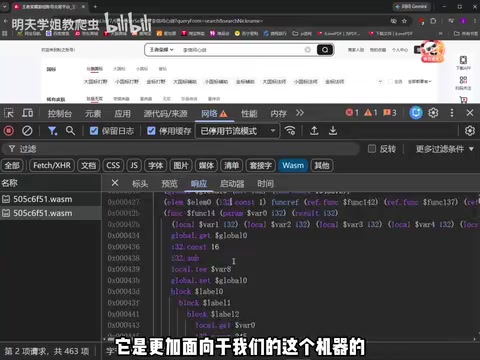
Among these parameters, some are generated by WASM encryption and cannot be directly understood through simple JS reading. As the creator said in the video: "This code is more machine-oriented; we can't understand it."
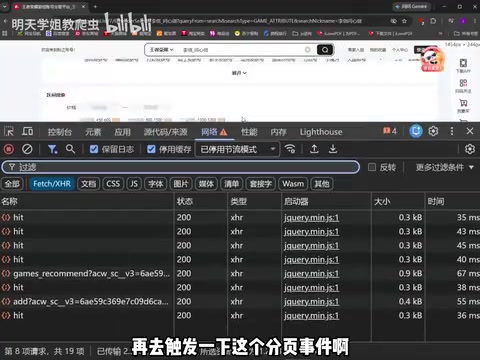
WASM (WebAssembly) is a low-level bytecode format that runs in modern browsers, typically compiled from languages like C/C++/Rust. Unlike ordinary JavaScript, WASM is loaded in binary form, and the code logic is not directly exposed as readable JS text. Therefore, websites often use it to implement security-sensitive logic such as encrypted signatures and parameter verification. Analyzing WASM usually requires first decompiling it into a readable intermediate representation (such as WAT), then combining dynamic debugging to observe function calls and memory states. In this case, the signature parameter is generated by a WASM module, which is why traditional static reading of JS struggles to understand it directly.
Toolchain: DeepSeek + Skill + MCP Reverse Engineering Skill Package
The core tool combination used by the creator includes:
- DeepSeekAd: As the AI analysis engine, responsible for understanding website logic and locating encryption entry points.
- Skill package: Pre-built reverse engineering skills, such as "find the encryption entry point" and "call the Revu reverse engineering MCP tool."
- MCP (Model Context Protocol): Connects AI with reverse engineering tools, enabling AI to directly operate the browser environment and analyze network requests.
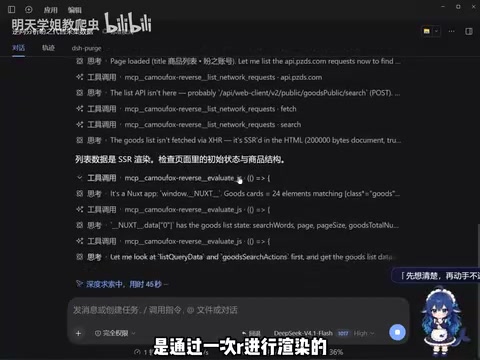
In terms of workflow, the creator did not manually analyze every line of JS code. Instead, they directly provided the website's homepage address (not a specific API) to the AI, with a limit of collecting only the first 10 records for verification. The AI automatically loaded the corresponding skills and began analyzing the page structure and network requests.
MCP (Model Context Protocol) is a protocol that enables standardized interaction between large language models and external tools and data sources. In reverse engineering scenarios, MCP acts as a bridge between AI and browsers, packet capture tools, and debuggers: AI issues commands through MCP (such as opening pages, monitoring network requests, reading memory), and the tools execute and return results to the model. This way, AI can not only "read" code but also "operate" the real runtime environment, thereby dynamically locating encryption entry points and reproducing signature logic. The Skill package is a pre-built task template and tool invocation specification on the AI side, essentially codifying the operational steps of a reverse engineering expert into reusable skills, reducing trial-and-error costs in each task.
AI Automatically Locates and Reproduces WASM Signature
After receiving the task, the AI first loaded the "find the encryption entry point" skill and called the Revu reverse engineering MCP tool. After a brief thought, the AI successfully located the calculation location of the signature parameter—an obfuscated WASM module.
"You can see that it has completely reproduced the WASM signature and located the corresponding function code."
Subsequently, the AI automatically completed the environment (i.e., "environment patching") and performed real packet capture verification. Ultimately, the first ten product records were successfully collected, without writing a single line of code throughout the process.
Key Challenges and Solutions
1. Readability of Obfuscated Code
The code of WASM modules is not human-readable JavaScript but a compiled binary format. Traditional reverse engineering requires specialized WASM decompilation tools, whereas AI directly interacts with the browser through MCP tools, dynamically analyzing function calls and memory states, bypassing the obstacle of static reading.
2. Environment Patching and Packet Capture Verification
After reverse engineering the WASM signature, the encryption logic needs to be reproduced locally. The AI automatically completed environment patching (such as simulating browser fingerprints, timestamp generation, etc.) and verified the correctness of the signature through real packet capture. In traditional workflows, this step often requires repeated debugging, but with the assistance of the skill package, the AI passed on the first attempt.
"Environment patching" is a common step when reverse engineering JavaScript/WASM encryption: encryption functions often depend on global objects provided by the browser (such as window, document, navigator, location), time functions, random numbers, and Canvas/WebGL fingerprints. If reproducing encryption logic in a non-browser environment like Node.js, these objects and return values need to be manually patched to match the behavior of a real browser; otherwise, the generated signature may fail verification. The difficulty of environment patching lies in the many and hidden dependencies, which usually require repeated packet capture comparisons. In this case, the AI leveraged MCP to dynamically observe the browser's runtime state, automatically identify and patch the required environment, and then verify the signature through real requests, saving a lot of manual debugging.
3. Login Restrictions for Large-Scale Collection
The creator specifically pointed out that this time only the first ten records were verified. For large-scale collection, one must log in to obtain sufficient cookie values. This means that the AI reverse engineering solution still requires manual strategy adjustments when dealing with login states and risk control policies.
Efficiency Gains and Limitations
From the video demonstration, the AI-led reverse engineering process significantly shortened the time from "seeing the API" to "obtaining data." Traditionally, analyzing a WASM signature might take hours or even days, while the AI completed location, reproduction, and verification within minutes. The creator used the term "one-person studio" to describe this efficiency leap—a single developer with AI can accomplish reverse engineering tasks that previously required team collaboration.
However, this solution also has boundaries:
- Dependence on skill package quality: The coverage of the Skill and MCP toolchain determines which types of encryption the AI can handle.
- Login and risk control: Large-scale collection still requires handling account systems; AI cannot yet fully automate bypassing login restrictions.
- Target website specificity: WASM implementations vary greatly across websites, and the AI's generalization ability still needs verification.
Impact on Reverse Engineering Practice
This case demonstrates a new role for AI in reverse engineering—not replacing developers, but acting as an "intelligent co-pilot" to accelerate repetitive analysis work. For security researchers and data analysts, mastering AI toolchains (such as DeepSeek + MCP) may become a new efficiency divider.
At the same time, it also reminds website developers: although WASM encryption raises the reverse engineering barrier, AI's intervention is lowering this barrier. Future offense-defense confrontations may shift more toward behavioral risk control and dynamic tokens rather than mere code obfuscation.
This article is based on a Bilibili creator's practical video; technical details are subject to the original video.
Related articles
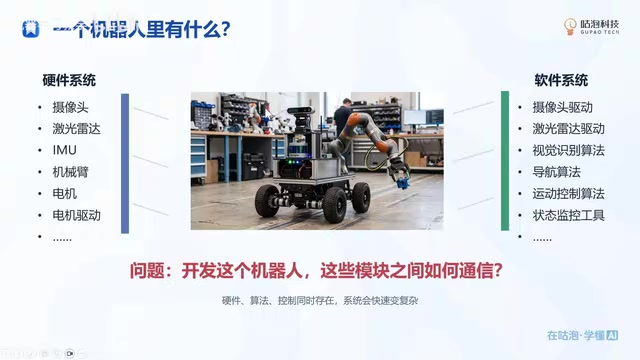
Getting Started with ROS2 Robot Development: Core Concepts and Environment Setup
This article introduces the core concepts and environment setup of ROS2 robot development, explains why ROS2 unifies module communication and facilitates collaborative work, and outlines the Turtlesim simulation experiment to help beginners get started quickly.

SLAM Mapping and Navigation Tutorial: A Complete Learning Path from Theory to Practice
This Bilibili SLAM mapping and navigation tutorial starts with a navigation overview, covering architecture, installation commands, and practical prerequisites, then connects to the Fourteen Lectures on Visual SLAM, slam_toolbox, and Cartographer—a complete learning path from theory to practice.

LangChain Beginner's Guide: Core Concepts and Hands-On Tools
What is LangChain? This guide covers its core positioning—Agent = Model + Harness—and the three key problems it solves: training time limits, external data connections, and multi-turn conversation context.