AI Rewrites Teaching: Why a Berkeley Math Professor Gave Up Grading Homework

AI can complete homework, raising doubts about the meaning of grading; educational assessment needs to shift toward process and ability.
A UC Berkeley math professor questions the point of grading homework because AI can easily complete it, sparking heated debate on Hacker News. The article points out that AI simultaneously impacts the four functions of homework grading—testing understanding, providing feedback, encouraging practice, and differentiating levels—loosening the foundations of traditional grading. Educators face three paths: ban, laissez-faire, or restructure homework, with restructuring the focus of assessment—toward process demonstration, oral defense, project-based learning, etc.—seen as a more feasible direction. For AI education tool developers, this means products should shift from "giving answers" to "giving processes," from replacing teachers to assisting diagnosis, and record learning trajectories to support process-based assessment. Although whether grading will exit classrooms remains undecided, it has become a consensus that educational assessment must find a new anchor.
When AI Can Do the Homework, Does Grading Still Make Sense?
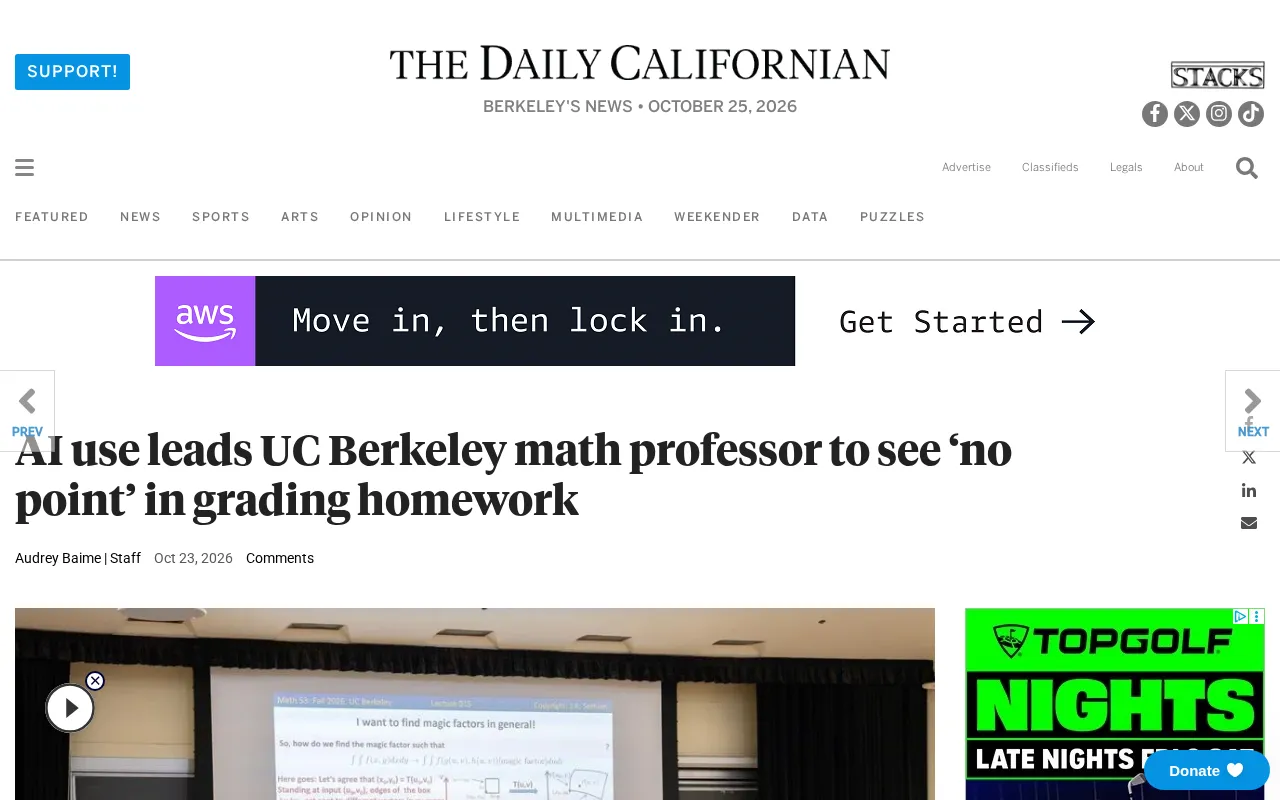
A math professor at UC Berkeley, after using AI tools, publicly stated that they "see no point in grading homework." This view sparked intense discussion on Hacker News, with the post receiving 41 points and 59 comments. Although the original message was brief, the underlying issue it reflects is sharp enough: when generative AI can easily complete math homework, is the traditional homework grading mechanism losing its core function?
This professor's experience is not an isolated case. More and more educators are finding obvious traces of AI generation in student submissions, and it is difficult for teachers to screen them one by one. More critically, if the purpose of homework is to consolidate knowledge through practice, then when AI does the practice for them, what is being measured by grading—the student's ability or the tool's ability?
The Foundations of Grading Are Loosening
Homework grading serves multiple functions in math education: testing understanding, providing feedback, encouraging practice, and differentiating levels. AI's intervention impacts all four functions simultaneously.
Testing understanding becomes difficult—AI-generated solutions are often logically complete, sometimes even more standardized than some students' handwritten answers. The value of providing feedback is weakened—if students have not personally experienced the struggle of solving problems, teachers' annotations lose their anchor. The effect of encouraging practice is greatly diminished—students can obtain correct answers without thinking. Differentiating levels almost fails—when tools can level the quality of output, scores can hardly reflect true differences in ability.
Some commenters on Hacker News pointed out that this is not the first technological shock to educational assessment. When calculators became widespread, some worried that students would no longer calculate by hand. But that shock was mainly at the computational level, whereas large language models reach the level of reasoning and expression, with a deeper impact.
A large language model (LLM) refers to an AI model trained on massive text data that can generate coherent natural language, such as the GPT series. Unlike earlier AI, LLMs can not only handle computational tasks but also perform logical reasoning, generate solution steps, and explain concepts, which enables them to perform at a level close to or even surpassing some students in math homework scenarios. It is precisely this coverage of the "reasoning and expression" level that makes the authenticity verification on which grading relies so difficult.
Educators' Dilemma: Ban or Restructure
Facing AI, educational institutions roughly have three paths to choose from.
The first is to ban. Some courses have tried returning to paper-and-pencil exams and in-class timed responses to avoid AI intervention. This approach is operable in the short term but difficult to cover all homework scenarios, and it is disconnected from the work environment students will face in the future.
The second is to laissez-faire. Acknowledge AI as a tool, allow students to use it, but adjust evaluation standards. The problem is that new standards are not yet mature, and teachers lack an assessment framework to refer to.
The third is to restructure the homework itself. Since AI can provide answers, design homework in forms that AI finds difficult to do for students: requiring process demonstration, oral defense, classroom discussion, and project-based learning. The Berkeley professor's statement of "no longer grading homework" is, to some extent, a signal of moving toward the third path—rather than spending energy on homework whose authenticity cannot be verified, it is better to shift the focus of evaluation to observable learning processes.
Process-based assessment is an educational evaluation approach that focuses on the learning process rather than only the final result. It assesses ability by observing students' thinking steps, revision traces, classroom participation, and oral expression. In the AI era, process-based assessment is seen as an important direction to replace traditional homework grading because it is harder for tools to do on behalf of students and can reflect students' true cognitive engagement. The Berkeley professor's shift to not grading homework is essentially a move toward process-based assessment.
Implications for AI Education Tool Developers
This discussion has direct reference value for AI education products. If the grading mechanism weakens, the design focus of tools should also adjust accordingly.
Shift from "giving answers" to "giving processes." Tools that can show solution steps and expose thinking paths are more suitable for teaching scenarios than products that directly output results. Shift from "replacing teachers" to "assisting diagnosis." Helping teachers identify where students are stuck and which concepts are misunderstood has more long-term value than completing homework for students. Shift from "single output" to "learning trajectory recording." Recording students' attempt processes, revision history, and changes in thinking provides a data foundation for process-based assessment.
Although these directions were not systematically expanded in the Hacker News discussion, commenters' concerns about "grading failure" essentially point to the need for new types of assessment tools.
Learning trajectory recording refers to systematically collecting behavioral data from students during the learning process, including problem-solving attempts, error corrections, dwell time, and thinking paths. These data can be used to build an evidence chain for process-based assessment, helping teachers understand students' real difficulties rather than grading solely based on final answers. For AI education tools, supporting trajectory recording means upgrading the product from an "answer generator" to a "learning diagnostic instrument," which better fits the need to restructure the assessment mechanism.
Unanswered Questions
The Berkeley professor's statement is more of a signal than a conclusion. Whether homework grading will really exit math classrooms is currently undecided. What is certain is that when AI can complete most routine homework, educational assessment must find a new anchor. This anchor may lie in process, in oral expression, in project practice, or in judgment in human-AI collaboration.
For those concerned with the intersection of AI and education, this discussion is worth following continuously. It raises more questions than it answers, and these questions are forcing the education system to respond.
Related articles
DeepSeek Open-Sources DeepInfer: What Is an Inference Framework Actually For?
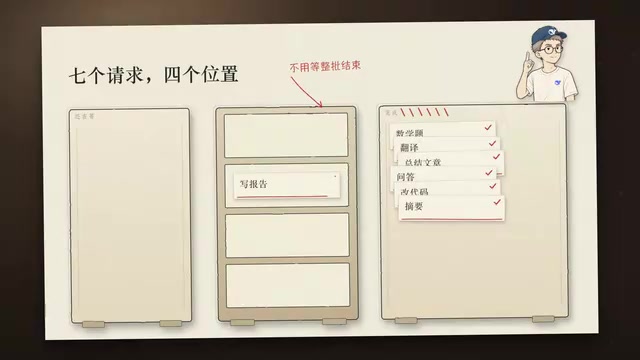
DeepSeek open-sources its inference framework DeepInfer under Apache 2.0, supporting DeepSeek V4.1 Flash offline inference. This article explains its request scheduling, FlashMLA/DeepGEMM compute optimization, DSPark speculative verification acceleration, and what it means for developers and ordinary users.
Open-Source AI Learning Agent: A Full Workflow Experience from Topology Graphs to Exam Generation
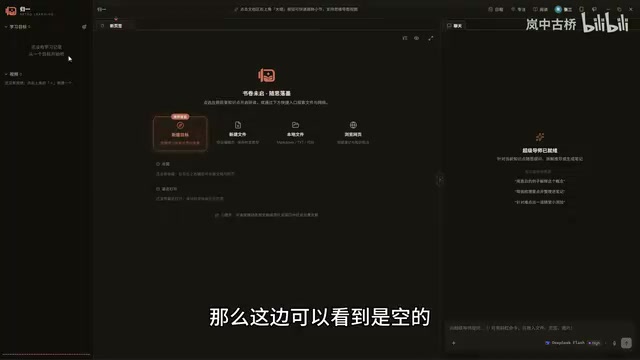
Explore an open-source AI learning agent: built on DeepSeek API, it constructs knowledge systems via topology graphs, with automatic document generation, notes, super documents, and exams. Learn about its Agent workflow and design highlights.

DeepSeek Whale Girl Open-Source MV Meme: AI Industry Coded Slang About Pivoting to Closed Source
Bilibili's DeepSeek Whale Girl rap MV uses fictional memes to tease the AI open-source vs. closed-source debate, with lyrics full of industry slang. This article explains the meme culture, the Whale Girl symbol, and the open/closed tension.