DeepSeek Whale Girl Open-Source MV Meme: AI Industry Coded Slang About Pivoting to Closed Source

A Bilibili rap MV uses industry slang and Whale Girl anthropomorphic memes to playfully mock the AI open-source vs. closed-source debate.
A Bilibili video titled "【DeepSeek Whale Girl】Pivoting from Open to Closed Source | Open Source × Closed Source Rap MV" uses rap to tease the open-source vs. closed-source debate in AI models. Labeled "fictional meme," the lyrics are packed with industry slang like "pivot coin" and deliberate grammatical ambiguity to create a "you get it but not quite" effect. DeepSeek is personified as "Whale Girl," reflecting community fan-creation culture. The article notes such meme content offers no technical parameters; its value lies in condensing industry sentiment into shareable symbols, with ambiguous satire that lets different viewpoints find their own interpretation.
A video titled "【DeepSeek Whale Girl】Pivoting from Open to Closed Source | Open Source × Closed Source Rap MV (Entirely Fictional Meme)" has appeared on Bilibili, using rap to poke fun at the open-source versus closed-source debate in the AI model world. The video is labeled "fictional meme" throughout, yet it's densely packed with inside jokes that only those who closely follow AI model developments will truly appreciate.
Why This MV Resonates with the AI Community
The barrier to entry for this MV isn't the music—it's the language, which is almost entirely industry slang. The recurring lyrics "pivot coin," "switch channels," and "open pivot coin," paired with the title "Open Source × Closed Source," point directly to the long-running tension in the model ecosystem over open weights versus commercial closed-source approaches. DeepSeekAd is personified as "Whale Girl," which itself carries the flavor of community fan creation—turning a model vendor's image into a meme-able character is part of open-source community culture.

Lines like "Running models I use the door-opening pedestal one by one" are almost grammatically nonsensical, but from a meme perspective, they deliberately mimic the sound of rap piling on jargon, using plausible-sounding but ambiguous vocabulary to create a "you get it but not quite" effect. This approach is precisely calibrated for AI community viewers: when you're dealing with models, weights, and open-source licenses every day, even the slightest distortion triggers associations.
Open Source vs. Closed Source: The Real Tension Behind the Meme
The title "Pivoting from Open to Closed Source" is itself a pun. Literally it says "turning toward closed source, coming ashore," but it actually alludes to certain projects or teams wavering between open source and commercialization. In the AI model space, open weights mean the community can freely deploy, fine-tune, and redistribute, while closed source means capabilities are encapsulated in an API or product. Both paths have their advocates and their critics.
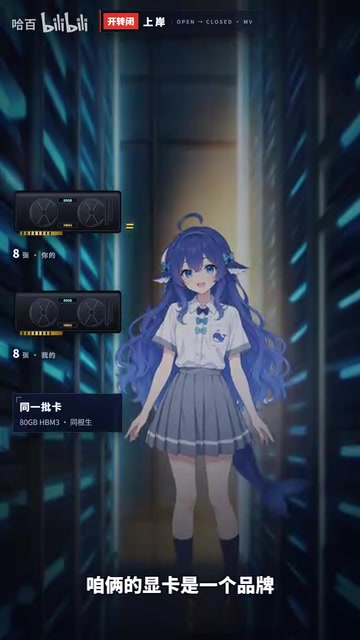
The MV doesn't offer any serious argument—it chooses to sing this tension out in a jesting way. Lines like "Tell your self-evil ghost" and "Don't look at the glass glue with lazy pig eyes" are nearly impossible to interpret without context, but within the "open source × closed source" framework, viewers will fill in the blanks with their own satire of certain industry phenomena. This ambiguity is precisely the传播 advantage of meme content: it doesn't take sides, yet people of different positions can all find their own interpretation.
Open Weights and Open-Source Licenses
In the AI model context, "open source" usually refers to open model weights—meaning the trained parameter files can be downloaded, deployed, and fine-tuned—rather than the strict open-source software definition. Alongside this come license terms: permissive licenses like Apache 2.0 and MIT allow commercial use and redistribution, while Llama Community License, RAIL, and others come with usage restrictions (such as monthly active user thresholds or prohibitions on specific uses). Therefore, "open source" in the model world is often a spectrum—from fully open weights plus open data, to open weights only but with commercial restrictions, to merely publishing a technical report—and the boundaries are quite blurry. This is exactly the premise that makes jokes like "pivoting from open to closed source" work—the choice of path is full of gray areas, with no black-and-white answers.
Whale Girl: A Symbol Forged by Community Meme-Making
Calling DeepSeek "Whale Girl" is the result of the community's personified re-creation of the model brand. This naming convention is common in open-source projects—an active community will spontaneously give a project an image, nicknames, and inside jokes. The name "Whale Girl" itself carries a sense of familiarity, and it makes a rap MV centered on criticism and teasing seem less sharp.

From a dissemination perspective, the value of such content isn't in information density but in condensing scattered industry sentiments into a shareable symbol. When viewers share this MV, what they're really sharing is their own attitude toward the open-source/closed-source debate. The "entirely fictional meme" label also draws a boundary in advance: this is entertainment, not industry analysis.
Moe Anthropomorphism and Community Fan Creation Ecosystem
"Whale Girl" belongs to the tradition of moe anthropomorphism: giving non-human objects (companies, software, hardware) anime character images and personalities, commonly seen in open-source communities and localized tech brand communication. It's usually done spontaneously by the community rather than officially led, including drawing character art, setting nicknames, writing dialogue, and spreading through emoji packs, short videos, and fan art. This re-creation lowers the brand's distance and provides a buffer for critical content—when the target of teasing is a cute character rather than a cold corporation, satire is easier to accept and faces less resistance in spreading. For the community, anthropomorphized images are also a kind of identity marker: using these memes signals that you belong to the in-group that follows the technology.
The Boundaries of Meme Content and How to Watch It
It should be clear that the lyrics of this MV make heavy use of homophones, distortions, and fragmented expressions, and the text itself does not constitute any verifiable statement about any specific company or product. It's better understood as a cultural phenomenon in the AI community—reflecting the community's continued attention to the model ecosystem and its habit of digesting industry anxiety through humor. For viewers unfamiliar with model-circle slang, this MV may be hard to understand; for insiders, it's more like a collective knowing smile.
If you're interested in the model technology itself, this MV won't provide parameters or benchmark information; if you're interested in AI community culture, it's a sample worth observing: when a technology becomes deeply embedded in everyday discussion, memes around it will naturally grow.
One-line Summary
A Bilibili rap MV uses industry slang and the Whale Girl anthropomorphic meme to playfully mock the open-source vs. closed-source debate in AI models.
Paragraph Summary
A Bilibili video titled "【DeepSeek Whale Girl】Pivoting from Open to Closed Source | Open Source × Closed Source Rap MV" uses rap to tease the open-source vs. closed-source path debate in the AI model world. Labeled "fictional meme" throughout, the lyrics are densely packed with industry slang like "pivot coin" and "open pivot coin," along with homophonic distortions and deliberately ambiguous grammar that creates a "you get it but not quite" effect. DeepSeek is personified as "Whale Girl," reflecting the community's tradition of fan re-creation of model brands. The article notes that such meme content doesn't offer parameters or benchmark information; its value lies in condensing scattered industry sentiments into shareable symbols—sharing is expressing an attitude—and its ambiguous satire lets people of different positions find their own interpretation.
Related articles

Building an AI Agent with Claude Code from Scratch: From Workspace to Cloud Autonomy
No coding required: build an AI Agent in four steps with the Claude Code desktop app—from workspace setup and Agent Designer to Skills, Memory, and cloud autonomy.

No Python Required: How Cursor AI Coding Is Reshaping Automated Testing and Test Development
Test engineers can do automated testing without learning Python? This article examines how Cursor and other AI coding tools empower functional testing, automation scripts, test platform development, and performance tuning, compares the cost and access restrictions of mainstream domestic and foreign tools, and offers capability transformation advice for testers.

Nearly 5,000 Affected! AI Coding Plugin Found with Backdoor, Officials Urgently Remove It
Claude Code's VS Code extension version 2.1.313 was maliciously tampered with, implanting a backdoor for remote login and persistent control, potentially affecting up to 5,000 users. Officials have removed the malicious version; this article details the attack method and cleanup steps.