AI SDK Voyage 2.0.41 Released: A Deep Dive into This Dependency Update Patch
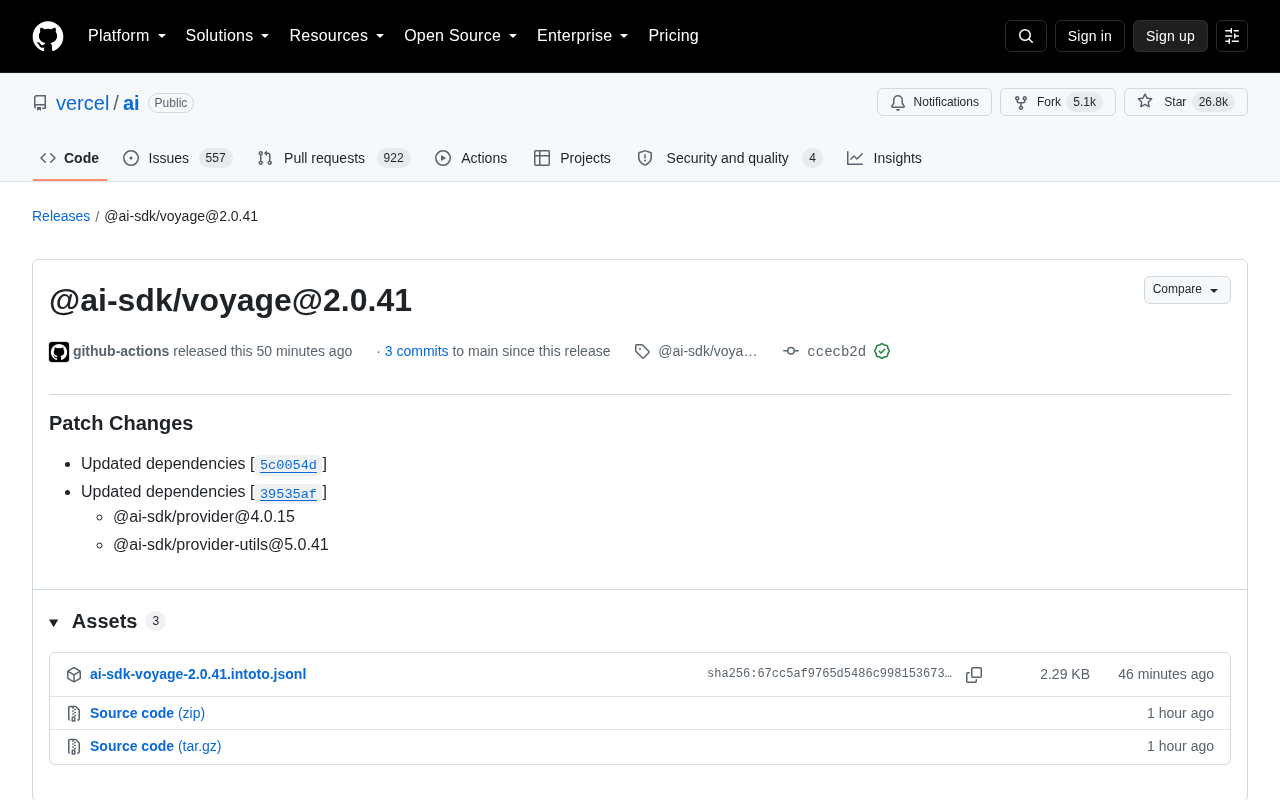
@ai-sdk/voyage@2.0.41 is a low-risk patch release that syncs underlying dependencies with no functional changes.
@ai-sdk/voyage@2.0.41 is a routine patch release in the Vercel AI SDK ecosystem, syncing two foundational dependencies: @ai-sdk/provider@4.0.15 and @ai-sdk/provider-utils@5.0.41 — with no breaking changes or new features. This is a classic monorepo dependency cascade: when core packages update, changesets automatically bumps upstream adapter versions to keep the SDK ecosystem aligned. For developers building RAG or semantic search applications with Voyage AI embeddings, the upgrade cost is minimal — just ensure version compatibility and maintain your lockfile.
Version Overview
Vercel's AI SDK ecosystem has received another routine update: @ai-sdk/voyage@2.0.41 was automatically published via GitHub Actions. This is a typical patch release focused entirely on dependency updates — no breaking changes, no new features. For developers currently using the Voyage embedding model integration, this kind of update is generally safe to adopt without hesitation.
The release follows the standard main-branch commit workflow and carries a GitHub Verified signature, ensuring the integrity and authenticity of the published artifact.
What Changed
The core changes in version 2.0.41 are limited to dependency upgrades. The Patch Changes log records updates to two underlying packages:
@ai-sdk/provider@4.0.15@ai-sdk/provider-utils@5.0.41
These two packages form the infrastructure layer of the AI SDK. provider defines the abstract interface specifications for various model providers, while provider-utils supplies shared utility functions for serialization, request handling, and more. When these foundational packages are updated, the higher-level adapters that depend on them — like this Voyage integration — also publish new patch versions to stay in sync.
This cascading release pattern is a common engineering practice in monorepo projects. Vercel's ai repository uses centralized management with the changesets tool to track dependency relationships. When a core package changes, related sub-packages automatically have their version numbers bumped, ensuring version alignment across the entire ecosystem.
What is Changesets? Changesets is a version management and release tool designed specifically for monorepos, open-sourced by Atlassian and widely adopted in the JavaScript/TypeScript ecosystem. The core workflow works like this: developers attach a changeset file to their PR describing the change type (major/minor/patch) and a summary; after merging, CI automatically aggregates all pending changes, calculates new version numbers for affected packages, generates CHANGELOGs, and publishes to npm in topological dependency order. This mechanism ensures that an update to a foundational package automatically triggers version bumps in all direct and indirect dependents — preventing the version mismatches and oversights that manual maintenance in large monorepos like Vercel AI SDK (with dozens of sub-packages) would inevitably produce.
The Role of the Voyage Integration
@ai-sdk/voyage is the official adapter in AI SDK for Voyage AI's embedding models. Voyage AI is known for its high-quality text embedding models, widely used in Retrieval-Augmented Generation (RAG), semantic search, text clustering, and similar applications. Through this package, developers can access Voyage's embedding capabilities under the unified AI SDK interface, without dealing with the underlying HTTP request details.
For teams building RAG applications, the stability of embedding model adapters is critical. While this patch release doesn't touch functionality, the ongoing maintenance of its underlying dependencies is precisely what ensures reliability in production environments.
What is Text Embedding? Text embedding is the technique of mapping natural language text into dense numerical vectors in a high-dimensional vector space, where semantically similar texts are positioned closer together. Compared to general-purpose embedding solutions, Voyage AI's models excel in vertical domains such as code retrieval, legal, and finance, and support context windows of up to 32K tokens. In a RAG architecture, the embedding model handles both offline document vectorization and online query vectorization — its quality directly impacts retrieval recall rate, which in turn affects the accuracy of the final generated output. Compared to competitors like OpenAI and Cohere, Voyage's key selling points are lower latency and higher retrieval precision, making it widely adopted in enterprise-grade RAG scenarios where retrieval quality is paramount.
What This Means for Developers
AI SDK has amassed approximately 27,000 stars and 5,100 forks on GitHub, making it one of the most active AI development frameworks in the TypeScript ecosystem. Its high-frequency release cadence reflects the team's commitment to ecosystem consistency.
For developers using the Voyage integration, here are a few practical takeaways:
- Low upgrade cost: As a patch release that only updates dependencies, upgrading typically requires no changes to your own code.
- Version alignment: It's recommended to keep
@ai-sdk/voyage,@ai-sdk/provider, and@ai-sdk/provider-utilson compatible version combinations to avoid type or runtime issues from cross-version mixing. - Lock and track: Use a lockfile to pin versions in production projects, and periodically review the changelog to determine whether you need to follow along.
Summary
@ai-sdk/voyage@2.0.41 is a low-risk routine maintenance update whose primary value lies in syncing underlying dependencies and maintaining version consistency across the AI SDK ecosystem. While an individual patch release carries limited information, it reflects the maturity of Vercel AI SDK's engineering standards — through automated releases, dependency cascading, and signature verification, it provides a continuously stable foundation for the many downstream applications that depend on it.
Related articles
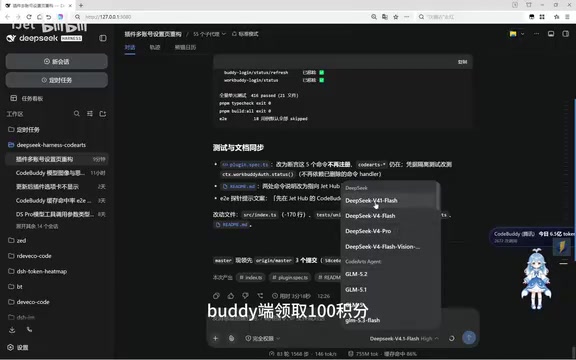
Free DeepSeek V4.1 Flash via DSH: Bulk Point Collection & International WorkBuddy Tested
DSH project update tested: WorkBuddy now offers 100 points per claim, rate limits raised beyond 80M tokens with faster resets, and international WorkBuddy supports free Hunyuan 4 and DeepSeek V4.1 Flash.
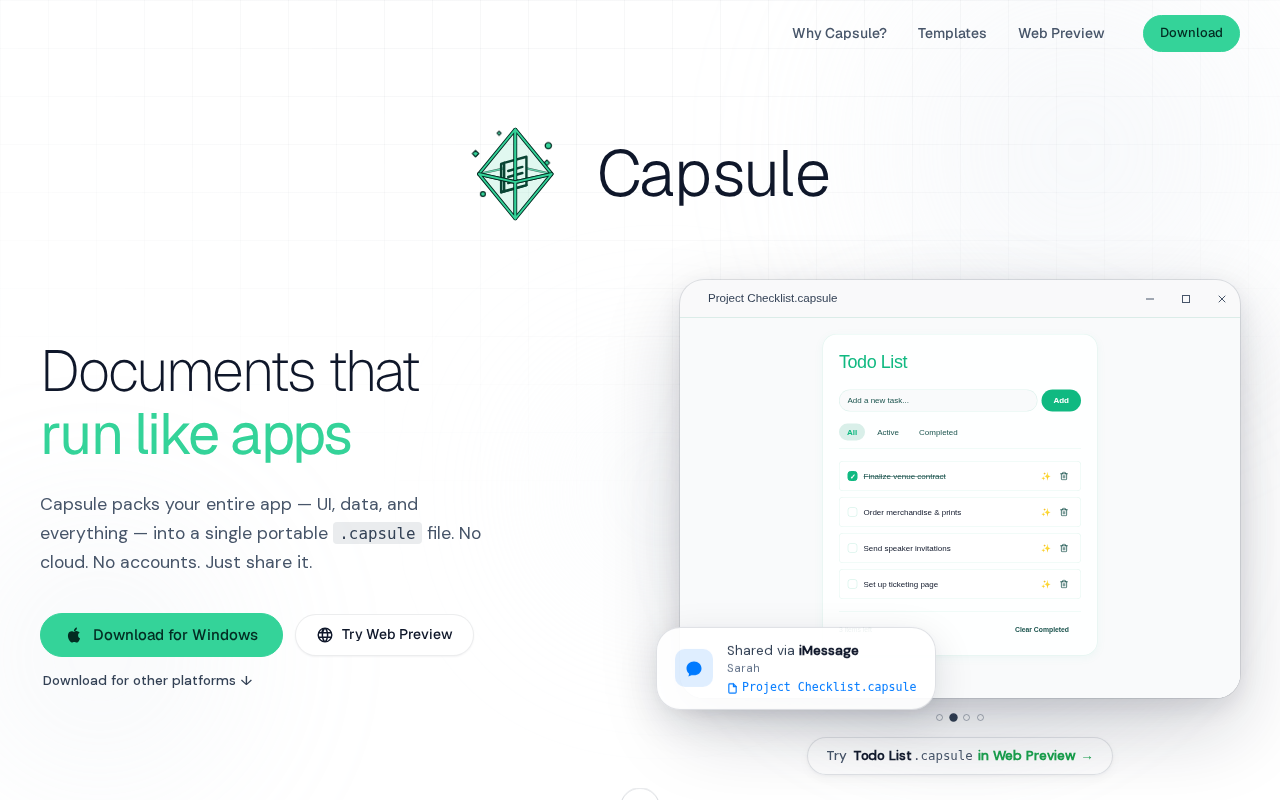
Capsule: Pack Web Apps and Data into a Single SQLite File
Capsule is a Rust/Tauri 2.0 tool that packs HTML web apps and data into a single SQLite file — privacy-first, local storage, portable sharing, with AI support.
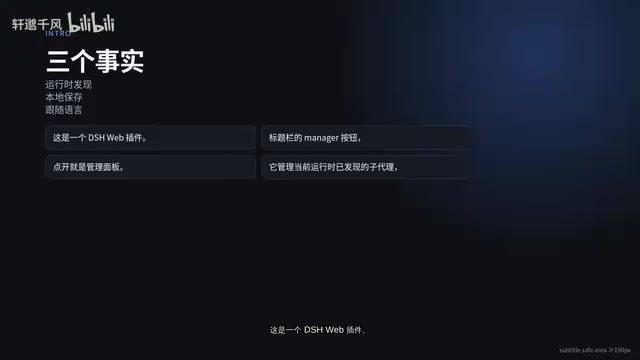
DSH-SUBAGENT-UI Plugin: The Ultimate Sub-Agent Manager for DeepSeek Harness
DSH-SUBAGENT-UI is a DeepSeek Harness browser plugin offering sub-agent overview, search, local categorization, and completion snapshots — install with one command.