@ai-sdk/voyage 2.0.70 Released: Dependency Update and Version Analysis

@ai-sdk/voyage 2.0.70 patch released, mainly updating dependency provider-utils to 5.0.70.
@ai-sdk/voyage 2.0.70 is a patch-level release whose only changes are dependency updates, most notably bumping @ai-sdk/provider-utils to 5.0.70. The article notes that keeping provider packages aligned with underlying utilities is common in the AI SDK monorepo—utilities ship fixes first, then each provider pulls them in via patch releases. Although there are no new interfaces or breaking changes, transitive dependency updates can affect request construction, error handling, and streaming responses. The author recommends running Voyage-related integration tests in staging, focusing on vector dimensions, batch requests, and error branches, and ensuring lockfiles are synchronized across environments to avoid version drift.
Patch Release: Core Changes in 2.0.70
The Voyage provider in the AI SDK ecosystem has released version 2.0.70. According to the changelog on GitHub, this update is marked as Patch Changes and primarily involves dependency updates.
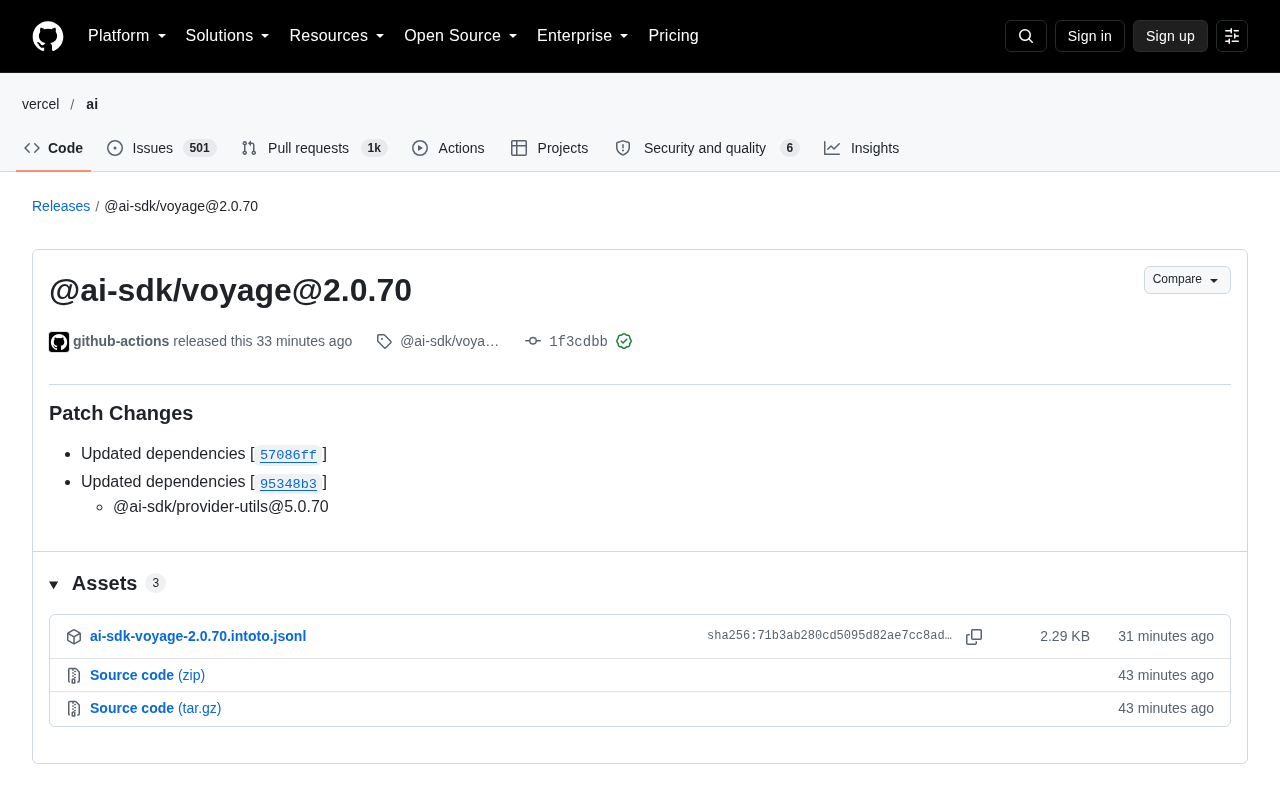
The release notes show two dependency update entries, pointing to commits 57086ff and 95348b3 respectively. The most direct change is bumping @ai-sdk/provider-utils to version 5.0.70. For developers building applications with the Vercel AI SDK, keeping provider packages in lockstep with the underlying utility package is a common practice to maintain compatibility and stability.
Why a Patch Update Matters
Looking at the version number alone, 2.0.70 is just a patch-level release that typically doesn't introduce new features or breaking changes. But for teams using the AI SDK in production, version alignment between the provider and provider-utils means upstream fixes or internal adjustments are being synced in. Transitive dependency updates can affect foundational capabilities like request construction, error handling, or streaming responses, so even for patch releases, it's advisable to validate in a test environment before upgrading.
AI SDK Release Cadence from a Dependency Chain Perspective
@ai-sdk/voyage is the provider package in the Vercel AI SDK ecosystem that connects to Voyage AI models. Its release history is tightly coupled with @ai-sdk/provider-utils—the latter provides shared foundational utilities across providers, such as request wrapping and response parsing.
In this update, provider-utils was bumped to 5.0.70 on its own, and the voyage provider followed with a patch release. This pattern is common in the AI SDK's multi-package repository: the underlying utilities ship fixes first, then each provider package pulls in the new dependency via a patch release.
Practical Impact on Developers
If your project uses @ai-sdk/voyage to call Voyage's embedding or reranking models, behavior will most likely remain unchanged after upgrading to 2.0.70, but fixes in the underlying dependency may introduce subtle differences. It's recommended to run your existing tests after updating the lockfile, paying particular attention to vector dimensions, batch requests, and error branch handling.
The Vercel AI SDK uses a multi-package monorepo architecture. The core ai package defines unified interfaces like LanguageModel and EmbeddingModel, while each provider package (such as @ai-sdk/voyage and @ai-sdk/openai) is only responsible for adapting vendor API requests and responses to this standard interface. @ai-sdk/provider-utils is the shared toolbox for these adapter layers, containing implementations for request retries, HTTP wrapping, streaming data parsing, schema validation, and more—so any provider's behavioral details can be affected by it. This layered design lets new model providers avoid reimplementing infrastructure, but it also means every fix in the underlying utility package propagates to all providers through dependency relationships. Understanding this chain is a prerequisite for assessing the risk of a patch upgrade.
Voyage AI is a model company focused on retrieval scenarios, offering text embedding and reranking models commonly used in RAG, semantic search, and recommendation systems. Reranking refers to taking candidate documents from vector recall and re-scoring/reordering them with a more refined cross-encoder model to improve final relevance. The role of @ai-sdk/voyage is to connect these models to the AI SDK's unified calling convention, so developers can switch between embedding, generation, and other models using the same set of interfaces.
How to Evaluate Whether to Upgrade
For most projects, following patch version upgrades is a low-risk operation. But if you have strict dependency version locks or are in a release freeze, you can evaluate in the following order:
- Check whether your project directly depends on
@ai-sdk/provider-utilsto avoid version conflicts; - Run Voyage-related integration tests in a staging environment;
- Confirm the lockfile in CI has been updated to prevent version drift across environments.
Ecosystem-Level Signals
The AI SDK's provider system is still iterating rapidly. Voyage, as a model provider focused on retrieval scenarios, has its provider package continuously maintained, indicating that this integration path is active. For teams building RAG or semantic search applications, keeping provider packages in sync with the main SDK version helps ensure you get the latest compatibility fixes.
Summary
@ai-sdk/voyage 2.0.70 is a patch release focused on dependency updates, with the core change being the upgrade of @ai-sdk/provider-utils to 5.0.70. It introduces no new interfaces, but for teams maintaining AI SDK ecosystem consistency, it's still a version worth including in your regular upgrade process.
Related articles

Manufacturing Accelerator Re:Build Raises $2.1B, Spins Out Slate Auto
Manufacturing accelerator Re:Build closes $2.1B funding, calling itself "America's answer to Shenzhen," and spins out Slate Auto. Known facts, positioning, and information gaps.
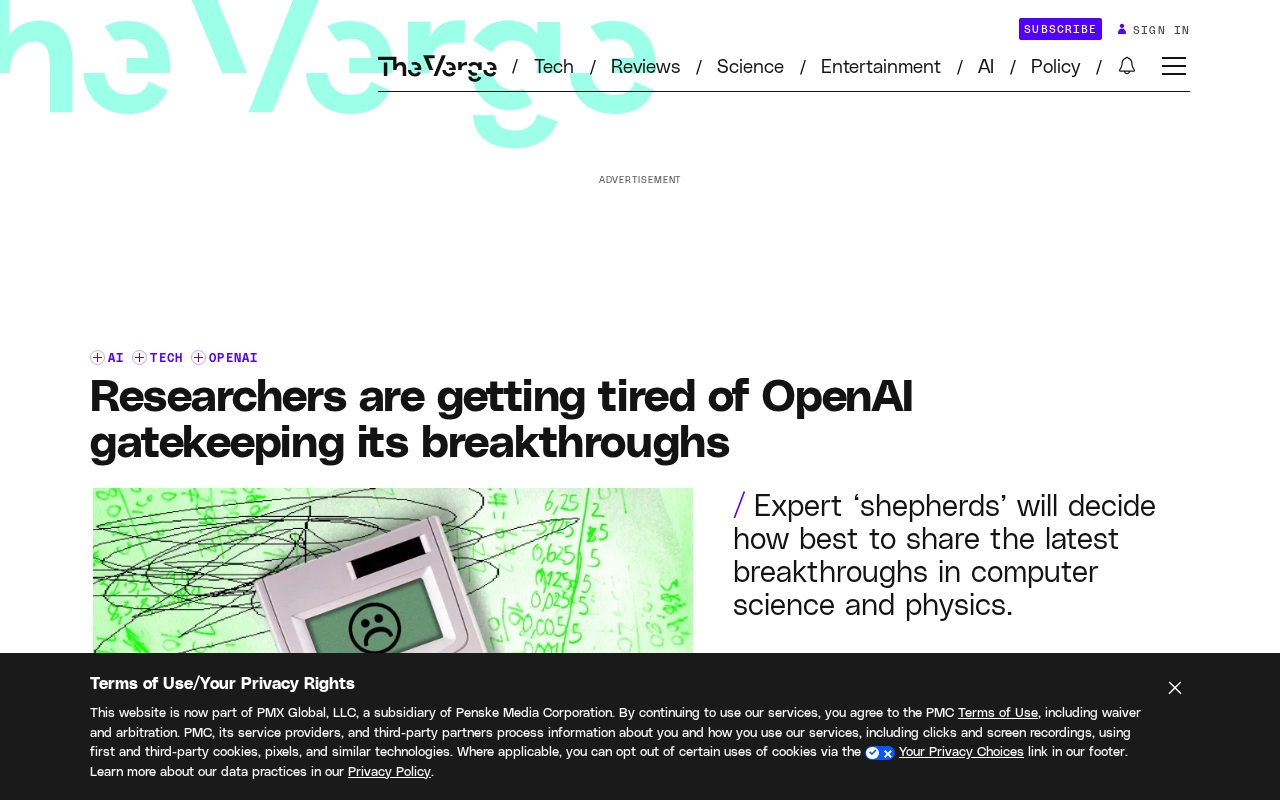
OpenAI's Public Breakthroughs Draw Academic Criticism: Research Transparency in the Spotlight
OpenAI announces math, CS, and physics breakthroughs and claims improved communication, but researchers tell The Verge dissatisfaction is mounting, criticizing selective disclosure and lack of reproducible details as the tension between corporate research and open science resurfaces.
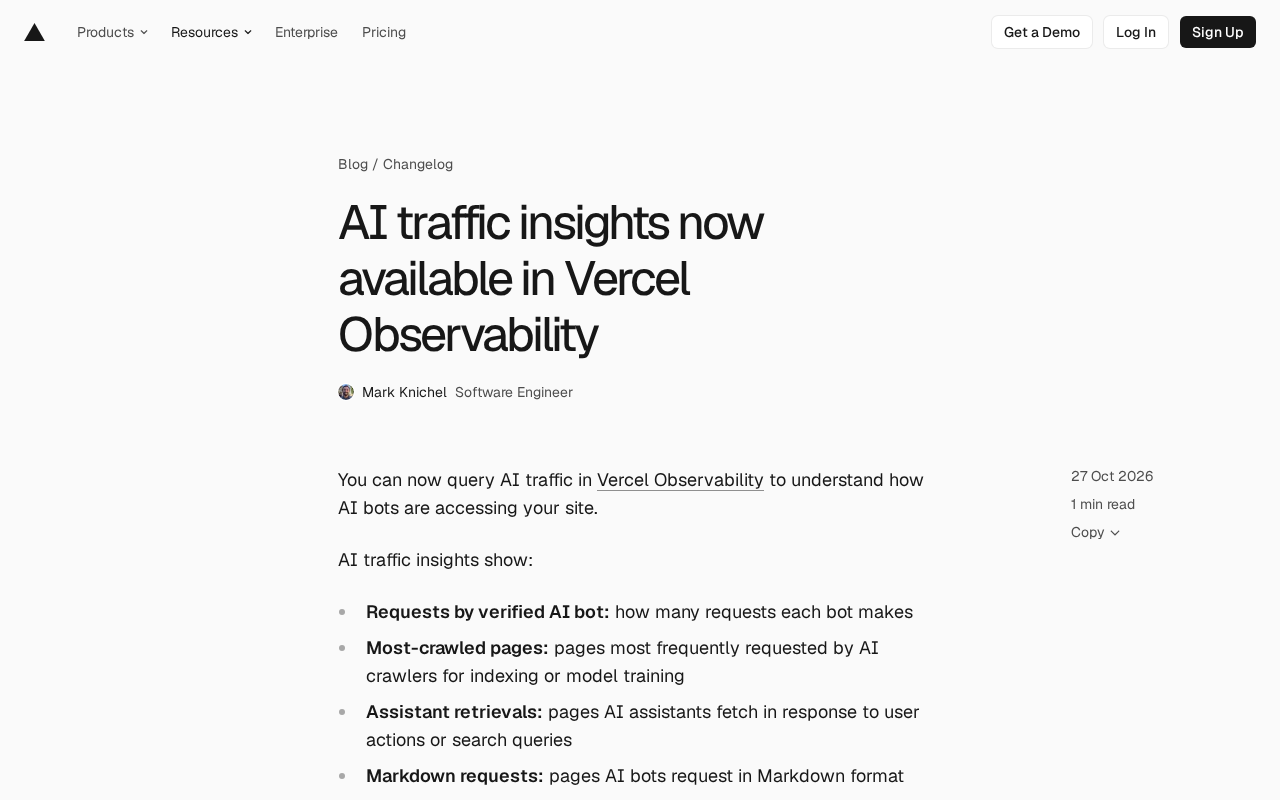
Vercel Observability Adds AI Traffic Insights: See How AI Crawlers Access Your Site
Vercel Observability adds AI traffic insights to query verified AI bot requests, most-crawled pages, assistant retrievals, Markdown requests, and errors, with CLI grouping by bot.