Manufacturing Accelerator Re:Build Raises $2.1B, Spins Out Slate Auto

Re:Build raises $2.1B and spins out Slate Auto, but key details are missing.
Re:Build, a manufacturing accelerator positioning itself as "America's answer to Shenzhen," has closed a $2.1 billion funding round and spun out Slate Auto, per an RSS feed. The original article confirms only the amount and the spin-out, omitting investors, round, valuation, funding structure, and Slate Auto's business. The "American Shenzhen" framing is catchy, but Shenzhen's edge comes from dense supplier networks, a fast-iterating engineering culture, and small-batch capacity—hard to replicate with capital alone.
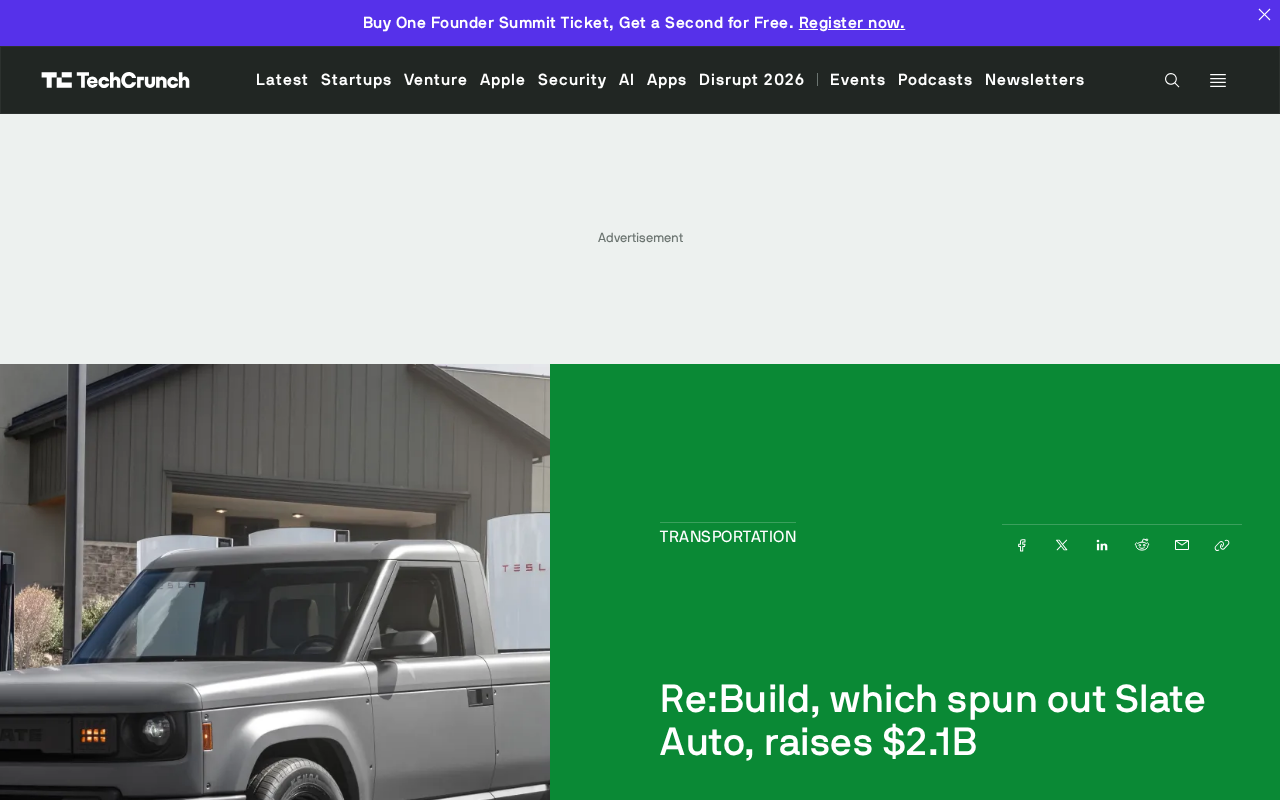
Manufacturing accelerator Re:Build has closed a $2.1 billion funding round. The company positions itself as "America's answer to Shenzhen" and is the parent company that recently spun out Slate Auto. The news comes from an RSS feed, and the amount is clear, but beyond that — investors, valuation, use of funds, and what Slate Auto actually does — the original article doesn't elaborate.
A Large Round, But Low Information Density
According to the RSS feed, Re:Build's funding round is $2.1 billion. The original article sums up the company's self-positioning in a single sentence: "America's answer to Shenzhen." That phrase is worth noting in itself: Shenzhen is synonymous with global hardware manufacturing and supply chain efficiency, and benchmarking an American manufacturing accelerator against it means Re:Build's story isn't just about investment — it's about closing America's gaps in rapid prototyping, small-batch production, and supply chain coordination.
However, the original article doesn't disclose the list of investors, the funding round, valuation changes, or whether the $2.1 billion is equity financing, debt financing, or a hybrid structure. For manufacturing accelerators, the funding structure directly affects the kind of services they can offer — whether they invest money in startups, or build production lines and buy equipment. The absence of this information dilutes the actual significance of the round.
Manufacturing accelerator is an institution that sits between venture capital and contract manufacturers: it typically provides hardware startups with funding, engineering support, small-batch trial production, and supply chain connections, helping teams cross the "valley of death" from prototype to mass production. Unlike pure financial investment, accelerators often build or integrate production lines, testing equipment, and engineering teams, with revenue potentially coming from equity, service fees, or mass production revenue sharing. This model is highly capital-intensive because equipment, facilities, and engineering staff are all heavy asset investments, so individual funding rounds are often significantly larger than those of software accelerators.
The Slate Auto Spin-Out Is Another Signal
The spin-out of Slate Auto from Re:Build is mentioned only as background in the original article, without explaining what products Slate Auto makes, what stage it's at, or what relationship it maintains with Re:Build after the spin-out. But the act of "spinning out" itself shows that Re:Build isn't just a financial investor — it's incubating physical businesses and is willing to let mature projects operate independently.
When a manufacturing accelerator spins out a vehicle or hardware project, it usually means the project has moved past the prototype stage and needs independent capital and management structures. The name "Slate Auto" suggests its business is automotive-related, but the original article provides no product details, so no further judgment can be made.
Spin-out refers to a parent company separating an internally incubated business into a legally and financially independent new company, usually accompanied by independent financing, independent management, and an independent equity structure. For an accelerator, a spin-out means the project has transitioned from "incubation service recipient" to "independently fundable entity," and the parent company may retain partial equity or a strategic partnership. Reasons for spinning out include: the project needs larger-scale external capital, needs an independent brand and compliance structure, or the parent company's accelerator business needs to remain neutral and avoid competing with its portfolio companies.
The Challenge of the "American Shenzhen" Positioning
Comparing Re:Build to Shenzhen is a catchy framing, but it also exposes structural problems in the U.S. manufacturing ecosystem. Shenzhen's advantage comes from a highly dense supplier network, a fast-iterating engineering culture, and flexible small-batch capacity — none of which can be replicated by capital alone.
As an accelerator, what Re:Build can do is perhaps integrate scattered manufacturing resources and provide hardware startups with bridging services from design to mass production. If the $2.1 billion is used to build its own production capacity or invest in supply chain nodes, it could indeed create Shenzhen-like synergies in localized areas. But the original article doesn't specify where the funds will go, so this can only be speculation.
Shenzhen's supply chain advantage is often summarized as a "one-hour ecosystem": in and around Shenzhen, hardware teams can find suppliers for virtually every link — PCB, tooling, injection molding, batteries, connectors — in an extremely short time, and complete prototyping and mass production in a small-batch, fast-iteration manner. This density reduces communication and logistics costs and has fostered a professional culture of rapid trial-and-error among engineers. The U.S. manufacturing ecosystem is more dispersed, with suppliers far apart, weak bargaining power for small-batch orders, and some links dependent on overseas sources. Therefore, "replicating Shenzhen" isn't just a matter of money — it also involves rebuilding supplier networks, supplying skilled labor, and aggregating orders.
Information Gaps and Follow-Up Points
This material is essentially a news brief with only two core facts: $2.1 billion in funding and the spin-out of Slate Auto. To assess the impact of this funding, we still need to know who the investors are, Re:Build's existing project portfolio, Slate Auto's product direction, and which specific capabilities "America's answer to Shenzhen" refers to. Until that information is filled in, the more prudent judgment is: this is an accelerator trying to consolidate manufacturing resources with capital, it has secured a large sum, and it already has one project that has reached the spin-out stage.
For those following hardware entrepreneurship and supply chains, Re:Build's next moves are worth tracking — especially whether it will put the funds into actual production capacity building, and whether Slate Auto can become a verifiable sample.
One-line Summary
Manufacturing accelerator Re:Build raises $2.1B and spins out Slate Auto, but key details are missing.
Paragraph Summary
Re:Build is a manufacturing accelerator that positions itself as "America's answer to Shenzhen." According to an RSS feed, it has closed a $2.1 billion funding round and spun out Slate Auto. The original article only confirms the funding amount and the spin-out fact, without disclosing investors, funding round, valuation, funding structure, or Slate Auto's specific business. The article notes that the "American Shenzhen" positioning is catchy, but Shenzhen's advantage comes from a high-density supplier network, a fast-iterating engineering culture, and small-batch capacity — hard to replicate with capital alone. If the $2.1 billion goes toward its own production capacity or supply chain nodes, it could create localized synergies, but that's only speculation. Until the information is filled in, the more prudent judgment is: this is an accelerator trying to consolidate manufacturing resources with capital, it already has one project at the spin-out stage, and its capacity investment and Slate Auto as a validation sample are worth tracking.
Related articles
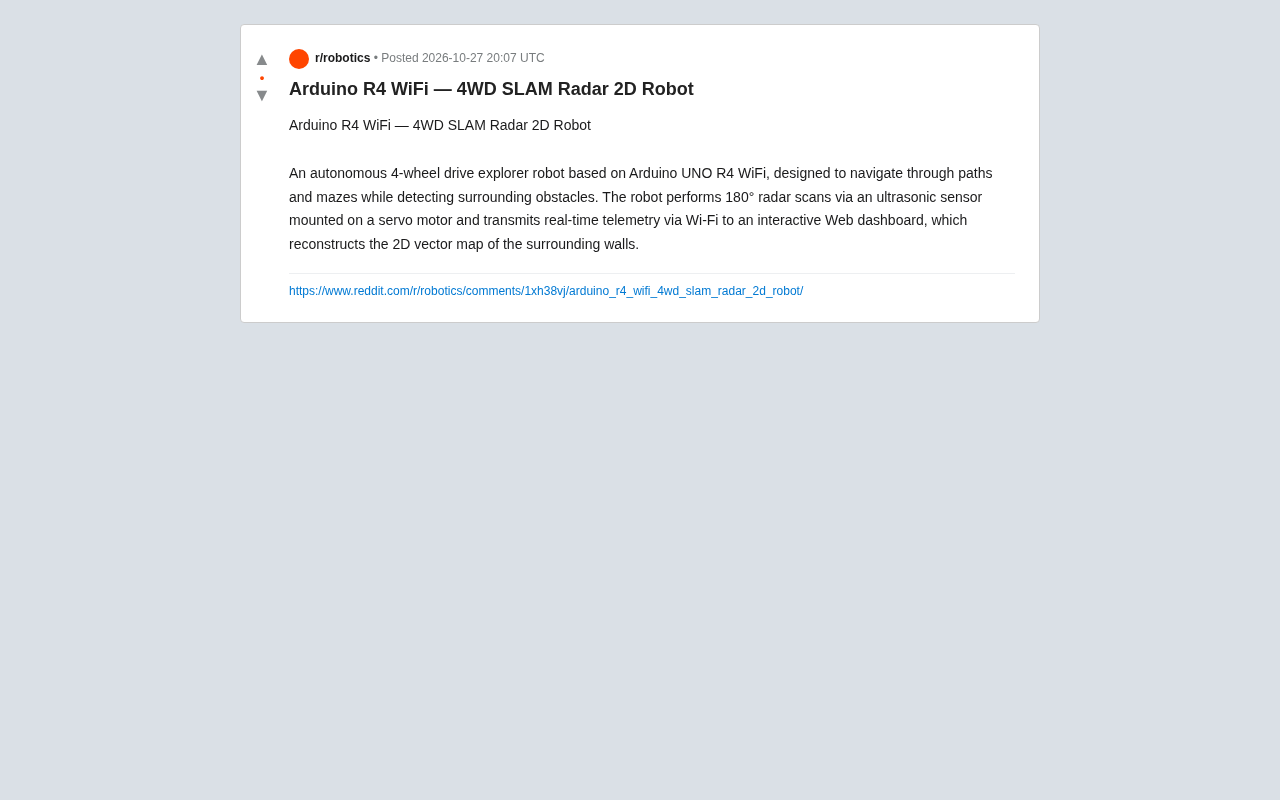
Building a 4WD SLAM Radar Robot with Arduino R4 WiFi
A Reddit maker shares a 4WD SLAM radar robot based on Arduino UNO R4 WiFi: a servo-mounted ultrasonic sensor performs 180° scanning, sends telemetry over Wi-Fi to a web dashboard, and reconstructs a 2D vector wall map in real time—a low-cost entry-level validation of simultaneous localization and mapping.
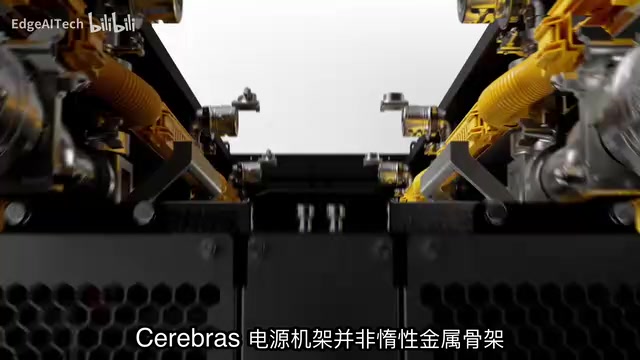
Cerebras CS-4 Stuns with Launch: The 4-Trillion-Transistor Wafer Monster That Crushes GPUs in Inference Speed
Cerebras CS-4 wafer-scale engine launched: 4 trillion transistors, 900,000 AI cores, inference an order of magnitude faster than GPUs. Modular power rack plus compute backpack design, 3D vertical stacking, and half-millimeter power delivery—online in minutes.

Apple's M6 Chip Lands in iMac: A Week in Review of Performance Upgrades and AI Controversy
Apple launches new iMac and MacBook Pro with M6 chip, N1 wireless chip brings speed gains; OpenAI claims three major discoveries but faces academic skepticism; data centers become a U.S. midterm election issue; Anduril teams up with Qualcomm for all-American laptops.