@ai-sdk/workflow 2.0.35 Released: Dependency Updates and Patch Fixes
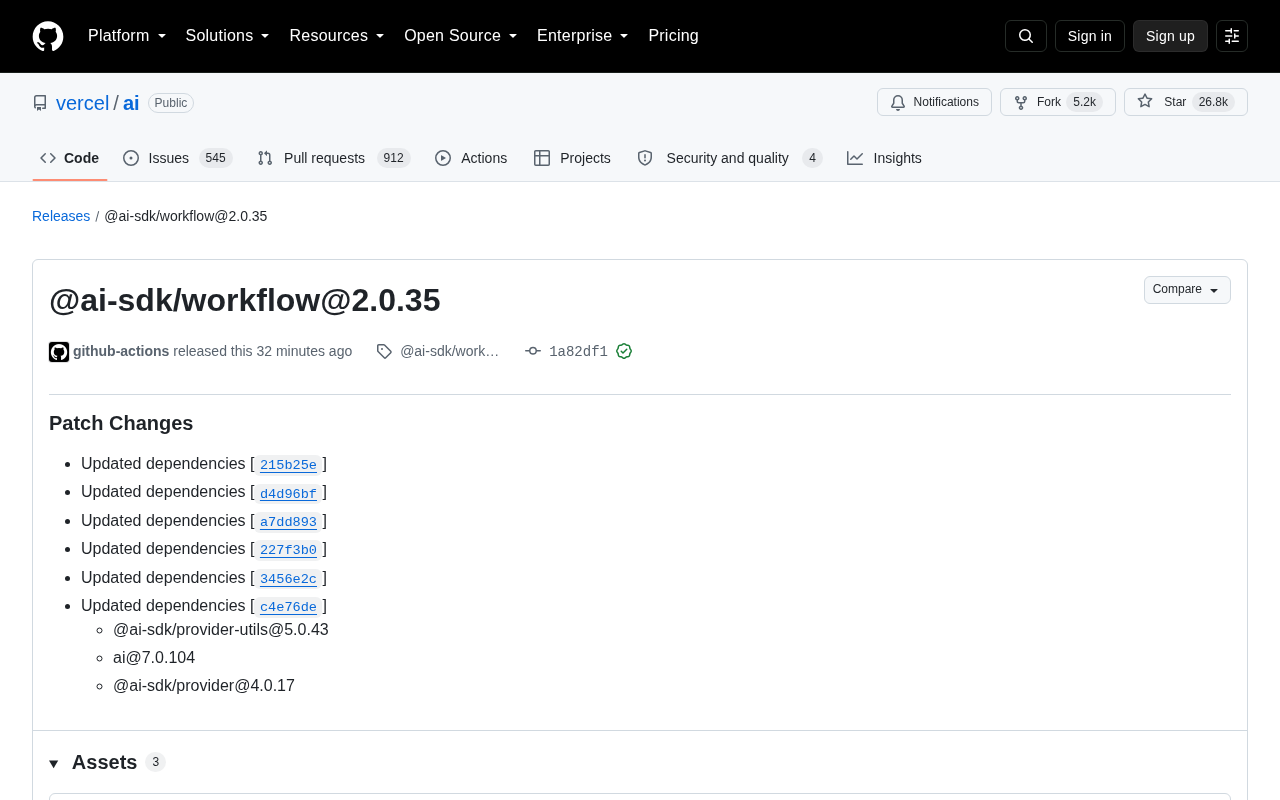
Vercel AI SDK releases @ai-sdk/workflow 2.0.35 patch to sync upstream dependency upgrades with no breaking changes.
`@ai-sdk/workflow@2.0.35` is a routine patch release for the workflow orchestration module in the Vercel AI SDK ecosystem. Its core change is syncing `ai`, `@ai-sdk/provider-utils`, and `@ai-sdk/provider` to their latest versions. The release was automated via GitHub Actions with GPG verification for supply chain security. Because SDK sub-packages are tightly version-coupled, staying current with such patches helps avoid dependency conflicts during future major upgrades.
Vercel's AI SDK project has released @ai-sdk/workflow@2.0.35. This is a patch release focused on dependency updates, introducing no breaking changes. While minor version bumps like this may seem unremarkable to developers building AI workflows with the Vercel AI SDK, they play a critical role in keeping the entire toolchain stable and secure.
Release Overview
@ai-sdk/workflow is the module responsible for orchestrating AI workflows within the Vercel AI SDK ecosystem. The Vercel AI project itself has accumulated over 26.8k stars and 5.2k forks on GitHub, making it one of the most popular AI application development frameworks available today.
This 2.0.35 release was automatically published via GitHub Actions and carries a verified signature from GitHub, ensuring the integrity and trusted origin of the published artifact. This is standard practice for mature open-source projects in their CI/CD pipelines — automated releases combined with GPG signing effectively reduce the risk of supply chain attacks.
@ai-sdk/workflow serves as the "workflow orchestration layer" within the Vercel AI SDK architecture. An AI workflow connects multiple AI calls, tool calls, conditional branches, and data flows into a reusable execution graph (DAG). Unlike directly invoking a single LLM endpoint, the workflow module lets developers declaratively define logic such as "which model to call first, how to route results, and how to fall back on errors" — making it well-suited for complex scenarios like agent loops and multi-step reasoning chains. Together with the core ai package and the @ai-sdk/provider abstraction layer, it forms a three-tier SDK architecture: the provider layer handles integration with various model APIs, the core ai layer provides foundational capabilities like streaming generation and structured output, and the workflow layer adds orchestration and state management on top.
Patch Contents: A Chain of Dependency Upgrades
According to the release notes, this update is a typical Patch Change — its core purpose is to sync upgrades across a series of internal dependency packages:
@ai-sdk/provider-utils@5.0.43ai@7.0.104@ai-sdk/provider@4.0.17
These updates were triggered by multiple upstream commits (e.g., 215b25e, d4d96bf, a7dd893, 227f3b0, 3456e2c, c4e76de). This shows that @ai-sdk/workflow maintains tight version coupling with the core ai package and provider-related modules. When the underlying provider abstraction layer or utility functions are adjusted, the workflow module bumps its version accordingly to ensure compatibility across all SDK components.
Why These Updates Matter
For teams building production applications on the AI SDK, staying current with patch releases like this matters for several reasons. Dependency upgrades often include underlying bug fixes and type definition adjustments — staying on an older version for too long can lead to version conflicts when you eventually upgrade the core ai package. Keeping all @ai-sdk/* sub-package versions consistent is a reliable strategy for avoiding subtle runtime errors.
@ai-sdk/provider is the model provider abstraction layer of the Vercel AI SDK, defining a unified interface (e.g., LanguageModel, EmbeddingModel) so that higher-level code doesn't need to care whether the underlying provider is OpenAI, Anthropic, or Google Gemini. @ai-sdk/provider-utils is the accompanying utility library, containing common logic such as stream parsing, error handling, and request retries. Any change to these two packages — even a subtle type definition tweak — propagates upward to the core ai package and then to @ai-sdk/workflow. This is precisely why this update takes the form of a "chain upgrade." The Patch level in Semantic Versioning (SemVer) means these changes only involve backward-compatible bug fixes and do not alter the public API signatures, so upgrades are theoretically safe.
How to Upgrade
Developers can upgrade to the latest version directly via their package manager:
npm install @ai-sdk/workflow@2.0.35
# or
pnpm add @ai-sdk/workflow@2.0.35
Since this is a patch-level update, it should not break any existing API calls. That said, it's still recommended to run your full test suite after upgrading — especially if your project pins specific versions of ai, @ai-sdk/provider, and related dependencies — to confirm the overall dependency tree resolves correctly.
Summary
@ai-sdk/workflow@2.0.35 is a routine maintenance release with no headline new features, but it reflects the Vercel AI SDK project's active iteration cadence and sound engineering practices. For users, keeping up with these fine-grained version updates is the foundational work that keeps AI applications running reliably over the long term. For details on specific changes, it's recommended to consult the official repository's full changelog and associated commit records.
Related articles
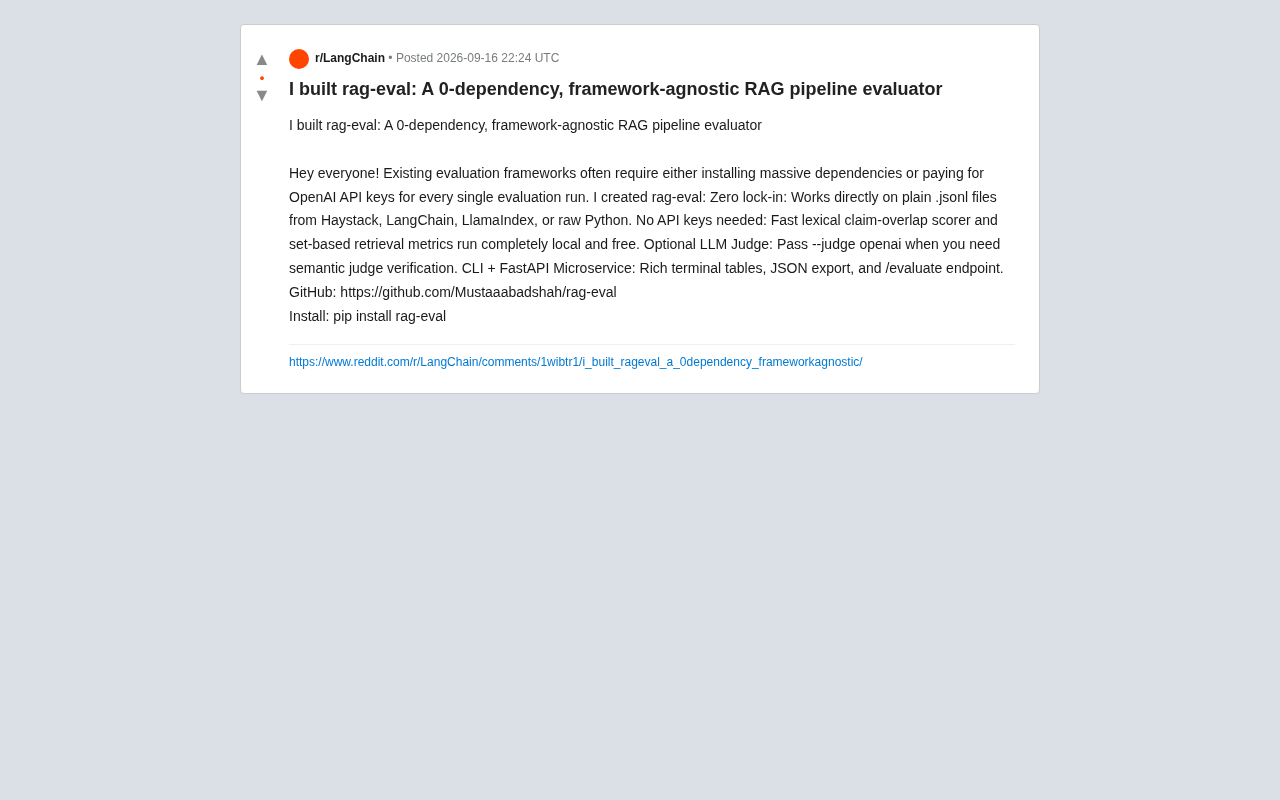
rag-eval: A Zero-Dependency, No-API-Key RAG Evaluation Tool
rag-eval is a zero-dependency, framework-agnostic open-source RAG pipeline evaluation tool. It supports free local lexical and retrieval metrics with no API keys required, and offers optional LLM Judge for semantic validation. Compatible with Haystack, LangChain, and LlamaIndex.
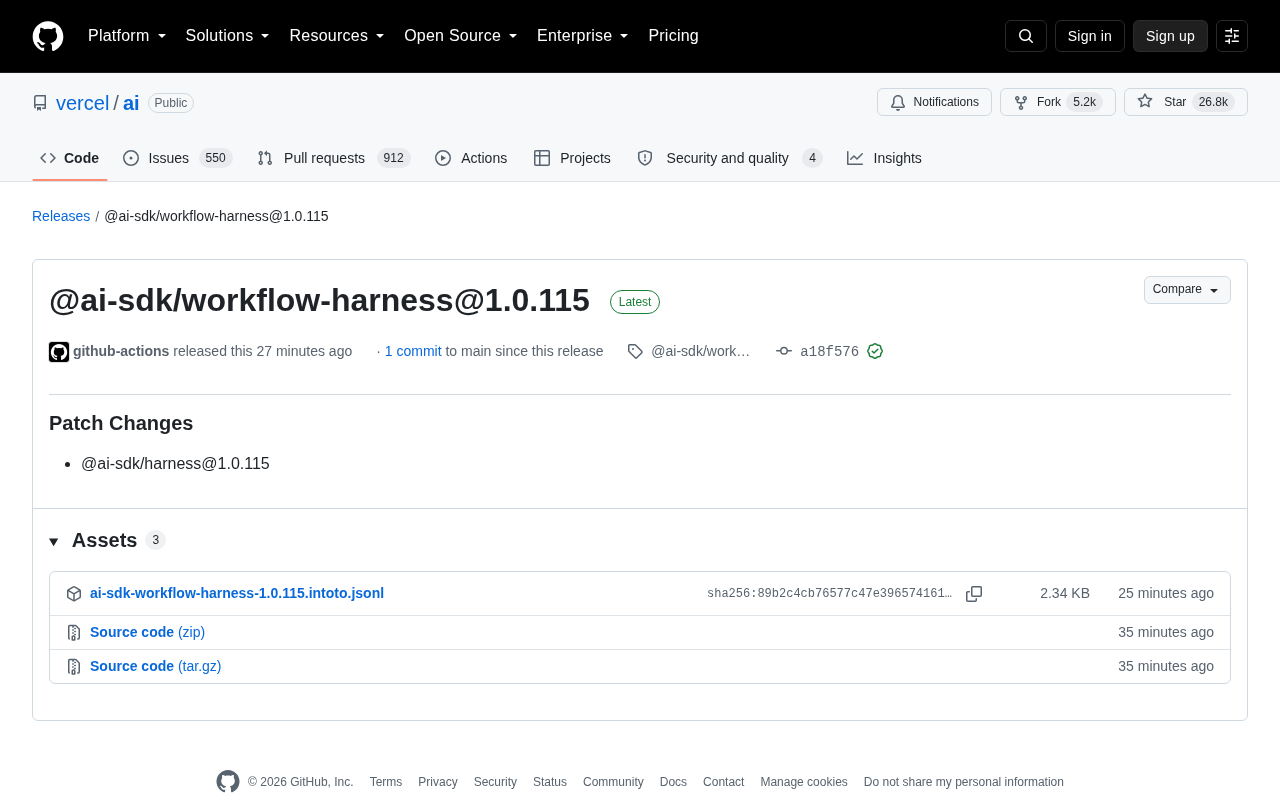
Vercel AI SDK Releases workflow-harness 1.0.115 Patch Update
Vercel AI SDK releases @ai-sdk/workflow-harness 1.0.115 patch update, syncing the @ai-sdk/harness dependency. Learn about the update, release mechanism, and what it means for developers.
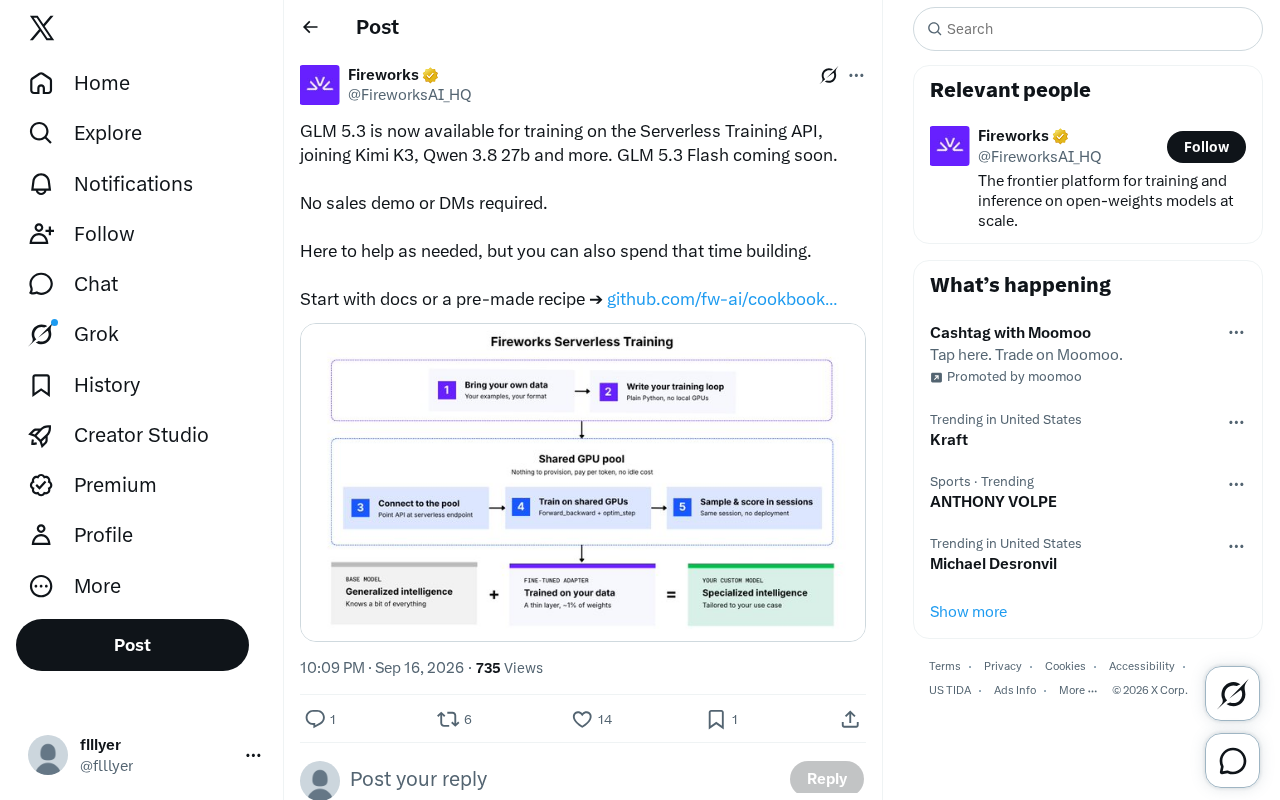
GLM 5.3 Now Available on Serverless Training API — No Sales Process Required
GLM 5.3 is now available on Serverless Training API alongside Kimi K3 and Qwen 3.8 27b. No sales process needed — start fine-tuning directly via docs or pre-made recipes.