@ai-sdk/workflow@2.0.37 Released: A Dependency-Sync Patch Update
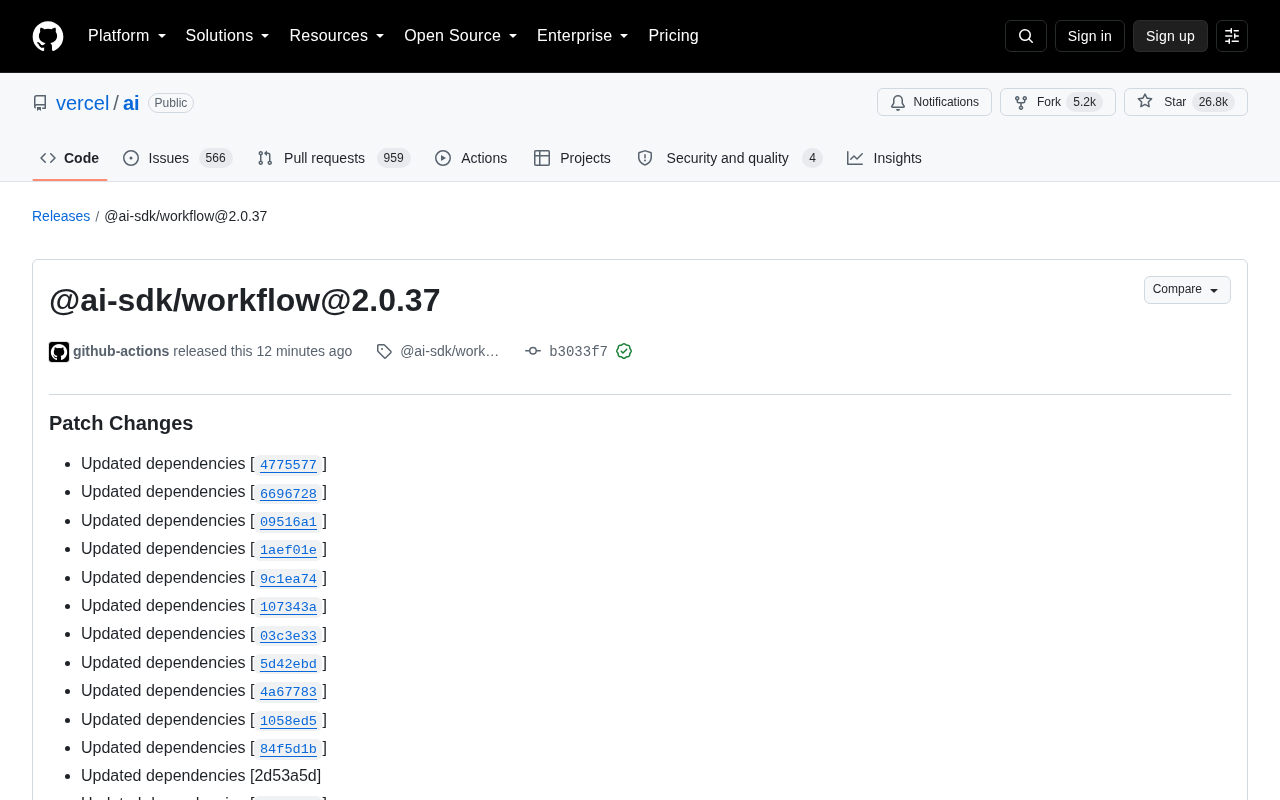
Vercel AI SDK workflow module releases patch 2.0.37, syncing upstream dependencies with no breaking changes.
`@ai-sdk/workflow@2.0.37` is a routine patch release in the Vercel AI SDK ecosystem, syncing dependencies to `ai@7.0.106` and `@ai-sdk/provider-utils@5.0.44`. It introduces no new features or breaking changes, and is a typical byproduct of the monorepo's cascade upgrade pattern. The update is safe and backward-compatible. The article also highlights that Vercel AI SDK's rapid release cadence requires production teams to maintain proper lockfiles and batch regression testing.
Vercel's AI SDK ecosystem recently released @ai-sdk/workflow@2.0.37. This is a patch release focused primarily on dependency updates, published automatically via GitHub Actions and verified with a GitHub signature.
Version Overview
@ai-sdk/workflow is the workflow module within the Vercel AI SDK ecosystem (approximately 26.8k stars and 5.2k forks on GitHub), designed to orchestrate multi-step task pipelines in AI applications. Version 2.0.37 is a patch-level update that introduces no breaking changes — its core purpose is syncing upstream dependencies.
According to the release notes, this version aligns with the following core dependency versions:
ai@7.0.106@ai-sdk/provider-utils@5.0.44
If you're already using the main Vercel AI SDK package, this update ensures the workflow module stays in sync, preventing compatibility issues caused by version mismatches.
The Vercel AI SDK — including @ai-sdk/workflow — is managed as a monorepo, meaning multiple related npm packages (such as ai, @ai-sdk/provider-utils, @ai-sdk/workflow, etc.) are maintained together in a single Git repository. In this architecture, sub-packages share tight dependencies, so an update to a lower-level utility package often requires all dependent sub-packages to release new versions as well — ensuring consistency in type definitions, interface contracts, and runtime behavior. This is why the workflow module's update is almost entirely "dependency synchronization" — there are no functional changes; it simply needs to stay in step with the rest of the SDK ecosystem.
Patch Update Details
The Patch Changes in this release are centered on "Updated dependencies," spanning more than a dozen commit hashes (e.g., 4775577, 6696728, 09516a1). Patch releases of this kind typically include low-level bug fixes, internal utility adjustments, or minor provider-layer improvements — not developer-facing API changes.
For SDKs managed under a monorepo architecture, this "cascade upgrade alongside the main package" pattern is common. When the core ai package or the provider-utils utility package is updated, the workflow module needs to follow suit to ensure consistent behavior across the entire SDK.
Practical Impact for Developers
For developers already using the AI SDK workflow in their projects, upgrading to 2.0.37 is generally safe:
- It is a patch release, following Semantic Versioning (SemVer) conventions — theoretically backward-compatible
- The primary benefit is inheriting stability fixes from upstream dependencies
- It's recommended to update this alongside the main
aipackage to keep your dependency tree clean
If you're not yet using this SDK, this release doesn't introduce noteworthy new features — it's routine maintenance work.
How to Think About High-Frequency Releases
Vercel AI SDK follows a fairly rapid release cadence. The fast-incrementing patch version (2.0.37) and the main package version (ai@7.0.106) reflect an actively developed ecosystem. The upside of this high-frequency iteration is that issues get fixed quickly and dependencies stay fresh. The downside is that teams need to maintain proper version locking (via lockfiles) and regression testing in production environments, rather than chasing every patch.
For production projects, the recommended approach is: watch for breaking change markers in the CHANGELOG, batch-upgrade pure dependency-sync patches after validating in a test environment, and avoid immediately shipping every individual patch to production.
Semantic Versioning (SemVer) defines version numbers as MAJOR.MINOR.PATCH, corresponding to incompatible API changes, backward-compatible new features, and backward-compatible bug fixes, respectively. The rapidly incrementing 37 in 2.0.37 indicates this module is in a high-frequency patch state, while the stable major version 2 means the API surface remains stable for end users. Meanwhile, lockfiles (such as package-lock.json or pnpm-lock.yaml) are especially important in high-frequency release scenarios — they pin the dependency tree to a known, verified state, preventing CI/CD pipelines from automatically pulling the latest patch version and introducing untested changes.
Summary
@ai-sdk/workflow@2.0.37 is a typical dependency-sync patch release, with the core goal of aligning with ai@7.0.106 and @ai-sdk/provider-utils@5.0.44. It introduces no new features but ensures stable coordination across SDK modules. For Vercel AI SDK users, this can be treated as a routine maintenance upgrade.
Related articles
Three Stages of AI LLM Testing: A Practical Guide from Core Concepts to API Calls
A learning path for testers covering LLM fundamentals, prompt engineering, OpenAI SDK calls, API Key vs Token differences, streaming output, RAG, and Agent systems.
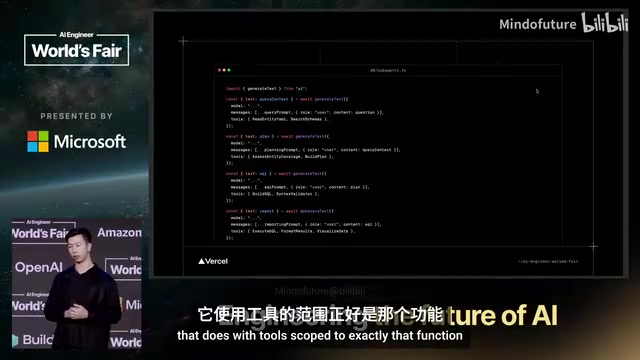
Vercel's Chief of Software Looks Back: The Evolution of Agent Building — From Multi-Agent Chains to File System Agents
Vercel's Chief of Software Andrew recaps the agent-building journey at AI Engineer: from giant prompts to multi-agent chains, monolithic memory, file system agents, and the open-source EVE framework.
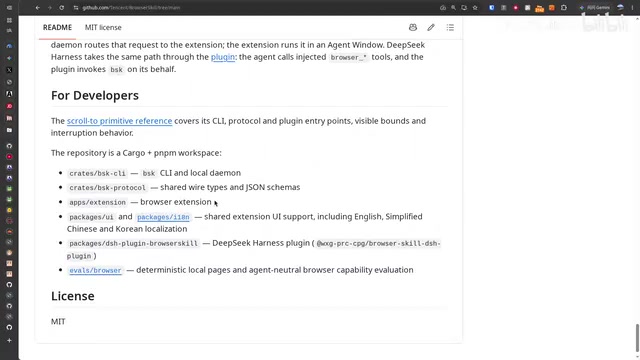
Tencent's Open-Source BSK in Action: Letting AI Take Over Your Already-Logged-In Browser
Tencent's open-source BSK (Browser Skill Kit) lets AI take over your real, logged-in Chrome via WebSocket. We break down the architecture, setup, and three key pitfalls from real-world testing.