@ai-sdk/workflow-harness 1.0.110 Released: Vercel AI SDK Patch Update
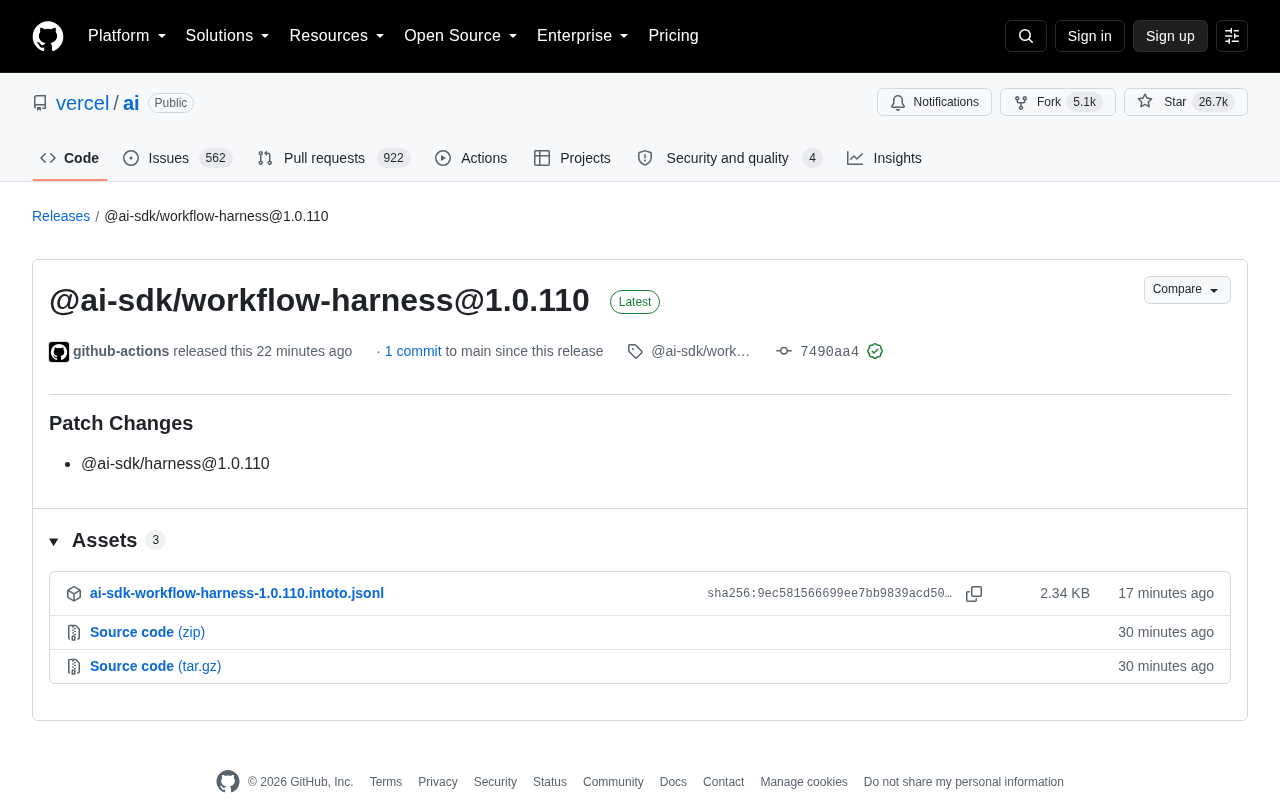
Vercel AI SDK releases workflow-harness 1.0.110 patch to sync internal dependencies — safe to upgrade.
Vercel AI SDK published `@ai-sdk/workflow-harness@1.0.110` via automated pipeline — a backward-compatible patch update that syncs the internal `@ai-sdk/harness@1.0.110` dependency. This internal package handles workflow orchestration and runtime support within the SDK and is not directly exposed to end users. Released with a verified GitHub signature, the update reflects mature monorepo engineering practices using changesets for version management. For developers, the patch is low-risk and can be seamlessly handled by tools like Dependabot or Renovate with no code changes required.
Vercel's AI SDK ecosystem has received another routine iteration. The GitHub repository published @ai-sdk/workflow-harness@1.0.110 via an automated pipeline — a patch-level update that primarily syncs the dependency @ai-sdk/harness@1.0.110 to its latest version.
For developers who closely follow AI application toolchains, these minor version bumps may seem unremarkable, but they're an important part of maintaining engineering stability.
Release Overview
This release was completed automatically by GitHub Actions, with the commit carrying a verified signature from GitHub, ensuring the trustworthiness of the release source. According to the changelog, the core change in workflow-harness@1.0.110 is a Patch Change — a cascading upgrade tied to the internal @ai-sdk/harness@1.0.110 dependency.
Vercel's ai repository currently has approximately 26.7k stars and 5.1k forks, making it one of the most popular AI development libraries in the JavaScript/TypeScript ecosystem. This active community also explains why the project maintains such a high-frequency release cadence — the patch number has already reached three digits at 110.
What Is workflow-harness
workflow-harness is an internal utility package within the Vercel AI SDK ("harness" typically refers to a scaffolding layer for testing or runtime). Packages like this are generally not exposed directly to end users; instead, they serve the SDK's internal workflow orchestration, test validation, or runtime reliability needs.
It maintains version parity with @ai-sdk/harness (both at 1.0.110), indicating a tightly coupled module relationship. When the base harness package is updated, the workflow layer publishes a corresponding patch to maintain compatibility. This versioning approach is very common in projects that use a monorepo structure with the changesets tool for release management.
What a Patch Update Means
Under Semantic Versioning (SemVer), a Patch version bump (e.g., 1.0.109 → 1.0.110) typically includes only backward-compatible bug fixes — no new features, no breaking API changes. This means:
- Projects using this package can upgrade safely with minimal risk
- Changes are mostly internal bug fixes or dependency syncs
- No modifications to existing business logic are required
For teams building production applications on top of the Vercel AI SDK, staying current with these patch releases ensures you have the latest stability fixes while avoiding accumulation of technical debt.
How to Get the Update
Developers can pull the latest version using standard package manager commands:
npm install @ai-sdk/workflow-harness@1.0.110
# or
pnpm add @ai-sdk/workflow-harness@1.0.110
If your project already uses an automated dependency update tool such as Dependabot or Renovate, patch-level releases like this are typically incorporated into upgrade workflows automatically.
Summary
This release carries limited new information on its own — it's a routine checkpoint in the ongoing maintenance of the Vercel AI SDK. It reflects the project's sound engineering practices: automated releases, verified signatures, inter-module version synchronization, and adherence to semantic versioning. Developers don't need to invest much attention in any single patch release, but understanding the SDK's iteration cadence helps you make informed decisions about when to upgrade dependencies and how to assess associated risks.
Related articles

RTX 5090 Stock Crisis: Why Third-Party Sellers Are Charging $9,500
NVIDIA's RTX 5090 has vanished from U.S. online retail, with third-party sellers asking up to $9,500. Here's how AI compute demand is driving GPU prices to extremes.
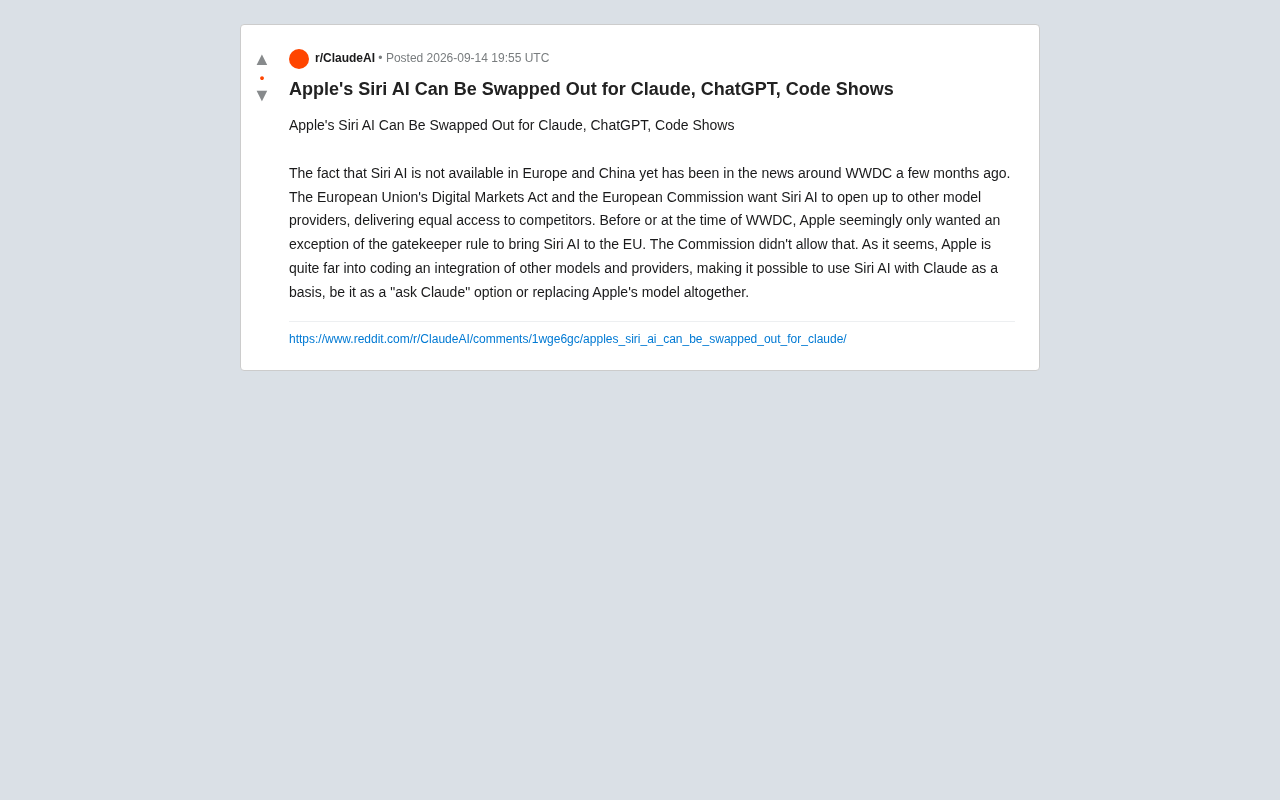
Apple Siri May Support Swapping in Claude and ChatGPT — Code Already Shows Signs
Leaked code shows Apple is developing third-party AI model integration for Siri, potentially allowing users to swap in Claude or ChatGPT under EU DMA pressure.
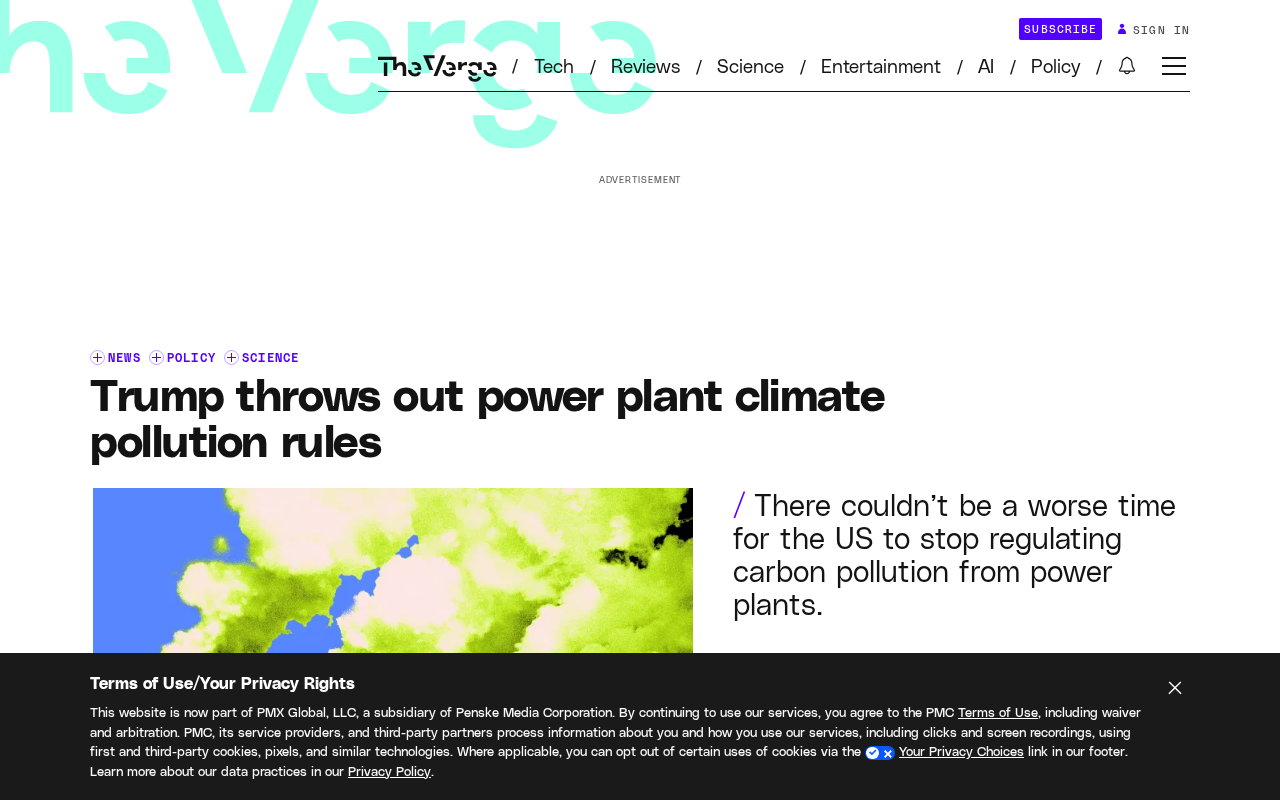
EPA Moves to Scrap Power Plant Greenhouse Gas Emission Standards Amid Surging AI Energy Demand
The EPA plans to eliminate all power plant greenhouse gas emission standards, just as AI, EVs, and manufacturing drive electricity demand higher — making U.S. power potentially far dirtier.