@ai-sdk/xai 3.0.156 Released: The Ecosystem Significance of Dependency Synchronization
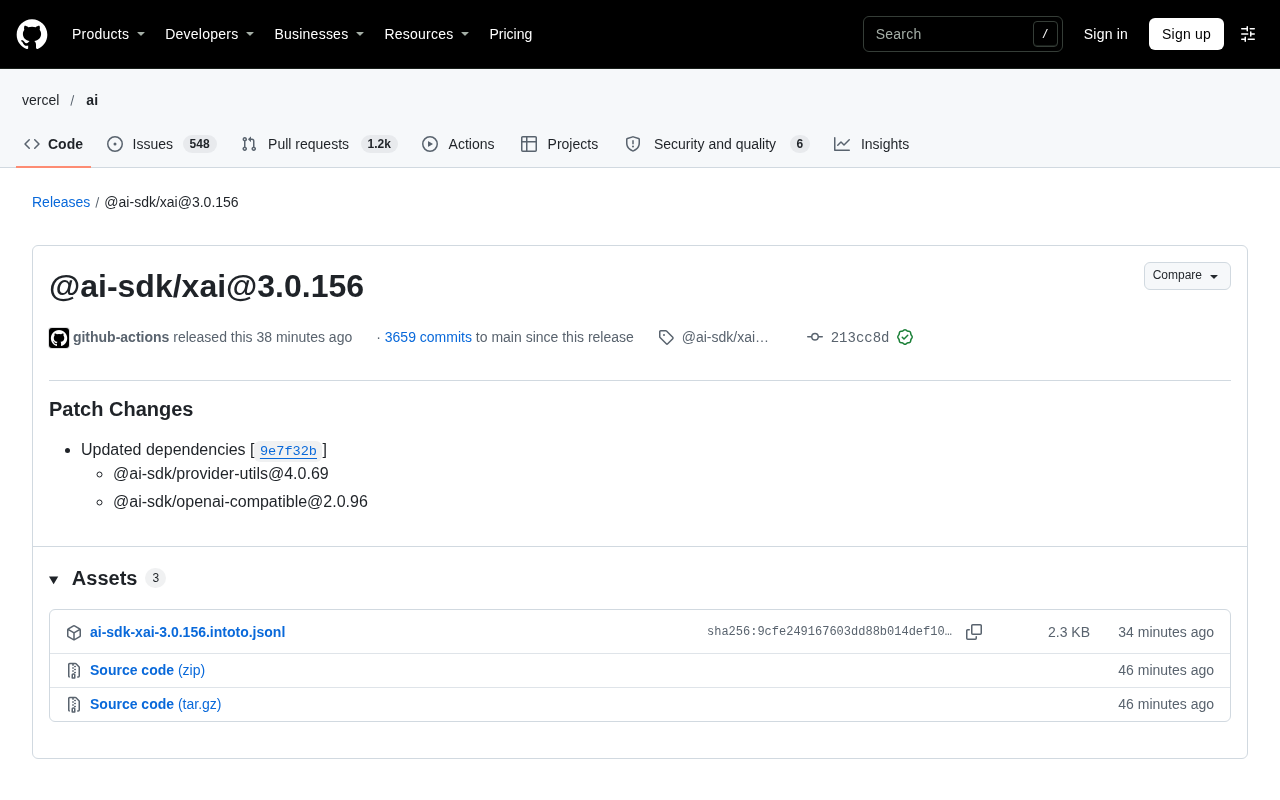
@ai-sdk/xai releases patch 3.0.156, syncing underlying dependency versions to ensure toolchain consistency.
This article reports the release of @ai-sdk/xai version 3.0.156 in the Vercel AI SDK ecosystem. This is a patch-level maintenance update whose core changes are upgrading the shared utility layer @ai-sdk/provider-utils to 4.0.69 and bumping the OpenAI-compatible adapter layer @ai-sdk/openai-compatible to 2.0.96, automatically published by github-actions with a verified signature on the commit. The article notes that while such dependency synchronization introduces no new features or API changes, it directly affects the consistency of underlying logic such as request construction, response parsing, and streaming processing; failure to follow up may cause hidden issues like type mismatches or streaming anomalies. For developers, upgrade risk is low, but they should verify the version linkage of the three packages through the lock file and establish regular dependency update habits rather than blindly chasing new versions or lagging long-term.
The AI SDK ecosystem has welcomed another routine yet necessary version iteration. @ai-sdk/xai@3.0.156 has been released on GitHub as a patch-level update, with the core action being dependency version synchronization. For developers using Vercel AI SDK to integrate xAI models, such minor version updates are often easily overlooked, yet they directly affect the health of the dependency tree.
What This Update Actually Changed
According to the GitHub Release page, the changes in @ai-sdk/xai@3.0.156 are very restrained: only one Patch Changes entry, which updates the @ai-sdk/provider-utils dependency to version 4.0.69 and bumps @ai-sdk/openai-compatible to 2.0.96. The commit points to 213cc8d, automatically published by github-actions, and the commit carries a GitHub verified signature (GPG key ID: B5690EEEBB952194).
From the release process perspective, this is a typical automated pipeline product—a version release triggered after 3659 commits were merged into the main branch. No new features, no API changes, no breaking changes; the change in the third digit of the version number itself speaks volumes: this is a maintenance release.
About the Role of @ai-sdk/provider-utils
@ai-sdk/provider-utils is the underlying shared utility package of Vercel AI SDK. It does not expose model-facing APIs but provides common capabilities for each provider package (such as @ai-sdk/openai, @ai-sdk/anthropic, @ai-sdk/xai): request body construction and serialization, HTTP client wrapping, response parsing, chunking and reassembly of streaming (SSE) data, error type definitions, and optional schema validation. It is typically used together with the unified interface specifications defined in @ai-sdk/provider—the former defines "what it looks like," while the latter implements "how it works." Because all providers depend on this layer, its patch versions often contain subtle fixes for specific API behaviors (e.g., handling of stream end markers, compatibility of error response fields). When provider-utils is upgraded without downstream providers being synchronized, the most typical symptoms are TypeScript type errors or runtime streaming data parsing anomalies—such issues do not surface immediately at compile time, making troubleshooting costly, so keeping versions aligned is necessary.
Why Dependency Synchronization Deserves Serious Attention
Many developers treat patch versions with an "upgrade when I have time" attitude, but in multi-layer toolchains like AI SDK, dependency synchronization matters more than it appears on the surface.
@ai-sdk/provider-utils is the shared utility layer for all AI SDK provider packages, responsible for request construction, response parsing, streaming processing, and other underlying logic. @ai-sdk/xai, as the integration layer for xAI models, must maintain version alignment with this utility layer. When provider-utils releases a new version and downstream packages do not follow up, hidden issues such as type mismatches and abnormal streaming response handling may occur.
The synchronized update of @ai-sdk/openai-compatible@2.0.96 is equally noteworthy. xAI's API is interface-compatible with OpenAI in design, so @ai-sdk/xai very likely reuses the implementation of the openai-compatible package internally. The version bump of this package means behavioral consistency of the compatibility layer is guaranteed.
In other words, the value of this update is not in "what was added" but in "ensuring nothing breaks."
The Role of @ai-sdk/openai-compatible
@ai-sdk/openai-compatible is a "universal adapter" package that implements request and response formats compatible with the OpenAI Chat Completions interface, for reuse by service providers whose APIs mimic OpenAI's design. The interfaces of xAI's Grok series models are highly similar to OpenAI in message structure and streaming return format, so @ai-sdk/xai is likely built on this package, only needing to override the base URL, authentication headers, and a few differing fields. This also explains why version updates of the xai package synchronously bump the openai-compatible version—any behavioral adjustment in the compatibility layer (such as adding parsing for a response field or fixing streaming usage statistics) directly affects the correctness of xAI integration. Understanding this reuse relationship helps developers determine whether to investigate issues in the upstream compatibility package or in xAI's own wrapper layer when encountering xAI-specific behaviors.
Practical Impact on Developers
If your project directly depends on @ai-sdk/xai, upgrading to 3.0.156 is a low-risk operation. Patch versions do not involve public API changes, and no business code modifications are needed after upgrading. It is recommended to verify the version linkage of the three packages in the lock file: @ai-sdk/xai@3.0.156, @ai-sdk/provider-utils@4.0.69, and @ai-sdk/openai-compatible@2.0.96.
If you use a higher-level framework (such as directly depending on the ai package), such provider-level patch updates are usually brought in indirectly and may not require manual intervention, but it is still advisable to monitor dependency resolution results.
From a broader perspective, such high-frequency patch releases reflect the maintenance rhythm of the AI SDK ecosystem: every minor fix in provider-utils propagates downstream, forming cascading version updates. This is good for the ecosystem—issues can be quickly fixed at the underlying level and reach all providers; for developers, it means establishing more regular dependency update habits rather than waiting for major versions.
Lock File and Version Linkage Checks
In npm/pnpm/yarn dependency trees, @ai-sdk/xai typically declares ^ range dependencies on provider-utils and openai-compatible, meaning that when only upgrading the xai package, the package manager may reuse the old utility packages already present in the lock file, resulting in an installed version combination inconsistent with what the publisher tested. It is recommended to run npm ls @ai-sdk/provider-utils @ai-sdk/openai-compatible (or the corresponding pnpm/yarn commands) after upgrading to verify the resolution results, and use overrides/resolutions to force version unification if necessary. For projects with multiple coexisting providers, especially confirm whether different provider packages introduce multiple copies of provider-utils—duplicate installations not only increase size but may also cause type incompatibilities due to different instances.
Engineering Practices Behind Automated Releases
This release was completed automatically by github-actions, with the commit carrying a verified signature—a pattern that has become standard in mainstream open-source projects. The value of automation lies in: dependency updates, version number increments, and release note generation are all handled by the pipeline, reducing human error. Behind the concise Release notes developers see is a stable CI/CD process at work.
For consumers, this means version reliability is process-guaranteed, but it also reminds us: patch release frequency can be high, and neither blindly chasing new versions nor long-term neglect is a good strategy. The reasonable approach is to combine lock files and test coverage for regular batch updates.
Related articles
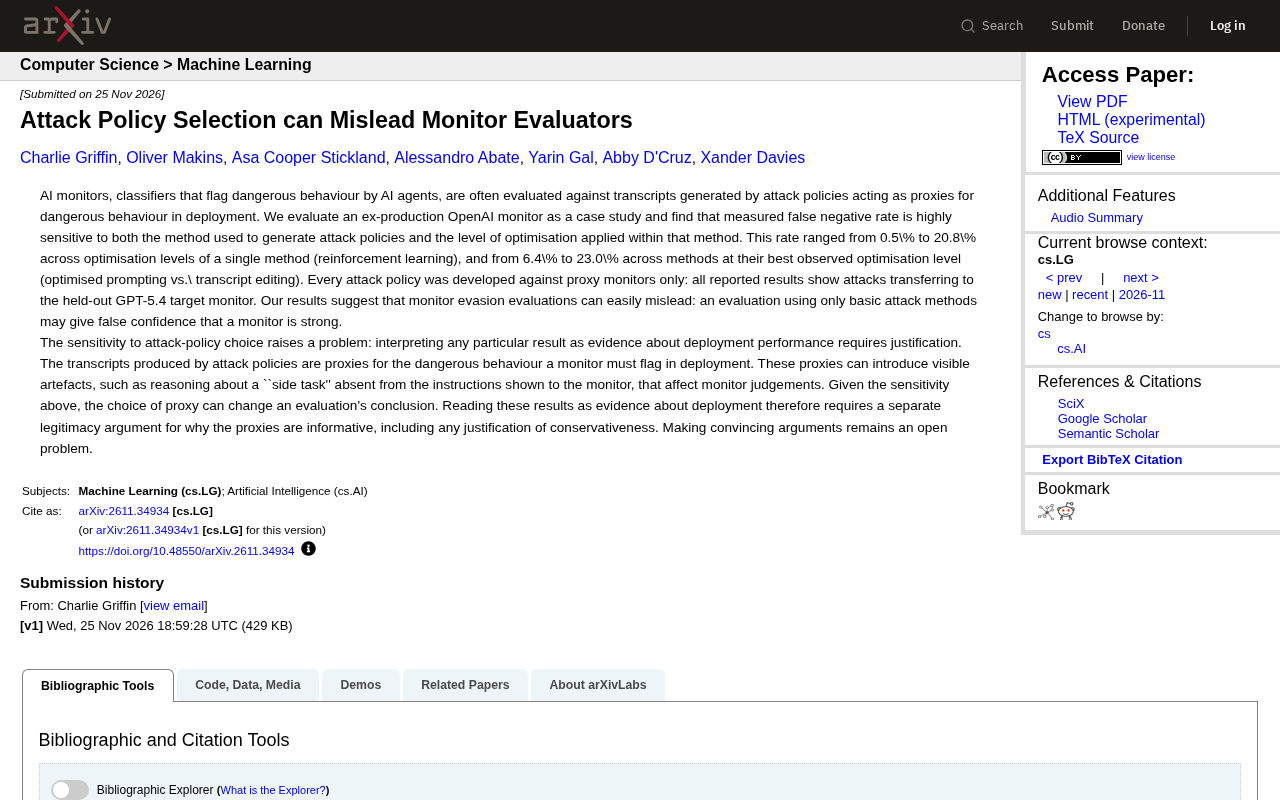
How Attack Policy Selection Can Mislead AI Monitor Evaluations
AI monitor evaluations are highly sensitive to attack policy choice; false negative rates vary widely across methods and optimization levels, and basic attacks may overestimate monitor strength and mislead deployment decisions.

Vibe Coding for Absolute Beginners: Full-Stack AI Agent Development in Practice
A beginner's guide to Vibe Coding: what it is, why workflow orchestration isn't AI development, and how full-chain AI agent development, multi-platform builds, and AI-driven operations enable one-person companies.

Surge of Ask HN Posts on Hacker News Raises Community Concerns
A "Tell HN: Lots of Ask HNs again" post appears on Hacker News, with users discussing how the rise of Ask HN question posts affects the platform's content structure, community governance, and ranking mechanisms.