@ai-sdk/xai@5.0.1 Released: A Dependency-Focused Patch Update
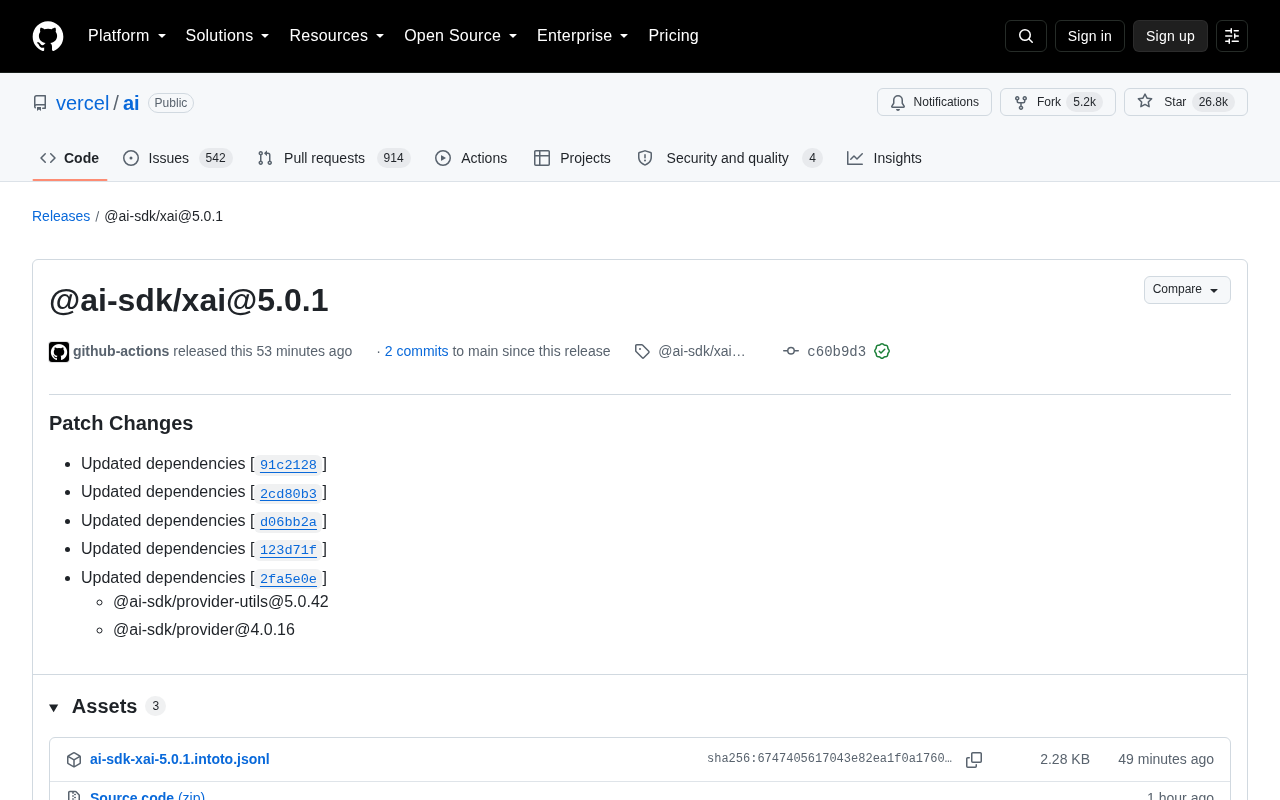
Vercel AI SDK releases @ai-sdk/xai@5.0.1 as a routine dependency-alignment patch with no functional changes.
@ai-sdk/xai@5.0.1 is a patch update to the Vercel AI SDK's provider package for xAI (Grok) models, containing no new features or breaking changes. The update bumps dependencies to `@ai-sdk/provider@4.0.16` and `@ai-sdk/provider-utils@5.0.42` — a typical cascading version-alignment release in a monorepo. Developers using this provider in production can safely upgrade, though reviewing the core package changelogs for any behavioral changes is recommended.
Vercel's AI SDK project has released @ai-sdk/xai@5.0.1, a patch version primarily focused on dependency upgrades with no functional changes of its own.
Release Overview
This version was automatically published via GitHub Actions at commit hash c60b9d3, and has been verified with GitHub's official GPG key. As a patch release in the 5.0.x series, it follows Semantic Versioning (SemVer) conventions at the patch level — meaning no breaking changes and no new public APIs.
Based on the release notes, this update is essentially a routine maintenance iteration to sync upstream dependency versions. For developers already using the AI SDK to integrate xAI (the Grok model family), patch releases like this are generally safe to adopt without hesitation.
Key Changes
This release contains only Patch Changes, all centered around dependency updates across several upstream commits:
- Updated dependency
@ai-sdk/provider-utils@5.0.42 - Updated dependency
@ai-sdk/provider@4.0.16
The dependency changes reference multiple commit records (e.g., 91c2128, 2cd80b3, d06bb2a, 123d71f, 2fa5e0e). This means the xai provider package update is primarily driven by keeping pace with the evolution of the AI SDK core's provider abstraction layer and utility library, maintaining overall consistency across the ecosystem.
What This Means for Developers
@ai-sdk/xai is the official provider in the Vercel AI SDK ecosystem for integrating xAI models. The AI SDK uses a unified provider abstraction design, allowing developers to call models from different vendors — including OpenAI, Anthropic, Google, and xAI — through a nearly identical interface.
When core packages like @ai-sdk/provider and @ai-sdk/provider-utils are updated, individual provider packages also need to publish patches to align their dependency versions. This kind of cascading release is standard practice in monorepo projects, ensuring that type definitions, interface contracts, and utility functions remain consistent across packages without version mismatches.
For production projects, it's recommended to review the changelogs of the associated core packages before upgrading, to confirm whether those lower-level updates involve any behavioral changes. Even as a patch release, changes in upstream provider and provider-utils can sometimes affect actual call behavior.
What is a Monorepo? A monorepo (monolithic repository) is a development approach where multiple related packages or sub-projects are managed together in a single code repository. The Vercel AI SDK uses this structure, housing
@ai-sdk/provider,@ai-sdk/provider-utils, and various vendor provider packages (such as@ai-sdk/xaiand@ai-sdk/openai) all within the same repository. The benefit is that cross-package changes can be committed atomically, with tools like Changesets automatically coordinating version releases across packages. However, when a shared foundational package is updated, all packages that depend on it need to publish new versions — even if those packages have no code changes of their own. This is the origin of "cascading releases." If developers upgrade only one provider package without also upgrading the core dependencies, they may run into type incompatibilities or inconsistent runtime behavior.
Project Background
The Vercel AI SDK (repository vercel/ai) is one of the most popular AI application development toolkits available today, with approximately 26,800 stars and 5.2k forks on GitHub. It provides a unified abstraction layer for building AI-powered applications, covering capabilities like text generation, streaming responses, and tool calling, with strong support for frontend frameworks such as React and Next.js.
The continued maintenance of the xAI provider reflects the AI SDK's commitment to broad multi-model ecosystem coverage. As large model capabilities evolve rapidly across vendors, frequent minor version updates to provider packages have become the norm.
xAI is an AI company founded by Elon Musk in 2023, with Grok as its flagship model series. The Grok models are distinguished by their access to real-time data from X (formerly Twitter), giving them an edge in information timeliness. xAI offers an OpenAI-compatible API format, which keeps integration costs relatively low. @ai-sdk/xai builds on this foundation by providing an encapsulation that conforms to the Vercel AI SDK's unified abstraction standard — allowing developers to use Grok models with the same coding style as they would use for OpenAI or Anthropic, without worrying about the underlying HTTP call details.
Related articles
Automattic Executives Signed Reciprocal Severance Agreements During Mullenweg's Brief Ouster
Automattic's CFO and General Counsel signed reciprocal severance agreements during Matt Mullenweg's brief ouster, covering one year's salary and accelerated equity vesting, raising corporate governance concerns.
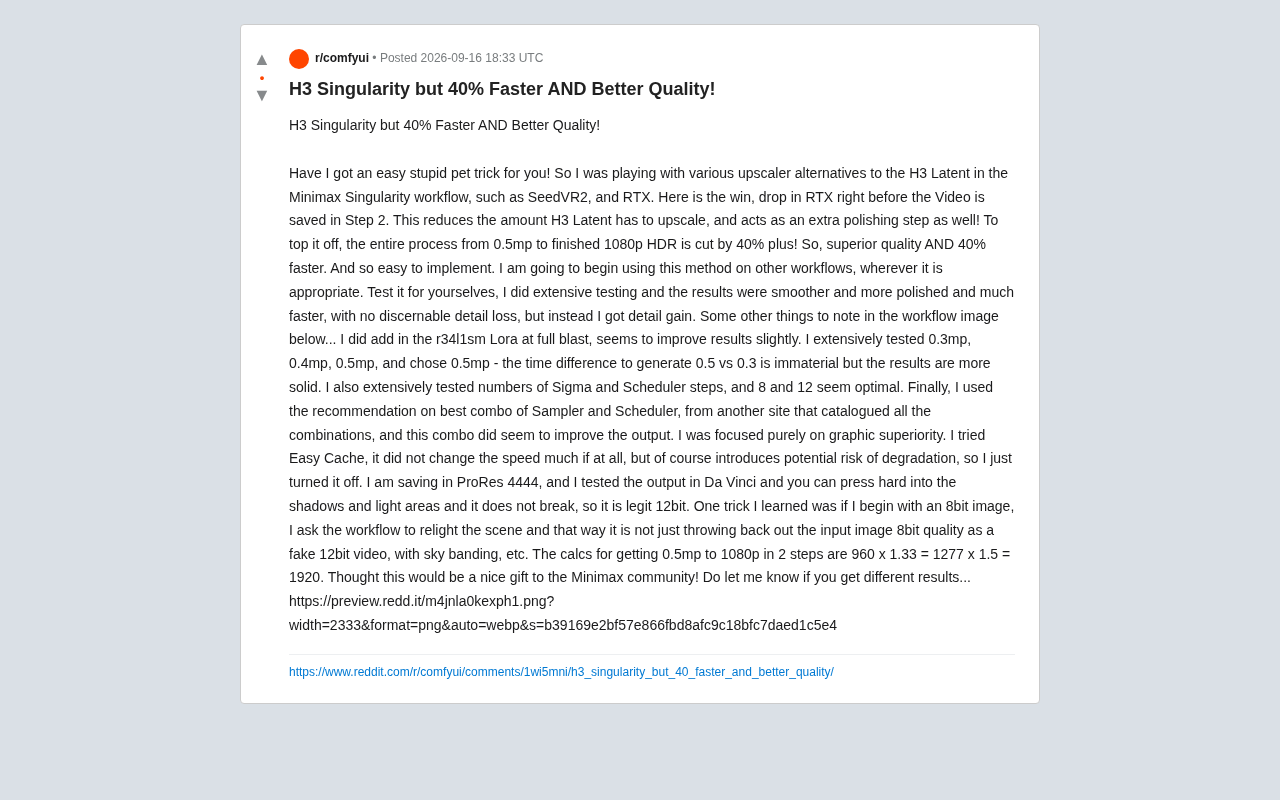
H3 Singularity Optimization: 40% Speed Boost With Better Image Quality
A Reddit user's Minimax Singularity workflow tip: insert an RTX upsampler before H3 Latent for 40%+ speed gains and better quality. Covers parameters, 12-bit output, and more.
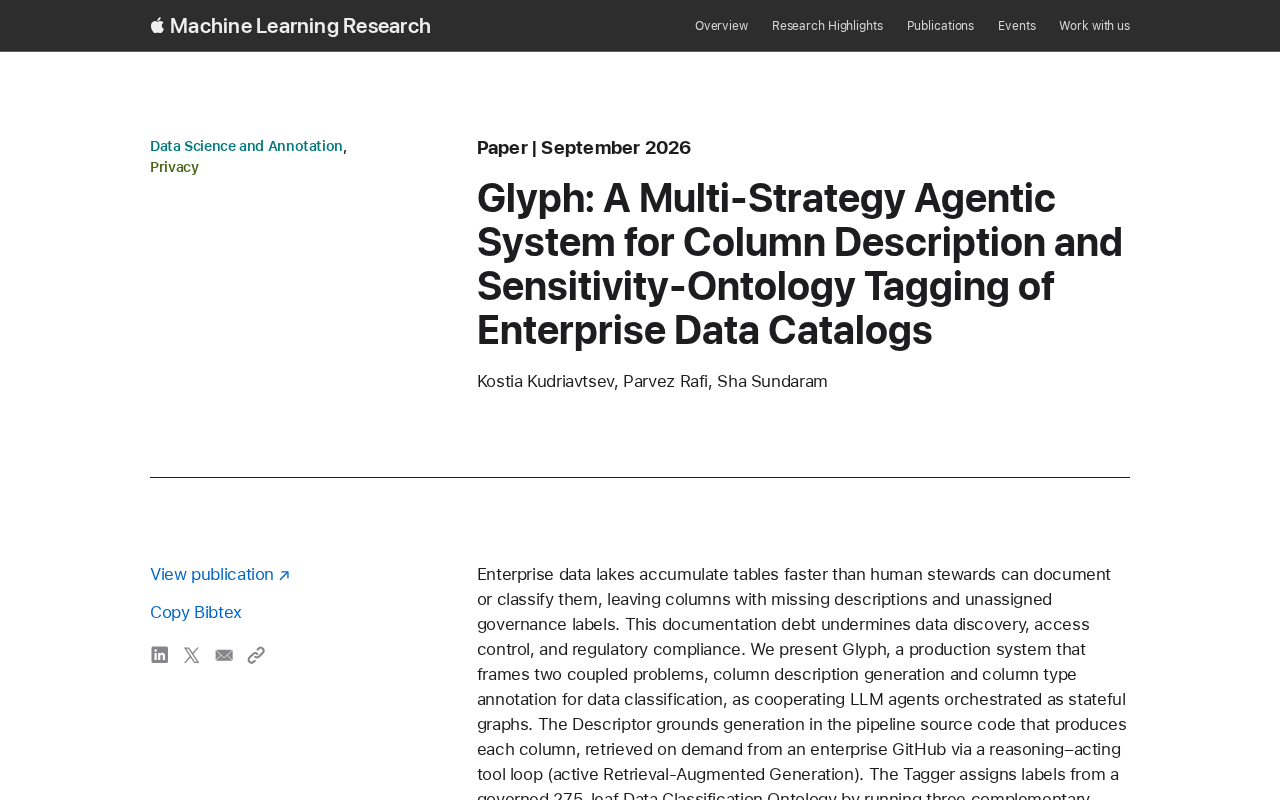
Glyph: A Multi-Strategy Agent System for Automated Enterprise Data Catalog Annotation
Glyph is a multi-strategy LLM agent system for enterprise data catalogs that automates column description generation and sensitivity ontology tagging, grounding outputs in pipeline source code to improve accuracy.