@ai-sdk/xai 5.0.2 Released: A Guide to the Vercel AI SDK Dependency Update
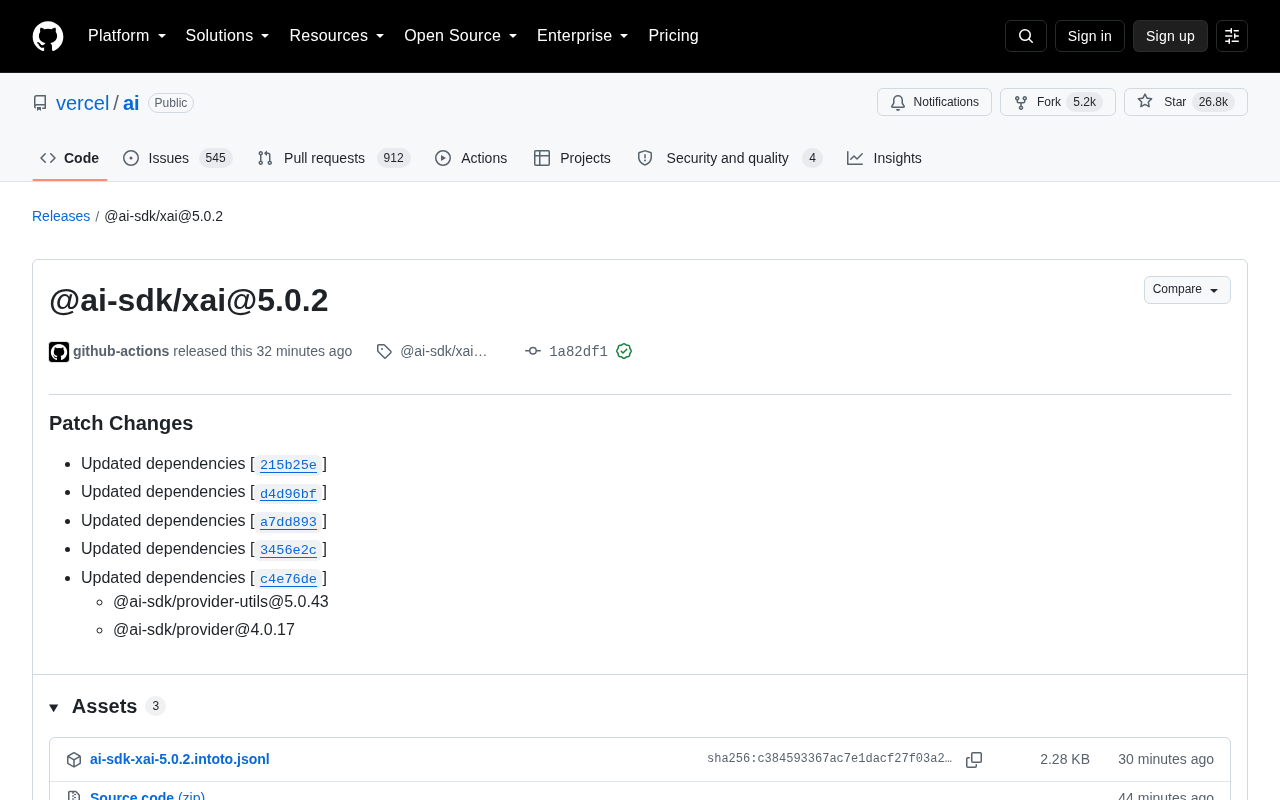
Vercel AI SDK's xAI adapter releases patch version 5.0.2, syncing core dependencies for compatibility.
`@ai-sdk/xai@5.0.2` is a maintenance-focused patch update that syncs two foundational packages: `@ai-sdk/provider@4.0.17` and `@ai-sdk/provider-utils@5.0.43`. Because Vercel AI SDK uses a monorepo with tightly coupled versioning, upstream package updates require downstream provider modules to follow suit or risk type errors and runtime issues. No new features are introduced, making this a low-risk upgrade — but one that helps maintain dependency chain consistency and incorporates potential performance and security improvements. The release is GPG-signed for supply chain integrity.
The xAI provider module in the Vercel AI SDK ecosystem has received a patch-level update: @ai-sdk/xai@5.0.2 is now officially released. This is a maintenance-focused release centered on dependency updates. While the changes are minimal, developers using this SDK to integrate xAI (Grok model series) should understand what's happening under the hood.
What's in This Update
According to the GitHub Releases page, @ai-sdk/xai@5.0.2 falls under Patch Changes — meaning the primary work was syncing underlying dependency packages rather than introducing new features or fixing user-facing bugs.
Specifically, this release updates two key dependencies:
@ai-sdk/provider-utils@5.0.43@ai-sdk/provider@4.0.17
These two packages form the infrastructure layer of the entire AI SDK. provider defines the unified model provider interface specification, while provider-utils supplies a range of common utility functions. As a concrete provider implementation, the xAI module must stay compatible with these foundational packages as they evolve. The release notes list several upstream commits (such as 215b25e, d4d96bf, a7dd893, etc.) that triggered the dependency updates — a classic example of a cascading version bump.
Why Patch Updates Still Matter
Under Semantic Versioning (SemVer), an increment to the patch version (the third digit) typically indicates backward-compatible fixes. For production projects, keeping up with patch updates has several practical implications.
Dependency chain consistency is critical. When provider and provider-utils are updated, if the xAI module isn't synchronized, version mismatches can cause type errors or runtime exceptions. This kind of issue is especially common in monorepo-structured SDKs — which is exactly the unified version management strategy Vercel's AI SDK uses, where sub-package versions are tightly coupled.
Additionally, updates to foundational utility packages often include performance optimizations, edge case handling, or security-related adjustments. Even when there are no visible behavioral changes at the application layer, keeping dependencies current remains a good practice for reducing potential risk.
What is a Monorepo? A monorepo (single repository) is an architectural pattern where multiple related packages or projects are managed together in one codebase. The Vercel AI SDK uses this structure to centrally manage dozens of sub-packages — including
@ai-sdk/openai,@ai-sdk/xai,@ai-sdk/provider, and more — using tools like Changesets to coordinate versioned releases. The advantage is that cross-package changes can be completed in a single PR, with version dependencies clearly traceable. However, this also means that when a foundational package (like@ai-sdk/provider) publishes a new version, upstream packages that depend on it (like@ai-sdk/xai) must publish a corresponding update — otherwise, end users may encounter peer dependency warnings or type inference errors during installation. Understanding this mechanism helps developers quickly pinpoint the root cause when dependency conflicts arise.
About Vercel AI SDK and xAI Integration
Vercel AI SDK is one of the most popular TypeScript libraries for building AI applications today, with over 26,000 stars and 5,200 forks on GitHub and an active community. It provides a unified abstraction layer that lets developers call different vendors' large language models through a consistent API.
@ai-sdk/xai is the official adapter for integrating xAI's Grok model series. With it, developers can easily invoke xAI's text generation, streaming output, and other capabilities without worrying about the underlying HTTP request details. The benefit of this modular design is that when one provider's implementation is updated, other provider modules and the core application logic remain largely unaffected.
About xAI and Grok xAI is an AI company founded by Elon Musk in 2023, with its flagship model series named Grok. Grok models are notable for their access to real-time X (formerly Twitter) data and offer an API compatible with OpenAI's interface specification — making it relatively low-cost for existing ecosystem tools to integrate. As the official adapter,
@ai-sdk/xaiencapsulates authentication, request construction, streaming response parsing, and other details. Developers only need to configure an API key to call Grok models through Vercel AI SDK's unifiedgenerateText,streamText, and other interfaces — with roughly the same effort required to switch to any other provider. This demonstrates the value of the SDK's abstraction layer.
How Developers Should Respond
For projects already using this module, it's recommended to review the full changelog before upgrading to confirm overall dependency tree compatibility. Since this is a pure patch update, the upgrade risk is low and can be completed with standard package manager commands:
npm install @ai-sdk/xai@5.0.2
# or
pnpm add @ai-sdk/xai@5.0.2
What is GPG Signature Verification? GPG (GNU Privacy Guard) signature verification is an important part of open-source software supply chain security. Publishers use a private key to sign release artifacts, and anyone can use the corresponding public key to verify that the signature is valid — confirming the version was genuinely released by an authorized party and not tampered with by a man-in-the-middle. GitHub's "verified commit" badge is based on this mechanism: when a commit or tag carries a valid GPG signature, the platform displays a green "Verified" badge in the UI. For SDK packages depended on by a large number of projects, signature verification effectively guards against supply chain attacks — where a malicious actor injects harmful code into downstream projects by publishing a counterfeit version.
After upgrading, it's recommended to run your existing test suite to confirm that type checking and core call paths work correctly. If your project also uses other provider modules from the AI SDK, it's best to upgrade them to matching versions at the same time to avoid dependency fragmentation.
It's worth noting that this release was signed with a verified GitHub signature (GPG key ID: B5690EEEBB952194), ensuring the trustworthiness of the release artifacts — a fundamental safeguard for open-source supply chain security.
Summary
@ai-sdk/xai@5.0.2 is a low-risk, maintenance-oriented version update, with its core purpose being to keep pace with the dependency iterations of @ai-sdk/provider and @ai-sdk/provider-utils. While no new features were added, for teams looking to maintain healthy dependencies and ensure stable xAI integrations, staying current with these kinds of patch updates remains a recommended engineering practice.
Related articles
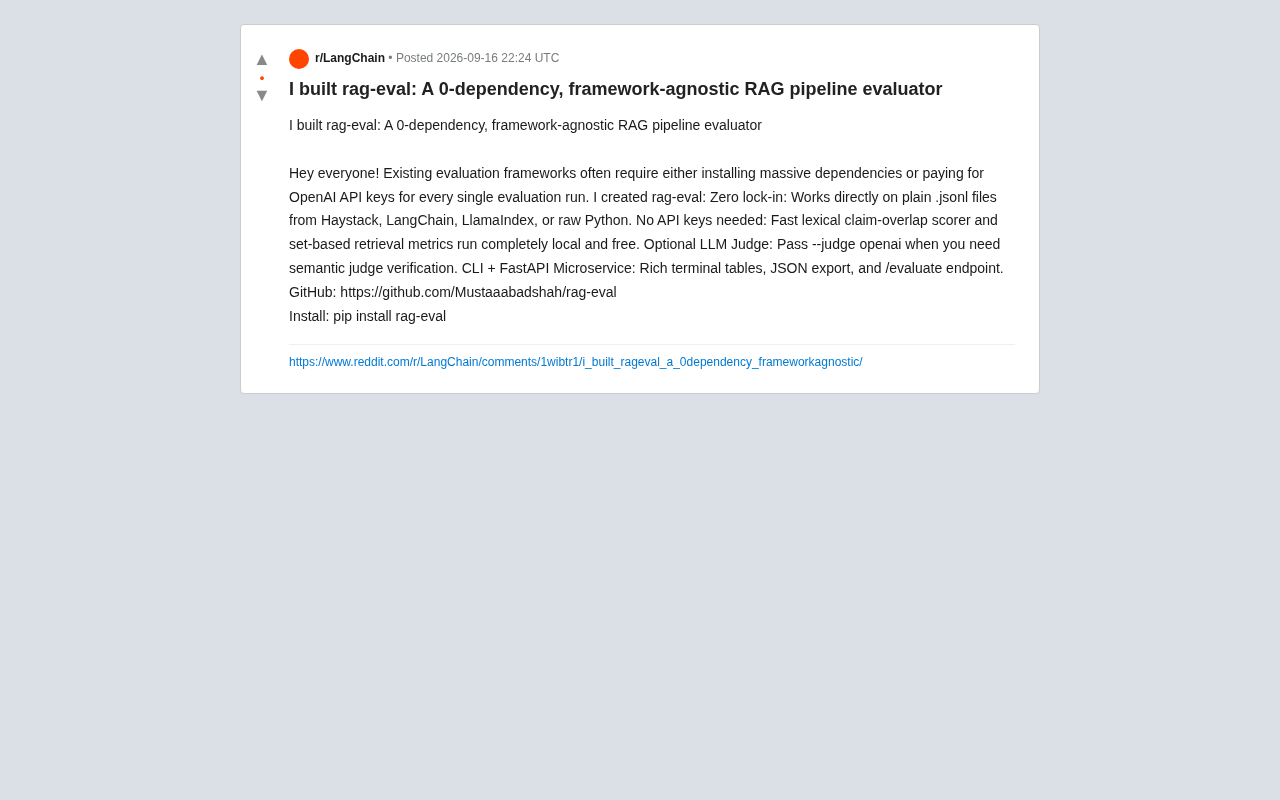
rag-eval: A Zero-Dependency, No-API-Key RAG Evaluation Tool
rag-eval is a zero-dependency, framework-agnostic open-source RAG pipeline evaluation tool. It supports free local lexical and retrieval metrics with no API keys required, and offers optional LLM Judge for semantic validation. Compatible with Haystack, LangChain, and LlamaIndex.
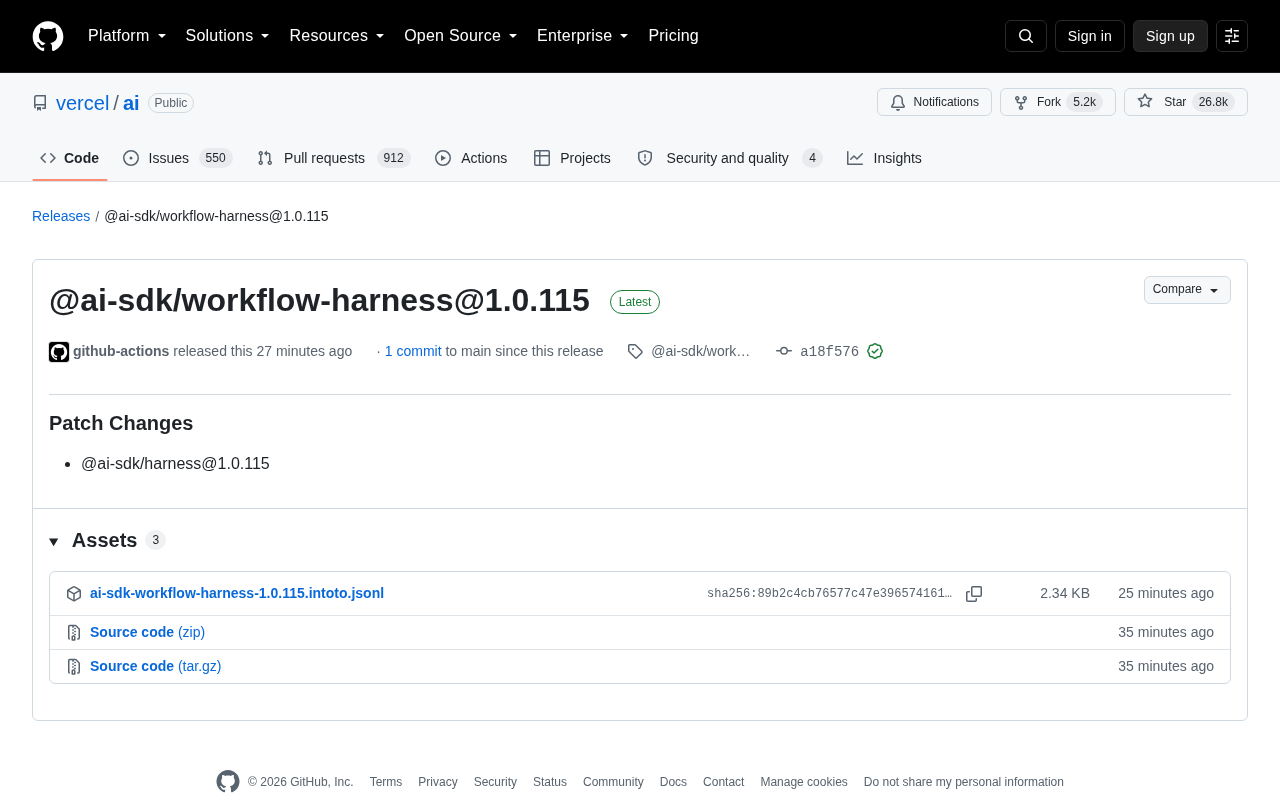
Vercel AI SDK Releases workflow-harness 1.0.115 Patch Update
Vercel AI SDK releases @ai-sdk/workflow-harness 1.0.115 patch update, syncing the @ai-sdk/harness dependency. Learn about the update, release mechanism, and what it means for developers.
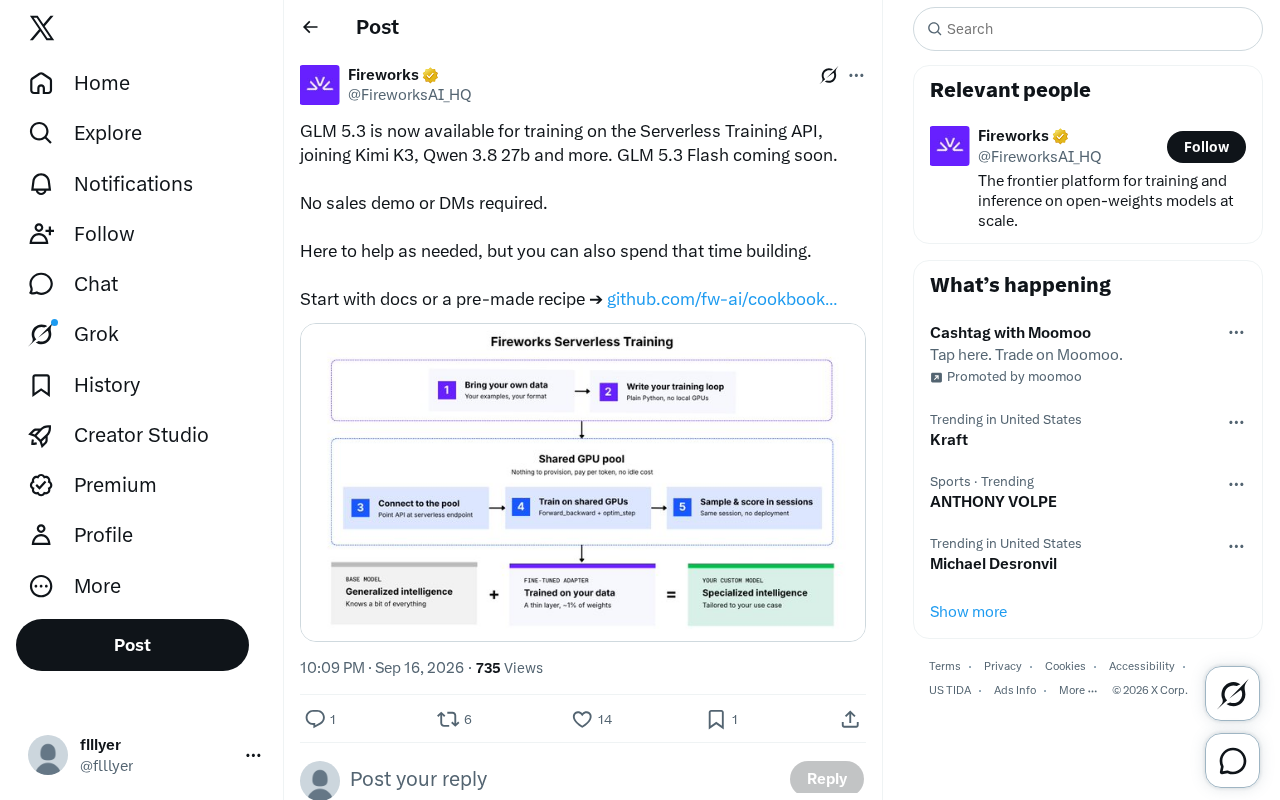
GLM 5.3 Now Available on Serverless Training API — No Sales Process Required
GLM 5.3 is now available on Serverless Training API alongside Kimi K3 and Qwen 3.8 27b. No sales process needed — start fine-tuning directly via docs or pre-made recipes.