@ai-sdk/xai 5.0.3 Released: A Deep Dive into This Dependency-Update Patch
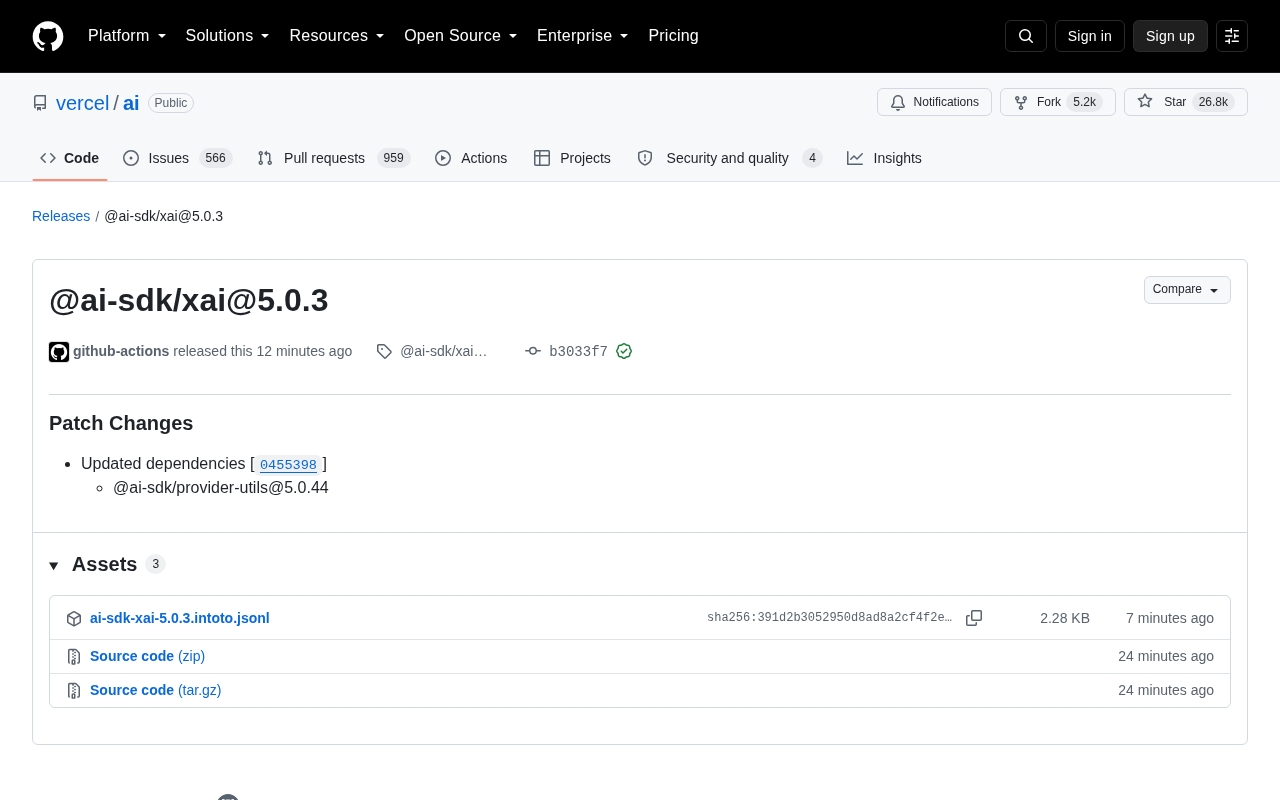
Vercel AI SDK releases xAI Provider patch 5.0.3, syncing the core provider-utils dependency.
`@ai-sdk/xai@5.0.3` is a maintenance patch release for Vercel AI SDK's xAI (Grok) provider package, with the sole change being an upgrade of the internal `@ai-sdk/provider-utils` dependency to `5.0.44`. No features were changed or broken — developers can upgrade without modifying existing code. The release was automated via GitHub Actions with GPG signature verification for supply chain security, reflecting the Vercel AI SDK team's commitment to dependency alignment and release discipline in a Monorepo architecture.
Vercel's widely followed open-source project, AI SDK, recently released @ai-sdk/xai@5.0.3. This is a patch-level update centered around syncing an internal dependency upgrade. For developers integrating xAI (Grok models) into their applications, the change is small — but understanding what's behind it is still worthwhile.
What's in This Release
According to the official GitHub release notes, @ai-sdk/xai@5.0.3 is a Patch Change, with the core modification being an upgrade to the @ai-sdk/provider-utils@5.0.44 dependency. Updates like this typically don't involve any breaking changes at the feature level — they're meant to keep the underlying utility library in sync, fix potential issues, or pull in improvements from upstream dependencies.
This release was published via an automated GitHub Actions workflow and signed with a verified GPG signature (key ID: B5690EEEBB952194). This signing mechanism ensures the published package is trustworthy and guards against supply chain attacks — a standard practice for mature open-source projects.
About AI SDK and the xAI Provider
Vercel's AI SDK is one of the most popular tools for building AI-powered applications in the TypeScript/JavaScript ecosystem, with over 26.8k stars and 5.2k forks on GitHub — a testament to its strong community adoption. The SDK provides a unified abstraction layer that lets developers seamlessly switch between different large model providers.
@ai-sdk/xai is the dedicated provider package for integrating with xAI (Elon Musk's AI company, known for the Grok series of models). By installing this package, developers can call xAI's model capabilities within their applications without worrying about the low-level differences in the underlying API.
The core design philosophy of Vercel AI SDK is the Provider Pattern: top-level APIs like generateText, streamText, and generateObject decouple model calls from vendor-specific implementations. Each provider package (e.g., @ai-sdk/openai, @ai-sdk/anthropic, @ai-sdk/xai) is responsible for translating the unified interface into the native API request format for the corresponding vendor, while also handling authentication, error mapping, and streaming response differences. @ai-sdk/provider-utils is the shared underlying utility library used by all provider packages, providing common capabilities such as HTTP request wrapping, stream parsing, and error normalization. This architecture means that when developers switch model providers, they theoretically only need to replace the provider initialization code — the business logic layer remains untouched.
What a Patch Update Means for Developers
In projects following Semantic Versioning (SemVer), a patch increment like 5.0.3 signals that the update is fully backward-compatible. Developers can typically upgrade without modifying any existing code — simply run npm install @ai-sdk/xai@latest or update your lock file with confidence.
The significance of dependency-sync updates like this lies in AI SDK's modular Monorepo architecture. Since provider-utils is a shared foundational library used by multiple providers, any update to it triggers version releases across all dependent provider packages. This ensures that all internal dependency versions within the SDK ecosystem stay aligned, preventing compatibility issues caused by version mismatches.
In a Monorepo architecture, version releases are typically managed by tools like Changesets. When @ai-sdk/provider-utils publishes a new version, all provider packages that depend on it will have corresponding patch version numbers generated in the same release pipeline, with GitHub Actions automatically handling the full build, packaging, and npm publishing workflow. This coordinated release mechanism ensures the entire SDK ecosystem maintains internal dependency consistency at the same point in time, avoiding the "dependency hell" that can arise when developers manually mix packages of different versions. For developers managing multi-package projects with npm workspaces or pnpm, a single npm update is all it takes to sync the entire dependency chain to the latest compatible versions.
Summary
@ai-sdk/xai@5.0.3 is a typical maintenance release — it introduces no new features, but reflects the Vercel AI SDK team's ongoing commitment to dependency health and release standards. For projects that rely on this package, it's recommended to stay up to date to benefit from any upstream fixes. If you're looking for functional improvements, keep an eye on minor or major version changelogs.
Related articles
Three Stages of AI LLM Testing: A Practical Guide from Core Concepts to API Calls
A learning path for testers covering LLM fundamentals, prompt engineering, OpenAI SDK calls, API Key vs Token differences, streaming output, RAG, and Agent systems.
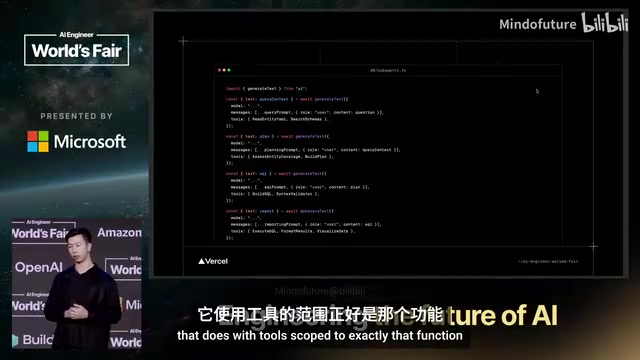
Vercel's Chief of Software Looks Back: The Evolution of Agent Building — From Multi-Agent Chains to File System Agents
Vercel's Chief of Software Andrew recaps the agent-building journey at AI Engineer: from giant prompts to multi-agent chains, monolithic memory, file system agents, and the open-source EVE framework.
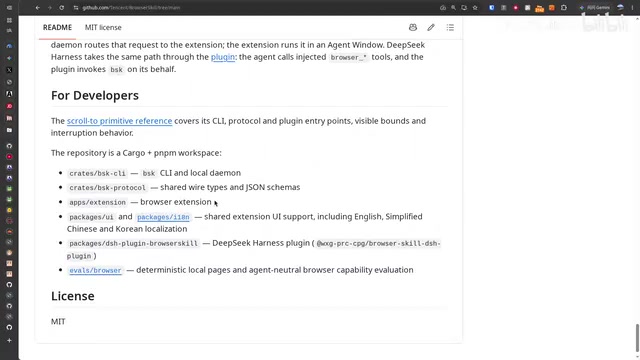
Tencent's Open-Source BSK in Action: Letting AI Take Over Your Already-Logged-In Browser
Tencent's open-source BSK (Browser Skill Kit) lets AI take over your real, logged-in Chrome via WebSocket. We break down the architecture, setup, and three key pitfalls from real-world testing.