@ai-sdk/xai 5.0.42 Patch Release: Behind the Dependency Update
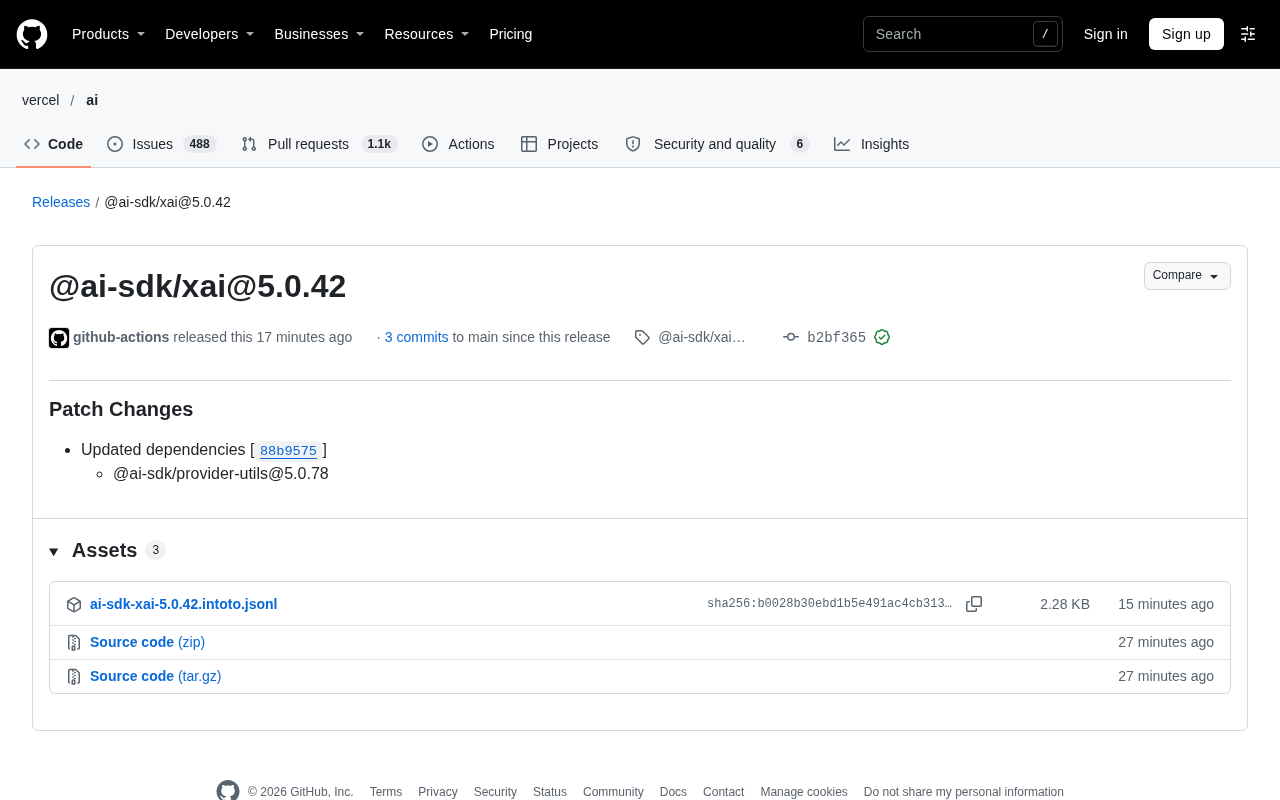
@ai-sdk/xai releases patch 5.0.42, only upgrading the shared dependency provider-utils to 5.0.78.
In the Vercel AI SDK ecosystem, `@ai-sdk/xai` automatically released patch version 5.0.42 on November 10, containing 3 commits in total. The only change is upgrading the shared foundation package `@ai-sdk/provider-utils` to 5.0.78, a typical dependency-driven patch. Since provider-utils carries common logic such as request construction, error handling, and streaming parsing, such upgrades, though small, may bring in fixes for parameter validation and retry strategies. The article recommends direct upgrades but notes the need to ensure provider-utils version consistency to avoid type conflicts from multiple copies in the dependency tree, and points out that this release cadence reflects the collaboration model under the AI SDK's layered architecture, with centralized maintenance of shared utility packages and lightweight provider packages.
A Seemingly Minor Patch Update
The AI SDK ecosystem under Vercel has seen a new version iteration. According to the GitHub repository release records, @ai-sdk/xai@5.0.42 was automatically published by github-actions on November 10, containing a total of 3 commits, and was pushed to the main branch as a patch version.
From the perspective of version number semantics, 5.0.42 is a patch-level update, which usually means bug fixes or dependency adjustments rather than functional changes. The "Patch Changes" section in the release notes confirms this.
Semantic Versioning (SemVer) is a versioning convention widely adopted in the npm ecosystem, with the format major.minor.patch. A major version change indicates incompatible API modifications, a minor version increase indicates backward-compatible feature additions, and a patch number increase represents only backward-compatible bug fixes. Therefore, 5.0.42 is a patch update and, by convention, should not contain breaking changes, which is the basis for judging it as "low risk" in this article. Developers often use ^5.0.42 in package.json to accept updates within the 5.x series, or ~5.0.42 to accept only patch-level updates.
Interpreting the Patch Content: Propagation Through the Dependency Chain
The Only Change: provider-utils Upgrade
The core information of this release is very clear: @ai-sdk/xai updated its dependency @ai-sdk/provider-utils, with the version locked at 5.0.78. The release record marks the commit reference (88b9575) for this dependency update, indicating that the change was driven by the upstream package.
This pattern is quite common in the npm ecosystem. As the adaptation layer of the AI SDK for xAI models (such as the Grok series), @ai-sdk/xai has the core responsibility of translating the unified SDK interface into the call format of the xAI API. A large amount of common logic—request construction, error handling, streaming response parsing—has been extracted into the shared foundation package provider-utils. Therefore, when the foundation package releases a fix, downstream adapter packages often only need to synchronize the version number.
npm dependency tree and duplicate copies: npm uses a flattened installation strategy. When multiple packages depend on different versions of the same foundation package, the package manager may keep multiple copies in node_modules. If the version of @ai-sdk/provider-utils directly depended on by the project is inconsistent with the 5.0.78 locked internally by @ai-sdk/xai, two sets of type definitions will appear, causing TypeScript type mismatches or runtime instance checks to fail. You can use npm ls @ai-sdk/provider-utils to check for duplicates, and use the overrides (npm) or resolutions (Yarn) field to force version unification.
Why Dependency Updates Deserve Attention
For end developers, a pure dependency upgrade may seem insignificant, but it actually plays a role in risk isolation. Changes in provider-utils may involve parameter validation, retry strategies, or edge cases in response parsing, and these details directly affect the stability of SDK calls to the xAI interface. Locking the new version means these upstream fixes will enter user projects along with the patch package.
From the perspective of ecosystem coordination, this also reflects that the AI SDK uses a layered architecture to manage adaptation work for multiple model providers: each provider package remains lightweight, shared logic is maintained centrally, thereby reducing the cost of synchronized releases across multiple packages.
The layered architecture of the AI SDK: Vercel AI SDK adopts a three-layer structure consisting of the core package (ai) + provider adapter packages (@ai-sdk/openai, @ai-sdk/xai, etc.) + shared utility package (@ai-sdk/provider-utils). Adapter packages are only responsible for mapping the unified interface to the request and response formats of each vendor's API, while common capabilities such as streaming parsing, error classification, and retry logic are centralized in provider-utils. This design greatly reduces the cost of adding a new model provider and also allows fixes at the foundation layer to automatically benefit all adapter packages through dependency upgrades.
Practical Impact on Developers
Upgrade Recommendations
For developers already using @ai-sdk/xai in their projects, this patch is a low-risk update. According to semantic versioning conventions, patch versions should not introduce breaking changes, so it can be upgraded directly. If the project declares the dependency through a caret range (^5.0.x), the package manager will automatically include this version.
It should be noted that this change synchronizes @ai-sdk/provider-utils@5.0.78. If there are multiple places in the project that directly depend on provider-utils, version consistency should be confirmed to avoid type mismatch issues caused by multiple copies in the same dependency tree.
Insights from the Release Cadence
The version number 5.0.42 itself reveals that this package has undergone relatively frequent iterations. In the rapidly evolving AI toolchain, provider adapter layers need to continuously keep up with changes in upstream APIs and fixes in the shared utility library. For users, paying attention to the release cadence of such patches helps judge the activity and maintenance quality of the ecosystem.
Conclusion
@ai-sdk/xai@5.0.42 is a typical dependency-driven patch release: small in scope and low in risk, but of practical significance for maintaining stable integration between the SDK and xAI services. It reminds us that in an AI toolchain composed of many granular packages, the continuous maintenance of the foundational utility package is also part of overall reliability.
One-line Summary
@ai-sdk/xai releases patch 5.0.42, only upgrading the shared dependency provider-utils to 5.0.78.
Paragraph Summary
In the Vercel AI SDK ecosystem, @ai-sdk/xai automatically released patch version 5.0.42 on November 10, containing 3 commits in total. The only change in this release is upgrading the shared foundation package @ai-sdk/provider-utils to 5.0.78, which is a typical dependency-driven patch. Since provider-utils carries common logic such as request construction, error handling, and streaming parsing, such upgrades, though small, may bring in fixes for parameter validation and retry strategies. The article recommends that developers upgrade directly, but they should pay attention to version consistency of provider-utils in the project to avoid type conflicts caused by multiple copies in the dependency tree, and points out that this release cadence reflects the collaboration model under the AI SDK's layered architecture, with centralized maintenance of shared utility packages and lightweight provider packages.
Related articles
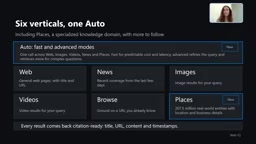
Microsoft WebIQ: Verifiable Real-Time Web Grounding for AI Agents
Microsoft WebIQ gives AI Agents real-time, citable web grounding across web, news, images, videos, and Places—164ms P95 latency, 50% fewer tokens, Scopes source control, and MCP integration.
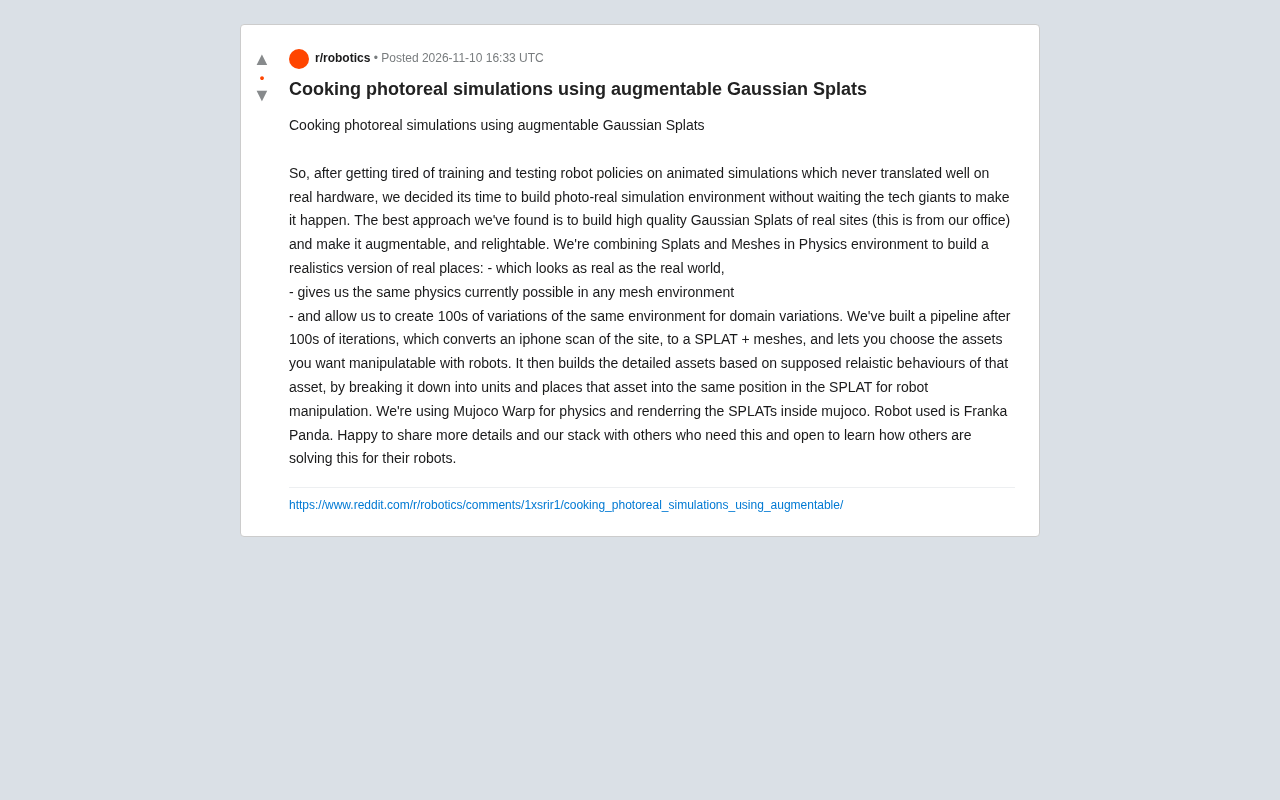
Augmentable Gaussian Splatting: Building Photorealistic Simulation Environments for Robot Training
Team combines Gaussian Splatting with meshes to build photorealistic robot simulation environments, integrating MuJoCo Warp physics and Franka Panda for augmentable, relightable real-site simulation.
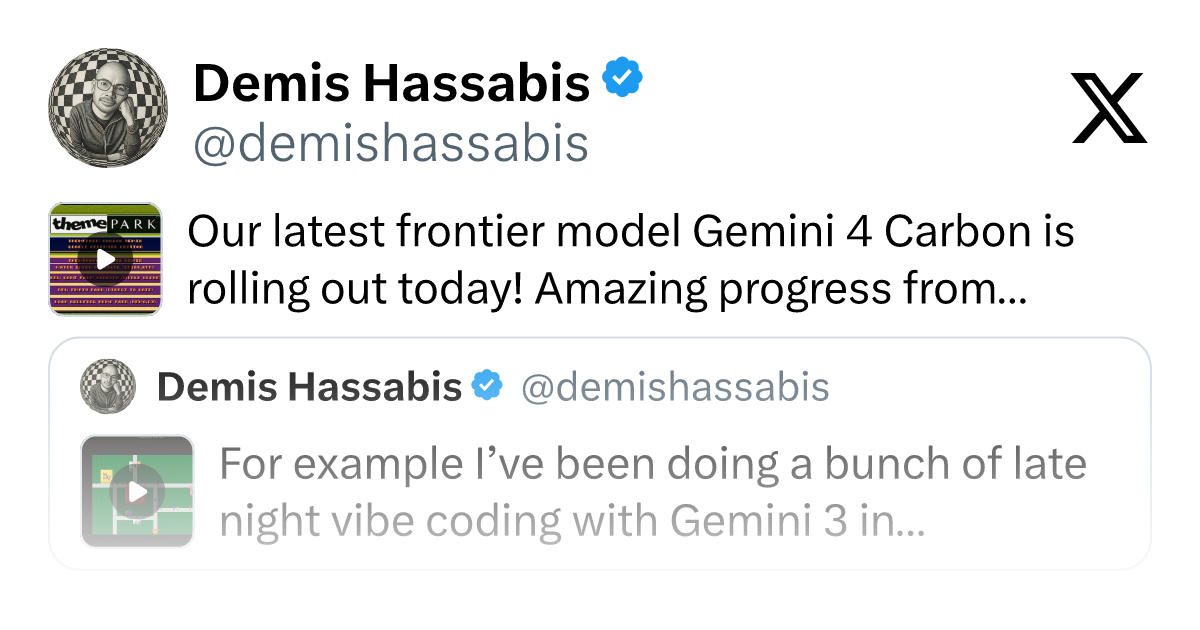
Gemini 4 Carbon Released: The Leap from Gemini 3 to Gemini 4 in Under a Year
Google releases Gemini 4 Carbon, less than a year after Gemini 3. In the official demo, Carbon reverse-engineered the Theme Park binary, added a new DeepMind-themed ride, and ported it to the web in one shot.