@ai-sdk/zai 3.0.51 Patch Analysis: The Right Way to Integrate Z.ai with AI SDK
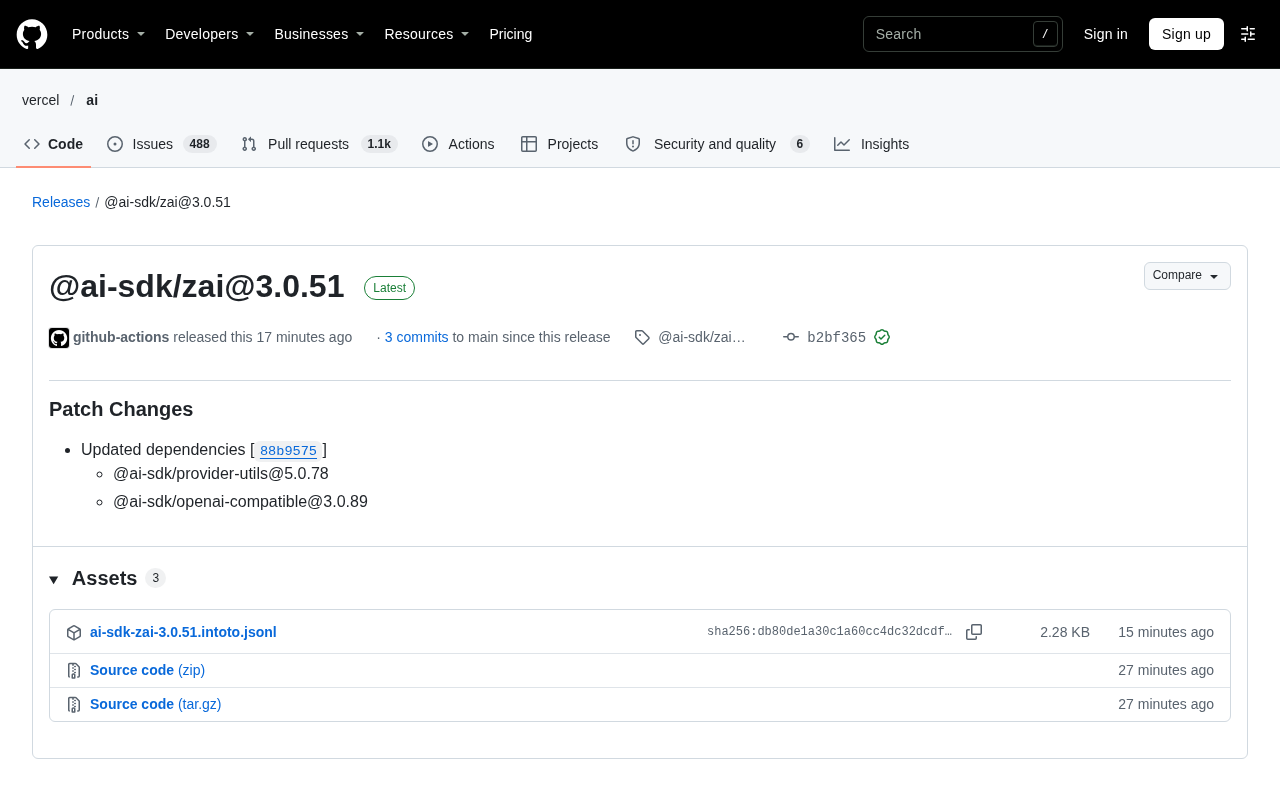
@ai-sdk/zai 3.0.51 patch updates two dependencies, reflecting the AI SDK ecosystem synchronization strategy.
This article analyzes the @ai-sdk/zai@3.0.51 patch release. It only updates references to two dependencies, @ai-sdk/provider-utils@5.0.78 and @ai-sdk/openai-compatible@3.0.89, but the author notes that such dependency updates affect whether the provider can handshake properly. The article explains provider-utils' foundational role as the shared utility library for all providers, and the compatibility layer's impact on request construction and tool calling. Before upgrading, developers should check the final resolved provider-utils version in their project dependency tree to avoid inconsistent streaming behavior caused by multi-version coexistence. The release was automated by github-actions, demonstrating the engineering practice of maintaining AI SDK ecosystem consistency through automated releases.
A Small but Critical Patch Release
@ai-sdk/zai@3.0.51 is a patch release, pushed to the main branch by the github-actions bot on November 10, comprising 3 commits. Judging from the changelog, its changes are quite restrained: it only updates references to two dependencies, @ai-sdk/provider-utils@5.0.78 and @ai-sdk/openai-compatible@3.0.89.
For readers unfamiliar with the Vercel AI SDK ecosystem, some background is needed first: @ai-sdk/zai is the officially maintained provider package in the AI SDK, used to let developers call model services provided by Z.ai (Zhipu-family model interfaces) through a unified interface. It does not implement inference itself; instead, it plays the role of an "adapter layer," translating the AI SDK's general calling conventions into request formats that the target service can understand.
So a patch release updating dependencies may seem unremarkable, but in reality it concerns whether the entire provider can handshake properly.
Why a Dependency Update Deserves Its Own Article
provider-utils Is the Foundation of the Entire Ecosystem
@ai-sdk/provider-utils is the shared utility library for all providers in the AI SDK, offering foundational capabilities such as request construction, response parsing, streaming data handling, and error mapping. Any provider package using the AI SDK—whether OpenAI, Anthropic, or Z.ai—depends on it.
When provider-utils releases a new version, each provider needs to follow up in sync; otherwise, two types of problems may arise. One is interface mismatch caused by version drift: for example, if the utility library internally adjusts the structure of streaming chunks while an older provider still parses according to the old format, the result manifests as interrupted stream output or misaligned content. The other is behavioral differences: for instance, if the error code mapping rules for certain edge cases change, an older provider might treat retryable errors as non-retryable.
This time, @ai-sdk/zai bumps provider-utils to 5.0.78, essentially aligning with the ecosystem baseline.
openai-compatible Determines Compatibility Layer Behavior
The name @ai-sdk/openai-compatible itself explains its positioning: it provides unified adaptation for services that expose OpenAI-compatible interfaces. Z.ai's interface design follows the OpenAI-compatible specification, so its provider package is built on top of this compatibility layer.
Version changes in the compatibility layer often affect the actual shape of requests, such as message role mapping, field assembly for tool calling, and handling of finish_reason in streaming responses. Delegating these details to the compatibility layer for unified maintenance, with provider packages only declaring dependency versions, is a fairly mainstream approach in the current AI SDK ecosystem.
From this perspective, the value of @ai-sdk/zai@3.0.51 lies not in "what features it adds" but in "catching the right train."
Semantic Versioning (SemVer) is the convention behind this release's version number 3.0.51: a major version change (3) indicates incompatible API modifications, a minor version change (0) indicates backward-compatible feature additions, and a patch version change (51) indicates backward-compatible bug fixes. Patch versions theoretically do not introduce breaking changes, so developers often assume by default that "patch upgrades need no testing." However, in an ecosystem with multiple layers of dependencies like the AI SDK, a patch version only guarantees that this package's external API remains unchanged; internal fixes in other packages in the dependency chain may still indirectly change runtime behavior. Therefore, this intuition needs to be judged together with the actual resolution results of the dependency tree.
Tool calling is the capability in the AI SDK that lets models request calls to external functions during a conversation, typically involving tools definitions, the tool_calls field, tool role messages, and other multi-turn interactions. Different service providers have subtle differences in field naming and message role mapping for tool calling, and the openai-compatible compatibility layer is responsible for unifying these differences into the OpenAI specification. When the compatibility layer version updates, the field assembly logic for tool calling may be adjusted accordingly; if the provider package does not sync its dependency version, issues such as mismatched tool-calling request formats and parameter parsing failures may occur. Therefore, this chain deserves focused regression testing after an upgrade.
Practical Impact on Developers
Should You Upgrade?
The criterion is straightforward: if your project locks in a relatively new @ai-sdk/provider-utils but still uses an older @ai-sdk/zai, then upgrading is worthwhile. Conversely, if the provider-utils version in your dependency tree is already quite old, upgrading the zai package alone is of little significance, because it merely points its internal reference to a newer version, and the actual effect still depends on the dependency version ultimately resolved in your project.
For teams using pnpm or npm, it is recommended to run pnpm why @ai-sdk/provider-utils or npm ls @ai-sdk/provider-utils after upgrading to confirm that multiple versions of the same package do not coexist in the dependency tree. Multi-version coexistence is a relatively hidden pitfall in the AI SDK ecosystem; a typical symptom is inconsistent streaming output behavior, while error messages do not point to the root cause.
Dependency tree multi-version coexistence refers to different versions of the same package appearing simultaneously in a project's node_modules, usually caused by different upstream dependencies each declaring incompatible version ranges. Under pnpm's strict node_modules structure, multi-version coexistence is more common. For the AI SDK ecosystem, multi-version coexistence of provider-utils means different provider packages may use different versions of streaming handling and error mapping logic, leading to inconsistent behavior that is difficult to locate. Using pnpm why or npm ls allows you to see which dependencies introduce a package and its final resolved version, and is the standard means of troubleshooting such issues.
Version Number Semantics Are Worth Noting
3.0.51 is a change in the patch position; according to semantic versioning conventions, it does not promise to include breaking changes. This is consistent with the "Patch Changes" label in the changelog. But note that dependency updates themselves do not change this package's external API, yet they may indirectly change runtime behavior—internal fixes in provider-utils propagate through the dependency chain to callers. So the intuition that "patch versions need no testing" does not hold here; at minimum, you should regression-test the two main paths: streaming conversation and tool calling.
AI SDK Engineering Practices as Seen from the Release Process
This release was completed by github-actions, with commits carrying GitHub verified signatures, and the changelog retains a commit hash reference (88b9575) for the dependency update. This process shows that the AI SDK team adopts an automated release strategy for provider packages: dependency changes trigger version number increments, and the bot is responsible for tagging, writing the changelog, and pushing the release.
The benefit of this approach is a stable rhythm and traceability. For users, seeing a provider patch version released by github-actions can be understood as "ecosystem synchronization" rather than "feature release," making expectation management more accurate.
Another detail is that the changelog writes the dependency update as Updated dependencies [88b9575] and lists the specific package names and version numbers. This style is common in monorepo scenarios and makes it convenient for developers to trace back to the specific changes via the commit hash. For teams troubleshooting production issues, such references are far more useful than a sentence saying "upgrade dependencies."
Conclusion
@ai-sdk/zai@3.0.51 is not a version that needs extensive coverage, but it is a suitable sample for understanding how the AI SDK provider system operates: provider packages are thin, dependency layers are thick, and ecosystem consistency is maintained through automated releases. For developers, when seeing such a patch version, the correct reaction is neither to upgrade immediately nor to ignore it, but to check the final resolved version of provider-utils in your project, and then decide whether to follow up.
Related articles
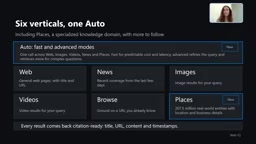
Microsoft WebIQ: Verifiable Real-Time Web Grounding for AI Agents
Microsoft WebIQ gives AI Agents real-time, citable web grounding across web, news, images, videos, and Places—164ms P95 latency, 50% fewer tokens, Scopes source control, and MCP integration.
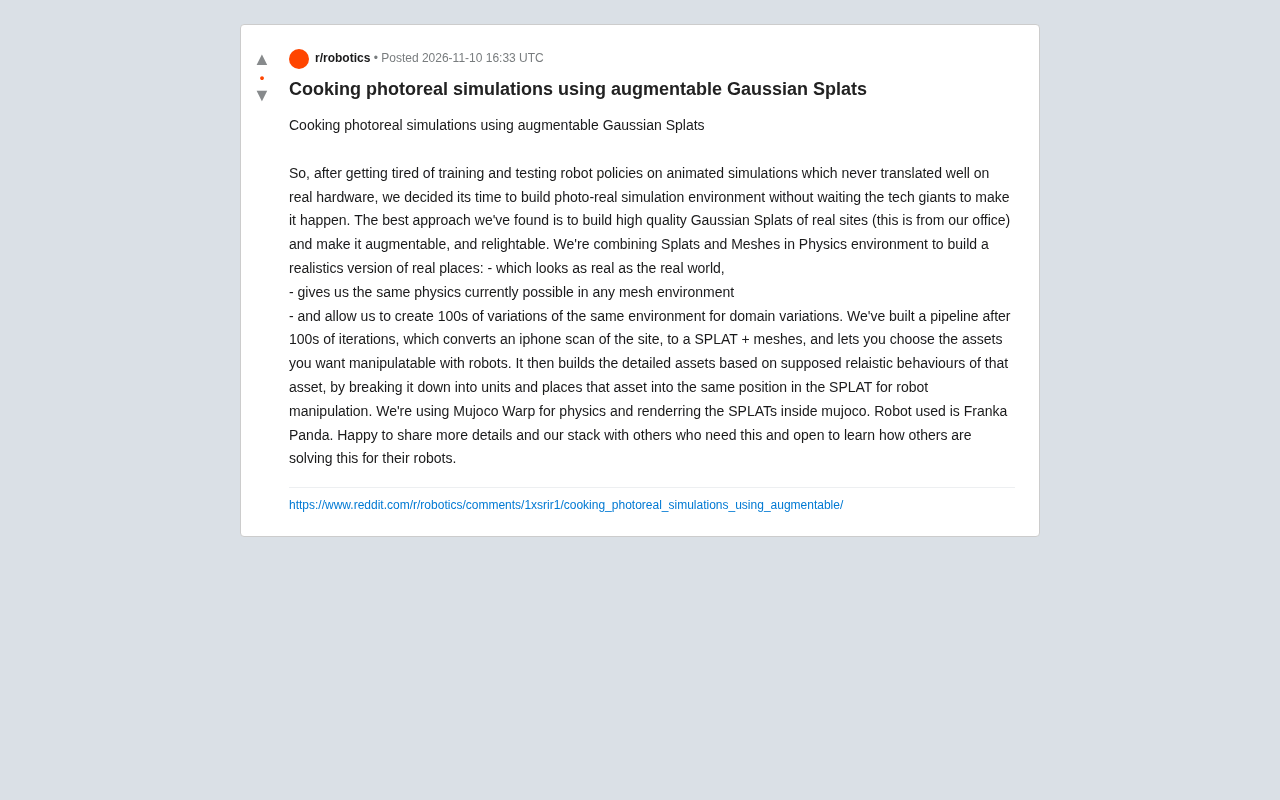
Augmentable Gaussian Splatting: Building Photorealistic Simulation Environments for Robot Training
Team combines Gaussian Splatting with meshes to build photorealistic robot simulation environments, integrating MuJoCo Warp physics and Franka Panda for augmentable, relightable real-site simulation.
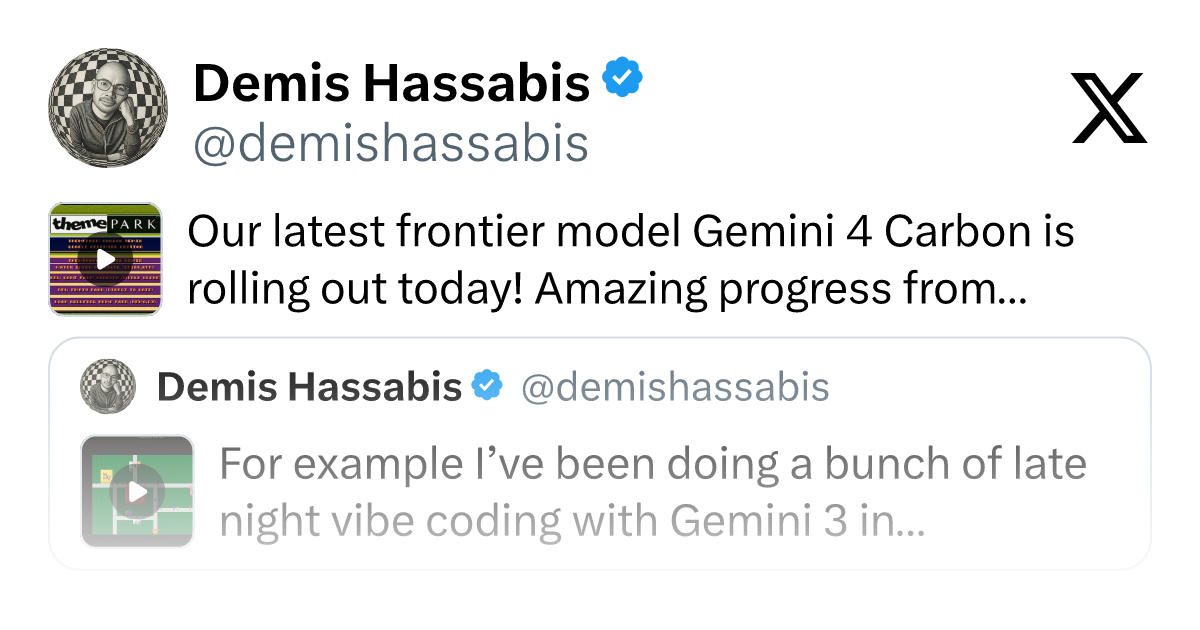
Gemini 4 Carbon Released: The Leap from Gemini 3 to Gemini 4 in Under a Year
Google releases Gemini 4 Carbon, less than a year after Gemini 3. In the official demo, Carbon reverse-engineered the Theme Park binary, added a new DeepMind-themed ride, and ported it to the web in one shot.