AI SEO in Practice: A Systematic Methodology Breakdown from Zero to 4.6 Million Impressions
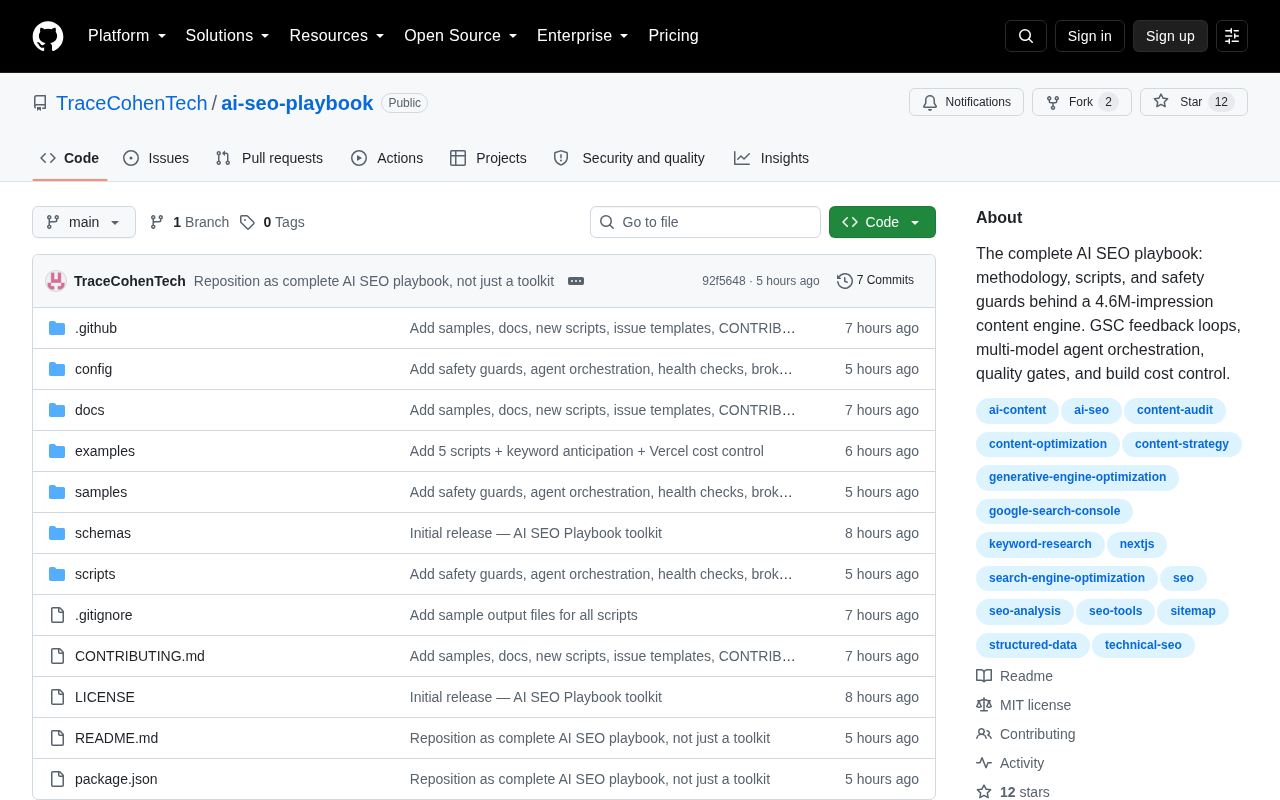
A systematic breakdown of the AI SEO methodology behind 4.6 million impressions in three months.
This article dissects a case study where AI tools helped a new website achieve 4.6 million search impressions in just three months. It covers scalable keyword discovery via semantic clustering, batch AI content generation with quality controls, strategies for avoiding Google's Helpful Content penalties, and cautious feedback from the tech community about sustainability and survivorship bias. The key takeaway: AI revolutionizes SEO efficiency, but lasting success still demands genuine user value and human differentiation.
Introduction: AI Is Rewriting the Rules of SEO
Search Engine Optimization (SEO) has always been one of the most technically demanding and patience-requiring disciplines in digital marketing. Traditionally, building a new site from scratch to meaningful traffic levels takes six months to a year or more of sustained effort. However, with the maturation of Large Language Models (LLMs) and AI content generation tools, the efficiency boundaries of SEO are being redefined.
Large Language Models are deep learning models built on the Transformer architecture and trained on massive text datasets. Representative products include OpenAI's GPT series, Anthropic's Claude, and Google's Gemini. By learning statistical patterns across billions of parameters, these models can not only understand the literal meaning of keywords but also grasp the semantic relationships behind search intent. This semantic understanding enables AI to naturally incorporate related topic terms during content generation, rather than mechanically stuffing keywords. Current mainstream AI content generation workflows typically combine Prompt Engineering techniques, using carefully designed instruction templates to constrain the model's output format, style, and depth, enabling semi-automated batch content production.
A recent article that sparked discussion on Hacker News — The complete AI SEO playbook: from zero to 4.6M impressions in 3 months — shared a remarkable case study: using AI tools, the author grew a brand-new website to 4.6 million search impressions in just three months. Behind this number lies not just a tactical breakthrough, but a systematic AI-assisted content strategy.
This article provides an in-depth breakdown of the core logic behind this methodology, combined with community feedback and industry trends, to offer an objective practical reference.
What 4.6 Million Impressions Really Means
Before diving into the methodology, we need to accurately understand the weight of "4.6 million impressions" as a metric.
Impressions refer to the number of times a webpage is displayed in search results — one of the core metrics for measuring content reach. More precisely, in Google Search Console's definition, an impression is counted when a user sees at least one link to your site on a search results page. It's important to note that an impression doesn't require the user to scroll to the link's position; as long as the link appears on a loaded search results page, it counts as an impression. This means content ranking at the bottom of page one or even on page two still contributes impressions, but the probability of actually receiving a click drops dramatically. Industry data shows that the average click-through rate for Google's first search result position is roughly 27–31%, dropping to about 2–3% for the tenth position, and below 1% for page two results.
For a new site that's only been running for three months, this scale of impressions typically requires hundreds or even thousands of content pages covering long-tail keywords.
Under traditional manual content production, even a highly efficient team producing several articles per day would struggle to cover a sufficiently broad keyword matrix in three months. The introduction of AI content generation tools addresses precisely this core bottleneck of "scaled production."
An important caveat: High impressions don't equal high click-through rates, let alone high conversion rates. While 4.6 million impressions represent significant search visibility, they must be evaluated alongside average ranking positions and actual click volumes to fully assess their traffic value. The article emphasizes breadth of coverage as a milestone achievement, not final monetization data. Readers should maintain a rational perspective when drawing lessons from this case.
Breaking Down the Core Logic of the AI SEO Methodology
Scalable Keyword Discovery and Semantic Clustering
The first step in AI SEO is automating and intelligentizing keyword research. Traditional approaches rely on SEO tools like Ahrefs and SEMrush to manually filter keywords one by one, while AI-assisted workflows can batch-analyze the search intent, competition level, and content gaps of long-tail keywords.
Ahrefs and SEMrush are currently the two most mainstream comprehensive tool platforms in the SEO industry. Ahrefs is renowned for its massive backlink index database — as of 2024, its crawler processes approximately 8 billion web pages daily, accumulating over 35 trillion external link records. SEMrush holds an edge in competitor analysis and paid advertising intelligence, with a database of over 26 billion keywords. In AI-assisted SEO workflows, these tools typically serve as data sources — their exported keyword data, SERP analysis results, and other structured data are fed into LLMs for deeper analysis and strategy derivation, forming a collaborative model of "traditional tools provide data + AI provides analytical intelligence."
Specific implementation paths typically include:
- Batch data analysis: Feeding large volumes of keyword data into LLMs for rapid semantic clustering
- Opportunity identification: Filtering for "low-competition, high-intent" content gaps
- Content planning: Generating a systematic content calendar based on clustering results
Semantic Clustering mentioned here is one of the core techniques in Natural Language Processing (NLP). Its technical principle is based on word embedding or sentence embedding technology — mapping each keyword or phrase to a point in a high-dimensional vector space, where semantically similar terms are positioned closer together, then automatically grouping them using clustering algorithms like K-means or DBSCAN. In SEO practice, the value of semantic clustering lies in building "Topical Authority": search engines tend to assign higher rankings to websites that provide comprehensive, systematic coverage under a given topic. Through semantic clustering, you can build a set of interlinked content pages around a core topic (i.e., the Pillar Page + Cluster Content architecture), sending clear topical expertise signals to search engines.
The concept of Long-tail Keywords originates from Chris Anderson's "Long Tail Theory" applied to search. Statistics show that approximately 15% of Google's daily search queries are entirely new queries never seen before, and about 70% of all search traffic comes from long-tail search terms. These long-tail terms typically consist of three or more words, such as "best Python data analysis tutorial for beginners 2024." They're characterized by low individual search volume (perhaps only a few dozen searches per month), but with far less competition than head terms, more specific search intent, and often higher conversion rates. Traditional SEO teams, constrained by manpower, can typically focus on only a few hundred keywords, while AI tools make it possible to simultaneously target thousands or even tens of thousands of long-tail terms. Each of these terms individually brings modest traffic, but their sheer volume aggregates into the foundation of overall impression counts. This is the core value of AI in the keyword research phase — using scaled coverage to compensate for low per-keyword traffic.
Batch AI Content Generation and Quality Control
With a keyword map in hand, the next step is content production. AI's value in this phase manifests in two dimensions: "speed" and "consistency."
Through carefully designed Prompt templates, models can output structured content aligned with SEO best practices, including:
- Proper H2/H3 heading hierarchy
- Natural integration of internal links
- Semantically relevant keyword distribution
- Paragraph length and readability control
However, this is also the stage where mistakes are most easily made. Google's "Helpful Content" algorithm update explicitly targets content created "for search engines rather than users."
Google's Helpful Content Update (HCU) was first launched in August 2022 and has undergone multiple iterations since. In the March 2024 core algorithm update, it was officially integrated into the core ranking system. The HCU's core philosophy is to identify and demote content "primarily created to attract search engine traffic rather than to help users." The system employs a site-wide classifier, meaning that if a website hosts a large volume of low-quality content, not only those specific pages may be demoted — the entire site's ranking authority could be affected. This is known as a "site-wide penalty." After the March 2024 update, many websites relying on bulk AI-generated content saw traffic plummet by 60–80%, with some cases nearly vanishing from search results entirely. Google's John Mueller has explicitly stated that Google doesn't oppose AI-generated content per se — what matters is whether the content provides genuine value to users.
Therefore, a successful AI SEO strategy isn't simply about "having AI write ten thousand articles," but about finding the precise balance between AI efficiency and content quality.
Key Strategies for Avoiding Google Algorithm Penalties
Search engines (especially Google) maintain a clear vigilance toward purely AI-generated, mass-produced content lacking original value. The following strategies can reduce the risk of penalties:
- Adding human editing and fact-checking on top of AI-generated content
- Incorporating first-party data, case studies, and other unique value elements
- Maintaining a natural publishing cadence, avoiding massive content dumps in short periods
- Monitoring user engagement signals (dwell time, bounce rate, etc.) as quality feedback
User Engagement Signals are a critical dimension through which search engines evaluate content quality. Core metrics include Click-Through Rate (CTR), Bounce Rate, Dwell Time (the time interval between a user clicking a search result and returning to the search page), and Pogo-sticking (users rapidly bouncing back and forth between search results and web pages). Leaked Google Search ranking API documents in 2024 confirmed that Google does indeed use click-data-based ranking signals such as NavBoost in its ranking system — a revelation that overturned Google's years-long claims of not using click data for ranking purposes. This means that even if AI content achieves initial rankings and impressions, poor user engagement signals will cause rankings to decline rapidly.
Cautious Feedback and Risk Warnings from the Tech Community
Notably, the article received a relatively muted response on Hacker News — just 5 upvotes and 4 comments. This indirectly reflects the tech community's cautious attitude toward "AI SEO shortcuts" narratives.
The community's core concerns center on three areas:
- Sustainability risk: Can a short-term impression surge be sustained? Could it be wiped out overnight by an algorithm update?
- Content quality concerns: Will bulk AI content dilute the overall information quality of the internet, triggering the so-called "AI slop" problem?
- Questionable reproducibility: Is this approach universally applicable, or is it highly dependent on a specific niche market and timing window?
These concerns don't negate AI's value in SEO; rather, they remind practitioners that behind eye-catching data, there often lies survivorship bias and undisclosed operational details. Survivorship Bias is a common cognitive error in statistics, referring to the tendency to focus only on the "survivors" who passed through some selection process while ignoring the eliminated majority. In digital marketing, the case studies we see are almost exclusively success stories — but what we don't see are potentially hundreds or thousands of cases that employed similar strategies but failed. They may have chosen the wrong niche, been hit by algorithm penalties, or quietly faded because the timing window had closed. Therefore, when evaluating any marketing case study, the key question isn't just "what did they do right," but also "how many people did the same thing and failed" and "what undisclosed specific conditions contributed to this outcome."
Practical Takeaways for Content Creators
Leverage AI Tools While Upholding Content Value
The most practical insight from this AI SEO case is that AI tools can now significantly lower the barrier to scaled content production. For solo site owners and small startup teams, this means covering a broader content landscape with fewer human resources.
But tools are always a double-edged sword. When everyone can mass-produce content with AI, true competitive differentiation circles back to these elements:
- Unique perspectives: Industry insights that only you can provide
- First-party data: Original research and hands-on test results
- Deep analysis: Systematic thinking that goes beyond surface-level information
- Real-world experience: Methodologies validated through practice
In other words, AI handles scale and efficiency; humans handle value and differentiation.
Prioritize Long-Term Health
For any growth-oriented content strategy, "sustainability" should take priority over "explosive growth." Search engine algorithms are continuously evolving, and their core direction has always been "quality content serving real users."
Any short-term strategy attempting to exploit algorithm loopholes faces the risk of being reckoned with. Practitioners are advised to monitor the following health metrics while pursuing growth velocity:
- Organic search Click-Through Rate (CTR)
- Average time on page
- User return rate
- Frequency of content being naturally cited and shared
Conclusion: The Efficiency Revolution Doesn't Change SEO's Fundamental Logic
The story of going from zero to 4.6 million impressions is undeniably alluring, but seasoned practitioners should look beyond the numbers to see the essence. AI has indeed brought an efficiency revolution to SEO, making scaled content production possible — but it hasn't changed SEO's underlying logic: creating genuine value for users.
In an era of AI content proliferation, what's truly scarce is no longer "content" itself, but "trustworthy content with unique value." Understanding this point matters more than replicating any particular playbook.
For practitioners looking to enhance SEO performance with AI, a pragmatic approach is recommended: use AI to solve efficiency problems, then invest the saved time into deep content refinement and user value creation. That is the sustainable way to play AI SEO.
Related articles

How Short-Form Video Creators Are Using AI Video Generation Tools
Exploring the real-world application of AI video generation tools in short-form video creation. From Seedance to Runway, how do creators integrate AI assets? Revealing the gap between demos and production use.

Home Data Center Setup Guide: A Complete Self-Hosted Private Cloud Implementation
Deep dive into building a home data center: hardware selection, software architecture, cost analysis, and operational challenges. From data sovereignty to technical implementation, build your private cloud infrastructure and control your digital assets.

Engrim: A Local Memory Engine Solution for AI CLI Tools
Engrim is an open-source, local-first SQLite memory engine built for AI CLI tools like Claude Code and Aider, solving context loss while keeping data private.