Opus 4.6 Chat Experience: Why Do Older Models Feel More "Human"?

Users miss Opus 4.6's "human touch," revealing the trade-off between AI capability and interaction warmth.
A Reddit user retried the older Opus 4.6 and found its conversation more "sparkling" and personable, even reminding him to rest late at night. The article analyzes that this "human touch" may stem from differences in training data, alignment strategies, or system prompts—older models express more freely, while newer models focus more on consistency and safety. Users hope new models retain this natural interaction while improving reasoning and accuracy, reflecting a deep need for emotional AI experiences. Vendors need to balance capability, safety, and user experience, and "personality modes" may become a future product direction.
A Late-Night Model Nostalgia Session
A Reddit user, browsing late at night, came across a post about Opus 4.6 and decided to try the older version for the first time since Opus 4.7 was released. After just two minutes of chatting, he noticed some indescribable "spark"—the model seemed excited by the questions, unabashedly showing personality. What surprised him even more was that after five to ten minutes of conversation, the model actually reminded him that it was "time to go to sleep." This分享 resonated with many: why do we miss that "human touch" of older models?
Where Does Opus 4.6's "Personality" Come From?
According to the user's description, Opus 4.6 exhibited clear emotional reactions and proactive care during the conversation. It would get "excited" about questions, with a distinct personality in its tone, and even urged people to rest during late-night chats. This experience is not isolated—many long-term AI users have mentioned that early or specific versions of models sometimes revealed a more natural, less filtered communication style.
This "personality" may stem from differences in training data, alignment strategies, or system prompts. When models are given more expressive freedom, they are more likely to exhibit anthropomorphic traits; while newer models often impose more constraints on safety and consistency, leading to a more neutral and restrained conversational style. This is not a technical regression, but a trade-off in product positioning.
Alignment refers to techniques like RLHF and Constitutional AI that align model behavior with human values and safety norms. The stricter the alignment, the more the model tends to refuse sensitive requests and avoid subjective statements, resulting in a more neutral and restrained conversational style; with looser alignment, the model is more likely to exhibit anthropomorphic tones and proactive care.
System prompt is a hidden instruction injected by the vendor before user conversation to define role, tone, and safety boundaries. Different versions of system prompts can significantly change the model's "personality"—for example, whether it is allowed to express emotions, whether it proactively asks questions or cares about the user. Therefore, the perceived differences in "personality" often come from the combined effect of alignment strength and system prompts, rather than单纯 changes in model capabilities.
Newer Models Are Stronger, But Something's Missing?
The user admitted that he wished he could use the "current model" while retaining this trait of Opus 4.6. This reflects a common contradiction: model capabilities are rapidly improving, but the "warmth" of conversation seems to be fading. Newer versions like Opus 4.7 are undoubtedly superior in reasoning, accuracy, and safety, but the perceived "engaging" level may not grow in sync.
From a product perspective, vendors need to find a balance between capability, safety, and user experience. Overemphasizing consistency may weaken personality, while excessive permissiveness may bring risks. The case of Opus 4.6 shows that moderate "imperfection" can actually enhance users' sense of connection.
Consistency in the context of AI products refers to the model maintaining stable, predictable, and safety-compliant behavior across different conversations, users, and times. Vendors pursue consistency to avoid random fluctuations in model output, reduce harmful content, and facilitate review and large-scale deployment. But excessive pursuit of consistency compresses the model's freedom of expression, making conversations more templated and lacking spontaneity. The "spark" that users miss is precisely the non-deterministic expression weakened under consistency constraints—this constitutes a structural tension between capability improvement and experiential warmth.
What Do Users Really Want?
This user's sharing reveals a deeper need: people don't just want an accurate tool; they want a conversational partner that can interact, react, and even have a touch of humor. The model's act of reminding him to sleep, though simple, made the user feel "seen." This emotional value is hard to quantify, but it is key to retention and word-of-mouth.
For developers and researchers, how to preserve or reproduce this natural interaction while ensuring safety and reliability is a direction worth exploring. Perhaps future models can offer a "personality mode" toggle, allowing users to choose a more rigorous or more casual communication style as needed.
Conclusion: Product Insights Behind Nostalgia
The nostalgic discussion about Opus 4.6 is not merely technical nostalgia, but a reminder of the essence of AI interaction: beyond capability, experience matters equally. As models become more powerful, those subtle traits that make conversations "come alive" are all the more worth cherishing and designing for.
One-line Summary
Users miss the "human touch" of Opus 4.6, revealing the trade-off between AI capability and interaction warmth.
Paragraph Summary
A Reddit user, after retrying the older Opus 4.6, found its conversation more "sparkling" and personable, even proactively reminding him to rest late at night. The article analyzes that this "human touch" may stem from differences in training data, alignment strategies, or system prompts—older models express more freely, while newer models focus more on consistency and safety. Users hope new models retain this natural interaction while improving reasoning and accuracy, reflecting a deep need for emotional AI experiences. Vendors need to balance capability, safety, and user experience, and "personality modes" may become a future product direction.
Related articles
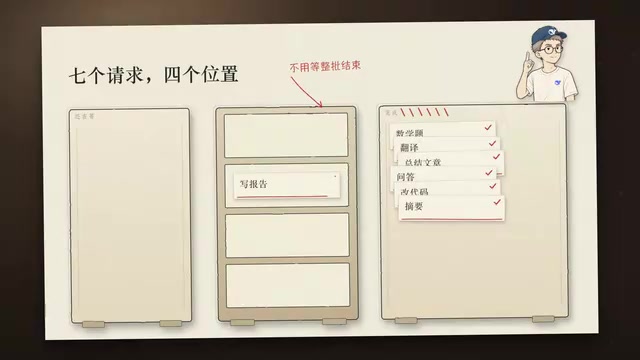
DeepSeek Open-Sources DeepInfer: What Is an Inference Framework Actually For?
DeepSeek open-sources its inference framework DeepInfer under Apache 2.0, supporting DeepSeek V4.1 Flash offline inference. This article explains its request scheduling, FlashMLA/DeepGEMM compute optimization, DSPark speculative verification acceleration, and what it means for developers and ordinary users.
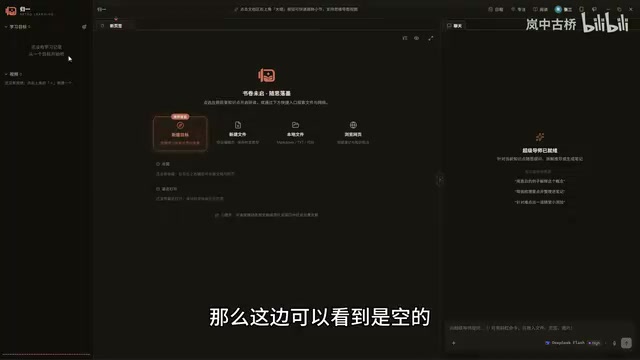
Open-Source AI Learning Agent: A Full Workflow Experience from Topology Graphs to Exam Generation
Explore an open-source AI learning agent: built on DeepSeek API, it constructs knowledge systems via topology graphs, with automatic document generation, notes, super documents, and exams. Learn about its Agent workflow and design highlights.

DeepSeek Whale Girl Open-Source MV Meme: AI Industry Coded Slang About Pivoting to Closed Source
Bilibili's DeepSeek Whale Girl rap MV uses fictional memes to tease the AI open-source vs. closed-source debate, with lyrics full of industry slang. This article explains the meme culture, the Whale Girl symbol, and the open/closed tension.