AI Supply Chain Security: What Canary Tokens Reveal
Canary tokens fill the gap in runtime abnormal access awareness in the AI supply chain with low-cost decoy probes.
Starting from a Hacker News discussion on AI supply chain security, the article argues that AI security should not focus only on model jailbreaks and prompt injection; whether the underlying components, models, and data pipelines are trustworthy is equally critical. Canary tokens embed decoys in sensitive assets such as model weights, training data, and API keys and respond to unauthorized access itself, filling the gap that traditional SCA and SBOM tools can only answer "what is depended on" but cannot sense "who is touching things they should not touch." The article also notes implementation constraints: probe coverage and maintenance costs grow with assets, and there are detection blind spots for underlying copying that bypasses logical paths, so they should be one layer in a multi-layered defense rather than the only means.
When discussing AI security, people tend to focus on model jailbreaks, prompt injection, or data leaks. But a Hacker News discussion titled "AI Supply Chain Security: What Canary Tokens Found" pulls attention back to a more fundamental question: Are the components, models, and data pipelines that AI systems depend on trustworthy in the first place?
Canary Tokens: An Underrated Detection Approach
Canary tokens are not a new concept. The core logic is simple: embed a "decoy" resource in the system that looks normal but can be sensed once it is accessed or triggered. Any reading, copying, or exfiltration of it leaves a trace.
When this idea is transferred to the AI supply chain, what it detects is no longer traditional intrusion paths, but whether AI-specific assets such as model weights, training data, API keys, and dependency packages are being accessed abnormally. Compared with log auditing, the advantage of canary tokens is that they do not rely on "known attack patterns" but respond to unauthorized access itself.
This is also where the value of this Hacker News discussion lies: it proposes a lightweight, verifiable supply chain monitoring method, rather than yet another broad AI security overview.
The classic forms of canary tokens include: a unique URL, a disguised AWS credential, a DNS name, or a document file. When an attacker or insider touches these decoys, the server immediately receives a trigger notification with metadata such as time, IP, and User-Agent. This mechanism is similar to honeypots, but more granular—honeypots usually simulate an entire system or service, while canary tokens are single-point probes embedded in real assets, with much lower deployment costs. In software engineering, a similar idea is also used to detect configuration file leaks or API key exposure: place a fake key in a code repository, and once someone uses it externally, it can be confirmed that a leak has occurred. The difference in AI scenarios is that the decoy objects become model weight files, training data shards, or access credentials for inference endpoints, with more trigger paths and more complex semantics.
The Risk Surface of the AI Supply Chain Is Larger Than Traditional Software
The risks of the traditional software supply chain are mainly concentrated in dependency packages and build processes. AI systems add several layers of new risk on top of this:
- Model artifacts: Weight files may be tampered with, replaced, or stolen, while model files themselves are large and difficult to audit byte by byte.
- Training and inference pipelines: Data preprocessing, fine-tuning, and deployment involve a large number of scripts and third-party tools, and contamination at any point may propagate to the final model.
- Credentials and access paths: API keys, cloud storage permissions, and access control for model hosting platforms form a channel for lateral movement.
The deployment of canary tokens in these locations is equivalent to adding an "alarm" to each sensitive asset. Its detection coverage depends on where the probes are placed, not on the attacker's techniques.
SBOM (Software Bill of Materials) and SCA (Software Composition Analysis) are core tools for traditional software supply chain governance. SBOM records all components contained in a software product and their versions, licenses, and dependencies in a structured list; SCA automatically scans code repositories, identifies third-party libraries with known vulnerabilities, and issues alerts. The common premise of both is that assets are static, enumerable, and versioned. The AI supply chain breaks these premises—model weights are large binary files, training data is a continuously flowing pipeline, and fine-tuning scripts and inference configurations often have no formal version inventory. Therefore, traditional tools can answer "which packages did I introduce," but have difficulty answering "who read a certain weight shard and when." The value of canary tokens falls precisely into this gap: they do not require a complete asset inventory to be established first, but instead respond immediately to abnormal access on sensitive paths, forming a complementary rather than substitutive relationship with SBOM/SCA.
What Can Be Seen from the Discussion
This Hacker News post did not receive much attention (9 points, no comments yet), but this precisely shows that the direction is still in an early discussion stage. The post title itself is a conclusive judgment: canary tokens did indeed "find" something, although the original material did not disclose the specific findings.
It can reasonably be inferred that the value of this type of detection method in the AI supply chain is not to replace existing SCA, SBOM, or permission auditing tools, but to fill in the link of "runtime abnormal access awareness." Traditional tools are good at answering "what do I depend on," while canary tokens are good at answering "who is touching things they should not touch."
Practical Constraints During Implementation
Using canary tokens for the AI supply chain is not without cost. Probe placement needs to cover model repositories, data lakes, CI/CD pipelines, and deployment environments, and maintenance costs grow with the number of assets. False positive handling also requires process support; otherwise alerts will quickly be ignored.
Another constraint is coverage blind spots: if an attacker copies data directly from the underlying storage or network layer without passing through logical paths where tokens are embedded, detection may fail. Therefore, it is more suitable as one layer in a multi-layered defense rather than the only means.
Runtime anomaly detection is a mature category in security operations, whose goal is to identify behavior that deviates from a normal baseline during system operation, such as access at abnormal times, abnormal geographic locations, or abnormal data read volumes. Canary tokens can be seen as the simplest implementation in this category with the lowest false positive rate: it does not need to establish a behavioral baseline; as long as the decoy is touched, it is a signal. But its limitation also stems from this—it can only cover paths where probes are embedded. More complete runtime awareness usually requires combining access log analysis, network traffic monitoring, and user behavior analysis (UEBA) to cover token blind spots. For AI teams, a reasonable approach is to use canary tokens as the first layer of low-cost probes for runtime detection, then gradually expand monitoring coverage based on trigger data, rather than pursuing full-chain coverage from the start.
Directions Worth Watching
For teams building AI systems, this discussion suggests an actionable starting point: first identify the assets in the supply chain that "should least be accessed," then consider using canary tokens as low-cost probes. It does not solve all problems, but it can make some previously invisible access behavior visible.
At a time when the AI security topic is dominated by grand narratives, this specific, actionable approach with clear detection boundaries is instead more worthy of serious attention from engineering teams.
One-line Summary
Canary tokens fill the gap in runtime abnormal access awareness in the AI supply chain with low-cost decoy probes.
Paragraph Summary
Starting from a Hacker News discussion on AI supply chain security, the article points out that AI security should not focus only on model jailbreaks and prompt injection; whether the more fundamental components, models, and data pipelines are trustworthy is equally critical. By embedding decoys in sensitive assets such as model weights, training data, and API keys, canary tokens respond to unauthorized access itself, filling the gap that traditional SCA and SBOM tools can only answer "what is depended on" but cannot sense "who is touching things they should not touch." The article also points out implementation constraints: probe coverage and maintenance costs grow with assets, and there are detection blind spots for underlying copying that bypasses logical paths, so it should be used as one layer in a multi-layered defense, not the only means.
Related articles
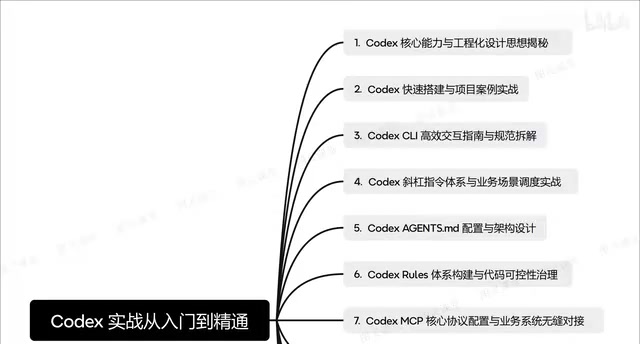
Codex in Practice: From Installation and Configuration to Multi-Agent Collaboration
Based on a Bilibili Codex course overview, this guide maps the full path of AI coding assistants from installation and agents.md context design to CLI commands, MCP integration, and multi-agent collaboration.
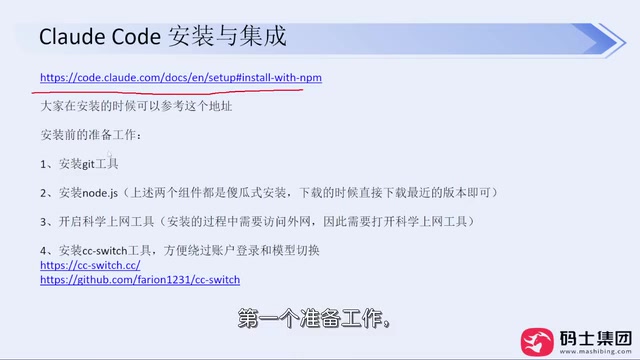
Claude Code Installation and Model Switching Guide for Users in China
How can developers in China install Claude Code reliably? This article compiles a Bilibili creator's hands-on solution: install via NPM, skip official login, use CC Switch to configure API Keys and freely switch between DeepSeek, Kimi, and other models to avoid account bans.

Backblaze Privacy Policy Sparks Debate: Where Are the Boundaries of Cloud Storage Privacy?
Backblaze's privacy policy and collection notice sparked debate on Hacker News with 237 points and 87 comments. This analysis examines cloud storage privacy boundaries, policy readability, and privacy evaluation points for developers choosing services.