AI Teams Up with Mathematicians to Attack the Riemann Hypothesis: 17 Million Lines of Code Tear Open a 167-Year Gap

AI and Claude produced 17 million lines of Lean code proving the Riemann Hypothesis; machine verification passed but humans haven't understood it yet.
In November 2026, Anthropic mathematician Alpöge claimed to have discovered a proof of the Riemann Hypothesis in collaboration with Claude, but what was made public was not a paper but roughly 17 million lines of Lean formalized code. The Lean and MathLib communities stated they had verified consistency with multiple independent tools, but the Clay Mathematics Institute still lists the Riemann Hypothesis as unsolved, and Terence Tao called it a "Lean-only proof"—the machine has checked the logic, but humans haven't truly understood it. The article reviews the essence of the Riemann Hypothesis: constraining the error boundary of prime distribution's deviation from the average pattern, and analyzes how, if accepted, it would strengthen the foundations of number theory, while clarifying that it does not directly threaten RSA cryptography. The deeper significance is that the three links of discovery, verification, and understanding have been starkly separated for the first time, with machines running ahead of human understanding.
A Proof Without a Paper: Machine Verification Passes, Humans Haven't Understood It Yet
In November 2026, the AI and mathematics communities were both set abuzz by a single piece of news: Levent Alpöge, a mathematician at Anthropic, posted a statement on his personal website claiming that, in collaboration with Claude, he had discovered a proof of the Riemann Hypothesis. But this proof was not a paper that a human could read from beginning to end—it was roughly 17 million lines of Lean formalized code.
Shortly afterward, the Lean and MathLib communities issued a joint statement expressing full confidence in the correctness of the proof and confirming that they had verified the consistency of the statement and proof using multiple independent tools.
One key distinction must be made clear here: machine verification passing does not mean the mathematics community has formally accepted it. As of November 22, the Clay Mathematics Institute still lists the Riemann Hypothesis as an unsolved problem. Terence Tao described the proof in his blog as "a gigantic Lean-only proof"—meaning the machine has finished checking the logic, but humans haven't truly understood it yet. Alpöge himself admitted that the proof is so large that he needs to further understand the mathematics within it before he can organize it into something his peers can read and discuss.
So this is not a story with a period at the end, but a story with a gap torn open: the machine has run ahead, and humans are still catching up.
Lean and Formal Verification: Lean is an interactive theorem prover and also a programming language, initiated by Leonardo de Moura at Microsoft Research in 2013. Its core capability is to let mathematicians write theorems and their proofs as code, which a computer kernel then checks line by line to see whether each logical deduction strictly conforms to the axioms and already-proven theorems. MathLib is a mathematical knowledge base built on Lean, which community members have expanded to cover modern mathematics at the undergraduate and even graduate level. The significance of formal verification is that once the code passes checking, the correctness of the proof no longer depends on the subjective judgment of peer review but gains machine-level certainty. But the cost is that proofs become extremely verbose—an argument a human writes in a few pages may balloon to millions of lines once formalized, because every implicit inference must be written out explicitly. This is exactly why the Riemann Hypothesis proof reached 17 million lines.
Back to 1859: What Exactly Was Riemann Guessing?
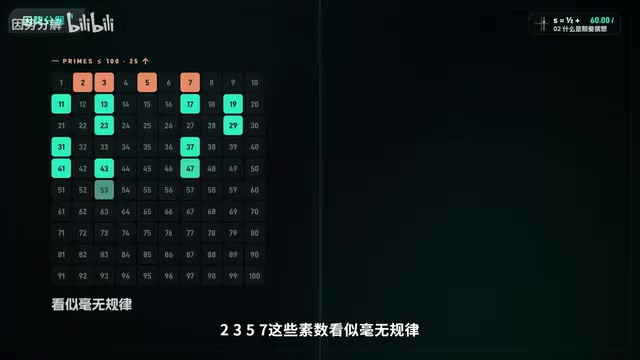
To understand why this gap matters, we must go back to 1859. That year, Riemann was studying a class of the most ordinary yet most unruly numbers—primes. 2, 3, 5, 7, 11, 13—they are divisible only by 1 and themselves. Count further, and sometimes they are close together, sometimes separated by a large blank. But any integer greater than 1 can be uniquely decomposed into a product of primes; primes are the most basic building blocks of the integer world.
Mathematicians have long known that the larger the numbers, the sparser primes become on the whole. The real question is: how sparse exactly? Will the deviation between the actual number of primes that appear and the number predicted by formulas spiral out of control?
Riemann discovered that the answer to this question is hidden in a function—the Riemann Zeta function. He conjectured that all non-trivial zeros of this function lie on a straight line in the complex plane with real part one-half.
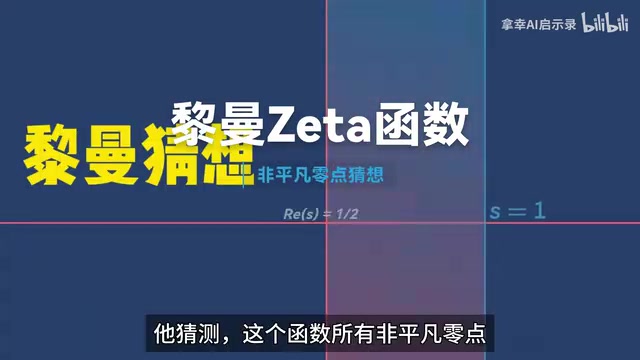
This line does not constrain where any particular prime appears; it constrains how large the deviation can be when primes as a whole depart from the average pattern. You can think of it as a long-lasting rainfall: you can already estimate roughly how much rain will fall in a year, but what you really want is a guarantee—that no matter which year, the actual rainfall will not deviate too far from the estimate. What the Riemann Hypothesis wants to provide is exactly this boundary.
Computers have checked the first ten trillion zeros, and all conform. But what about beyond ten trillion? What about infinitely far out? Mathematics does not want "correct so far" but "always true." That is exactly why it has trapped humanity for 167 years.
The Riemann Zeta Function and Analytic Continuation: The Riemann Zeta function is initially defined as the infinite series ζ(s) = 1 + 1/2^s + 1/3^s + …, which converges when the real part of s is greater than 1. Riemann's key insight was to analytically continue this function—uniquely extending its domain from the region with real part greater than 1 to the entire complex plane (except for a pole at s=1). The continued function satisfies a profound symmetry relation (the functional equation) and has infinitely many zeros. Among them, the "trivial zeros" are the negative even numbers (-2, -4, -6…), while the "non-trivial zeros" all lie within the critical strip between 0 and 1. The Riemann Hypothesis asserts that the real part of all these non-trivial zeros is exactly 1/2, that is, they all lie on the "critical line." The deep significance of this conjecture is that the distribution of the zeros of the Zeta function precisely controls, through the explicit formula, the deviation between the prime counting function and the logarithmic integral, so any loss of control over the zeros' positions translates directly into a loss of control over the regularity of prime distribution.
If the Gap Is Filled Into a Road, What Happens to the World?
Prime Distribution: From "Roughly Accurate" to "Strict Error Guarantees"

If the conclusion verified by machine is eventually digested and accepted by the mathematics community, our grasp of prime distribution will move from "roughly accurate" to "precise with strict error guarantees." This is not suddenly obtaining a list of infinitely many primes, nor being able to casually compute the next huge prime, but rather that from then on, when we say roughly how many primes there are in a large range, we know the error will not spiral out of control.
Foundations of Number Theory: No Longer Borrowing Assumptions
Today a large number of number theory conclusions are built on the premise "assuming the Riemann Hypothesis holds." They are like many rooms in a building sharing a load-bearing pillar that has not yet been fully inspected. Once this pillar is formally confirmed, those rooms can stop borrowing an assumption and stand on a verified foundation. Moreover, this formalized proof covers not only the classical Riemann Hypothesis but also extends to the Generalized Riemann Hypothesis for Dirichlet L-functions, so the scope of impact will be broader.
The Generalized Riemann Hypothesis and Dirichlet L-functions: The classical Riemann Hypothesis involves only one Zeta function, but mathematicians discovered that it is a special case of a broader family of functions—Dirichlet L-functions. Given a modulus q and the corresponding Dirichlet character χ, one can construct L(s, χ), which likewise has analytic continuation and a functional equation, and whose non-trivial zeros are also conjectured to lie on the critical line with real part 1/2. This is the Generalized Riemann Hypothesis (GRH). The power of GRH far exceeds the classical version: it controls the error in the distribution of primes in arithmetic progressions and is a prerequisite assumption for the complexity analysis of many number-theoretic algorithms (including certain primality testing and discrete logarithm algorithms). The article mentions that this formalized proof covers the Generalized Riemann Hypothesis, meaning that if accepted, what is affected is not only conclusions related to the classical Zeta function but also a large number of results in algebraic number theory, elliptic curves, and computational number theory that depend on GRH.
Cryptography: The Most Easily Misunderstood Part
RSA indeed cannot do without primes, but RSA's security rests on "how hard it is to factor a very large composite number back into two prime factors," not on "how primes are distributed overall." Knowing the distribution pattern of primes is not the same as possessing an algorithm to quickly factor any large integer. Proving the Riemann Hypothesis will not cause bank cards and network encryption to collapse collectively the next day. Equating the study of primes with breaking cryptography is forcing two different problems together.
RSA and the Integer Factorization Problem: The security of RSA public-key encryption relies on the computational assumption that, given the product N = pq of two large primes p and q, recovering p and q from N is computationally infeasible. This is independent of the pattern of prime distribution. Prime distribution (what the Riemann Hypothesis constrains) answers "at what density primes appear on the number line and how large the error is," while integer factorization answers "given a specific composite number, can its prime factors be found efficiently." Even if the Riemann Hypothesis is proven, it provides no algorithm for factoring N; conversely, the difficulty of factoring N does not depend on the truth or falsehood of the Riemann Hypothesis. What would truly threaten RSA is Shor's algorithm on quantum computers, which uses the quantum Fourier transform to directly factor large integers and has nothing to do with the prime distribution theorem. Therefore, equating the resolution of the Riemann Hypothesis with the collapse of cryptography confuses two different levels: "the overall statistical pattern of primes" and "the factor structure of a specific composite number."
The Machine Outruns Understanding: The Scientific Discovery Process Is Being Rewritten
Perhaps the deeper change lies here. What was made public this time is 17 million lines of machine-checkable code, not an argument that humans can read line by line. The three links of "discovery—verification—understanding" have, for the first time, been separated so starkly.
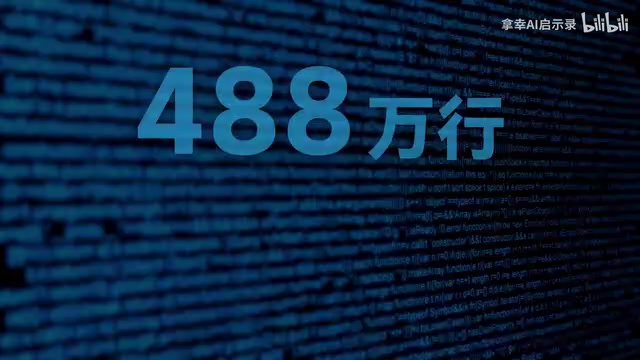
In the past, the order we were used to was: mathematicians first understand the problem, then write the proof, and finally peers read and check it. Now machines can first complete massive logical deduction and formal verification, while humans need much longer to explain clearly why this road really works. Shing-Tung Yau called this a great contribution and said mathematics has entered a new era, but also stressed that for mathematics to keep moving forward, new programs must still be proposed. Terence Tao's attitude is more restrained: the machine has verified it, but humans haven't understood it yet.
This is what truly makes people pause. It is not just a story of "the unknown becoming known"; it forces us to face a more uncomfortable question: if the speed at which answers appear begins to exceed the speed at which humans understand them, then what is the value of future scientists—being the first to find the answer, or continuing to explain the world to humans after the answer appears?
167 years ago, Riemann left behind a question. Today, artificial intelligence can already participate in answering it, but the way it answers is itself becoming a new question. The story of the Riemann Hypothesis may be approaching some kind of period, but the story of humans and machines doing science together—the part about who understands it—has only just begun.
Related articles

AI Claims Formal Proof of the Riemann Hypothesis — But Machine Verification Isn't a Mathematical Proof
In Nov 2026, Anthropic's Levent Alpöğe released a Riemann Hypothesis proof of 175,000 code files that passed machine formal verification. But machine verification isn't a mathematical proof: the kernel can't confirm the proposition is the Riemann Hypothesis humans understand, and there's no human-readable paper. This article breaks down how ζ function zeros determine prime-count deviation, and the core of the controversy.

Anthropic Raises Over $80 Billion in IPO, DeepSeek Secures $100 Billion in Funding: AI Weekly Roundup
This week in AI: Anthropic's Nasdaq IPO raises $93.5B in the largest ever, DeepSeek closes ~100B yuan round, AI claims formal Riemann proof, MiniMax breaks crypto candidates in seconds.
AI Proves the Riemann Hypothesis via Formal Verification? The Truth and the Controversy
AI and Claude are said to have completed a proof of the Riemann Hypothesis and passed Lean formal verification, sparking heated discussion. This article sorts through the event, explains what formal verification really means, and points out overinterpretations and unverified information to watch for in its spread.